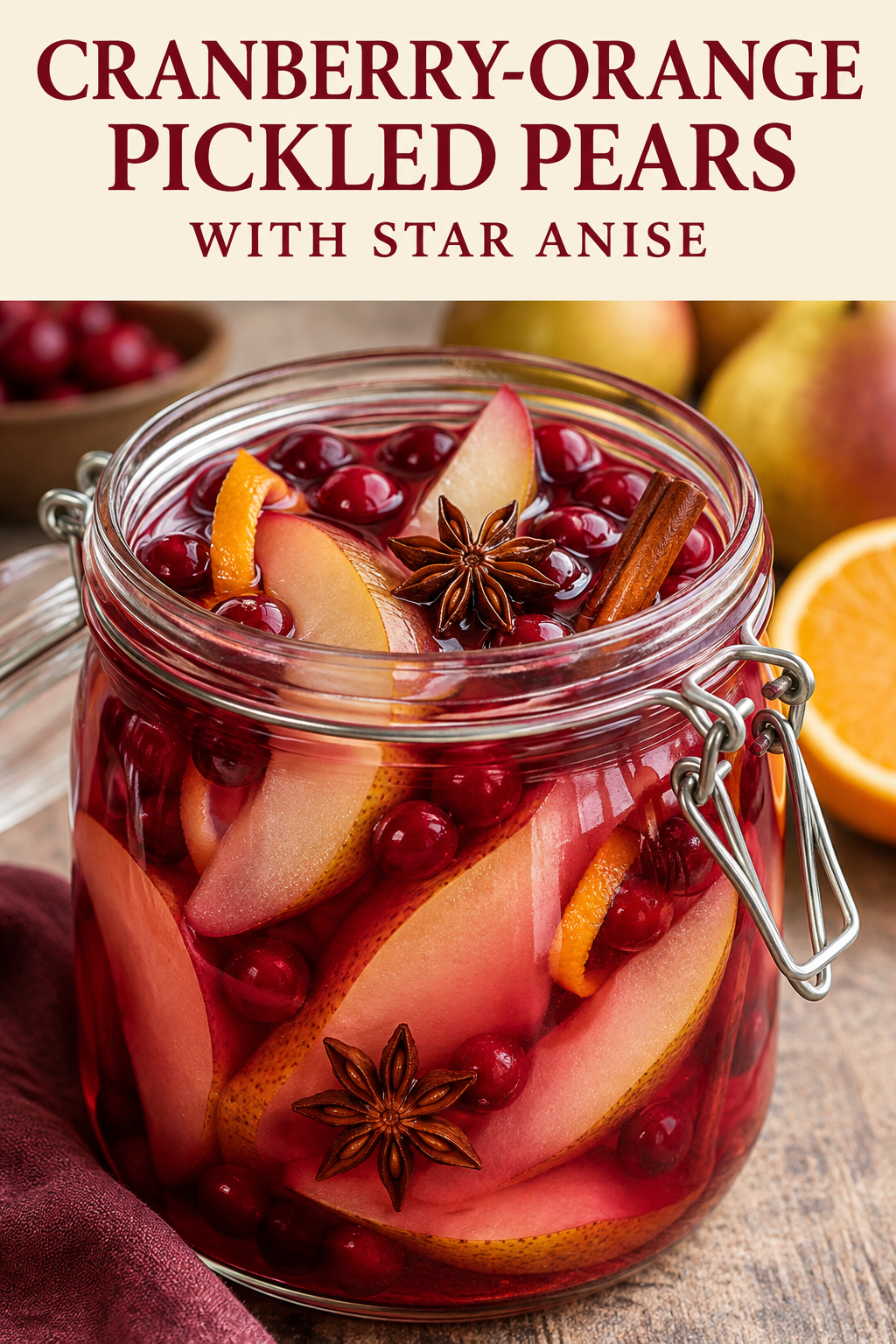
Amazing Cranberry-Orange Pickled Pears with Star Anise

Cranberry-orange pickled pears pair firm, sweet fruit with tart cranberries in a bright citrus-vinegar brine. They add a sweet-tart bite to a cheese board, roast dinner, or holiday sandwich without complicated preserving equipment.
Cranberry-orange pickled pears take about 15 minutes of active preparation, plus at least 12 hours to chill. The fruit stays tender with a little bite, while cinnamon and star anise give the brine a gentle winter-spice aroma. This is a quick refrigerator recipe, not a shelf-stable canning recipe.
QUICK ANSWER
To make cranberry-orange pickled pears, pack firm pear wedges and fresh cranberries into a clean heat-safe jar. Simmer cider vinegar, water, sugar, salt, orange peel, cinnamon, and star anise, pour the hot brine over the fruit, cool, and refrigerate. Give the pears at least 12 hours to take on the flavor; 24 hours gives a more rounded sweet-sour taste.
QUICK OVERVIEW
- Prep: 15 minutes
- Cook: 5 minutes
- Chill: 12–24 hours
- Yield: about 1 quart (4 servings)
- Texture: tender pears with a light bite
- Storage: refrigerated, use within 5 days for best quality
- Method: quick refrigerator pickle; not suitable for pantry storage
WHY YOU’LL LOVE THIS RECIPE
This recipe turns a few sturdy pears into a colorful, useful condiment. Cranberries bring tartness and jewel-like color; orange peel makes the vinegar smell fresh rather than sharp; cinnamon and star anise add warmth without hiding the fruit.
The process is straightforward: warm the brine, pour it over the fruit, and let the refrigerator do the rest. There is no boiling-water canning step and no claim of shelf stability. That makes it a manageable small-batch recipe when you want a bright accompaniment for a meal or gathering.
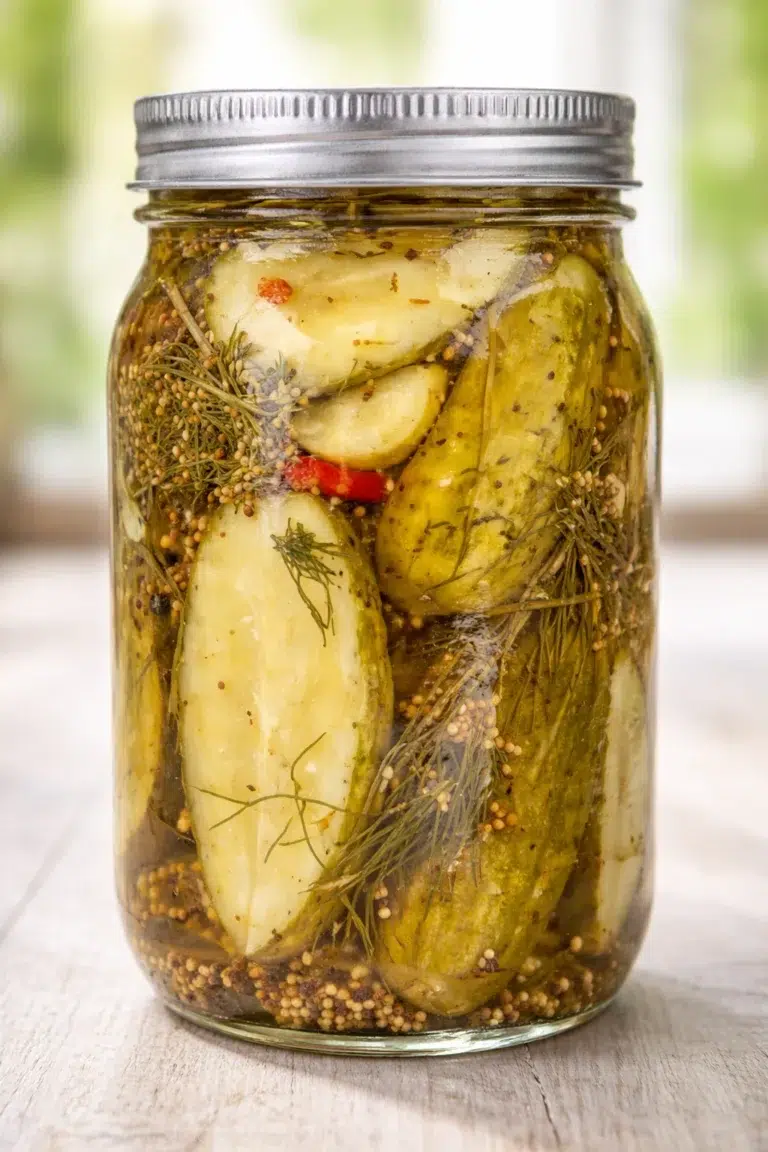
The pears are also flexible at the table. Serve them with a sharp cheddar, tuck them into a turkey sandwich, or spoon a few slices beside roasted vegetables. If you enjoy sweet-and-sour jars, you might also like Cookliva’s Quick Fridge Pickled Vegetables and Spicy Garlic Dill Pickle Recipe.
WHAT MAKES THIS RECIPE
Think of it as a lightly spiced, vinegar-based refrigerator pickle. The pears are not fermented. A measured blend of vinegar and water creates a balanced brine, while a modest amount of sugar softens the acidity and helps the cranberries release their color. The fruit is heated only indirectly by the hot brine, so it keeps more shape than if simmered for a long time.
Choose pears that are ripe enough to smell fragrant but still firm when pressed near the stem. Very soft fruit can collapse in the jar. Bosc and Anjou pears are good options because their flesh generally holds its shape when sliced; a firm Bartlett can also work if it is not fully ripe.
INGREDIENTS
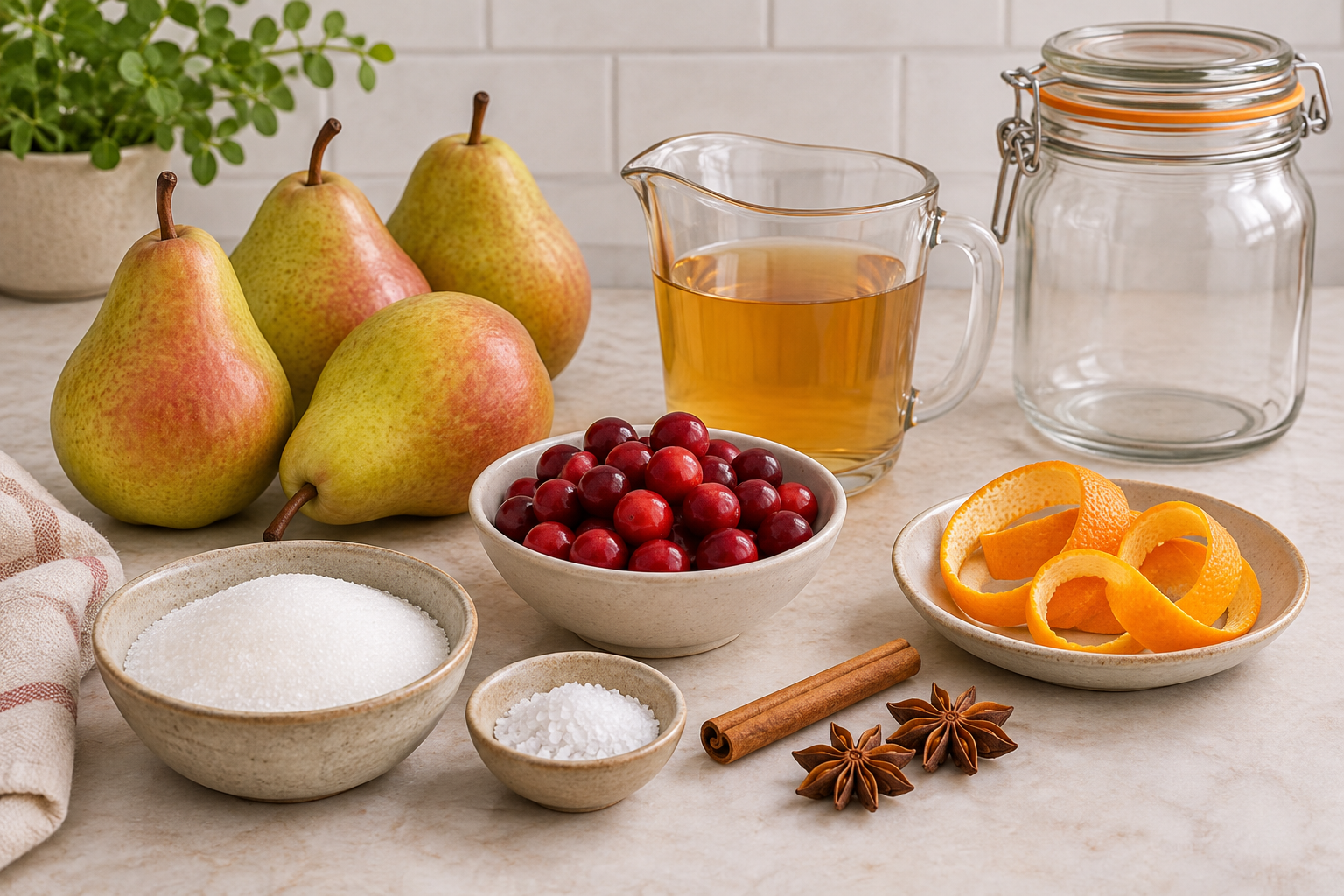
- 2 medium firm pears, about 450 g, washed, cored, and cut into 8 wedges each
- 1 cup (100 g) fresh cranberries, rinsed and picked over
- 1 cup (240 ml) apple cider vinegar labeled 5% acidity
- 1/2 cup (120 ml) water
- 1/3 cup (65 g) granulated sugar
- 1 teaspoon fine salt
- 3 wide strips orange peel, with as little white pith as possible
- 1 cinnamon stick
- 2 whole star anise pods
- 1 teaspoon orange juice, optional, for a brighter citrus note
Use vinegar labeled 5% acidity and do not dilute it beyond the quantities above. Fresh cranberries are preferred for their firm texture. Frozen cranberries can be used straight from the freezer, though they may soften more quickly and tint the brine faster.
INSTRUCTIONS
- Prepare the jar. Wash a 1-quart (1-liter) heat-safe jar and lid with hot soapy water, rinse well, and let them air-dry. This is a refrigerator preparation, so a clean jar is important; it is not a substitute for tested canning procedures.
- Prepare the fruit. Rinse and dry the pears. Cut them into quarters, remove the core, and slice each quarter lengthwise into two wedges. Keep the pieces similar in thickness so they take on the brine evenly. Rinse the cranberries and discard any soft or damaged berries.
- Fill the jar. Place the pear wedges and cranberries in the jar, distributing the cranberries between the pear pieces. Leave about 2 cm (3/4 inch) of headspace. Do not pack so tightly that the brine cannot flow around the fruit.
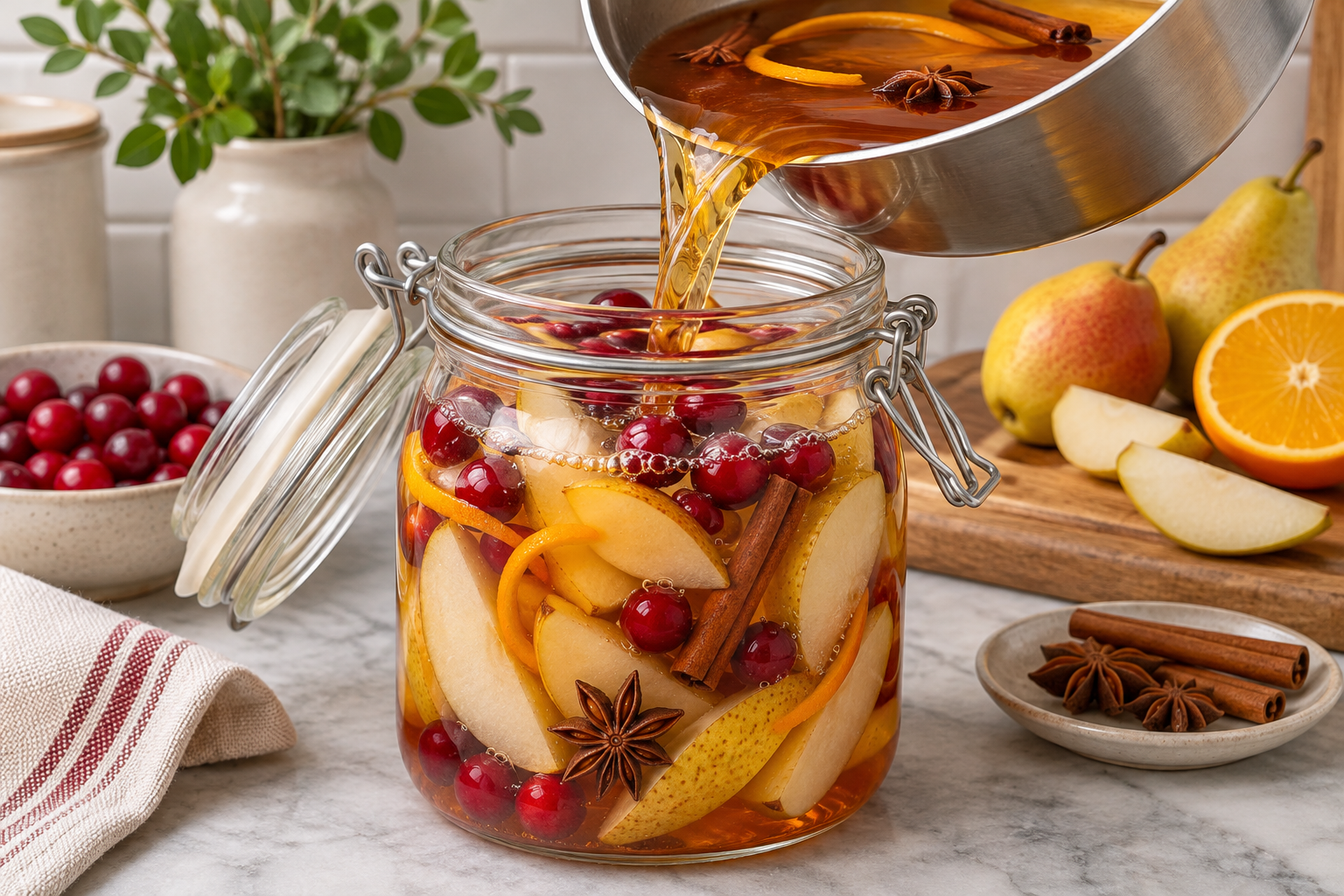
- Make the brine. Add the vinegar, water, sugar, salt, orange peel, cinnamon stick, and star anise to a small saucepan. Bring to a gentle simmer over medium heat, stirring until the sugar and salt dissolve. Simmer for 2 minutes, then remove from the heat. Stir in the optional orange juice.
- Pour and cool. Slowly pour the hot brine and spices over the fruit until it is covered. If a little fruit floats, use a clean spoon to settle it under the liquid. Let the open jar stand on a heat-safe surface until it stops steaming, about 30–45 minutes; do not leave it out for more than 2 hours.
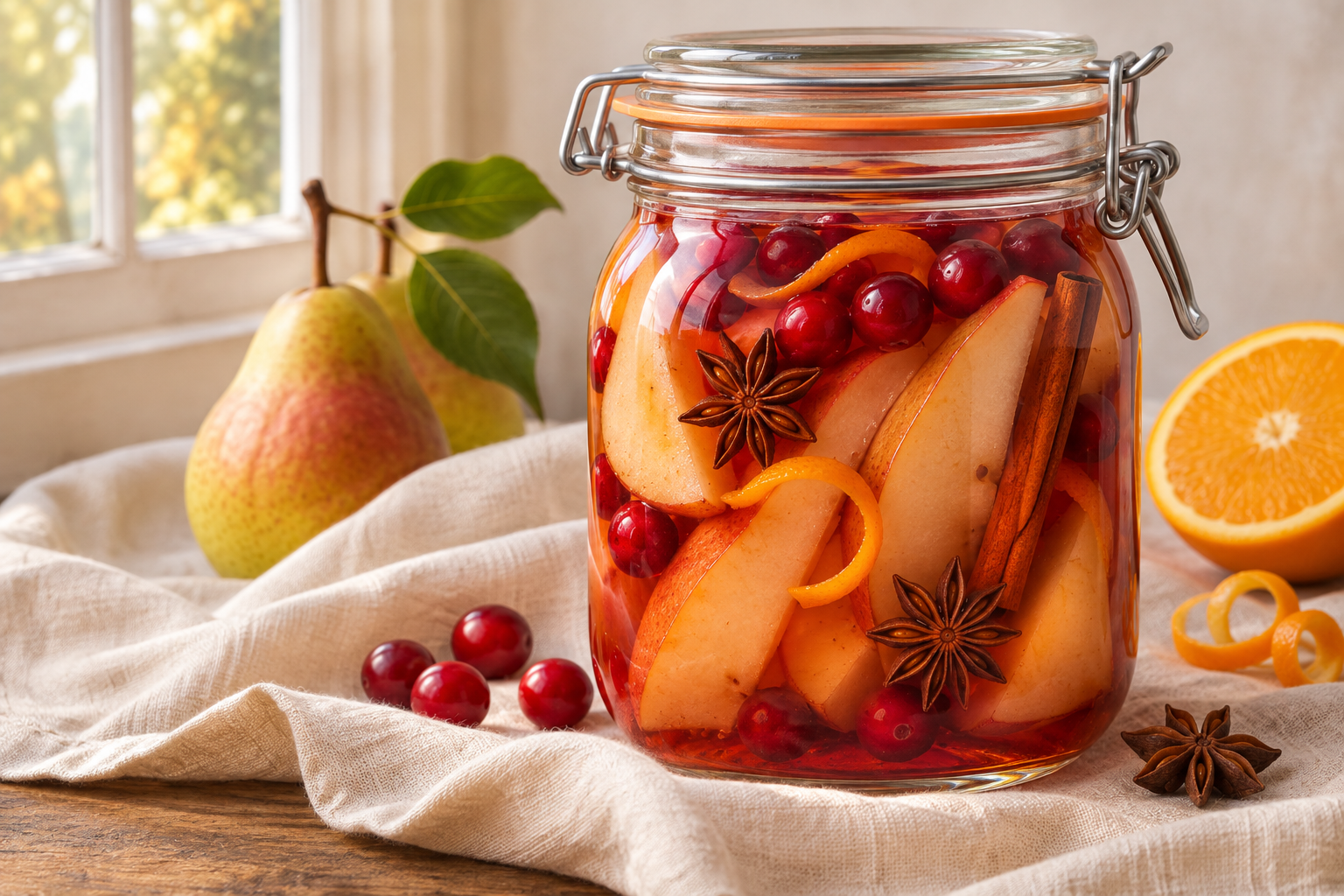
- Chill and wait. Close the lid and refrigerate promptly. Chill for at least 12 hours before serving; 24 hours gives the fruit more time to absorb the orange and spice. Keep the jar refrigerated between servings and use a clean fork to remove the pears.
TIPS & FLAVOR VARIATIONS
- Start with firm fruit. Pears should yield slightly near the stem but not feel mushy. Firmer wedges hold their shape during chilling.
- Keep the wedges even. Similar-size pieces absorb the brine at roughly the same rate, so every serving tastes balanced.
- Use 5% acidity vinegar. This gives a predictable sharpness. Avoid homemade vinegar or a lower-acidity product for this recipe.
- Simmer gently. A steady simmer dissolves the sugar and releases spice aroma without reducing the liquid too much.
- Wait overnight. The jar tastes more integrated after a full day in the refrigerator; the cranberries also tint the brine naturally.
- Keep fruit submerged. Use a clean utensil to settle floating pieces below the liquid and limit exposed surfaces.
- Make it less sweet. Reduce sugar to 1/4 cup if you prefer a sharper pickle; the flavor will be more pronounced and less rounded.
- Change the spice. Replace star anise with 4 lightly crushed cardamom pods, or add 3 whole cloves for a deeper holiday aroma.
- Add gentle heat. Add one thin slice of fresh ginger to the saucepan, then remove it before pouring if you want a clean, mild ginger note.
WHAT MAKES THIS RECIPE SPECIAL
The fruit does two jobs: pears bring a mellow, buttery sweetness, while cranberries keep each bite lively. Orange peel bridges them, and whole spices perfume the liquid without leaving a gritty ground-spice coating. Because the recipe is made in a small jar, you can adjust the next batch after tasting this one—more orange, less sugar, or a slightly warmer spice profile.
It also offers a useful contrast on a plate. Rich cheese, roasted meat, and buttery pastries benefit from something crisp and acidic. A few pear slices can brighten a serving without requiring another cooked side dish.
HOW TO SERVE CRANBERRY-ORANGE PICKLED PEARS
Lift the pears from the jar with a clean fork and let excess brine drip back before serving. The fruit is best cool, not icy; set out only the amount you plan to eat. The cranberries and orange peel can be served alongside the wedges for color and an extra tart note.
SERVING IDEAS
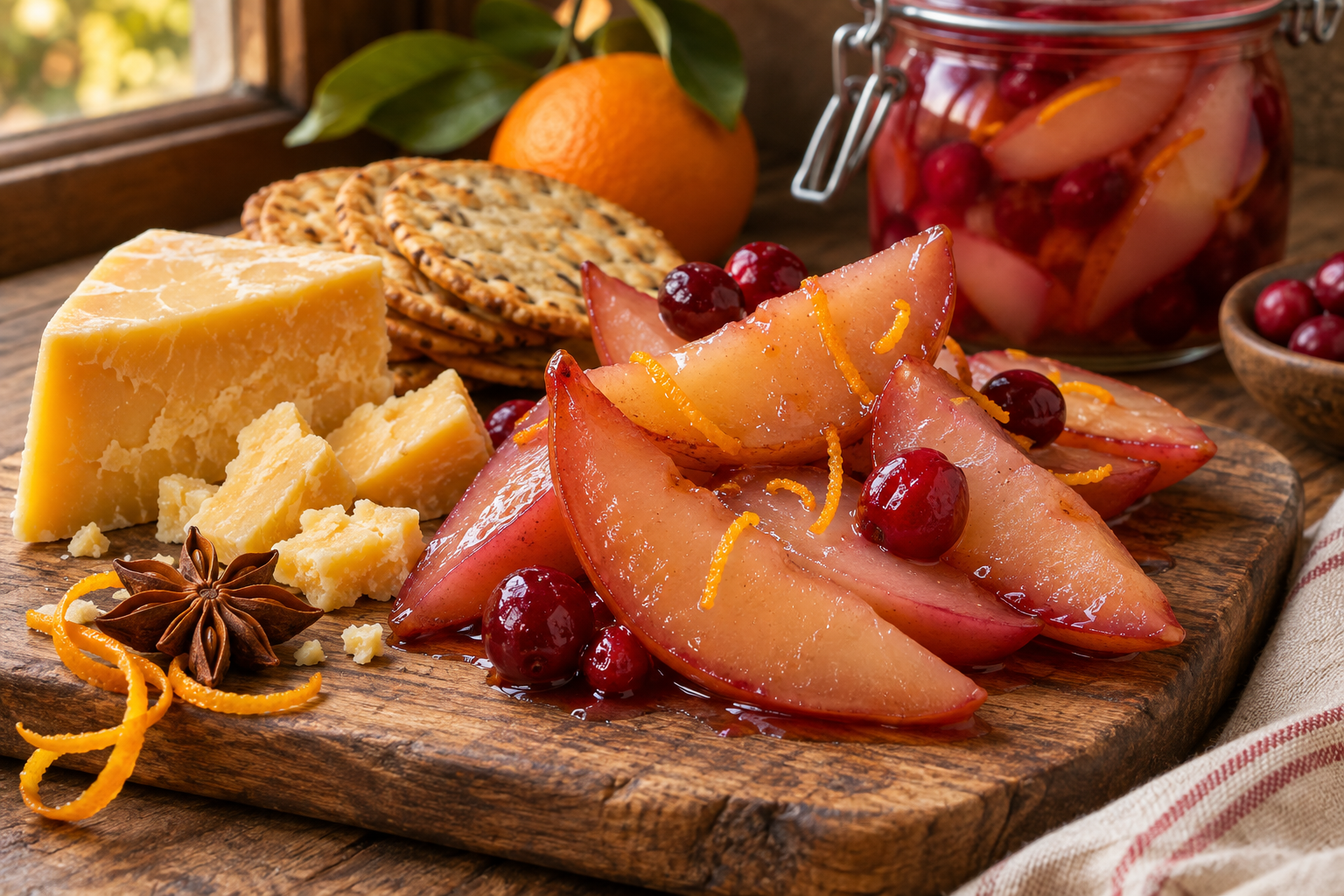
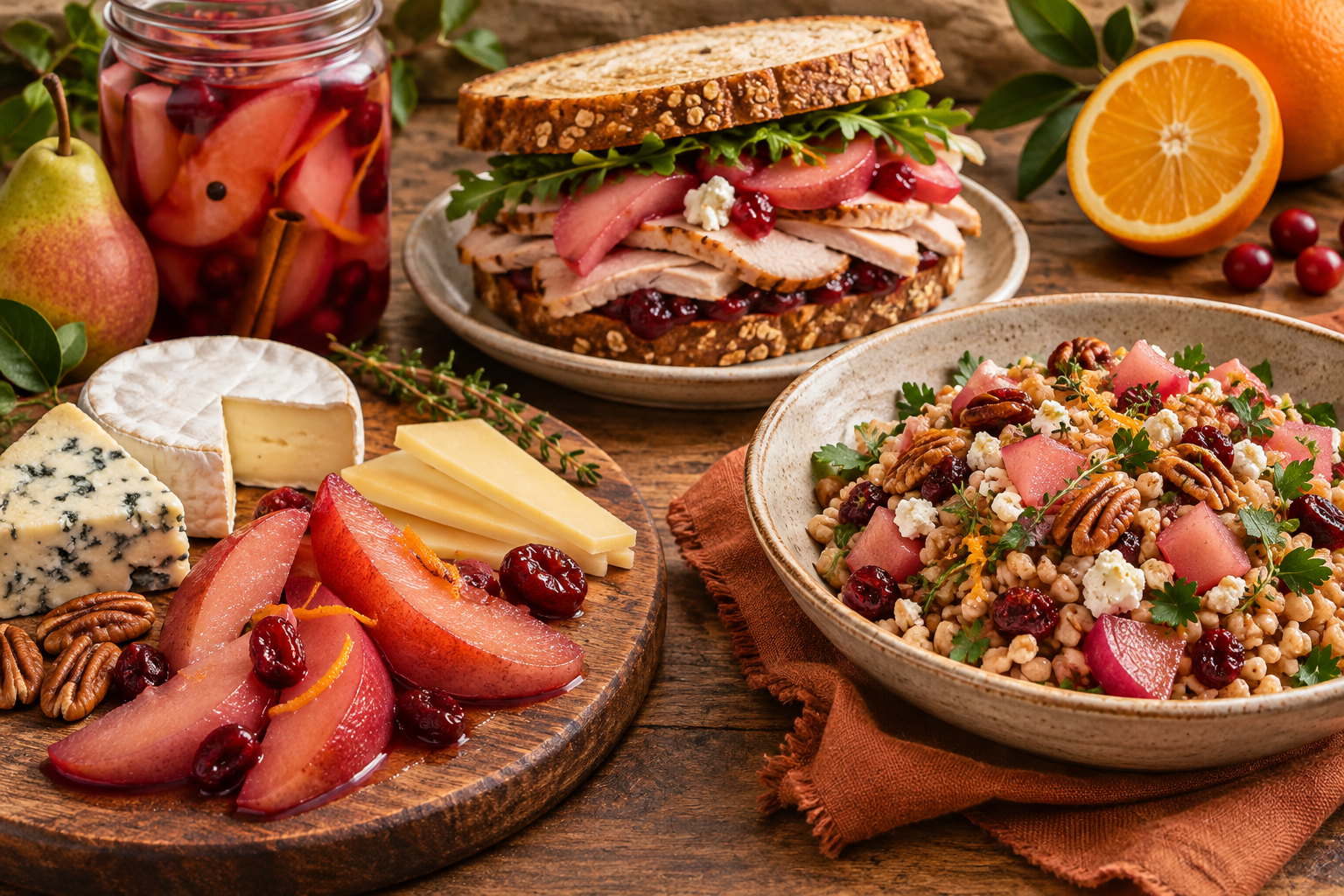
- Add pear wedges and cranberries to a cheese board with aged cheddar, blue cheese, crackers, and toasted nuts.
- Layer slices into a turkey or roast-chicken sandwich with greens and a mild mustard.
- Serve a few pieces beside roast pork, chicken, or a lentil loaf to cut through richer flavors.
- Chop the pears and fold them into a grain salad with farro, parsley, and toasted pecans.
- Use the fruit as a bright garnish for a savory tart or a baked brie platter.
- Offer the pears with a simple lunch salad and a vinaigrette; keep the portion modest because the brine is tangy.
FLAVOR VARIATIONS AND SWAPS
Ginger-orange: Add 4 thin coins of fresh ginger while the brine simmers, then remove them before filling the jar. Maple-spice: Replace half of the sugar with maple syrup; the brine will taste rounder and slightly woody. Cardamom cranberry: Use 4 green cardamom pods in place of the star anise for a more floral aroma. Rosemary-citrus: Add a short rosemary sprig and use lemon peel in place of orange for a more savory direction. Apple-cranberry: Replace one pear with a firm apple, sliced into similar wedges; check texture after 12 hours because apples may stay firmer.
For the cleanest flavor, change only one spice at a time. Keep the measured vinegar, water, and salt quantities the same, and do not treat any variation as a canning formula.
COMMON MYTHS & MISTAKES
Myth 1: A Hot Vinegar Brine Makes This Jar Shelf-Stable
Why people believe it: The brine is hot when poured, and vinegar is commonly associated with preserving. A sealed lid can also look like the airtight seal used for canned foods. Why it is incorrect: Heating a brine and closing a jar does not create a tested, shelf-stable preserve. Safe canning depends on a tested recipe, exact ingredient ratios, jar size, processing method, and altitude adjustments. This recipe has not been developed or tested for room-temperature storage. The correct approach: Treat it as a refrigerator pickle only. Cool the jar, refrigerate it promptly, keep the fruit covered with brine, and do not store it in a cupboard or pantry. For pantry-safe fruit pickles, use a current tested canning recipe from a reliable preservation authority and follow it exactly.
Myth 2: Any Pear Is Fine Because the Brine Softens It
Why people believe it: The recipe uses a hot liquid, so it is easy to assume the pears will become tender no matter how ripe they are. Why it is incorrect: Very ripe pears have soft cell structure and can turn mushy as they absorb liquid. The hot brine does not firm them up; it can make fragile slices soften further. The correct approach: Choose pears that are fragrant but still firm, and cut evenly sized wedges. If the only pears available are quite ripe, chill them thoroughly before cutting and shorten the rest time to 8–12 hours. They will still taste good, but they may be best spooned over cheese or salad rather than handled as neat wedges.
Myth 3: More Vinegar Always Means a Better Pickle
Why people believe it: Vinegar gives pickles their recognizable tang, and a sharper brine may seem like a stronger preservation method. Why it is incorrect: Changing the liquid proportions can overwhelm the fruit, alter how it tastes, and does not turn this refrigerator recipe into a validated canning process. The tested safety of a canning formula cannot be inferred from taste or from adding extra acid. The correct approach: Keep the stated vinegar and water proportions. If you want a sharper flavor, reduce the sugar modestly or serve with a small spoonful of brine. Keep the jar cold and make a fresh batch rather than improvising a shelf-stable version.
IS THIS RECIPE HEALTHY?
Pears and cranberries provide fruit, while the brine adds sugar and salt. The nutrition estimate below is for one quarter of the batch and can vary with pear size and how much brine is consumed. Most people eat the fruit rather than drink the liquid, so the actual sugar and sodium eaten may be lower than a calculation that assumes all brine is consumed. This is a condiment, not a substitute for a serving of fresh fruit.
For safe handling, keep the refrigerator at 4°C (40°F) or below and refrigerate the jar promptly. FoodSafety.gov advises that cold foods should stay at or below this temperature and that perishable foods should not remain at room temperature for more than two hours. See its four steps to food safety. For preservation guidance, the National Center for Home Food Preservation explains that fruit pickles use an acidified syrup and that ingredient proportions matter; consult its general information on pickling. This recipe is not a tested canning formula.
FAQ – FREQUENTLY ASKED QUESTIONS
How long should the pears pickle before I serve them?
Give the jar at least 12 hours in the refrigerator so the pear surfaces begin to take on the sweet-sour brine. Around 24 hours is a good target for the orange and spices to feel integrated. The wedges will continue to absorb flavor while chilled, but their texture gradually softens. If you prefer a firmer bite, try one after 12 hours and serve the batch within five days for best quality. The exact time depends on how thickly the pears are cut and how ripe they were.
Can I use canned pears or very ripe pears?
Fresh, firm pears work best because they keep their shape when covered with the hot brine. Canned pears are already soft and may break apart, so they are not a good substitute for this method. Very ripe fresh pears can be used in a pinch, but slice them into thicker wedges, chill them before cutting, and begin tasting after 8 hours. If they soften too much, serve them as a spoonable topping for cheese, yogurt, or salad rather than expecting crisp pickle slices.
How should I store the jar, and can I keep it in the pantry?
Store the closed jar in the refrigerator at 4°C (40°F) or below, and use a clean fork each time you remove fruit. This is a refrigerator pickle and must not be stored in a pantry, even if the lid seems sealed. For best quality, enjoy it within five days. Refrigeration slows spoilage, but it does not make food last indefinitely. Discard the batch if it develops mold, an unusual odor, bubbling that was not present before, or a slimy texture; do not taste food that appears spoiled.
Can I freeze cranberry-orange pickled pears?
Freezing is not recommended for the finished jar. Pears contain a lot of water, and freezing then thawing can make the wedges soft and watery. The cranberries may also split, leaving a less appealing texture. If you need to prepare ahead, make the brine a day early, refrigerate it separately, and assemble the jar with fresh pears closer to serving time. The finished batch is small and keeps best in the refrigerator, so making only what you expect to use is the simplest approach.
Why did my pears turn brown or become too soft?
Some browning can happen while pears are cut and exposed to air, especially before the brine reaches them. Work promptly and submerge the wedges as soon as the jar is filled. If the pears are too soft, they were likely very ripe, cut thinly, or left in the warm liquid for too long before chilling. Use firm fruit, keep the wedges thicker, and pour the brine while hot but not after it has reduced for a long time. The flavor remains pleasant even if the texture is softer; serve those pieces chopped as a relish.
Can I change the spices or make the recipe less sweet?
Yes. Keep the vinegar, water, and salt amounts as written, then adjust the flavorings. Cardamom can replace star anise, ginger can add gentle warmth, and lemon peel can stand in for orange. You can reduce the sugar from one third cup to one quarter cup for a sharper result. Avoid removing all the sugar if you want the balanced sweet-sour profile, and remember that changing flavorings does not make the jar suitable for shelf storage. Refrigerate every variation and use it promptly.
CONCLUSION
Cranberry-orange pickled pears are a small-batch way to add bright fruit and warm spice to a cheese board or dinner plate. Firm pears, a measured vinegar brine, and an overnight chill do most of the work. Keep the jar refrigerated, serve the fruit cold, and enjoy the sweet-tart contrast while the wedges still have their bite.