Cranberry Orange Bread Recipe

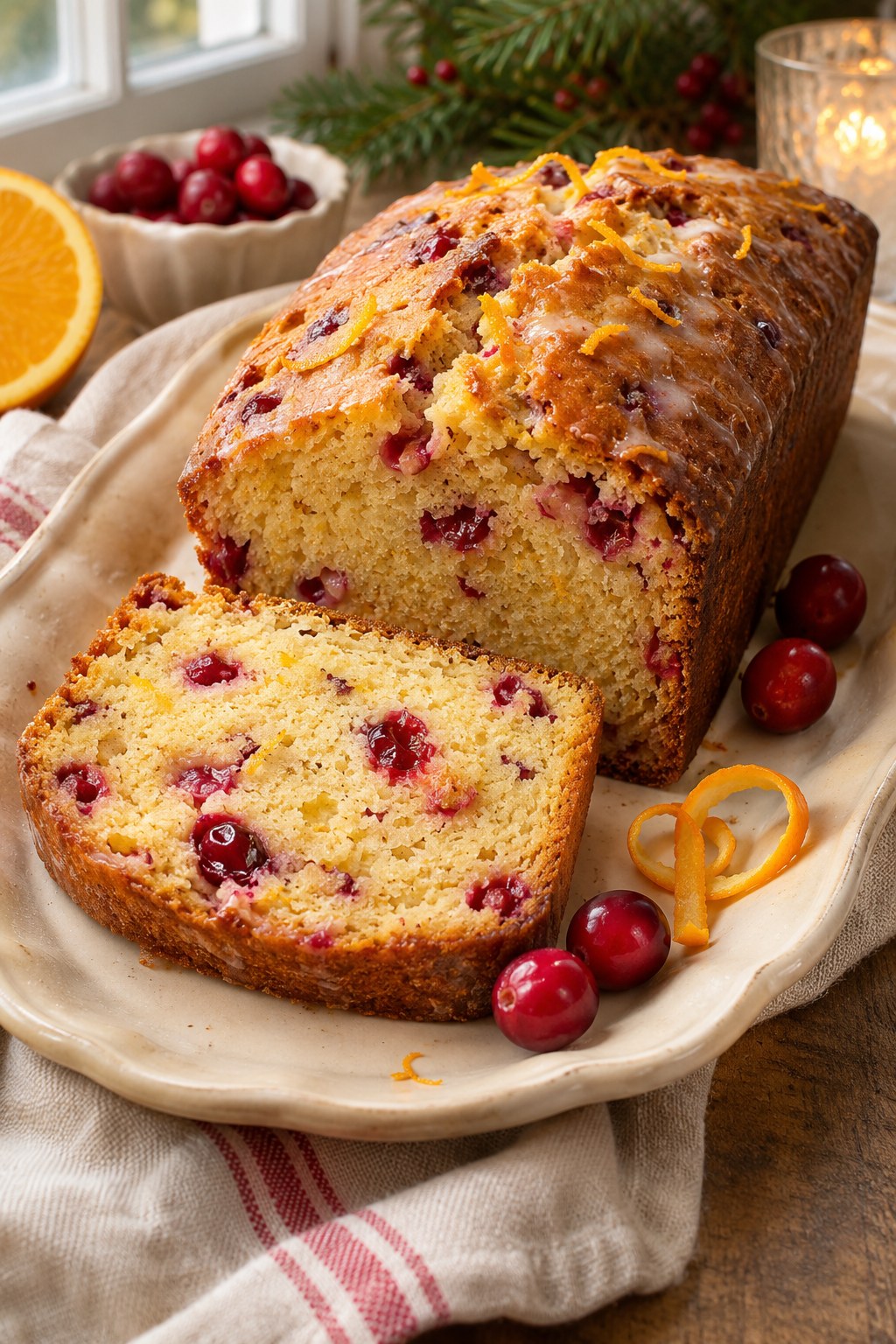
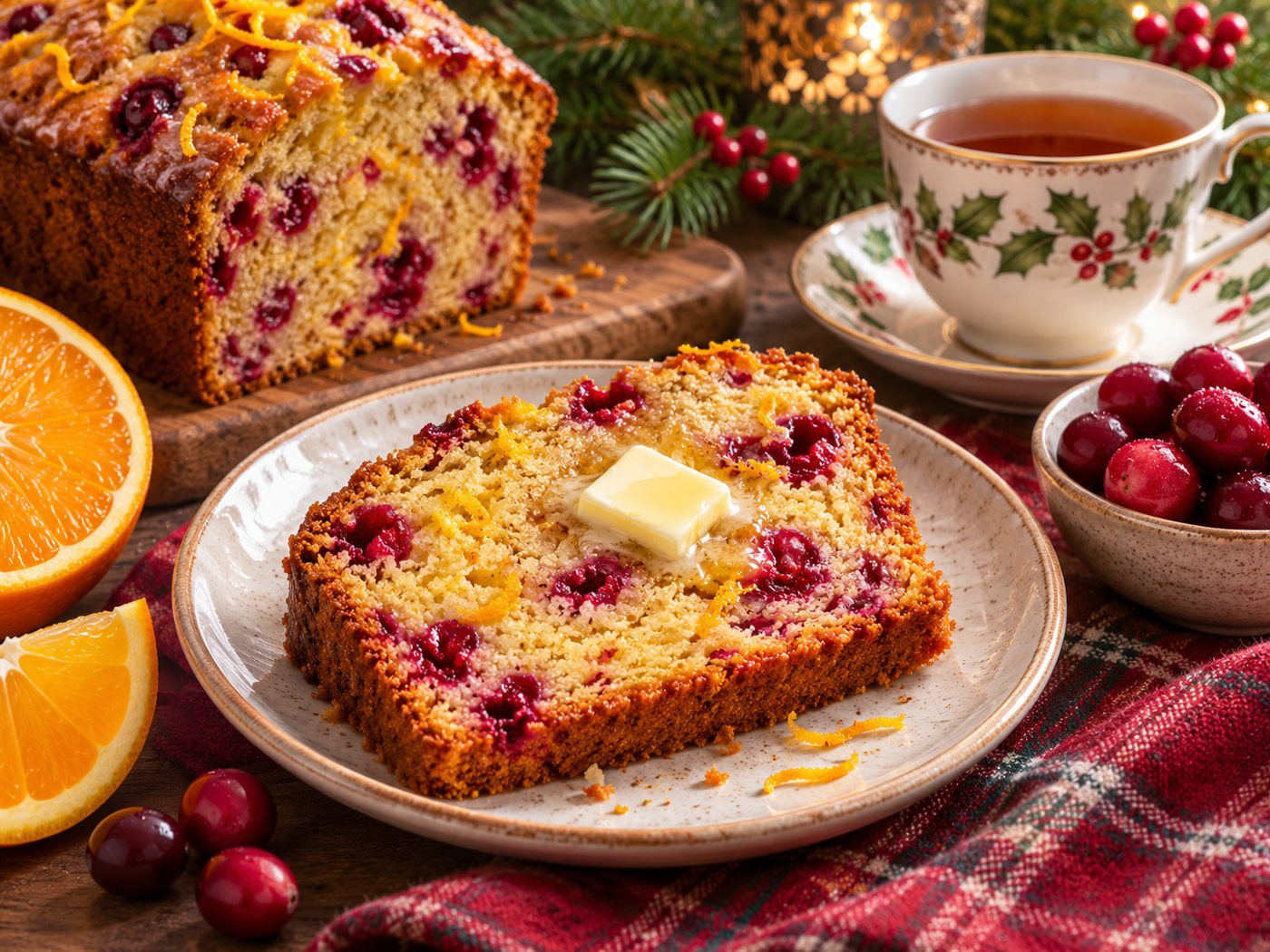
A slice of cranberry orange bread brings a bright citrus aroma and tart ruby cranberries to an easy, no-yeast loaf. This version uses fresh cranberries, orange zest, and tangy buttermilk for a tender crumb that works for breakfast, brunch, or a holiday snack.
Cranberry orange bread recipe prep takes about 15 minutes, with 55–65 minutes in the oven. It makes one 9-by-5-inch loaf, about 10 slices. Protein is approximately 4 grams per slice, depending on the ingredients and slice size.
QUICK ANSWER
Whisk flour, baking powder, baking soda, and salt. In another bowl, combine melted butter, sugar, eggs, buttermilk, orange zest, and orange juice. Fold the wet mixture into the dry ingredients just until combined, then gently fold in chopped fresh cranberries. Bake in a lined 9-by-5-inch pan at 350°F (175°C) until a tester comes out with a few moist crumbs. Cool before slicing.
QUICK OVERVIEW
- Prep: 15 minutes
- Bake: 55–65 minutes
- Cool: at least 45 minutes
- Yield: 1 loaf, about 10 slices
- Flavor: tart cranberry, fragrant orange, lightly sweet crumb
- Skill level: beginner friendly
WHY YOU’LL LOVE THIS RECIPE
This cranberry orange bread recipe gets its flavor from real orange zest and fresh berries, so it tastes lively without needing a thick frosting. Buttermilk adds gentle tang and helps keep the crumb soft, while melted butter makes the batter simple to mix by hand. The cranberry pieces soften as they bake, leaving bright pockets of fruit in each slice.
It is also an adaptable loaf. Serve it plain with coffee, toast a slice the next morning, or add a thin orange glaze when you want a sweeter finish. It uses familiar pantry ingredients and does not require a mixer or yeast. If you enjoy seasonal baking, Cookliva’s Moist Rhubarb Quick Bread and Brown Sugar Cinnamon Cookies make good companions for a holiday baking list.
WHAT MAKES THIS RECIPE
This is a quick bread, which means baking powder and baking soda lift the batter instead of yeast. The batter should be thick but spoonable. Fresh cranberries are naturally tart, so the sugar is there to balance them rather than make the loaf cake-sweet. Orange zest contributes fragrant oils; juice adds citrus flavor and a little acidity.
Cutting the berries in half helps distribute them and makes the loaf easier to slice. A light dusting of flour around the cut fruit can reduce sinking, but it is optional. Mixing only until the flour disappears is the most important texture step: too much stirring develops gluten and can make a quick bread dense.
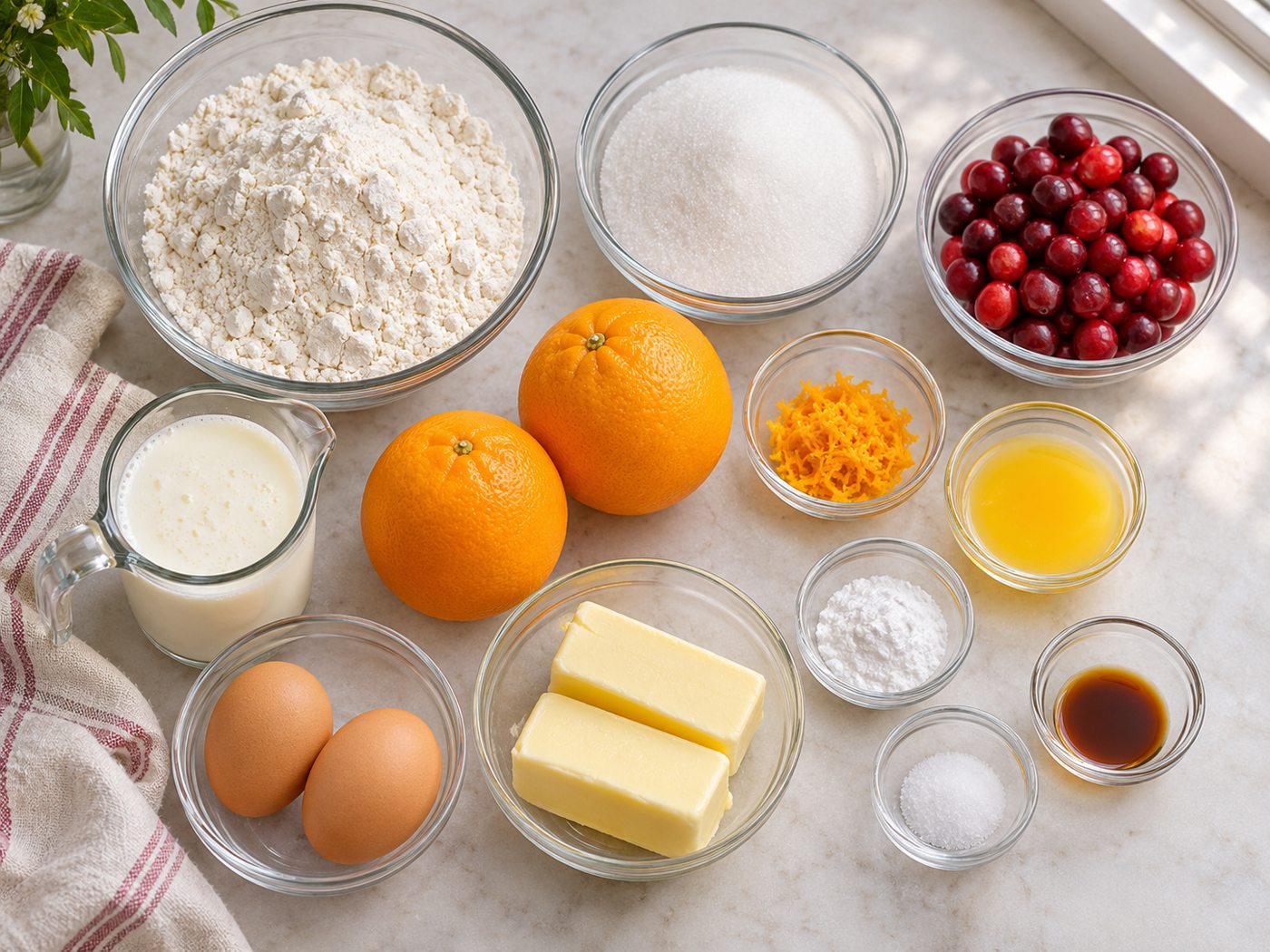
INGREDIENTS
- 2 cups (250 g) all-purpose flour, spooned and leveled
- 1 teaspoon baking powder
- ½ teaspoon baking soda
- ½ teaspoon fine salt
- ½ cup (113 g) unsalted butter, melted and slightly cooled
- ¾ cup (150 g) granulated sugar
- 2 large eggs, room temperature
- ½ cup (120 ml) buttermilk, room temperature
- 2 tablespoons fresh orange juice
- 1 tablespoon finely grated orange zest, from about 1 large orange
- 1½ cups (150 g) fresh cranberries, rinsed, dried, and halved
- Optional glaze: ½ cup powdered sugar plus 1–2 tablespoons orange juice
Buttermilk gives the loaf a soft, lightly tangy crumb. If you do not keep it on hand, stir 1½ teaspoons lemon juice into ½ cup milk and let it stand for 5 minutes. That quick substitute is workable, though the texture can vary slightly. Use zest from an unwaxed, well-washed orange and avoid grating the bitter white pith.
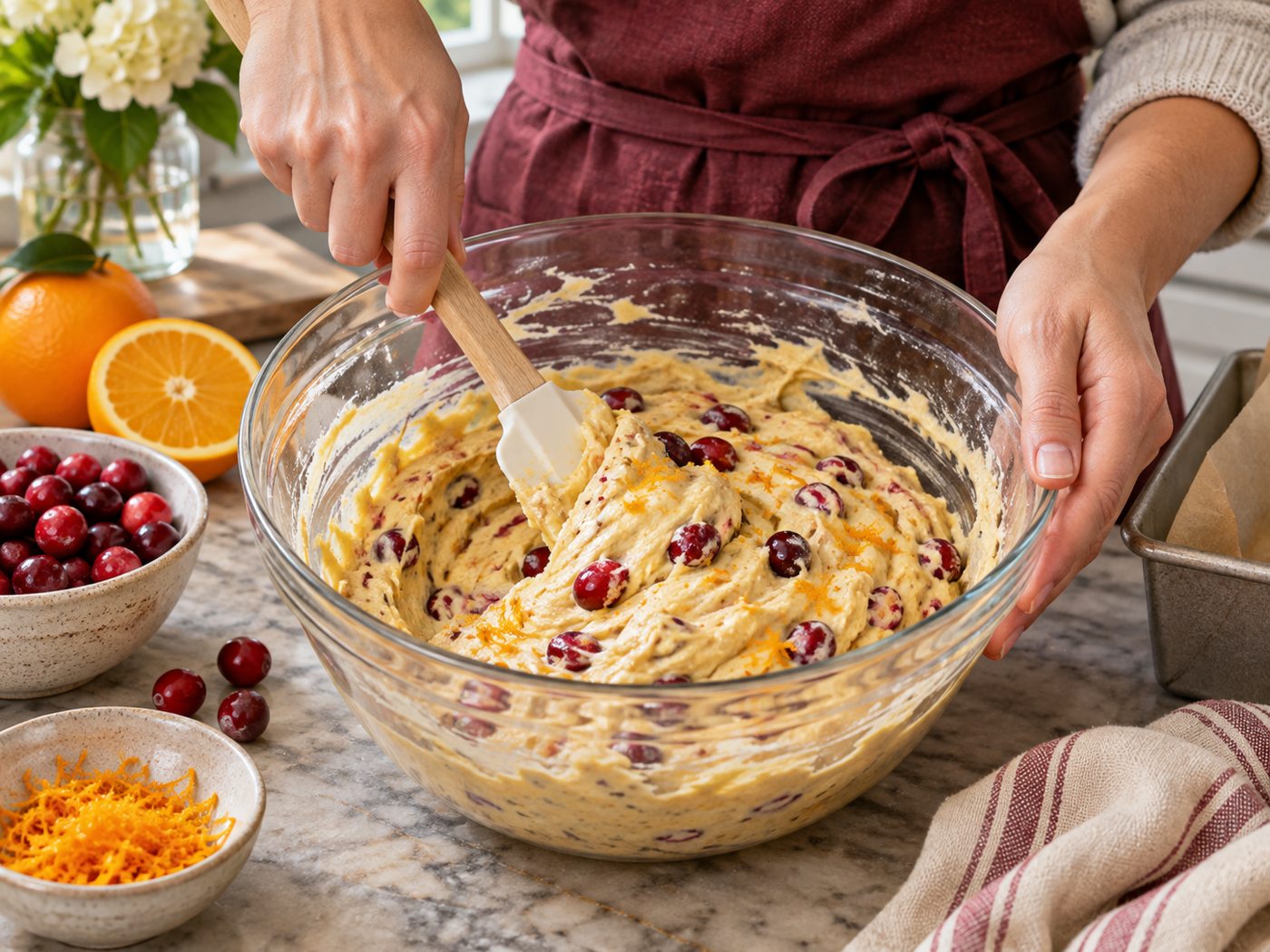
INSTRUCTIONS
- Prepare the pan. Heat the oven to 350°F (175°C). Grease a 9-by-5-inch loaf pan and line it with a parchment sling so the loaf can be lifted out after baking.
- Mix the dry ingredients. Whisk flour, baking powder, baking soda, and salt in a medium bowl. This spreads the leaveners evenly through the flour.
- Mix the wet ingredients. In a large bowl, whisk melted butter and sugar. Add eggs one at a time, then whisk in buttermilk, orange juice, and zest. The butter should be warm, not hot, so it does not scramble the eggs.
- Combine gently. Add the dry mixture to the wet ingredients. Fold with a spatula until a few flour streaks remain. Fold in the cranberries just until no dry flour is visible. The batter will be thick and slightly lumpy.
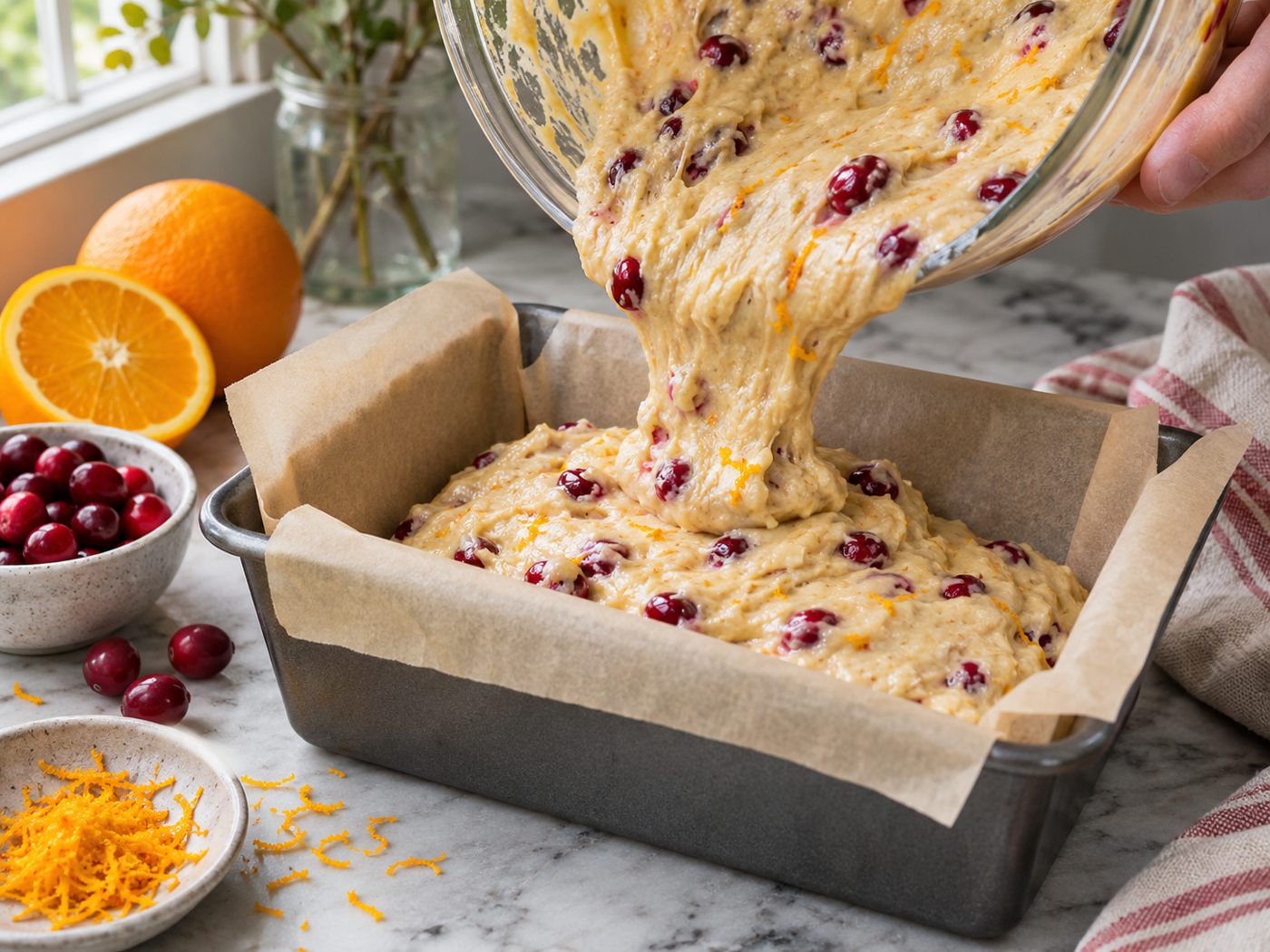
- Bake. Scrape the batter into the pan and smooth the top. Bake 55–65 minutes. If the top browns early, loosely tent it with foil for the last 15 minutes. A toothpick in the center should come out clean or with a few moist crumbs, not wet batter.
- Cool before slicing. Let the loaf rest in the pan for 15 minutes, then lift it onto a rack. Wait at least 30 minutes more before cutting; the crumb finishes setting as it cools.
- Glaze if desired. Stir powdered sugar with orange juice a teaspoon at a time until it falls from a spoon in a thin ribbon. Drizzle over the completely cool loaf.
TIPS & FLAVOR VARIATIONS
- Measure flour lightly. Spoon it into the measuring cup and level the top; packed flour can make the loaf dry.
- Bring cold ingredients closer to room temperature. Eggs and buttermilk blend more evenly with melted butter when they are not refrigerator-cold.
- Do not overmix. Stop as soon as the last dry patches disappear; a few small lumps are better than a tough loaf.
- Check the center, not just the edges. Loaf pans bake slowly in the middle. Start checking at 55 minutes, then continue in short increments.
- Use frozen cranberries straight from the freezer. Do not thaw them first, because thawing releases extra moisture. Expect the bake time to run a little longer.
- Add nuts. Fold in ½ cup chopped pecans or walnuts for a crisp contrast.
- Make it sweeter. Add the orange glaze, or sprinkle coarse sugar over the top before baking.
- Try dried cranberries. Use 1 cup dried cranberries and reduce to ½ cup sugar if you prefer a milder tartness; the crumb will be less juicy.
WHAT MAKES THIS RECIPE SPECIAL
The loaf keeps the contrast between cranberry and orange in balance. Orange zest perfumes the whole batter, while the fresh berries bring sharp little bursts rather than a uniform sweetness. Buttermilk softens that edge and gives each slice enough richness to feel like a treat without needing icing. A glaze remains optional, so the same recipe can feel simple on a weekday or dressed up on a holiday table.
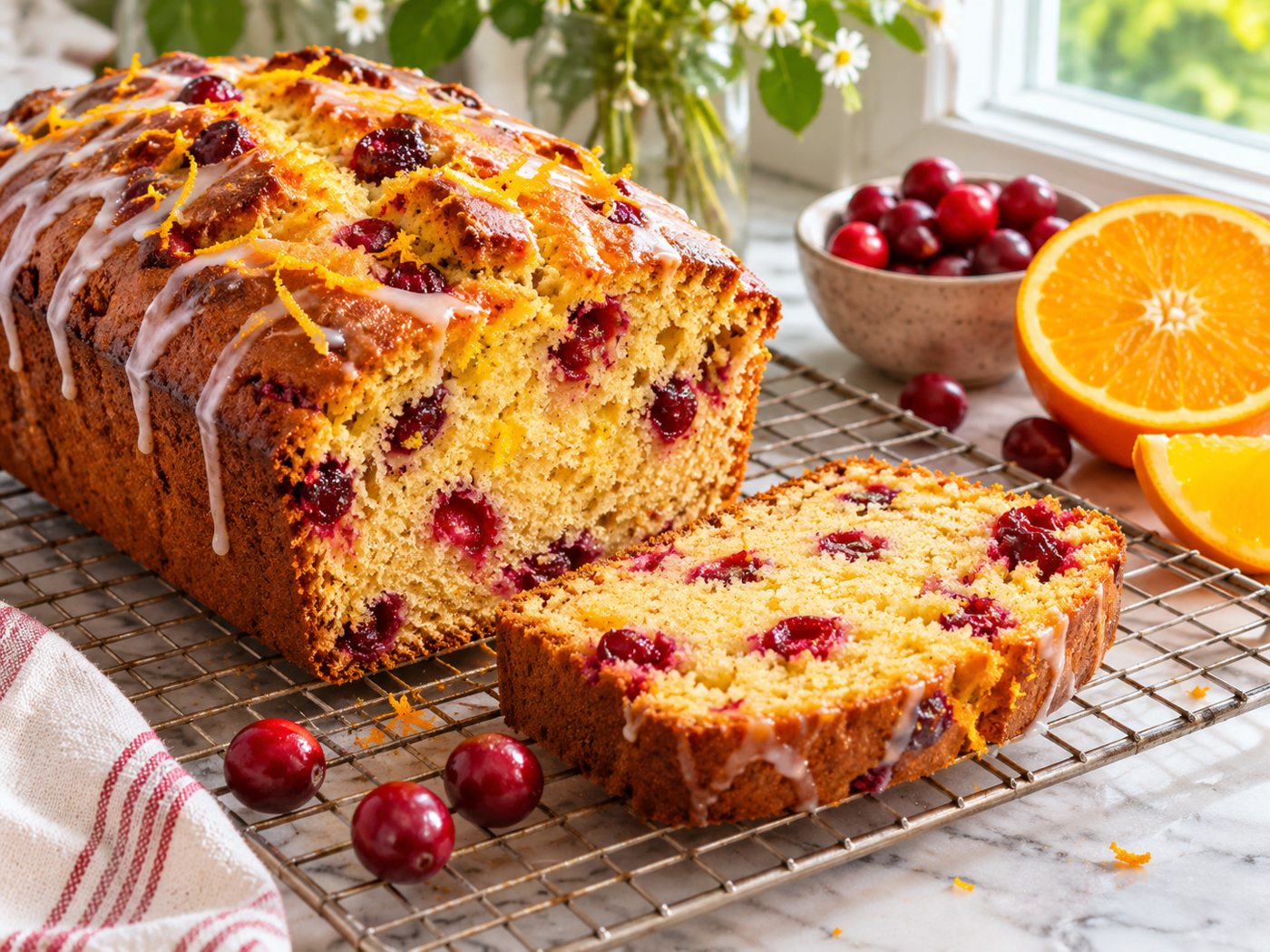
HOW TO SERVE CRANBERRY ORANGE BREAD RECIPE
Let the loaf cool fully before slicing with a serrated knife. For breakfast, serve it with plain yogurt, eggs, or a bowl of fruit. For an afternoon snack, a warm slice with tea or coffee is enough. Toast leftovers lightly and spread them with butter or cream cheese. For a seasonal spread, pair it with Cookliva’s Cranberry-Orange Pickled Pears on a brunch board; the savory-sweet contrast keeps the menu interesting.
SERVING IDEAS
Cut thin slices for a brunch buffet, or cut thicker pieces and serve warm with salted butter. A few orange segments make a fresh side. If serving guests, keep the glaze on the loaf until just before it goes to the table so it stays glossy. The loaf also travels well once completely cool and wrapped.
FLAVOR VARIATIONS AND SWAPS
Use lemon zest and juice for a sharper citrus note, or add ½ teaspoon cinnamon for a warmer flavor. For a streusel top, rub 2 tablespoons cold butter into ¼ cup flour and 2 tablespoons brown sugar, then scatter it over the batter before baking. A dairy-free version can use a neutral plant milk with lemon juice and a dairy-free baking stick; results may vary. For a less tart loaf, use 1 cup cranberries and add 2 tablespoons sugar.
COMMON MYTHS & MISTAKES
Myth 1: Quick bread batter should be smooth
Why people believe it: Cake batters are often beaten until smooth, so it feels natural to do the same with a loaf batter. Why it is incorrect: This batter relies on chemical leaveners, and prolonged mixing after flour is added develops gluten. That can make the bread tight or rubbery instead of tender. The correct approach: Whisk the wet ingredients thoroughly, then fold in the dry ingredients only until the flour disappears. A few small lumps are normal. Fold the cranberries in last, using just enough strokes to distribute them.
Myth 2: Fresh cranberries must be sweetened first
Why people believe it: Raw cranberries are sharply tart, so they seem too sour to bake into a sweet loaf. Why it is incorrect: The sugar in the batter balances their acidity, and baking softens the berries. Their tartness is part of what makes the orange flavor taste brighter. The correct approach: Rinse and dry the berries, discard any soft ones, and halve large berries. If you prefer a milder result, reduce the amount slightly or use dried cranberries rather than adding a heavy coating of sugar.
Myth 3: A browned top means the loaf is done
Why people believe it: The top and edges color before the center finishes, making the loaf look ready. Why it is incorrect: A deep golden crust does not tell you whether the middle is set. Loaf pans are deep, and the center takes longer to bake. The correct approach: Test the center with a thin skewer near the end of the estimated bake time. If the top is already dark, tent it loosely with foil and continue baking until the tester shows moist crumbs rather than liquid batter.
IS THIS RECIPE HEALTHY?
This is a sweet quick bread, best treated as a breakfast or snack rather than a low-sugar staple. Cranberries and orange contribute fruit, but the recipe also includes flour, butter, and sugar. A slice is estimated at about 250 calories, 4 g protein, 10 g fat, and 36 g carbohydrates; actual values depend on the brands, glaze, and slice size. To make a lighter loaf, omit the glaze and cut slices evenly. Nutrition estimates are not medical advice.
FAQ – FREQUENTLY ASKED QUESTIONS
Can I use frozen cranberries?
Yes. Add them while frozen, without thawing, and fold them in at the very end. Thawed berries release liquid that can streak the batter and make the crumb wet around the fruit. Frozen berries may lower the batter temperature, so the loaf can need several extra minutes in the oven. Check the center with a toothpick rather than relying only on the clock.
Why did my cranberry orange bread sink in the middle?
A sunken center usually means the loaf was underbaked, the leavening was old, or the batter was overmixed. Make sure the center is fully set before removing the pan. Avoid opening the oven repeatedly during the first 45 minutes, because a sudden temperature drop can affect the rise. Measure baking powder and soda accurately and replace them if they no longer bubble when tested.
How should I store this loaf?
Once cool, wrap the bread or place it in an airtight container. For best texture, enjoy it within 2–3 days at room temperature in a cool kitchen. If your kitchen is very warm or the loaf has a perishable topping, refrigerate it. USDA guidance notes that commercially baked breads are typically stored at room temperature for a few days; homemade loaves vary by moisture and ingredients. Freeze tightly wrapped slices for longer storage.
Can I make the loaf ahead or freeze it?
Yes. Bake the loaf a day ahead, cool completely, and wrap it airtight. For freezing, leave off the glaze, wrap the loaf or individual slices well, and freeze for up to about 3 months for good quality. Thaw wrapped at room temperature so condensation forms on the wrapper rather than the crumb. Add fresh glaze after thawing if desired.
Can I bake this in a different pan?
A standard 9-by-5-inch loaf pan is the most reliable choice. An 8½-by-4½-inch pan may be fuller and need more time, so do not fill it above about two-thirds; bake extra batter as muffins. For muffins, divide the batter among lined cups and begin checking around 18–22 minutes. Pan material and oven calibration affect timing, so use visual cues and a tester.
CONCLUSION
This cranberry orange bread recipe is a straightforward way to bake a bright, tender loaf with fresh fruit and familiar ingredients. Keep the mixing gentle, let the center bake through, and give it time to cool before slicing. Serve it plain or add a light orange glaze for a festive finish.
Recipe card summary: Prep 15 minutes; bake 55–65 minutes; total about 1 hour 20 minutes; yield 10 slices. Combine 2 cups flour, 1 teaspoon baking powder, ½ teaspoon baking soda, and ½ teaspoon salt. Whisk ½ cup melted butter with ¾ cup sugar, 2 eggs, ½ cup buttermilk, 2 tablespoons orange juice, and 1 tablespoon zest. Fold wet into dry, then add 1½ cups halved fresh cranberries. Bake at 350°F in a lined 9-by-5-inch pan until a tester comes out with moist crumbs. Cool before slicing. Optional glaze: ½ cup powdered sugar plus orange juice to thin.
Food storage: Keep wrapped and use within 2–3 days for best quality, or freeze. For more guidance on quick-bread proportions, see Utah State University Extension’s quick bread guide; for bread storage guidance, see the USDA FSIS bread storage page.