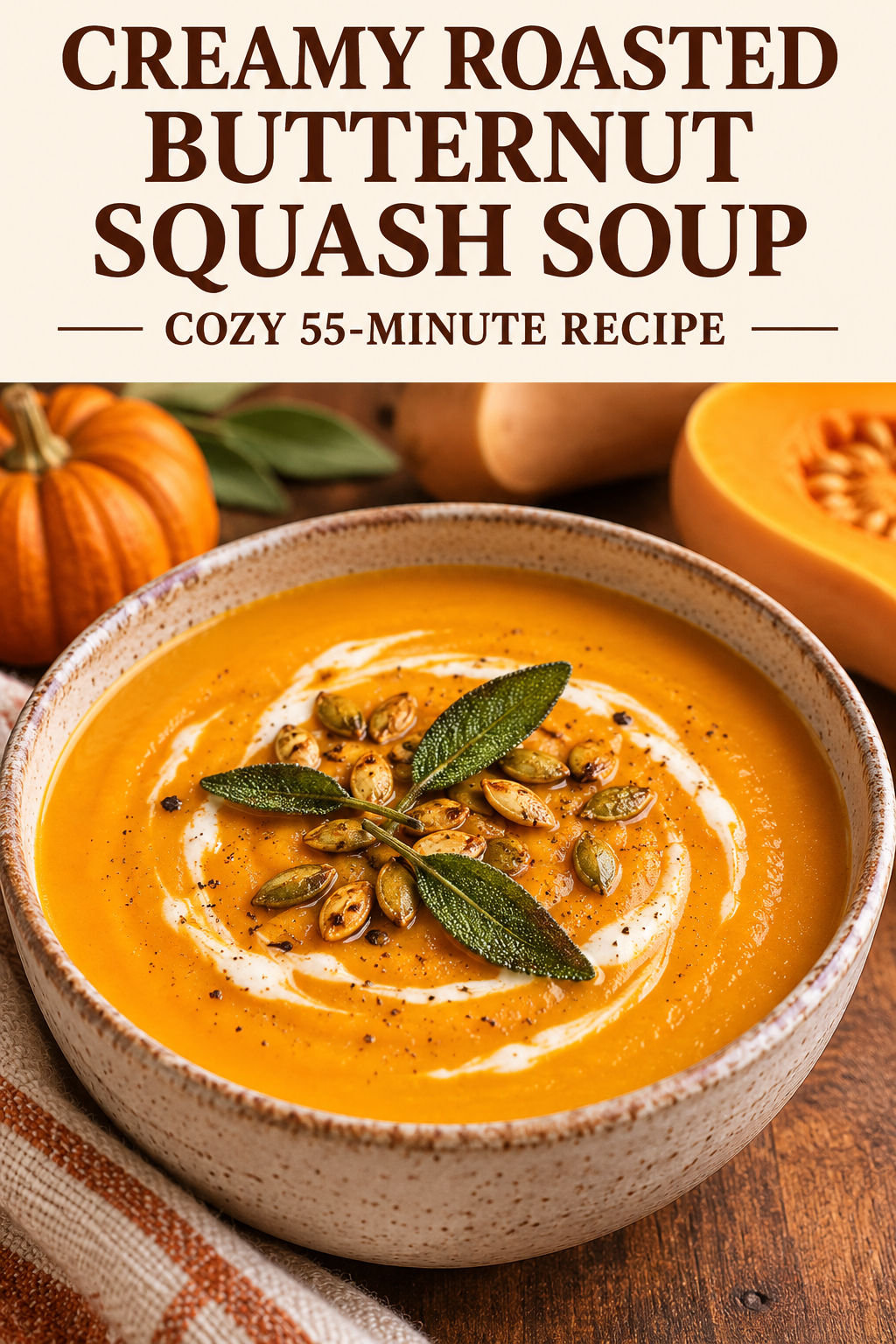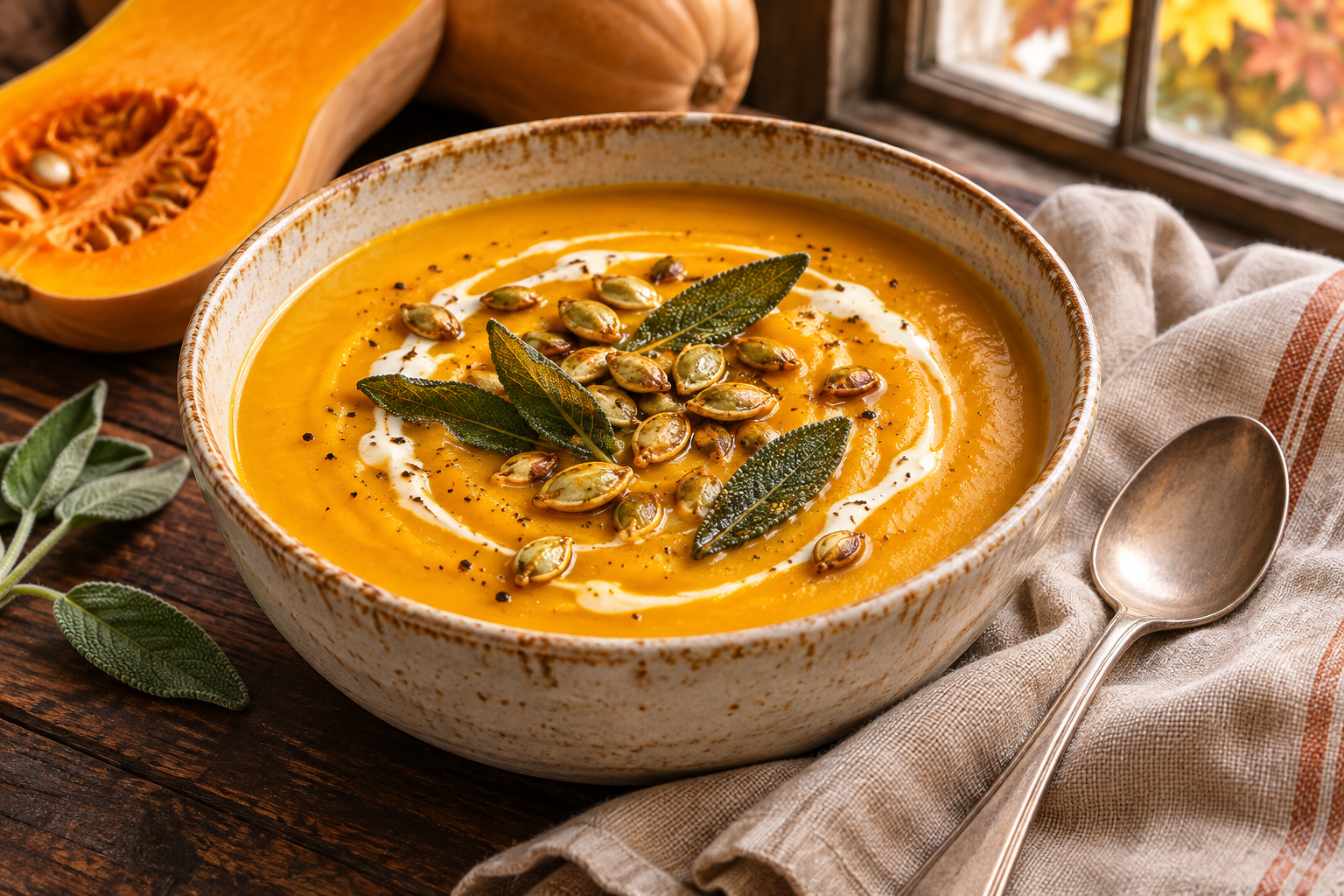
Amazing Creamy Roasted Butternut Squash Soup

Creamy roasted butternut squash soup brings out the squash’s natural sweetness, while onion, garlic, and warm spice keep each spoonful savory and balanced. This smooth, cozy soup comes together with simple ingredients and a blender.
Creamy roasted butternut squash soup takes about 15 minutes to prepare and 35 minutes to roast and simmer. It makes 6 servings, with an estimated 4 grams of protein per serving before toppings. The texture is creamy without requiring heavy cream.
QUICK ANSWER
To make creamy roasted butternut squash soup, cut a peeled butternut squash into cubes, toss with olive oil, and roast until tender and browned at the edges. Simmer the roasted squash with sautéed onion, garlic, vegetable broth, and a pinch of nutmeg, then blend until smooth. Stir in milk or unsweetened oat milk to make the soup creamy, season to taste, and serve warm with toasted seeds.
QUICK OVERVIEW
- Prep time: 15 minutes
- Roast time: 25–30 minutes
- Stovetop time: 12–15 minutes
- Total time: about 55 minutes
- Yield: 6 servings
- Texture: smooth, velvety, and spoonable
- Equipment: baking sheet, large pot, blender or immersion blender
WHY YOU’LL LOVE THIS RECIPE
Roasting gives butternut squash deeper flavor than simmering it from raw. The edges caramelize lightly, adding a toasted sweetness that makes the finished soup taste full and rounded. Onion and garlic build a savory base, while nutmeg adds warmth without making the soup taste like dessert.
The method is flexible for a weeknight. Roast the squash while you prepare the other ingredients, then let the pot simmer briefly before blending. You can use a countertop blender in batches or an immersion blender directly in the pot. A splash of milk makes the texture silky, but the soup is still satisfying without it.
For another simple meal idea, pair a bowl with Cookliva’s Easy Sheet Pan Chicken and Sweet Potatoes, or serve it before a fresh salad such as Beet Salad with Spinach and Honey-Mustard Lemon Dressing.
WHAT MAKES THIS RECIPE
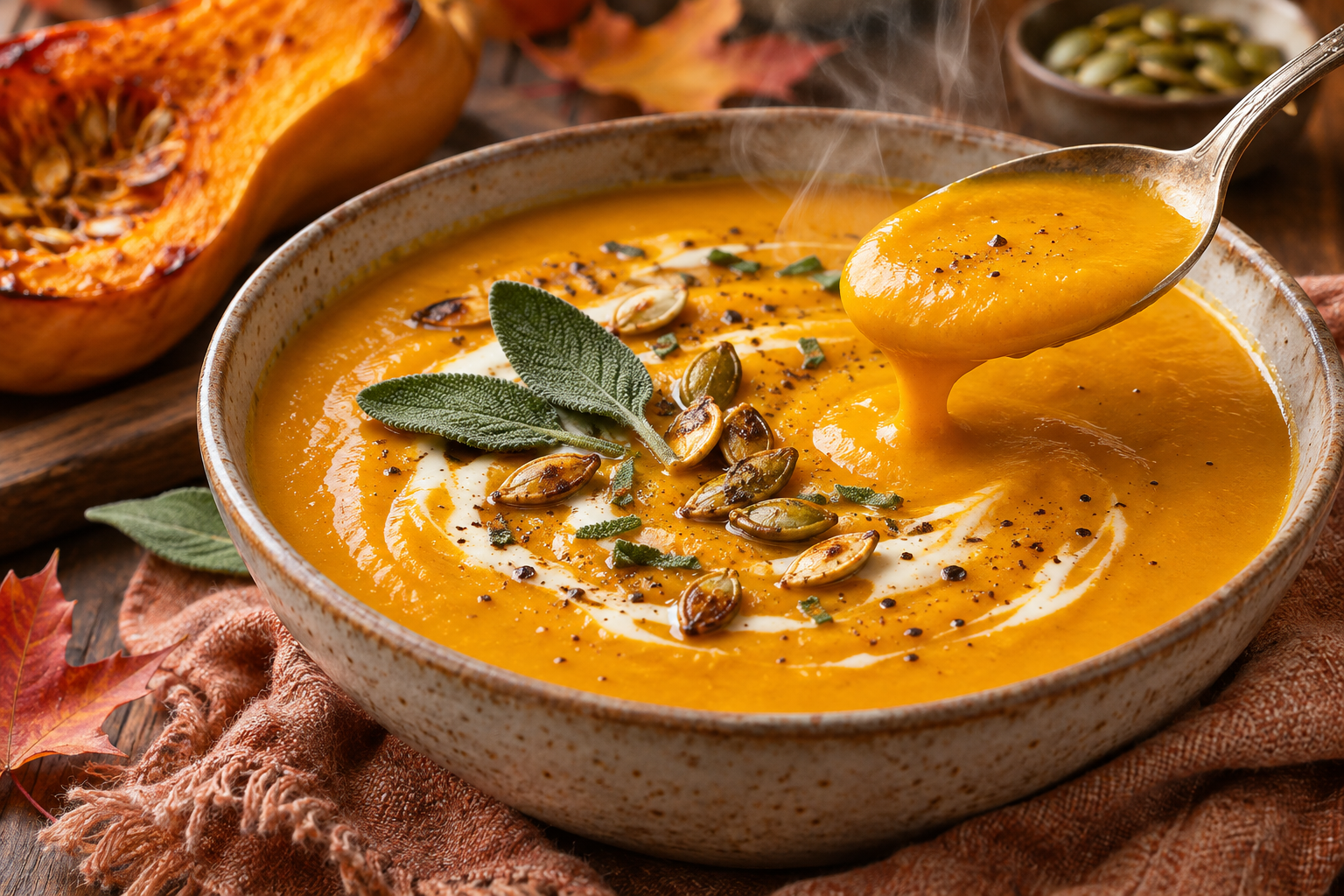
This is a roast-first soup. The squash is cooked on a hot tray before it meets the broth, so the final flavor has more depth and less watery sweetness. A modest amount of broth keeps the soup thick enough to feel creamy, and the liquid can be adjusted after blending to suit your preferred consistency.
Butternut squash varies in size and water content. Use the stated weight as a guide, and add broth gradually rather than pouring it all in at once. If the soup is too thick, a little extra broth thins it easily; if it is too thin, simmer it uncovered for a few minutes.
INGREDIENTS
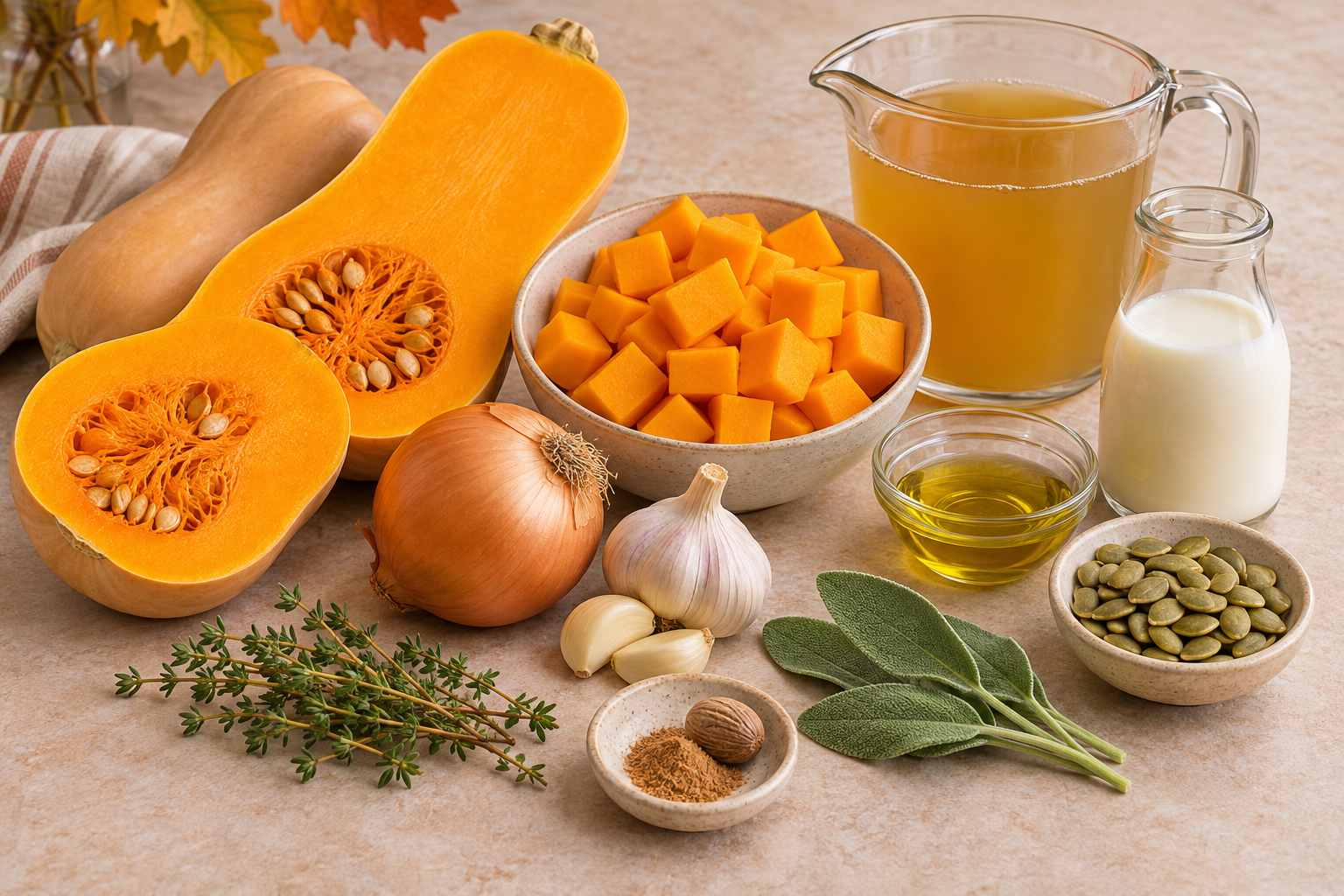
- 1 medium butternut squash, about 1.2 kg whole (roughly 900 g peeled and seeded)
- 2 tablespoons olive oil, divided
- 1 medium yellow onion, roughly chopped
- 3 garlic cloves, peeled and lightly crushed
- 4 cups (960 ml) low-sodium vegetable broth, plus more as needed
- 1/2 cup (120 ml) whole milk or unsweetened oat milk
- 1/2 teaspoon fine salt, plus more to taste
- 1/4 teaspoon freshly ground black pepper
- 1/8 teaspoon ground nutmeg
- 1 teaspoon fresh thyme leaves, or 1/2 teaspoon dried thyme
- 1 tablespoon lemon juice, optional, to brighten the finished soup
- 2 tablespoons toasted pumpkin seeds and 6 small sage leaves, for serving (optional)
Choose a squash that feels heavy for its size, with firm skin and no soft spots. Low-sodium broth makes it easier to control seasoning. Unsweetened milk alternatives work well; sweetened or vanilla versions can make the soup taste unexpectedly sugary.
INSTRUCTIONS
- Heat the oven. Set the oven to 425°F (220°C). Line a rimmed baking sheet with parchment for easier cleanup.
- Prepare the squash. Carefully cut off the stem and base. Stand the squash upright and peel it with a sturdy vegetable peeler. Cut it lengthwise, scoop out the seeds, and cut the flesh into 1-inch cubes. Keep the pieces similar in size so they roast evenly.
- Season and roast. Toss the cubes with 1 tablespoon olive oil, half the salt, and black pepper. Spread them in one layer with space between pieces. Roast for 25–30 minutes, turning once, until a fork slides through easily and the edges show golden-brown spots.
- Build the soup base. While the squash roasts, warm the remaining tablespoon of olive oil in a large pot over medium heat. Add the onion and cook for 5–6 minutes, stirring occasionally, until soft and translucent. Add the garlic and thyme; cook for 30 seconds, just until fragrant.
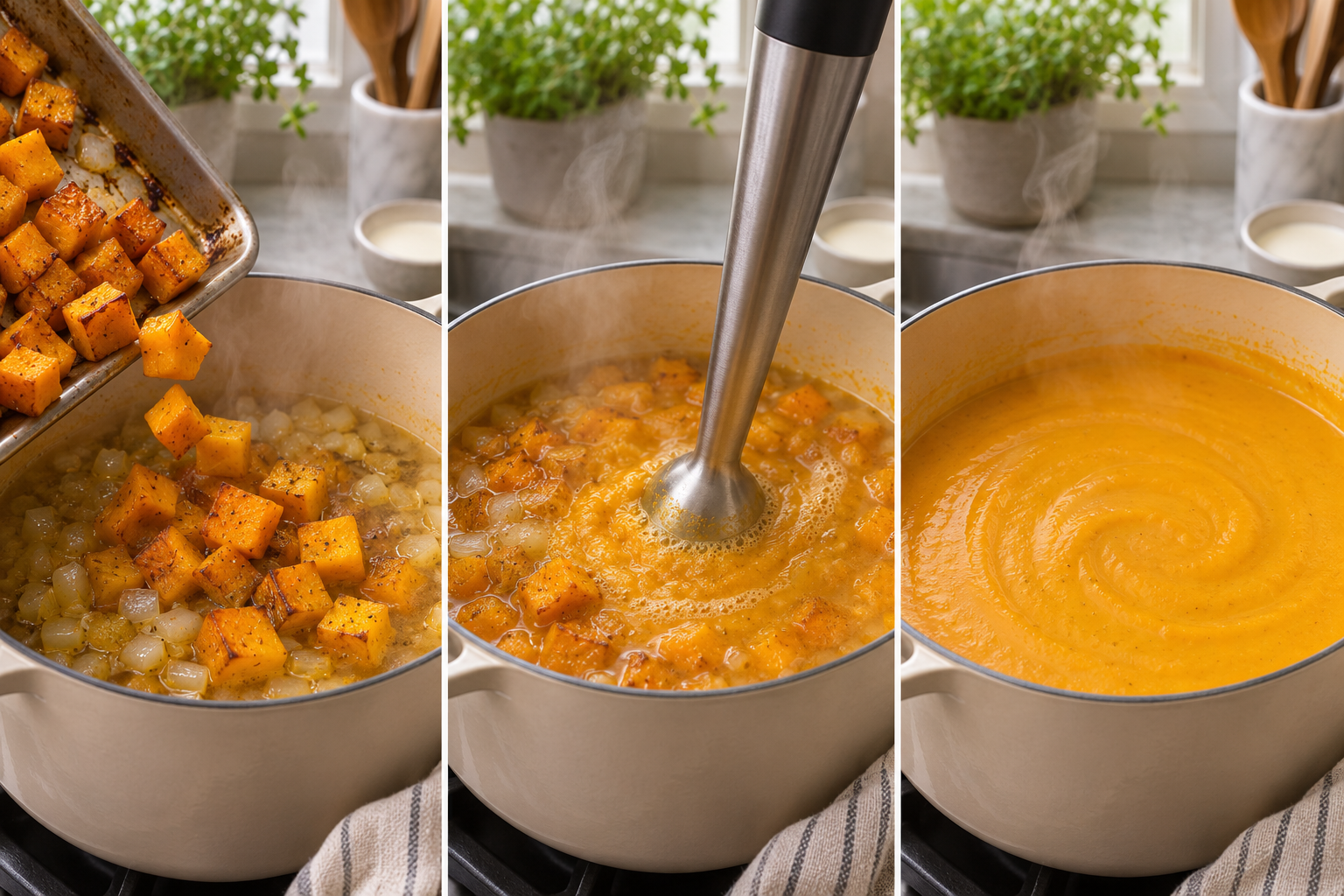
- Simmer. Add the roasted squash, nutmeg, and 3 cups of broth. Bring to a gentle simmer, then cook uncovered for 8 minutes. The squash should be very tender. Turn off the heat before blending.
- Blend carefully. Use an immersion blender until smooth, moving it around the pot to catch any pieces. For a countertop blender, work in small batches and vent the lid according to the blender’s instructions; hot liquid expands. Return the soup to the pot.
- Finish the texture. Stir in the milk and lemon juice, if using. Add more broth a little at a time until the soup is as thick or pourable as you like. Warm gently over low heat without boiling. Taste and add salt, pepper, or another small pinch of nutmeg.
- Serve. Ladle into warm bowls and finish with toasted pumpkin seeds, crisp sage, or a small swirl of milk. Serve right away while hot.
TIPS & FLAVOR VARIATIONS
- Roast until the edges color. A few browned spots add sweetness and a toasted flavor that a pale roast will miss.
- Give the cubes space. Crowding traps steam, so use two trays if the squash does not fit in one layer.
- Cut evenly. Uniform cubes finish at about the same time and are easier to roast without burning smaller pieces.
- Add broth gradually. Squash moisture varies; reserving some broth lets you control the final thickness.
- Blend off the heat. This reduces splashing and gives you better control, especially with an immersion blender.
- Season after blending. Blending can mute salt and spice, so taste the smooth soup before making final adjustments.
- Use a little acid. Lemon juice brightens the natural sweetness; add a teaspoon at a time so it stays subtle.
- Make it dairy-free. Use unsweetened oat milk or skip the milk and add broth. Olive oil keeps the texture pleasant.
- Add gentle heat. A pinch of cayenne or a small spoonful of grated fresh ginger gives the soup a warming finish.
WHAT MAKES THIS RECIPE SPECIAL
The soup has a short ingredient list, but each step contributes something useful. Roasting concentrates the squash; sautéing softens the onion and garlic; blending gives the bowl a smooth texture; and a little lemon keeps the sweetness from feeling heavy. The recipe also leaves room for personal preference without changing its basic method.
It is easy to scale for a family meal, and leftovers reheat well. Keep toppings separate until serving so toasted seeds stay crisp and sage does not soften in the container. A bowl can be a light lunch on its own or part of a larger dinner with bread, a salad, or a protein dish.
HOW TO SERVE CREAMY ROASTED BUTTERNUT SQUASH SOUP
Serve the soup hot in warmed bowls. Add toppings just before eating: toasted pumpkin seeds for crunch, a little chopped parsley for freshness, or a small swirl of milk for a decorative finish. A slice of crusty bread is useful for scooping and balances the soup’s soft texture.
SERVING IDEAS
- Serve with grilled cheese or a toasted cheese sandwich for a simple lunch.
- Add a side salad with crisp greens and a tangy dressing.
- Offer small cups as a starter before roast chicken or a vegetable tart.
- Top with white beans or cooked lentils for a more filling plant-based bowl.
- Set out toasted pumpkin seeds, croutons, and chopped herbs so everyone can finish their own bowl.
- Serve alongside a slice of hearty bread and a piece of fruit for an easy meal.
FLAVOR VARIATIONS AND SWAPS
Ginger squash soup: Add 1 tablespoon finely grated ginger with the garlic. Apple-roasted squash soup: Roast one peeled, cored apple with the squash for a gentle fruit note. Coconut curry: Replace milk with unsweetened coconut milk and add 1 teaspoon mild curry powder when sautéing the onion. Smoky paprika: Add 1/2 teaspoon smoked paprika to the squash before roasting. White bean blend: Add 1 cup rinsed cannellini beans with the broth for a thicker, more filling soup. Herb-forward: Finish with chopped sage or thyme and a little black pepper.
For gluten-free serving, check the broth label and choose toppings such as seeds instead of croutons. Keep substitutions unsweetened and add salt gradually because broths and toppings differ.

COMMON MYTHS & MISTAKES
Myth 1: Cream Is Required for a Creamy Soup
Why people believe it: Restaurant soups are often finished with cream, and the word creamy can sound like a dairy requirement. Why it is incorrect: Butternut squash becomes naturally smooth when fully cooked and blended. The squash itself supplies body, while a small amount of broth helps it move through the blender. Milk is a finishing option for softness, not the only source of a creamy texture. The correct approach: Roast the squash until completely tender, blend it thoroughly, and add liquid gradually. If you want a richer finish, stir in milk or oat milk after blending. If you prefer dairy-free soup, use broth and a teaspoon of olive oil. The result can still be velvety, provided the squash is cooked through and the blender is used long enough.
Myth 2: The Squash Must Be Simmered in the Pot from Raw
Why people believe it: Many soup recipes cook vegetables directly in broth, and that method is familiar and convenient. Why it is incorrect: Simmering is a useful cooking method, but it does not create the same browned edges and concentrated flavor as roasting. The finished soup may be pleasant, yet its flavor can taste lighter and less developed. The correct approach: Roast the squash first, allowing the edges to turn golden and the flesh to become tender. You do not need dark, burnt spots; look for light browning and a fork-tender center. Then simmer it briefly with the aromatics and broth. This two-stage method gives the soup more depth without adding complicated ingredients or a long simmer.
Myth 3: Boiling the Finished Soup Makes It Better
Why people believe it: A rolling boil seems like a way to make soup hotter and blend flavors quickly. Why it is incorrect: Once the soup is blended and milk has been added, vigorous boiling can make it splatter, scorch at the bottom, or develop a less pleasant texture. It is also unnecessary because the squash and broth are already cooked. The correct approach: Warm the finished soup over low heat, stirring gently, until steaming. If it has thickened during storage, loosen it with broth or water before reheating. Bring leftovers to a safe hot temperature and avoid repeatedly cooling and reheating the full pot. For practical leftovers guidance, see FoodSafety.gov’s cold-storage guidance.
IS THIS RECIPE HEALTHY?
Butternut squash provides carbohydrates and fiber, and this recipe uses olive oil and broth for its main cooking fats and liquid. The estimated nutrition below is for one-sixth of the recipe made with whole milk and without optional toppings. It is a general estimate, not a medical nutrition calculation; broth brands, squash size, and milk choice change the values. For a lighter bowl, use unsweetened oat milk or omit the milk. For more staying power, add beans or serve with a protein-rich side. Adjust salt to your taste and dietary needs.
FAQ – FREQUENTLY ASKED QUESTIONS
Can I make the soup ahead?
Yes. Prepare the soup, cool it promptly, and refrigerate it in a covered container. For the best texture, keep garnishes separate and add them when serving. Reheat only the amount you plan to eat, warming it gently on the stove and stirring often. If the soup thickens in the refrigerator, add a splash of broth or water. Follow your local food-safety guidance for cooling and refrigerated storage; FoodSafety.gov recommends refrigerating perishable food promptly and using shallow containers to cool leftovers faster.
Can I freeze roasted butternut squash soup?
The soup freezes well when it is made without dairy. Cool it, portion it into freezer-safe containers, and leave room for expansion. Thaw in the refrigerator, then warm gently and stir until smooth. If you froze a soup that already contains milk, it may look slightly separated after thawing; whisking or briefly blending can help restore a smooth appearance. Do not freeze the optional toppings with the soup. Label containers with the date and use within a reasonable period for good flavor and texture.
How do I make the soup thinner or thicker?
For a thinner soup, add warm broth a few tablespoons at a time after blending. Stir and check the texture before adding more; it is easy to thin the soup gradually. If it is too thin, simmer it uncovered over low heat for several minutes, stirring the bottom of the pot so it does not catch. You can also blend in a few more roasted squash cubes if you have them. Avoid adding lots of milk at once, because it changes the flavor as well as the thickness.
Can I use frozen butternut squash?
Yes. Frozen squash is convenient, though it may release extra moisture and may not brown as readily as fresh cubes. Roast it from frozen on a hot tray, spread in a single layer, and allow a few extra minutes if needed. If the tray becomes watery, drain excess liquid and continue roasting until the pieces are tender. You can also simmer frozen squash directly in the broth, but the flavor will be milder than the roast-first version. Taste and adjust lemon, salt, and pepper at the end.
Why does my soup taste bland?
Squash sweetness can mask seasoning, and low-sodium broth varies by brand. First add salt in small pinches and taste again. A little lemon juice can brighten the bowl, while black pepper or a small pinch of nutmeg adds warmth. If the soup tastes watery, simmer it uncovered to concentrate the flavor. If it tastes overly sweet, add a savory topping such as toasted seeds or a little sharp cheese. Change one thing at a time so you can tell which adjustment helps.
Do I need to peel the squash?
For this smooth soup, peeling gives the most consistent texture. The skin of mature butternut squash can be tough even after roasting, and blending it may leave small flecks. If you roast squash halves with the skin on, scoop the cooked flesh from the shell before adding it to the pot. A sharp peeler and a stable cutting board make peeling easier. If your squash is difficult to cut, microwave it briefly to soften the exterior, then let it cool enough to handle safely before slicing.
CONCLUSION
Creamy roasted butternut squash soup is a comforting meal built from simple ingredients and a useful roast-first technique. Give the squash space on the tray, blend it until smooth, and adjust the broth at the end for your preferred texture. Serve it warm with crisp seeds, bread, or a fresh salad, and save leftovers in the refrigerator or freezer for another easy meal.
Save this recipe for later.