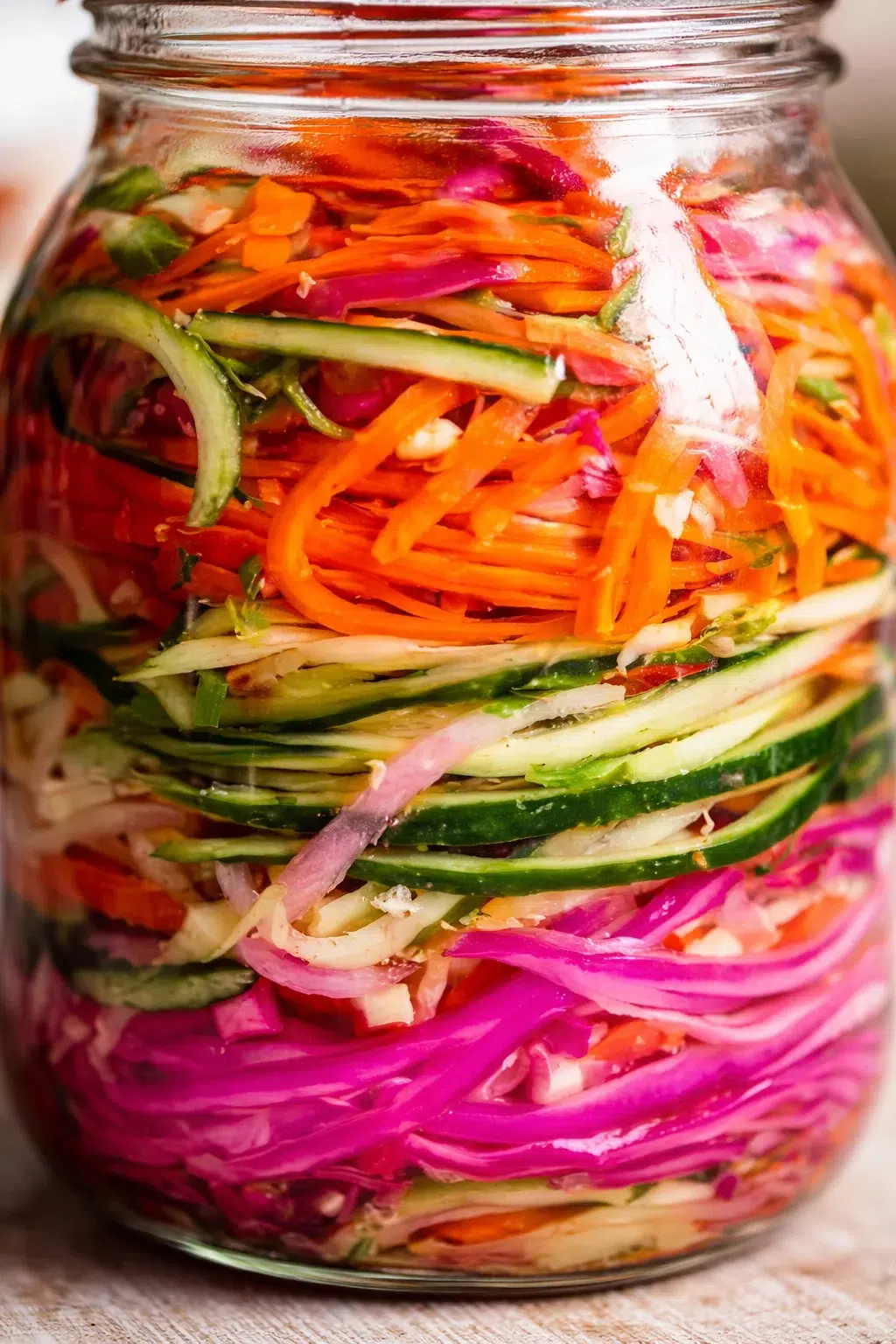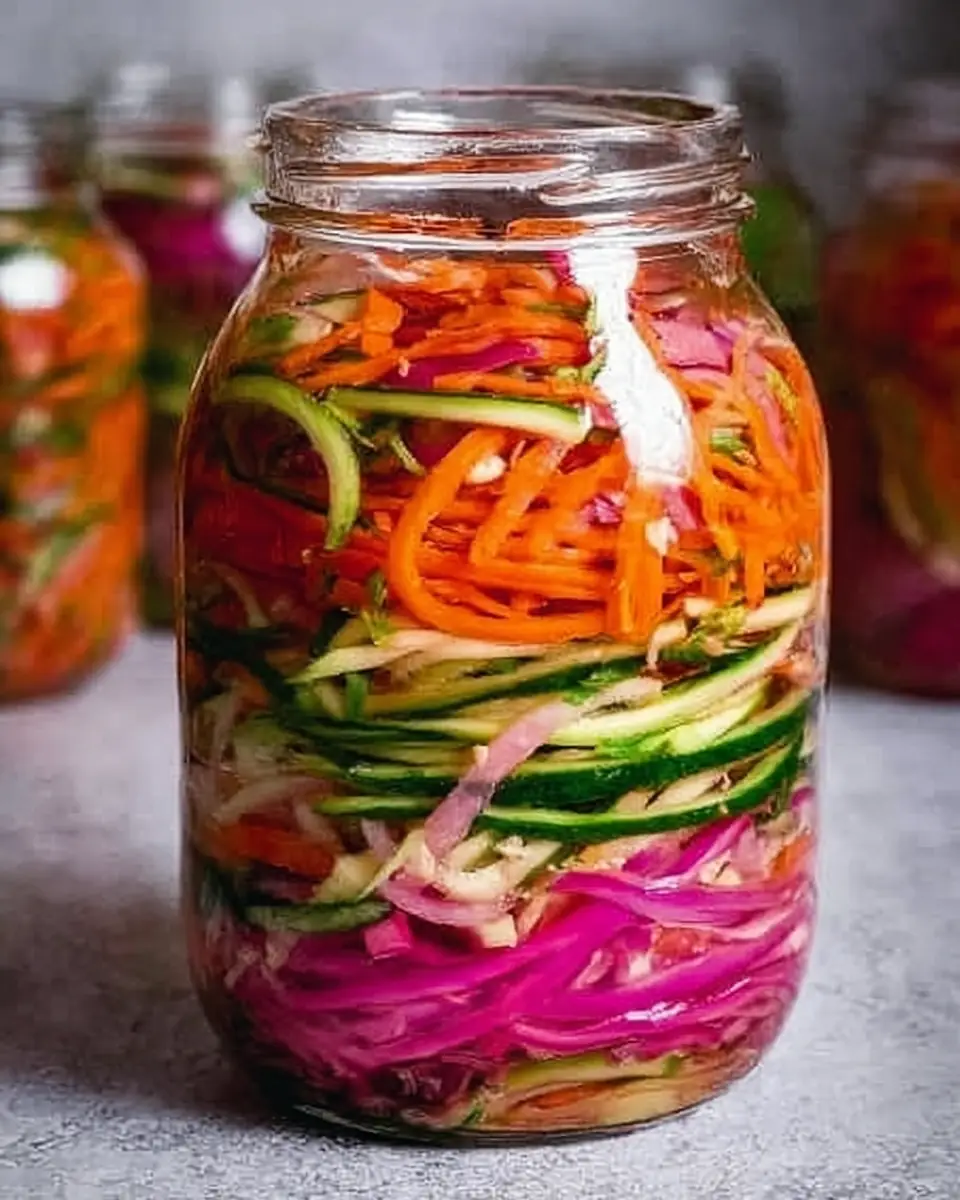
Quick Fridge Pickled Vegetables
Crunchy, tangy, and ready in minutes — these quick fridge pickled vegetables are the easiest way to transform fresh veggies into a bold, flavor-packed topping for any meal.

Have you ever opened your fridge and wondered how to keep your fresh vegetables crisp, flavorful, and exciting without spending hours in the kitchen? You’re not alone. Many home cooks look for quick, healthy ways to make the most of their produce before it goes to waste.
That’s exactly where this quick fridge pickled vegetables recipe comes in. With just a few simple ingredients and less than 20 minutes of prep, you can turn everyday vegetables into a crunchy, tangy, and vibrant topping that instantly upgrades your meals.
Unlike traditional pickling methods that take days, this easy approach delivers fresh flavor fast. Whether you’re adding them to sandwiches, salads, bowls, or enjoying them straight from the jar, these quick pickles are a simple and delicious way to bring more life to your cooking.
QUICK ANSWER
Quick fridge pickled vegetables are made by soaking fresh vegetables in a simple vinegar-based brine for a few hours. This fast pickling method creates crunchy, tangy veggies that are ready the same day and can be stored in the refrigerator for up to 2–3 weeks.
QUICK OVERVIEW
This quick fridge pickled vegetables recipe is a fast and easy way to preserve fresh veggies while adding bold flavor and crunch.
With just 17–20 minutes of prep, you can create a tangy, versatile topping that works perfectly for sandwiches, salads, bowls, and snacks. The vegetables stay crisp, colorful, and full of nutrients, making this recipe both practical and delicious.
It’s also highly customizable—use your favorite vegetables, adjust the seasoning, and create a version that fits your taste perfectly.
WHY YOU’LL LOVE THIS RECIPE
Why You’ll Love This Quick Fridge Pickled Vegetables Recipe
This quick fridge pickled vegetables recipe is all about making your life easier while adding bold flavor to your meals.
Fast and effortless: You only need about 20 minutes of prep, and the vegetables start developing flavor within hours—no long fermentation or canning required.
Crisp and flavorful: The quick brine keeps your veggies crunchy while adding a bright, tangy taste that instantly upgrades any dish.
Healthy and fresh: Made with simple ingredients, these pickled vegetables are low in calories and packed with vitamins and nutrients.
Perfect for meal prep: Make a jar in advance and enjoy it all week as a topping for salads, sandwiches, bowls, or snacks.
Highly customizable: Swap vegetables, adjust sweetness or acidity, and experiment with herbs and spices to match your taste.
Reduces food waste: A great way to use leftover vegetables and turn them into something delicious instead of throwing them away.
Why These Pickles Work
This recipe isn’t just for making pickles— it’s your shortcut to adding crunch, color, and bright tang to nearly every meal. With only 17 minutes of active time, ordinary veggies become a flavorful fridge-friendly condiment that keeps well for weeks. Here’s what makes it so great:
- Ridiculously quick: Just 7 minutes prep and 10 minutes to whip up the brine. Ready in a few hours, best after 24, so you can fit it in between errands or while dinner is baking.
- Minimal gear and cleanup: All you need is one mason jar and a saucepan. No fancy tools, no canning gear, just easy clean-up.
- Crunchy, vibrant results: The quick-brine method keeps the veggies crisp and colorful, making them perfect for salads, sandwiches, and grain bowls like this Chicken Quinoa Power Bowl, or snack platters.
- Healthy and low-calorie: Uses fresh carrots, cucumbers, radishes, and onion — packed with vitamins and fiber but low in calories. Easily adjustable for lower salt or sugar-free versions.
- Incredibly versatile: Stick to the 2:1 vinegar-to-water ratio and swap ingredients to capture your favorite flavors — from a tangy sandwich topper to a spicy side dish, or piled onto Dill Pickle Ranch Chicken Tacos.
- Great for meal prep and entertaining: Make several jars in advance to save time during the week, or place a jar on your cheese board for a fresh, palate-cleansing crowd pleaser.
- Reduces food waste: Use up shy veggies before they spoil by turning them into this tasty condiment that keeps for 2–3 weeks in the fridge.
- Flexible and forgiving: Scale the recipe up or down, reuse the brine for a second quick batch (just boil it first), and tweak the salt, sugar, or spices to your liking.
To sum it all up — you’ll love these fridge pickles because they’re fast, dependable, customizable, and bring big flavor to everyday meals with very little effort.
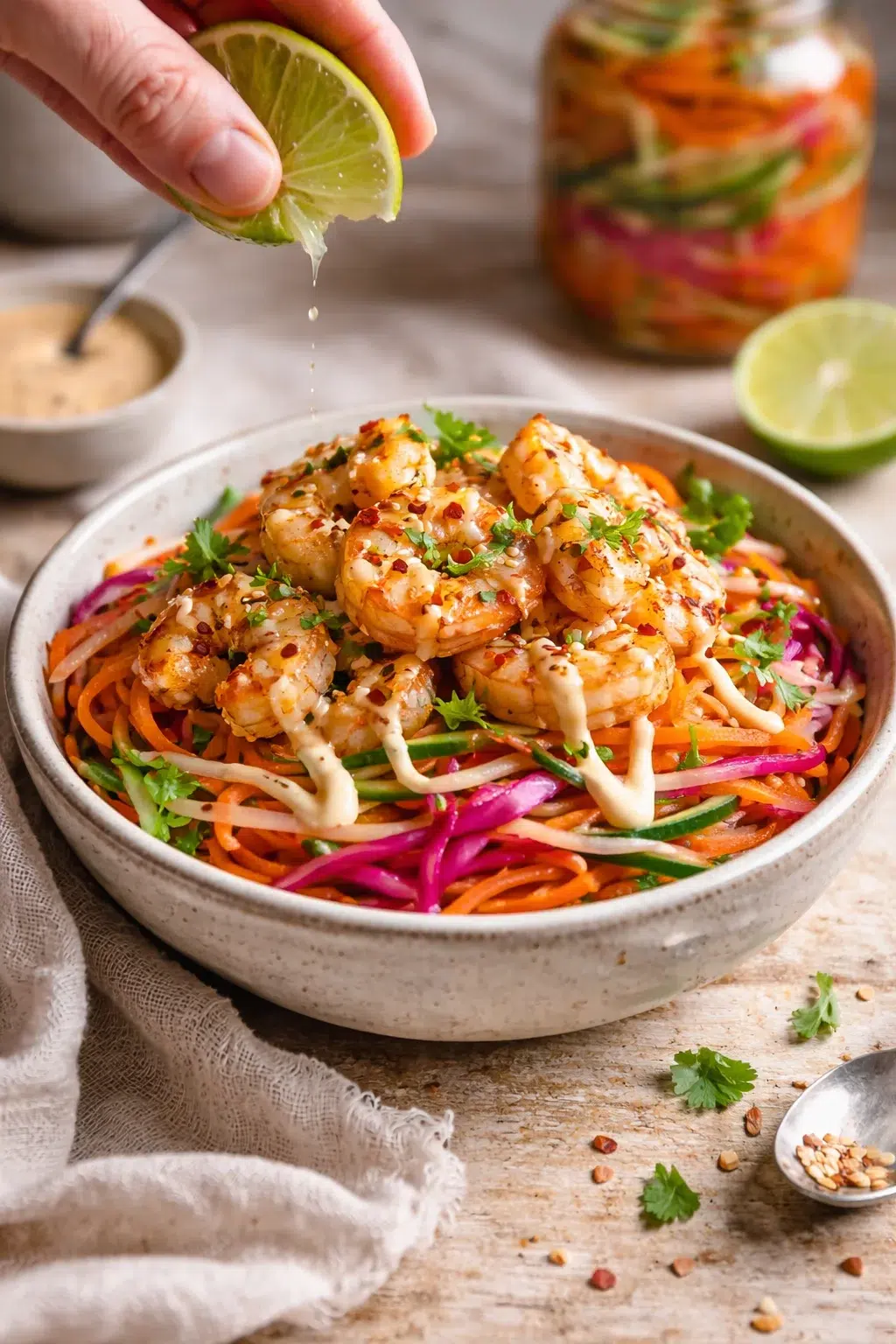
Essential Ingredients and Swaps
- 240 ml vinegar (For the pickling brine)
- 120 ml water (To dilute the vinegar)
- 1 clove garlic, minced (Minced for flavor)
- 2.5 g sea salt (Enhances flavor and preservation)
- 2 g sugar (Optional, balances acidity)
- 0.5 g dried oregano (Adds an aromatic herb note)
- 15 g chopped green onion (For a fresh, mild onion flavor)
- 60 g shredded carrots (Adds sweetness and crunch)
- 60 g shredded radish (For a peppery bite and crisp texture)
- 100 g English cucumber, cut into matchsticks (Cut into matchsticks for pickling)
- 75 g red onion, thinly sliced (Thinly sliced for mild onion flavor)
Step by Step Pickling Method
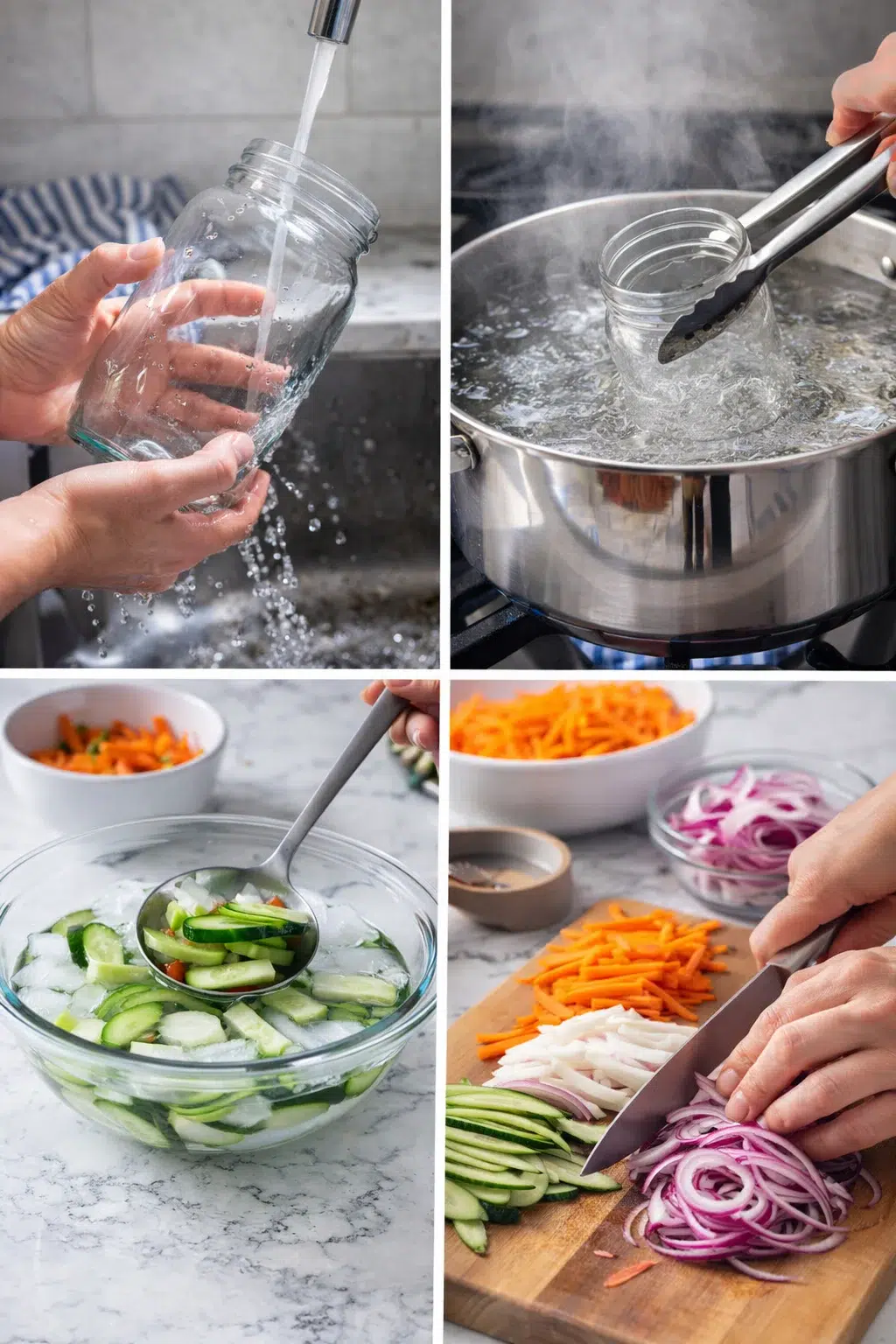
- Thoroughly wash and dry a medium‑large mason jar.
- (Optional) Sterilize the jar by boiling it in water for 10 minutes, then dry.
- If cucumbers or peppers are soft, soak them in ice water for 20–30 minutes, then drain.
- Cut carrots, radishes, cucumber, and red onion into matchsticks or thin slices.
- (Optional) For extra firmness, toss cut vegetables with 1/2–1 tsp kosher salt, let drain 10–15 minutes, then rinse and pat dry.
- In a medium saucepan combine 240 ml vinegar and 120 ml water and bring to a boil.
- Stir in 1 minced garlic clove, 15 g chopped green onion, 2.5 g sea salt, 0.5 g dried oregano, and 2 g sugar (optional) until dissolved; remove from heat and let the brine cool 5–10 minutes.
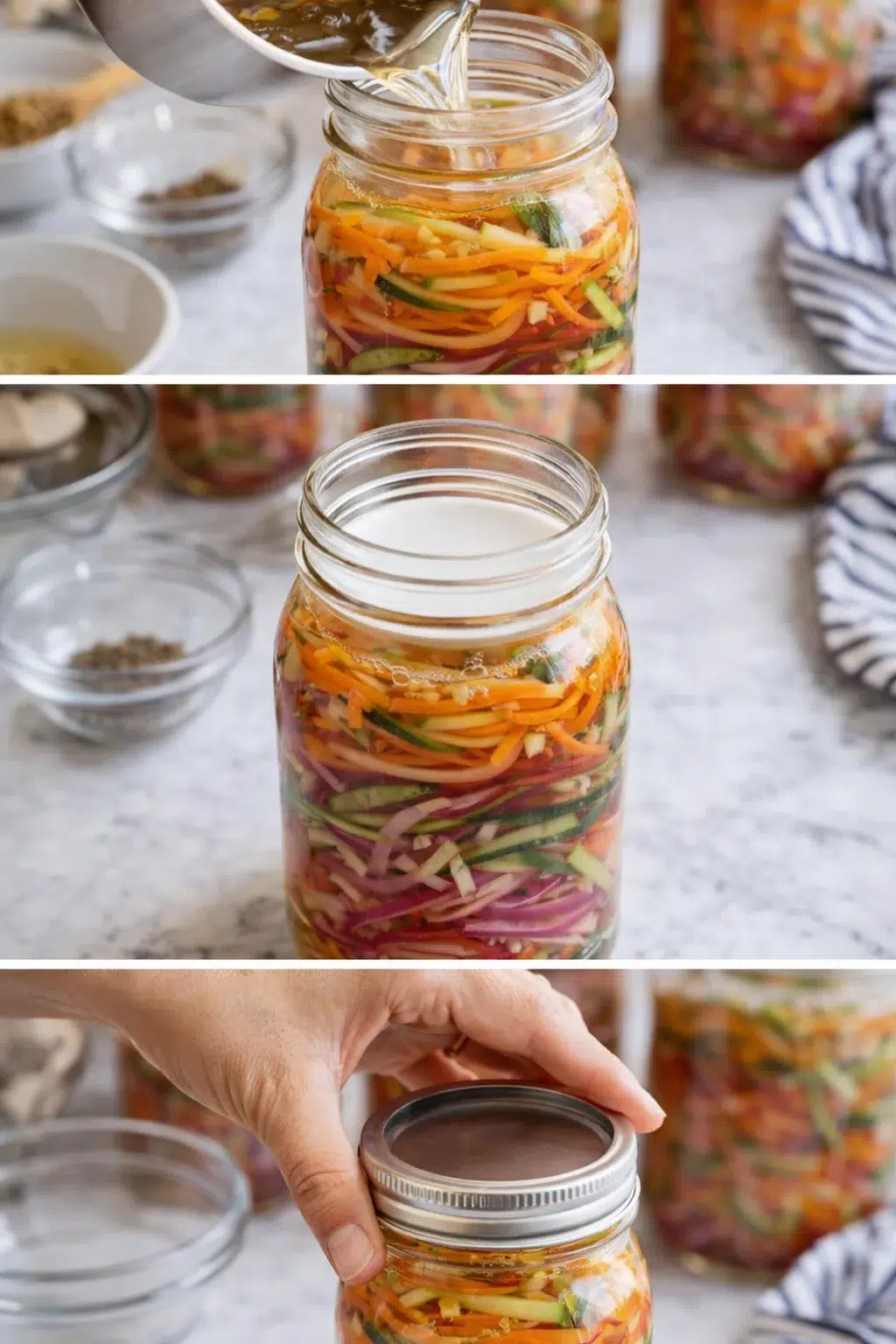
- Pack the prepared vegetables into the mason jar.
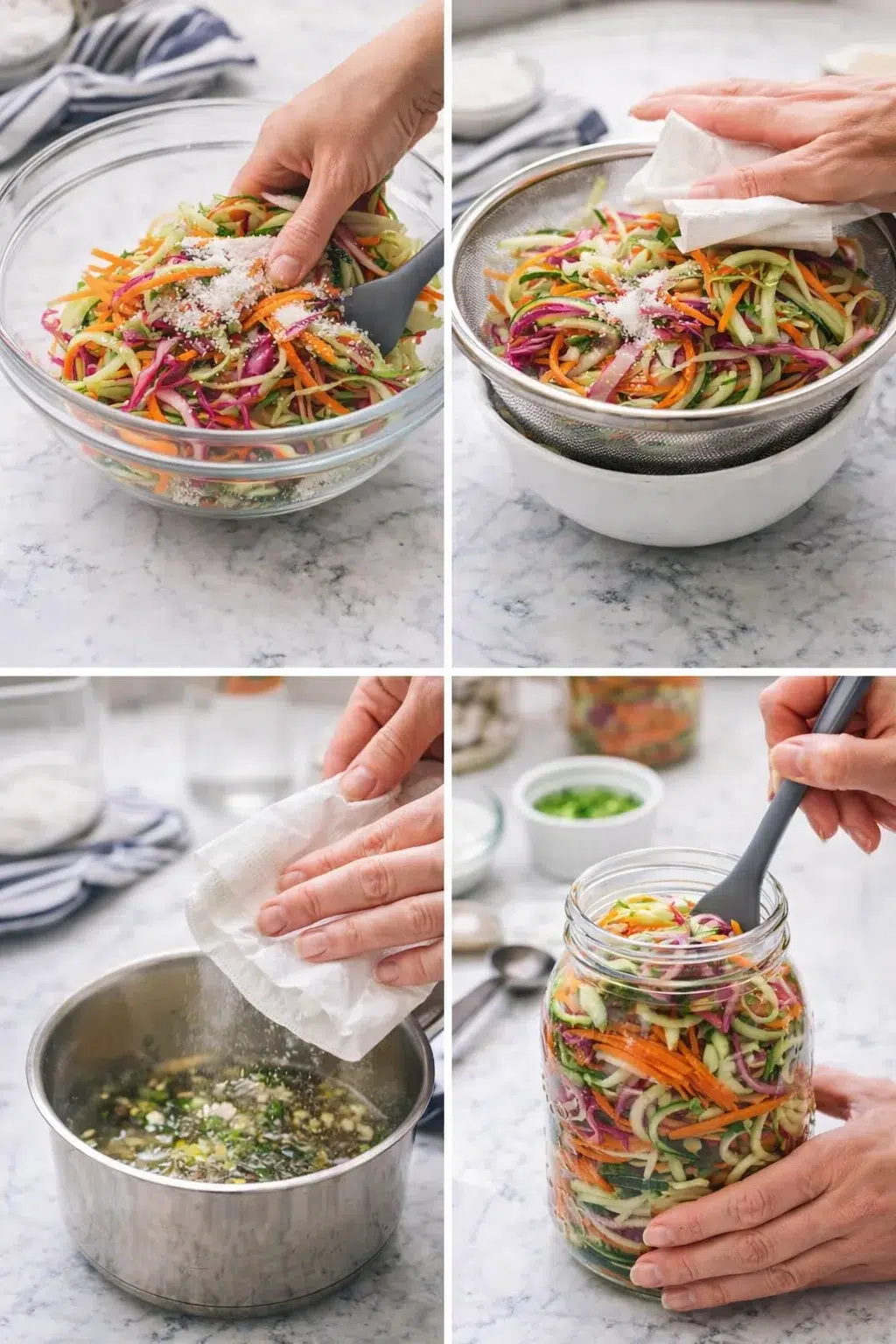
- Carefully pour the hot (not boiling) brine over the vegetables, ensuring they are fully submerged.
- If pieces float, weigh them down with a clean, food‑safe weight or small plate to keep everything submerged.
- Let the jar cool to room temperature, seal with the lid, and refrigerate; pickles are ready after a few hours and best after about 24 hours.
Pro Tips for Crisp Pickles
Little tweaks can make a big difference with quick pickles. Use these helpful tips below to keep your veggies crunchy, flavorful, and safe — and to fix any common hiccups:
- Keep vegetables firm: Start with the freshest, firmest produce you can find. If your cucumbers or peppers feel a bit soft, soak them in ice water for 20–30 minutes before slicing to boost crunch.
- Cut for the result you want: Thin slices or matchsticks pickle faster and soak up more brine flavor. Thicker chunks stay crunchier longer but take more time to get pickled taste. Pick your cut based on if you want quick flavor or more snap.
- Control salt carefully: If you pre-salt for extra firmness (a quick toss with 1/2–1 tsp kosher salt and 10–15 minute drain), rinse and pat dry the veggies before packing and use less salt in the brine so pickles don’t get too salty.
- Don’t pour scalding brine over delicate veg: Let the brine cool for 5–10 minutes before pouring it over delicate slices. Hot brine can make veggies mushy instead of crunchy.
- Weigh things down: If your veggies float, use a clean, food-safe weight or small plate so everything stays under the brine. This helps with even pickling and stops spoilage.
- Layer flavors intentionally: Toss in whole spices (peppercorns, mustard seeds), fresh herbs (dill, thyme), or aromatics (ginger, bay leaf) for extra flavor. Start small — you can always add more next time!
- Label jars: Always mark your jars with the date you made them. Quick fridge pickles are best eaten within 2–3 weeks, and they’re crispiest in the first week.
- Reuse brine safely: You can reuse the brine for another batch by bringing it back to a boil first to refresh its acidity and kill any microbes.
Common pitfalls and how to avoid them
- Uneven pickling: Happens when jars are too crowded or pieces float. Pack loosely so brine flows around well and use a weight if veggies float.
- Soggy vegetables: Often because of pouring piping-hot brine on delicate slices or using limp produce. Always cool the brine and pick crisp veggies.
- Off flavors or spoilage: Can be from unclean jars or double-dipping utensils. Always use clean jars, lids, and utensils, and don’t touch pickles with fingers or used forks.
Follow these tips and you’ll get crunchy, tasty fridge pickles every time — no fuss, all flavor.
These tangy veggies are so versatile and can brighten almost any meal!
- Sandwich & Wrap Enhancer: Add a crisp, tangy layer to sandwiches, burgers, or wraps — they’re amazing on pulled pork sandwiches!
- Salad Topper: Chop finely and sprinkle over green salads, grain bowls, or even potato salad for a welcome zing.
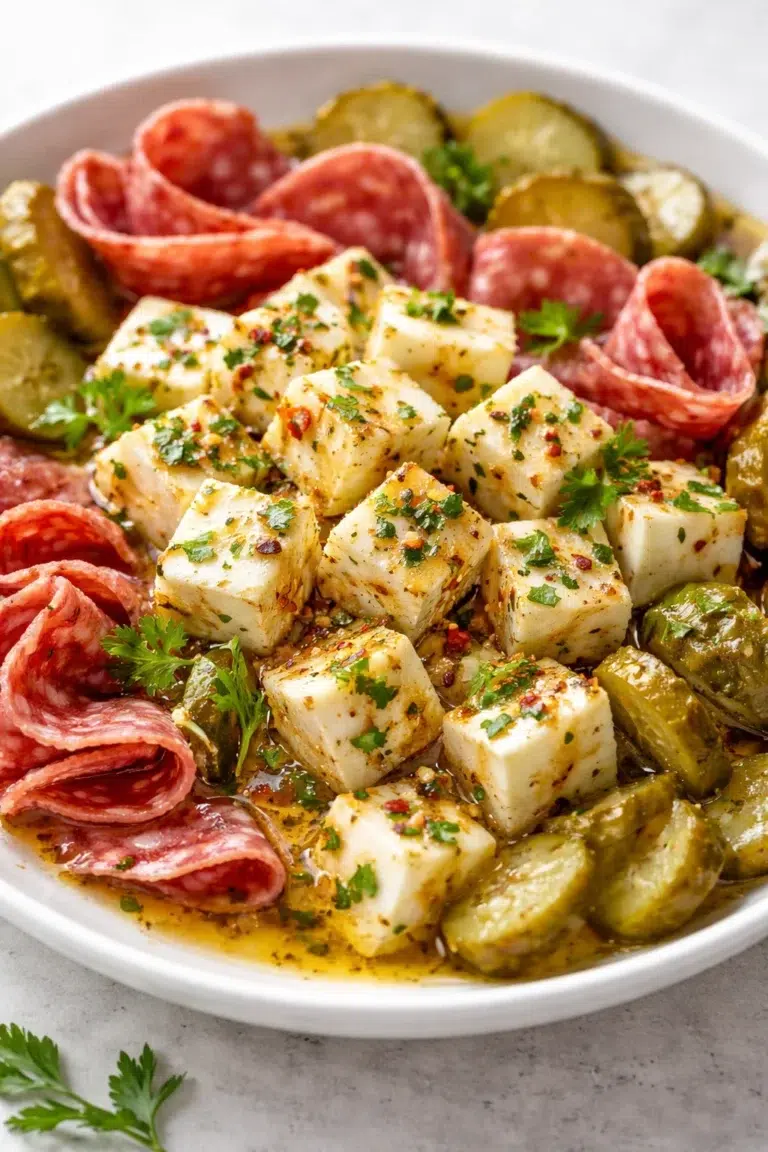
- Appetizer Platter: Offer alongside cheeses, crackers, and charcuterie (and playful bites like Mini ‘Carrot’ Peppers) for a colorful, palate-cleansing treat.
- Side Dish Star: Serve as a refreshing side with grilled meats, roasted chicken (try this Sheet Pan Chicken and Sweet Potato Meal Prep), or fish.
- Snack Attack: Eat straight from the jar for a crunchy, low-calorie snack. Pro tip: Try them on creamy avocado toast for extra magic!
Even a simple Quick Fridge Pickled Vegetables Recipe can sometimes go sideways. Here are common mistakes and how to avoid them:
- Not Submerging Vegetables: If your veggies aren’t fully covered by brine, they won’t pickle evenly and may spoil faster. Heads up: Uneven acid exposure can cause off textures, flavors, or even mold.
- Using Stale Vegetables: Always pick fresh, firm produce for the best crunch and taste. Old or bruised veggies lead to soggy pickles.
- Not Cooling the Brine Enough: Pouring boiling-hot brine on delicate veggies cooks them, making them soft instead of crisp. Cooling 5 to 10 minutes helps keep crunch.
- Overcrowding the Jar: Stuffing too many veggies in prevents proper brine flow and causes uneven pickling.
- Not Washing Jar Properly: Any leftover food or soap can mess with flavor and shelf life.
Flavor Twists and Substitutions
Want to tweak this tangy veggie snack to make it healthier or fit your taste? Here are some great ideas:
- Low-Sodium: Cut sea salt to 1/4 tsp or leave it out completely. The vinegar gives plenty of flavor on its own.
- Sugar-Free: Skip the sugar totally. The carrots add enough natural sweetness for most palates.
- Spice It Up: Add red pepper flakes for a little heat or some fresh ginger slices for a gentle anti-inflammatory kick. For a similar spicy, tangy profile, check out this Korean Cucumber Salad.
- Herbal Infusion: Swap dried oregano for fresh dill, thyme, or bay leaves to shift the flavor notes.
- Vinegar Variety: Try apple cider vinegar for gut-friendly benefits or rice wine vinegar for a softer, sweeter brine—similar to the dressing in this Easy California Roll Cucumber Salad.
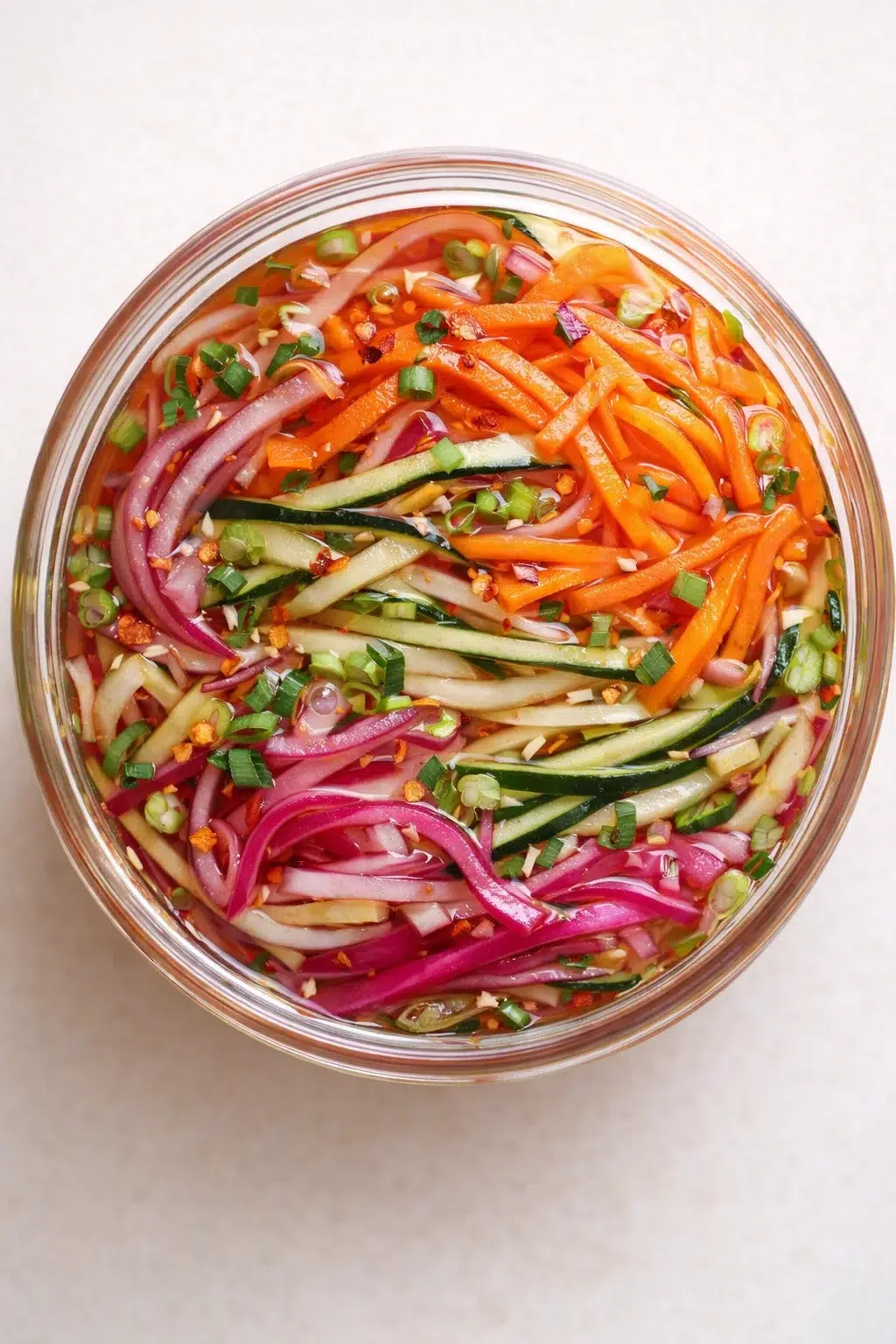
Storage and Freshness Tips
Keeping your quick pickles fresh is simple with these tips:
- Refrigeration is Key: Always keep your fridge pickled vegetables cold. Unlike traditional canned pickles, these aren’t shelf-stable at room temperature.
- Airtight Seal: Make sure your jar lid closes tightly to block air, which can spoil your pickles faster.
- Optimal Freshness: Eat your pickles within 2-3 weeks for best texture and flavor. They may last longer but won’t stay as crunchy.
- Brine Longevity: Don’t toss that brine! You can boil it and use it again for a quick second batch, or whisk a splash into a simple vinaigrette—delicious on our Strawberry Feta Salad.
Pickling Questions Answered
Q1: How long do quick fridge pickled vegetables last?
A1: Stored in a sealed jar in the fridge, they stay fresh and delicious for about 2-3 weeks. For the best crunch, enjoy them within the first week.
Q2: Can I use other vegetables for this fast pickling method?
A2: Definitely! This recipe is super flexible. Try green beans, cauliflower, bell peppers, zucchini, or asparagus. Just cut them into similar-sized pieces for even pickling.
Q3: Why is it called “fridge” pickled?
A3: Because unlike classic canning that creates shelf-stable jars through long heat processing, these veggies are quickly pickled and must be kept refrigerated to stay fresh and crisp.
Q4: Can I make a larger batch?
A4: Yes! Just keep the vinegar-to-water ratio 2:1 and have enough jars ready. Scale it up or down depending on how many pickles you want.
Q5: What if my vegetables aren’t fully submerged in the brine?
A5: Full submersion is super important for even pickling and to prevent mold. If veggies float, use a clean weight or small plate to push them down under the brine.