Fermented Carrot Salad (Easy Probiotic Recipe with Big Flavor)
There’s something incredibly satisfying about turning simple ingredients into something bold, tangy, and alive with flavor. That’s exactly what this fermented carrot salad does.
With just a handful of pantry staples, you can create a probiotic-rich, crunchy salad that transforms everyday meals. The natural fermentation process gives these carrots a bright, slightly spicy tang while boosting their nutritional value.
This fermented carrots recipe is surprisingly easy. You’ll spend about 20 minutes prepping, then let time do the work over 4 to 6 days. The result? A vibrant, gut-friendly condiment that adds texture and flavor to tacos, bowls, burgers, or even simple roasted vegetables.
If you’ve never tried fermenting vegetables at home, this is the perfect place to start.

QUICK ANSWER
Fermented carrot salad is a probiotic-rich dish made by fermenting carrots in a salty brine for several days. This easy fermented carrots recipe creates a tangy, crunchy salad that supports gut health and adds bold flavor to tacos, bowls, and everyday meals.
QUICK OVERVIEW
This fermented carrot salad is a simple, gut-friendly recipe made with shaved carrots, salt, and spices. After 4–6 days of fermentation, it develops a bright tangy flavor and stays fresh in the fridge for weeks.
It’s perfect as a crunchy side, topping, or probiotic boost for everyday meals.
Big Flavor, Little Effort
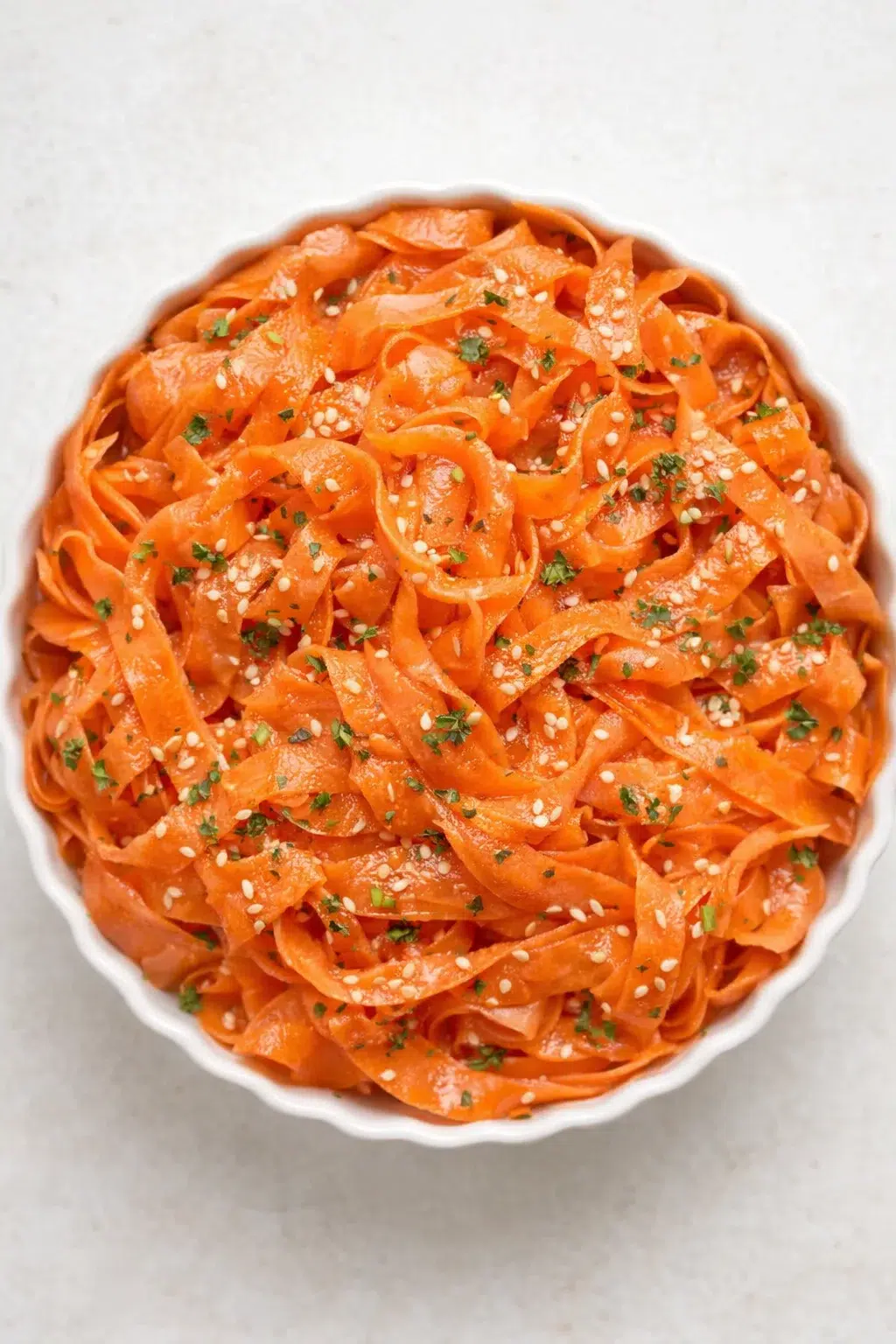
This fermented shaved carrot salad is a real game changer for anyone juggling busy days but wanting big flavor with little effort. It delivers bright, tangy goodness, a satisfyingly crunchy texture, and it lasts beautifully in the fridge for weeks—so it’s practical as well as delicious.
- Flavor in two layers: The lacto-fermentation provides a clean, tangy base, while garlic-infused oil, coriander, and smoked paprika bring warmth and cozy aroma. A touch of maple syrup adds gentle sweetness if you want it.
- Crunchy and colorful: Thin carrot ribbons add texture and look gorgeous on any plate or piled high on tacos, burgers, salads, or bowls (like these BBQ Chicken & Roasted Sweet Potato Bowls). A vegetable peeler or mandoline makes slicing effortless.
- Good for your gut: Fermentation introduces beneficial lactobacilli, helping digestion and nutrient absorption without extra work.
- Super versatile: Enjoy as a salad side, crunchy mix-in, or zesty topping for sandwiches, wraps, poke bowls, grilled meats, eggs, or creamy avocado. It pairs especially well with richer, fattier foods.
- Easy and mostly hands-off: Only about 20 minutes active prep, then 4–6 days fermenting at room temp. Great for make-ahead meal prep with plenty to share or stash away.
- Better with time: Flavors deepen after refrigeration and it keeps for weeks or even months when stored well—perfect for batch cooking.
- Customizable: Boost spice with cayenne or chili flakes, swap sweetness for maple or brown sugar, or brighten with fresh herbs like dill or parsley to fit your family’s tastes.
If you’re into crunchy, tangy condiments that uplift nutrition and flavor, this fermented carrot salad is a real keeper. Try it on tacos (like these Dill Pickle Ranch Smash Chicken Tacos) or burgers first—you’ll see why it’s a favorite to come back to.
- Versatile: Pairs beautifully with grilled meats, fish, or as a crunchy boost for salads, burgers, and tacos.
- Loaded with probiotics: Fermentation builds up good bacteria helping balance your gut.
- Boosts nutrients: Lacto-fermentation raises vitamin content and makes carrots easier on digestion.
- Great for digestion: Friendly bacteria help break down food better and guard against harmful microbes.
- Tantalizing tang: Natural lactic acid from fermentation gives a bright, slightly spicy zing to brighten any dish.

Related Fermented Veggies
- Fermented Beets + Cabbage (Probiotic Rich Beetroot Sauerkraut)
- Fermented Cucumbers (Dill Pickles) No Vinegar
- Fermented Cauliflower Recipe
- Guide To Fermented Tomatoes
- Fermented Zucchini And Cucumbers
- Fermented Peppers And Tomatoes
Ingredient Checklist
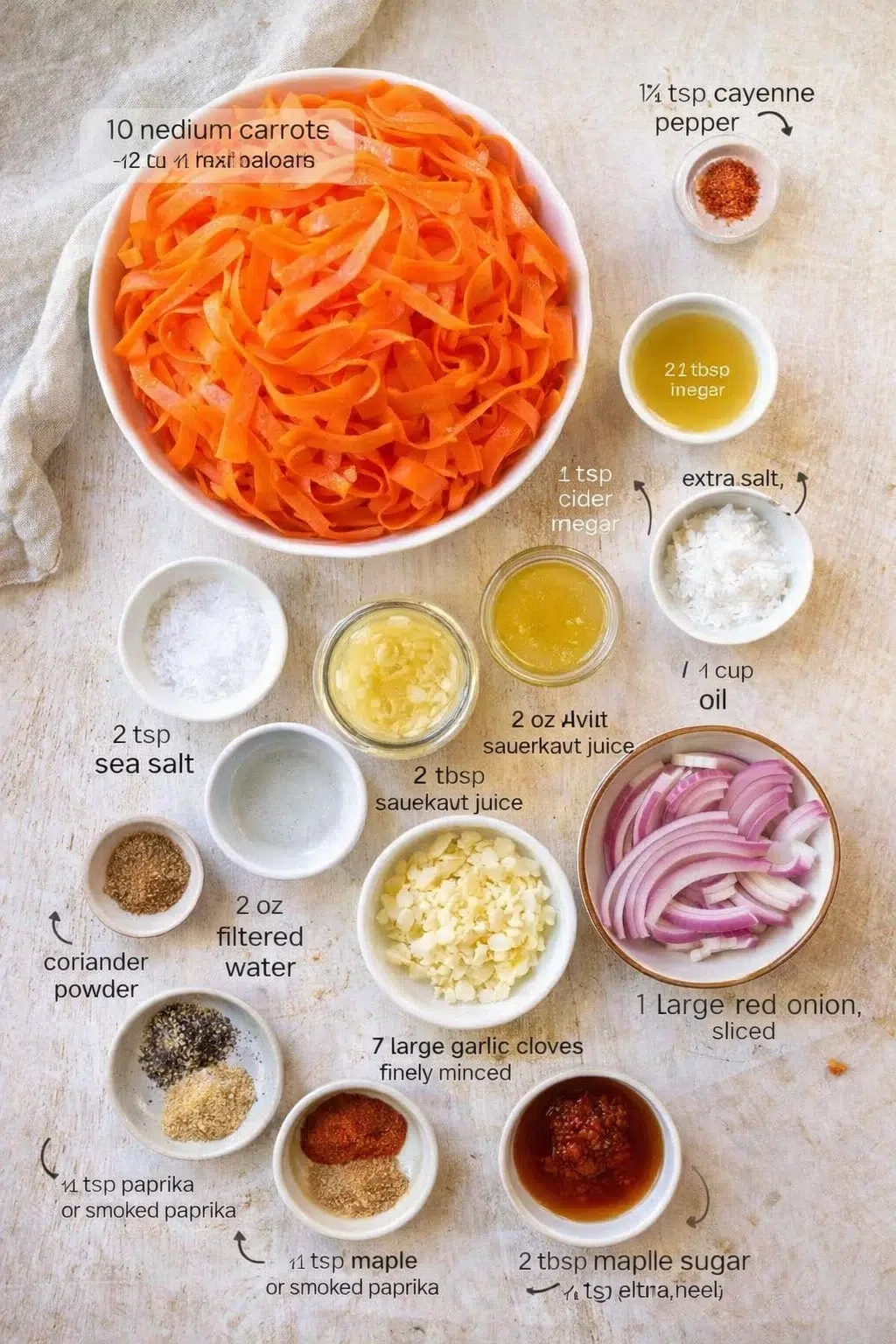
- 10 medium carrots — shaved into ribbons (about 800 grams)
- 2 tsp sea salt
- 2 tbsp sauerkraut juice — from raw fermented cabbage, optional starter
- 2 oz filtered water
- 1 large red onion, sliced — or 2 medium onions
- 7 large garlic cloves — finely minced
- ¼ cup oil — olive, avocado, or grapeseed
- 2 tsp coriander powder
- ½ tsp freshly ground black pepper
- 1 tsp paprika or smoked paprika
- 2 tbsp maple sugar or syrup
- ⅓ tsp cayenne pepper — for a little heat
- 2 tbsp apple cider vinegar — adds fresh tang
- Extra salt, if needed
How to Ferment and Assemble
- Shave carrots into long thin ribbons with a vegetable peeler or mandoline and place them in a large bowl.
- Dissolve 2 tsp sea salt in 2 oz filtered water and stir in about 2 tbsp sauerkraut juice if using.
- Pour the brine over the shaved carrots and gently massage with clean hands to coat all ribbons.
- Pack the carrots tightly into a clean jar, pressing down to release juices, and pour remaining brine over to fully submerge them.
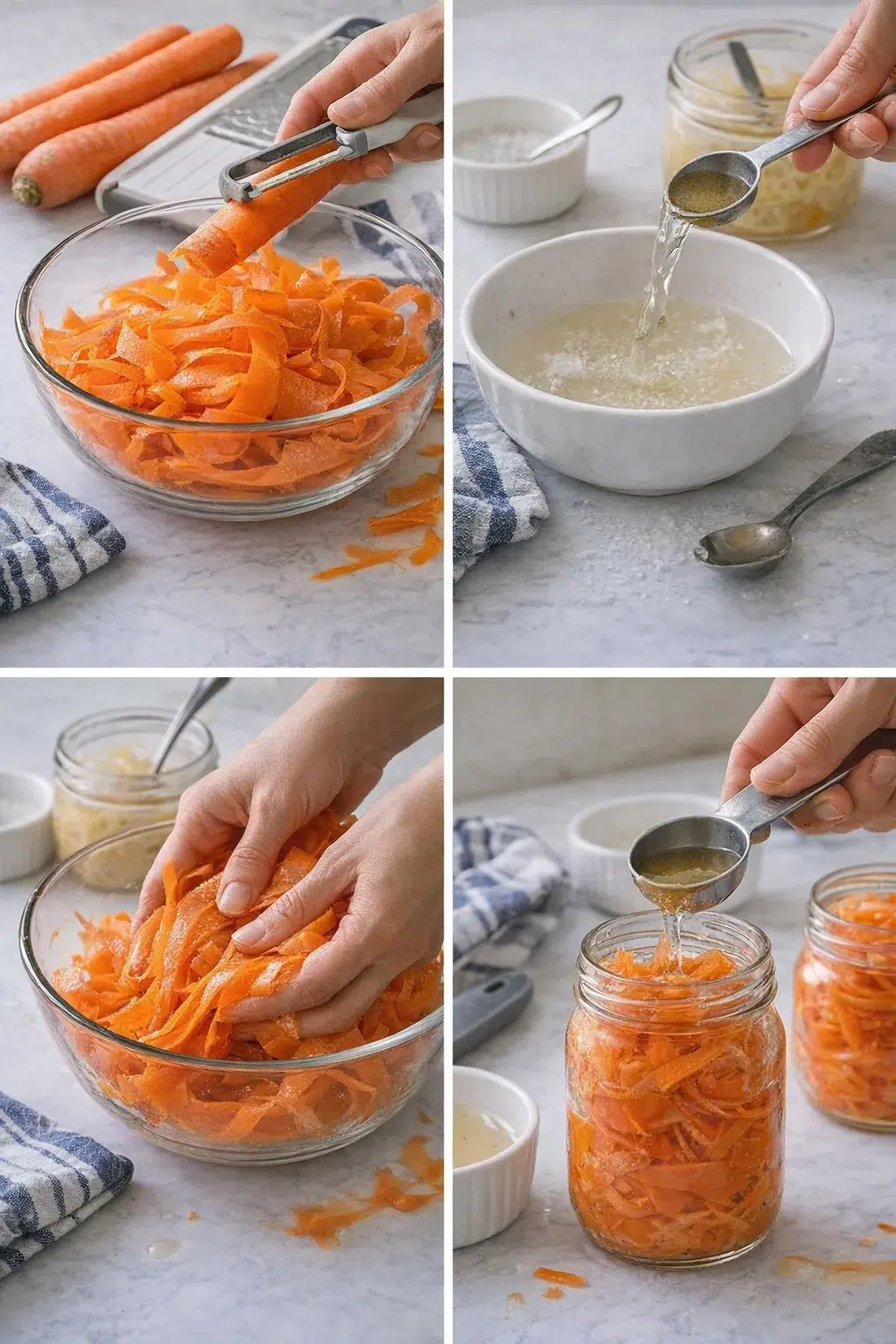
- Place a weight on top if needed to keep the carrots submerged.
- Cover the jar with a clean cloth or coffee filter and secure with a rubber band (or use a lid and burp daily if sealed).
- Leave the jar to ferment at room temperature, start tasting from day 3, and ferment about 4–6 days until pleasantly sour.
- Check the ferment daily; skim off any white film (kahm yeast) and remove exposed vegetable bits; discard the batch if you see fuzzy colored mold or foul smells.

- Once the carrots have the desired flavor, strain them through a colander and transfer to a mixing bowl.
- Warm 1/4 to 1/3 cup oil in a skillet over medium heat.
- Add sliced red onion and sauté until golden brown and fragrant.
- Remove the onions with tongs and strain the flavored oil into a small bowl, keeping or discarding the onions as desired.
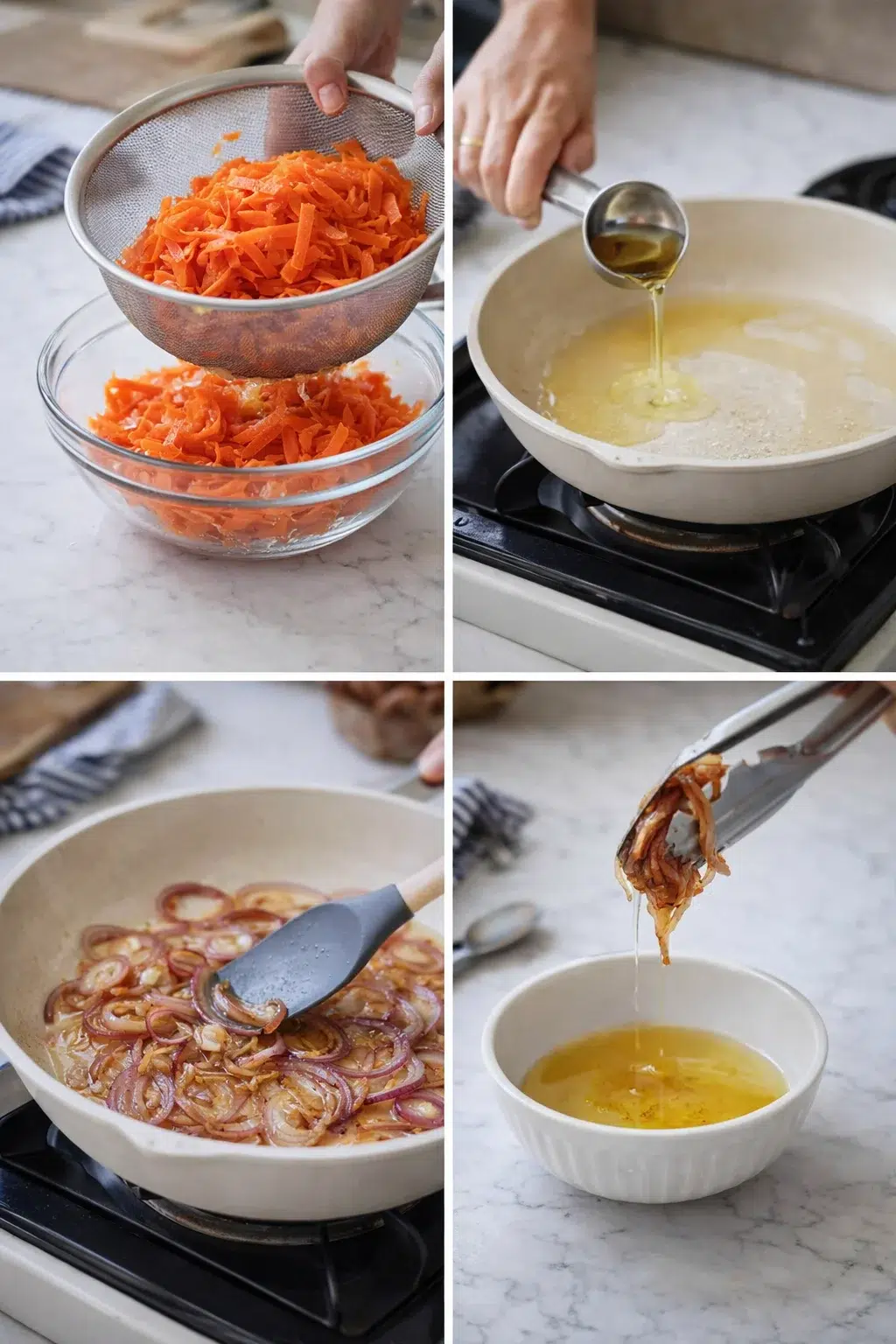
- Add minced garlic to the same skillet and sauté about 1 minute, then remove from heat and let the oil cool completely.
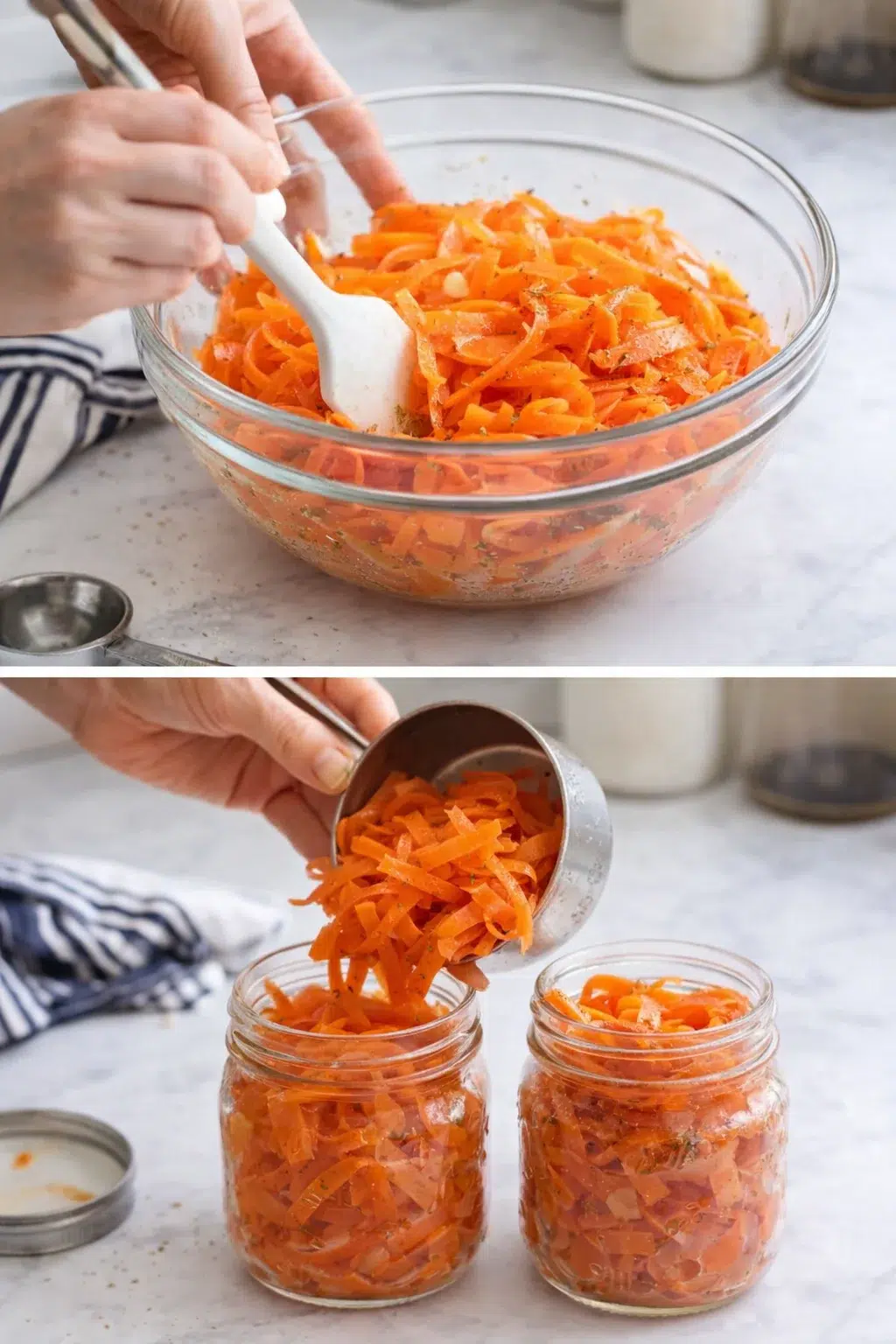
- Pour the strained, cooled garlic-infused oil over the fermented carrots.
- Add coriander powder, paprika or smoked paprika, ground black pepper, and cayenne pepper if using.
- Stir in maple syrup or brown sugar for a touch of sweetness.

- Gently toss everything until every carrot ribbon is evenly coated.
- Transfer the dressed carrot salad into jars, seal, and refrigerate for at least 12 hours before serving.
Tips for Smooth Ferments
Here’s some friendly advice to help your fermentation go smoothly and avoid common pitfalls.
- Measure your salt carefully, ideally with a kitchen scale. Two teaspoons equals about 10–12 grams and works perfectly here. Salt is your best friend—it keeps harmful bacteria away and lets the good guys thrive.
- Pay attention to room temperature. Fermentation speeds up in warmer kitchens (70–75°F / 21–24°C), often ready in 3–4 days. Cooler spots might take 5 to 7+ days. For another example of how temperature influences fermentation, see our Same Day Sourdough Focaccia.
- Keep the carrots submerged. Press them down firmly and use a fermentation weight or a smaller jar inside your jar to keep them underwater. Mold can grow if vegetables are exposed to air.
- Always use clean jars and filtered water. Tap water with chlorine can stall fermentation. Use raw, unpasteurized sauerkraut juice if using a starter to ensure live bacteria.
- White film (kahm yeast) is normal—skim it off. If you see colored mold or fuzz, toss the batch.
- Let your garlic-onion oil cool fully before mixing. Hot oil can kill the probiotics and soften your carrot ribbons too much.
- Slice safely: Use a vegetable peeler or mandoline with a cut-resistant glove. The peeler might be slower but safer for thin, even ribbons.
- If fermenting with a sealed lid, “burp” it daily. Open the jar briefly to release gas and prevent overflow.
- After fermentation, adjust flavors as needed: Add extra herbs, sweetener, chili, or vinegar to get just the right balance. Add delicate herbs last to keep their color bright. For spicy-tangy inspiration, check out this Korean Cucumber Salad.
- Store refrigerated once happy with flavor. This slows fermentation and lets the flavors blend beautifully. Let the salad rest at least 12 hours after dressing before serving. Always use clean utensils to help it last longer.
Flavor Swaps and Add-Ins
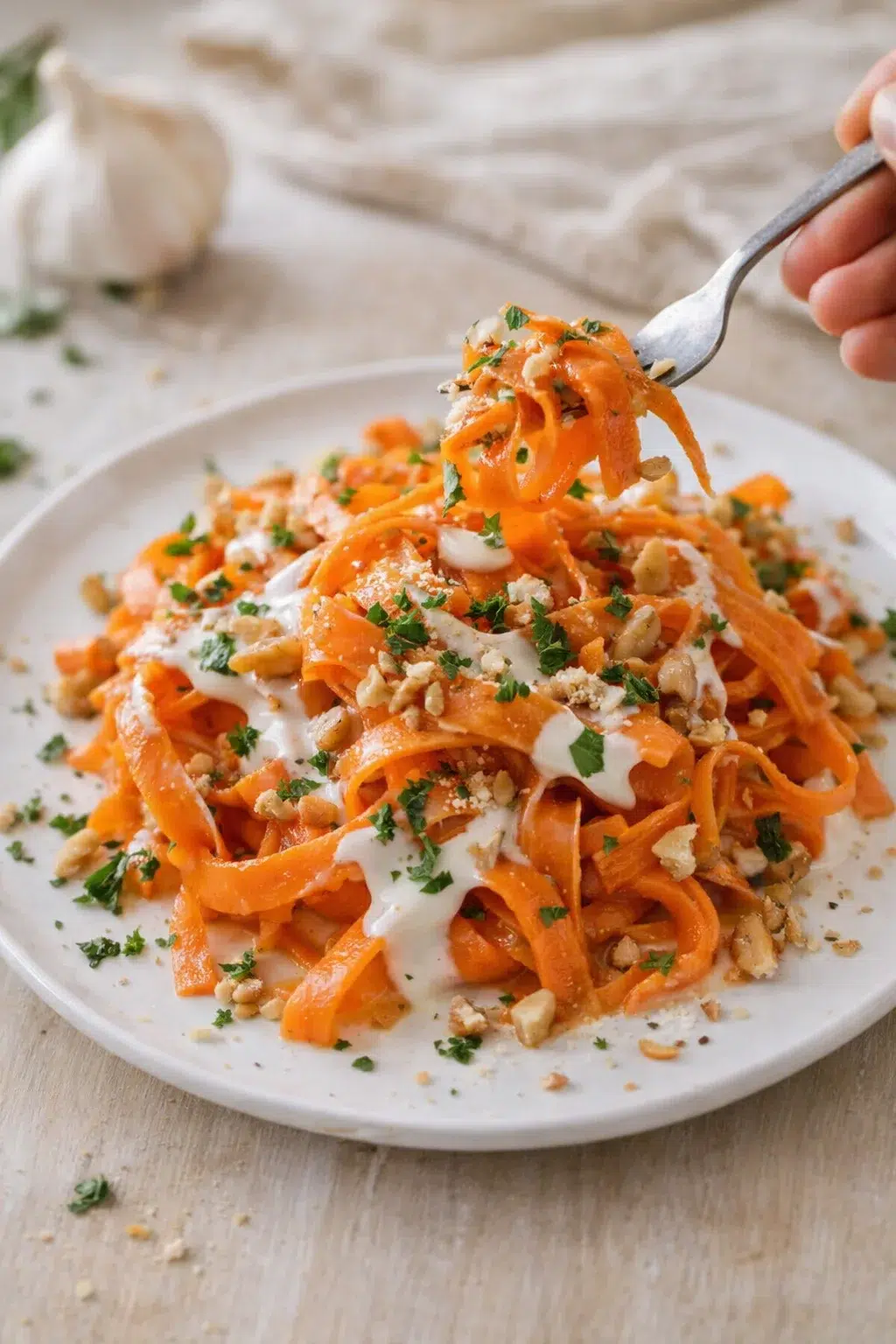
- Make it your own by adding extra spice like fresh ginger, more garlic, or chili flakes right into the ferment.
- Fresh herbs like dill or parsley brighten and freshen the flavor beautifully.
- Try swapping in other fermentable veggies like beets (for pairing ideas, see beet salad with feta and cucumbers) or turnips for color and crunchy texture changes.
- Customize sweetness, heat, or acidity to perfectly complement your main dishes. This salad is super flexible while keeping those great gut-friendly benefits.
- Feel free to customize by adding ginger, extra garlic, or chili flakes right into the ferment for a spicy kick.
- Add herbs like dill or parsley to brighten up the flavor profile.
- Swap or add other fermentable veggies like beets or turnips for color and texture variety.
- Adjust sweetness, spice, or acidity to fit your taste—especially if you’re pairing it with Lemon Garlic Chicken Zoodles. This salad stays gut-friendly no matter your tweaks.
Storing and Serving Suggestions
Keep your fermented carrot salad in sealed jars in the fridge to slow fermentation and preserve fresh, lively flavors.
It stays great for several weeks, with the taste mellowing and deepening over time.
Serve it as a bright side salad, toss it into mixed greens for extra crunch—try it in a beet salad with spinach and honey-mustard lemon dressing—or pile on sandwiches, tacos, burgers, or bowls to add gut-healthy probiotics and vibrant flavor.

Common Questions About Fermented Carrots
How long do fermented carrots last?
Fermented carrots typically last 1 to 2 months in the fridge, and even longer if properly stored. Always check for a pleasant sour smell and firm texture before consuming.
Are fermented carrots good for gut health?
Yes! Lacto-fermentation promotes beneficial bacteria that support digestion, improve nutrient absorption, and help balance gut health.
How can I tell if my ferment is safe?
A healthy ferment smells tangy and fresh. If you notice foul odors, slimy texture, or colored mold (blue, green, black), discard it immediately.
What is kahm yeast? Should I worry?
Kahm yeast is a harmless white film that can appear on the surface. Simply skim it off and continue fermenting if everything else looks and smells fine.
Do I need a starter like sauerkraut juice?
No, it’s optional. Natural bacteria on the carrots are enough, but a starter can speed up fermentation and improve consistency.
How long should I ferment carrots?
Most batches take 4 to 6 days at room temperature. Start tasting from day 3 and refrigerate once the flavor is pleasantly tangy.
Healthy Benefits
This fermented carrot salad isn’t just flavorful—it’s packed with nutritional benefits that make it a smart addition to your meals.
Rich in probiotics: Lacto-fermentation naturally develops beneficial bacteria that support gut health and digestion.
Boosts nutrient absorption: Fermentation makes vitamins and minerals easier for your body to absorb.
Supports digestion: The natural enzymes and bacteria help break down food more efficiently.
Low-calorie and nutrient-dense: Carrots provide fiber, antioxidants, and essential vitamins without adding unnecessary calories.
Naturally enhances meals: Its tangy, slightly spicy flavor helps balance richer dishes, making your meals feel lighter and more satisfying.
Also Try
• Fermented Watermelon Recipe
• Fermented Red Cabbage (Sauerkraut)
• Fermented Cucumbers (No Vinegar Pickles)
Conclusion
This fermented shaved carrot salad is a simple yet powerful way to add bold flavor and gut-friendly benefits to your everyday meals. With just a little prep time and a few days of fermentation, you get a vibrant, crunchy, and tangy topping that transforms everything from tacos and burgers to salads and bowls.
It’s easy, versatile, and perfect for meal prep—plus, it only gets better with time. Whether you’re new to fermentation or already love probiotic foods, this recipe is a reliable go-to you’ll come back to again and again.
Let’s Hear From You
If you try this fermented carrot salad, drop a comment below and let me know how it turned out. I’d love to hear your variations and how you’re using it in your meals!
Print
Fermented Shaved Carrot Salad (Probiotic-Rich & Easy)
- Total Time: 4 days 30 minutes
- Yield: 12 servings 1x
- Diet: Gluten Free
Description
This fermented shaved carrot salad is a crunchy, tangy, probiotic-rich side made with simple ingredients. With just 20 minutes of prep and a few days of fermentation, you get a vibrant, gut-friendly condiment perfect for tacos, burgers, bowls, and more.
Ingredients
10 medium carrots, shaved into ribbons
2 teaspoons sea salt
2 ounces filtered water
2 tablespoons sauerkraut juice (optional starter)
1 large red onion, sliced
7 garlic cloves, minced
1/4 cup olive oil (or avocado oil)
2 teaspoons coriander powder
1 teaspoon paprika or smoked paprika
1/2 teaspoon black pepper
1/3 teaspoon cayenne pepper (optional)
2 tablespoons maple syrup or brown sugar
2 tablespoons apple cider vinegar
Salt to taste
Instructions
1. Shave the carrots into thin ribbons using a vegetable peeler or mandoline and place them in a large bowl.
2. Dissolve the sea salt in filtered water and stir in the sauerkraut juice if using.
3. Pour the brine over the carrots and massage gently to coat evenly.
4. Pack the carrots tightly into a clean jar, pressing down to release juices, and ensure they are fully submerged.
5. Add a weight if needed, cover loosely, and ferment at room temperature for 4 to 6 days, tasting from day 3.
6. Check daily, skim off any white film (kahm yeast), and remove any exposed carrot pieces.
7. Once fermented, drain the carrots and transfer them to a bowl.
8. Heat oil in a skillet, sauté the onion until golden, then strain the oil.
9. Add garlic to the oil briefly, then let it cool completely.
10. Pour the cooled garlic oil over the carrots.
11. Add spices, maple syrup (or brown sugar), and vinegar.
12. Toss gently until evenly coated.
13. Transfer to jars and refrigerate for at least 12 hours before serving.
Notes
• Always keep carrots fully submerged during fermentation to prevent mold.
• Kahm yeast is normal and can be removed safely.
• Let the oil cool completely before mixing to preserve probiotics.
• Store in the refrigerator and consume within several weeks.
- Prep Time: 20 minutes
- Cook Time: 10 minutes
- Category: Side Dish
- Method: Fermented
- Cuisine: Fermented / Healthy
Nutrition
- Calories: 90 kcal
- Sugar: 5g
- Fat: 6g
- Carbohydrates: 8g
- Fiber: 2g
- Protein: 1g