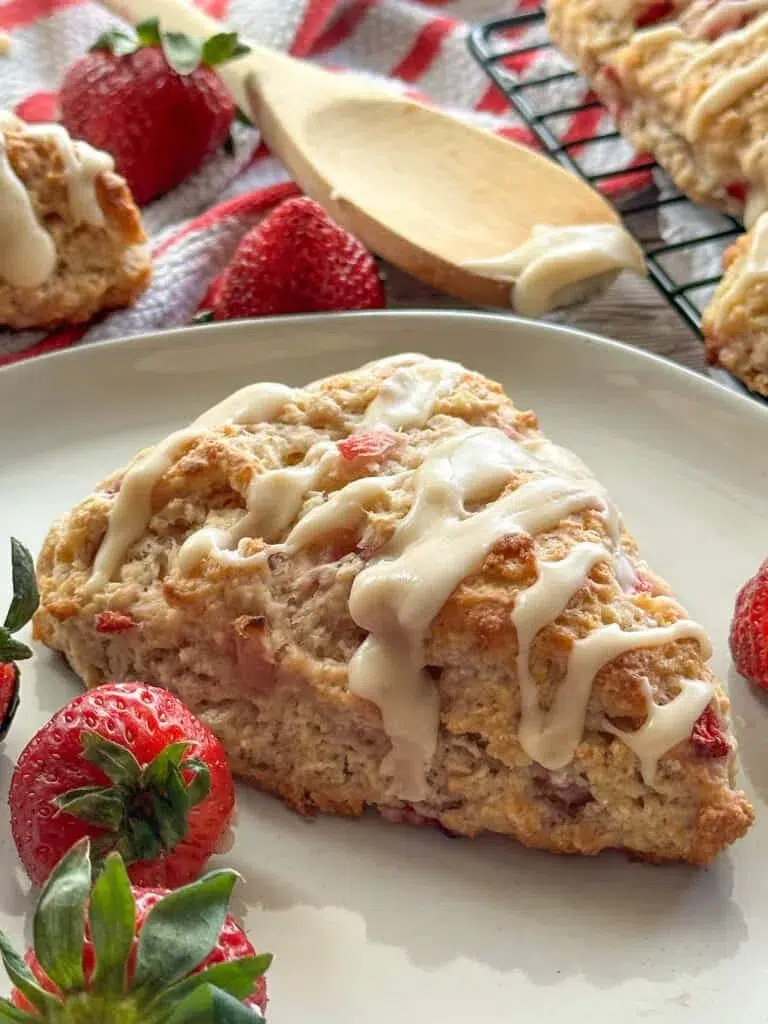
Sourdough Strawberry Scones – Foragers of Happiness

One of my go-to treats has always been scones, and with strawberry season fast approaching, I thought, why not bake up some fresh, fruity homemade scones? These strawberry sourdough scones burst with juicy strawberries and are finished off with a smooth vanilla glaze. They’re light, flaky, subtly sweet, and flexible enough to enjoy with a cozy cup of coffee or tea any time of day.
As strawberry season nears, these strawberry sourdough scones offer a fresh, seasonal way to use up your sourdough starter discard while spotlighting ripe berries. They have a delicate flake, a hint of tang from lemon zest and the sourdough, and then a sweet vanilla glaze to bring it all together — perfect for a special brunch or an afternoon pick-me-up.
In this post, I’m sharing everything you need to make these scones at home with confidence: a detailed list of ingredients (plus swap ideas), easy-to-follow steps with photos, tips to keep your scones tender and flaky, ideas for switching up the flavors, plus advice for storing, freezing, and reheating. This recipe is egg-free, works great with discard straight from the fridge, and uses very cold butter plus just enough liquid to prevent the dough from getting soggy from all that juicy fruit and starter.
So, whether you’re looking to use up your starter discard, baking for a smaller group, or craving a warm strawberry pastry alongside your morning coffee or tea, these scones fit the bill — approachable, adaptable, and downright tasty. Jump to the ingredients if you’re ready to bake, or take in my tips first for an extra dose of kitchen confidence.
Quick Answer
Strawberry sourdough scones are tender, flaky pastries made with sourdough discard, fresh strawberries, and cold butter. They’re baked until golden and finished with a smooth vanilla glaze, making them perfect for breakfast, brunch, or a lightly sweet afternoon treat.
Quick Overview
- Prep Time: 15 minutes
- Cook Time: 18–22 minutes
- Total Time: 35 minutes
- Servings: 8 scones
- Difficulty: Easy
The Origin of This Recipe
I first started making these strawberry sourdough scones on a quiet Sunday morning when I had a jar of sourdough discard sitting in the fridge and a basket of strawberries that needed to be used quickly. Instead of making the usual pancakes, I wanted something a little more special but still simple enough to fit into a relaxed family morning.
My husband immediately loved the balance of flavors — not too sweet, with just a hint of tang — and my kids were completely sold the moment I added the vanilla glaze on top. Since then, these scones have become one of our go-to weekend bakes, especially when strawberries are in season. It’s one of those recipes that feels a little special without requiring extra effort, which is exactly how I like to cook.
Why You’ll Love These
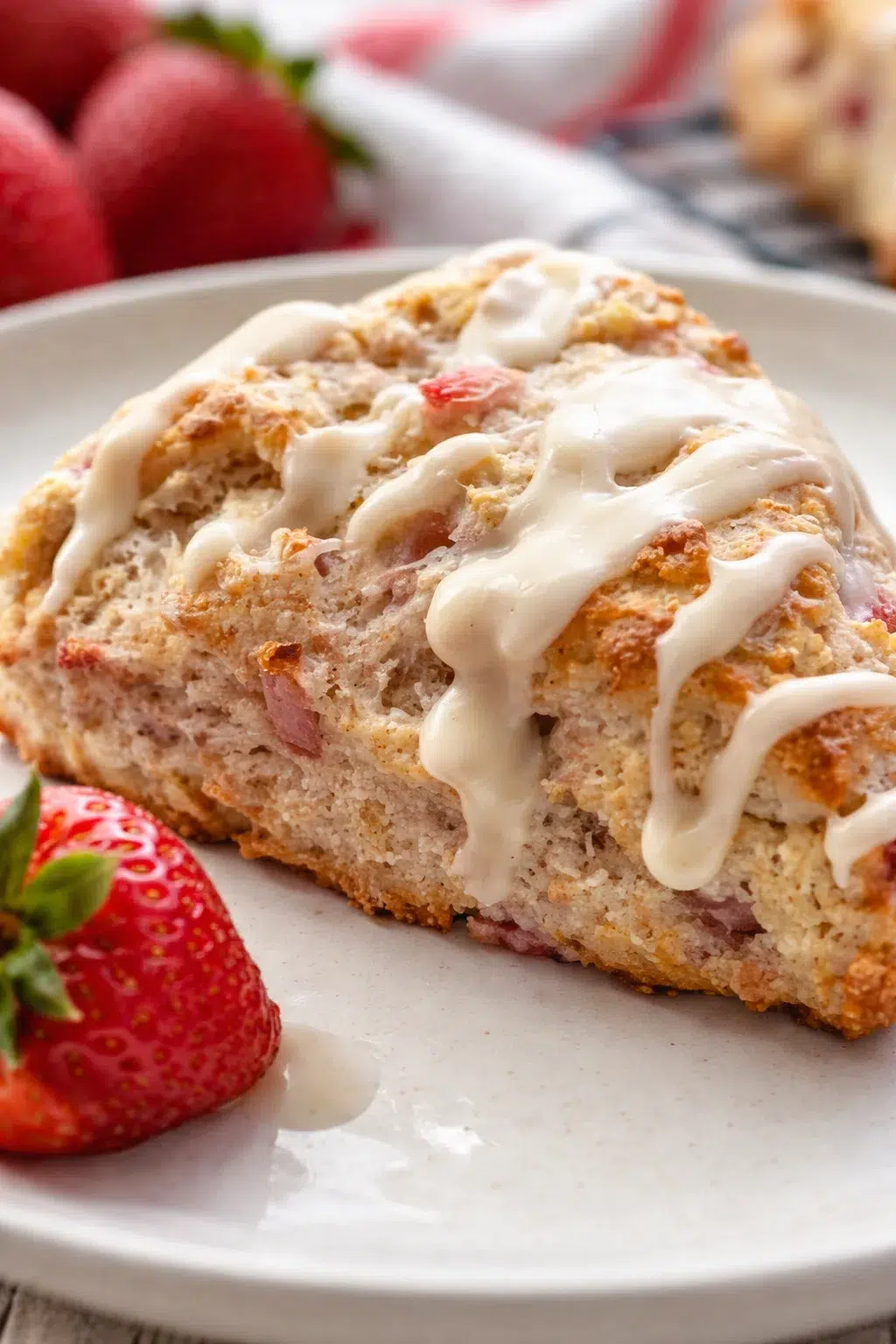
These strawberry sourdough scones are a fantastic way to celebrate warmer weather and make good use of your sourdough discard. They’re wonderful for tea parties, Easter brunch, Mother’s Day celebrations, or simply as a year-round treat. The flavor finds the perfect sweet-tart balance thanks to fresh lemon zest and tangy sourdough discard — it’s like a cozy hug in pastry form.
Ingredients and Substitutes
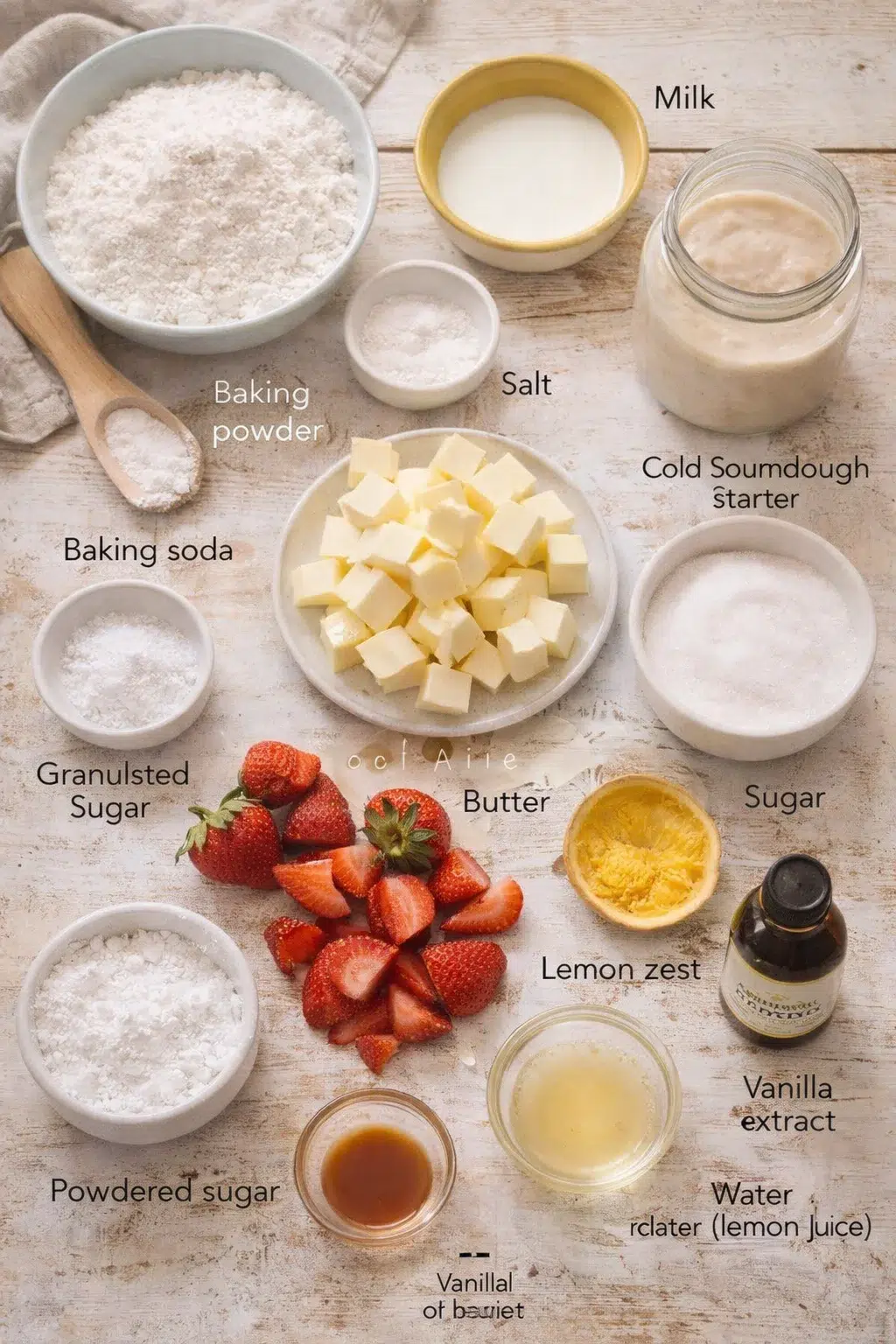
- All-purpose or bread flour (can substitute up to 25% whole wheat)
- Baking powder
- Baking soda
- Salt
- Granulated sugar
- Unsalted butter, super cold (salted works too — reduce salt by ~1/8 teaspoon)
- Fresh strawberries
- Milk (whole milk recommended; oat milk, half-and-half, or thicker plant milks like oat/soy/pea work)
- Sourdough starter (active or discard; cold discard OK)
- Pure vanilla extract
- Lemon zest (fresh zest from one medium lemon)
- Melted butter (for glaze)
- Vanilla extract (for glaze)
- Water (or freshly squeezed lemon juice for a lemony glaze)
- Powdered sugar (for glaze)
How to Make the Scones
- In a large bowl, whisk together all dry ingredients including sugar until well combined.
- Grate the cold butter directly into the flour mixture (or cut in with a pastry cutter or pulse in a food processor).
- Gently fold in the fresh strawberries.
- Whisk together all wet ingredients in a small bowl until smooth.
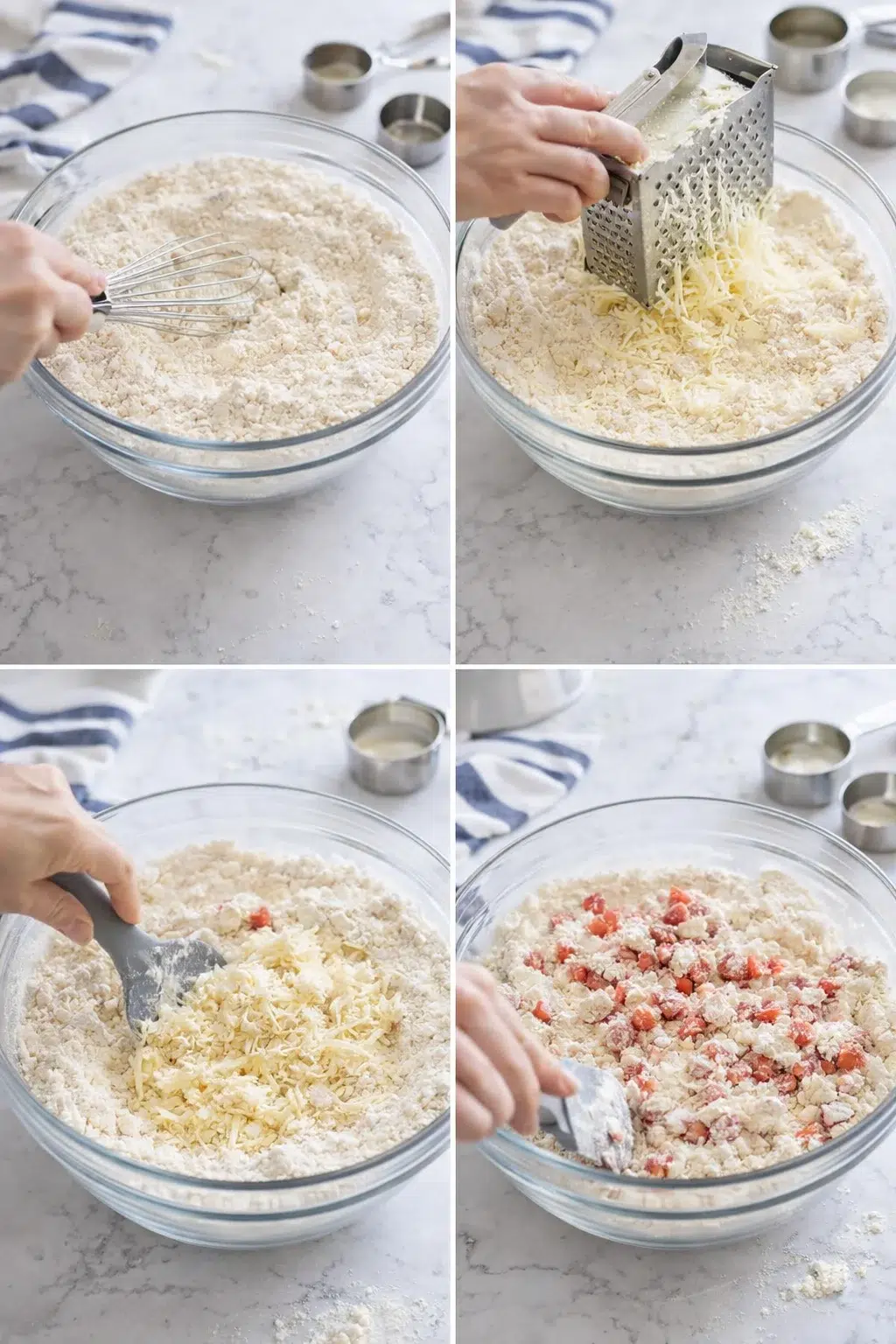
- Pour the wet ingredients into the dry and gently mix just until the dough comes together, avoiding overmixing.
- Mix gently until the dough holds together but isn’t wet or sticky.
- On a floured surface, gently pat the dough into a disk and cut it into 8 wedges.
- Optionally chill the formed dough or wedges for 10–20 minutes to improve texture.
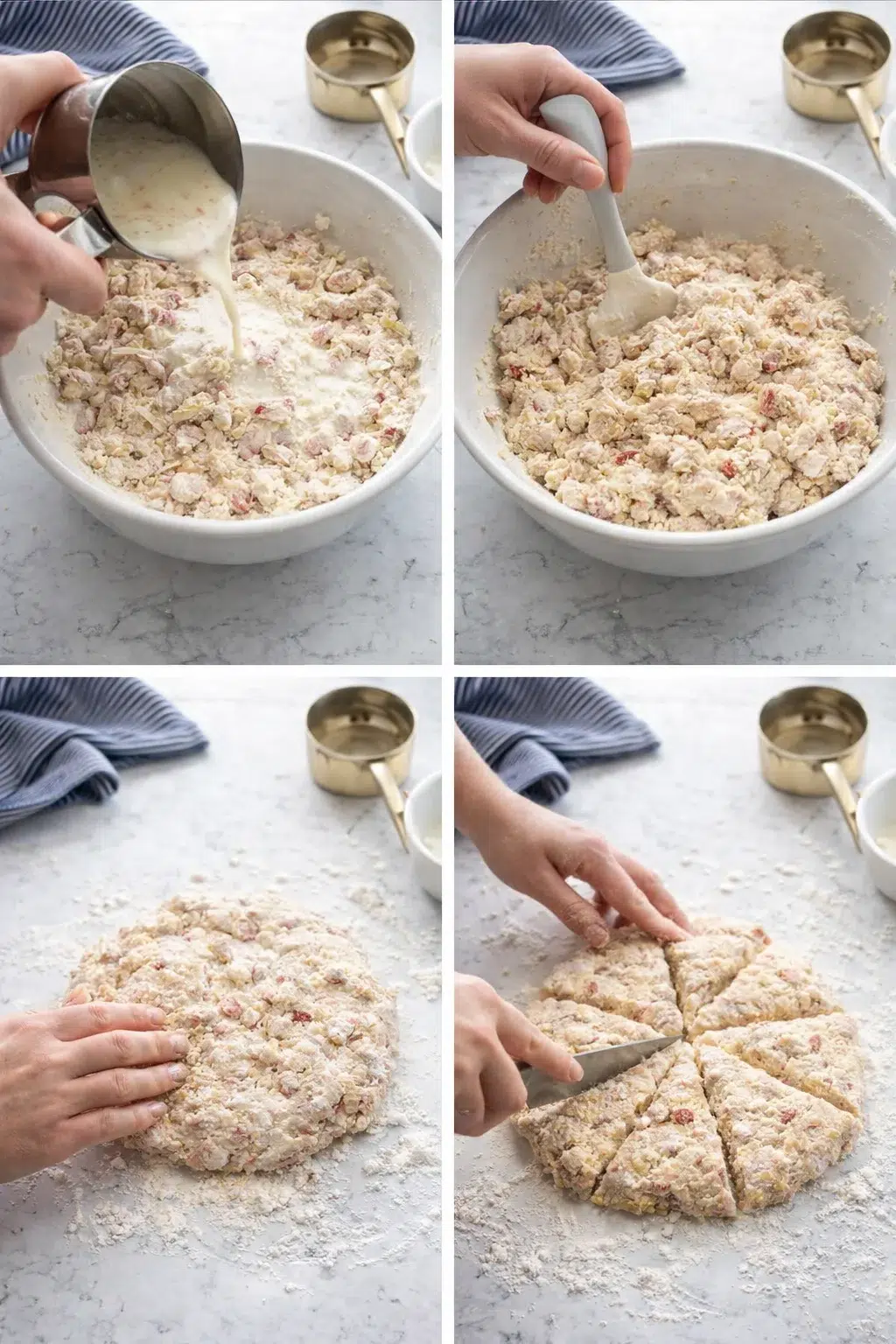
- Place the scones on a baking sheet and bake in the oven until golden and puffy.
- Whisk together the vanilla glaze while the scones bake.
- Once the scones have cooled for a few minutes, drizzle the glaze over the tops.

Pro Tips for Tender, Flaky Scones
The secret to perfect scones with sourdough discard is to keep the dough on the dry side. Fresh berries and sourdough starter bring a lot of moisture on their own, so I avoid adding an egg and keep the milk amount low. Cold butter is essential — it creates those flaky layers we’re all after. Resist the urge to overmix, and handle the dough gently for tender results.
Flavor Swaps and Mix-Ins
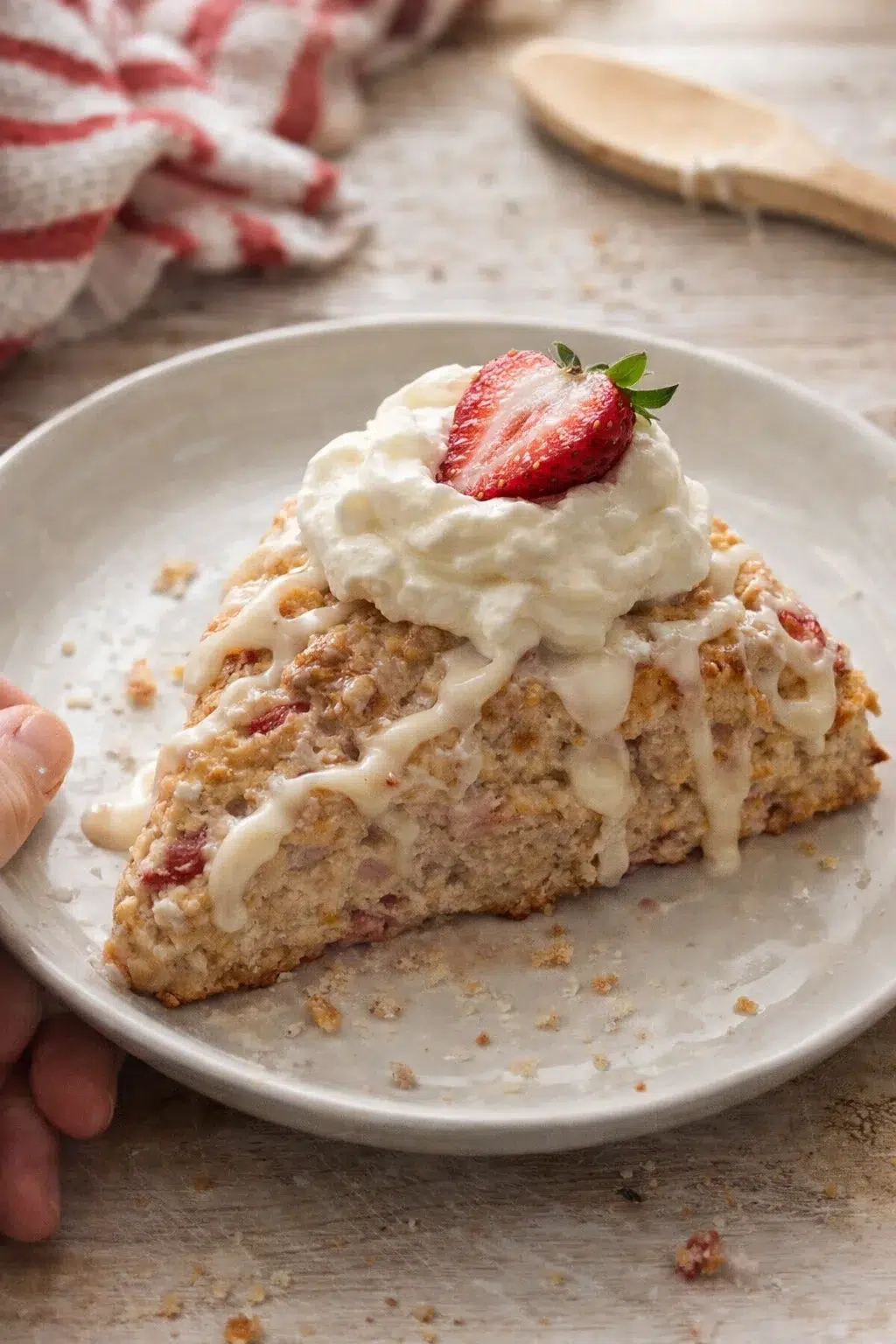
I love how versatile these scones are! Small tweaks make them completely your own without changing much in technique.
- Other berries: Try raspberries, blueberries, or blackberries instead of strawberries. Fresh works best! If your berries seem juicy, tossing them in a tablespoon of flour before adding helps reduce extra moisture and color bleed.
- Dried fruit or chips: Swap some or all the fresh fruit for 1/3 to 1/2 cup of dried strawberries or 1/2 cup white chocolate chips. Skip the extra flour coating with dried fruit.
- Whole wheat option: Substitute 25% of the all-purpose flour with whole wheat for a nuttier flavor and denser texture. Using more than that will make the scones heavier.
- Glaze swaps: Use lemon juice instead of water for a lemon glaze, or toss in an extra teaspoon of lemon zest to boost citrus aroma.
- Milk swaps: Any milk mentioned works, but thicker plant-based milks like oat or soy are best for dairy-free versions. If you’re using salted butter, cut salt in the recipe by 1/8 teaspoon.
- Add nuts or spice: Toasted almonds or pecans (up to 1/3 cup) add crunch, and a pinch of cardamom or cinnamon adds warmth.
- Vegan option: Use vegan butter that behaves like cold regular butter and a thicker plant milk like oat or soy. Since the recipe is eggless, no other changes are needed.
- Shape & size: For smaller scones, cut into more wedges or use a biscuit cutter for drop scones—just adjust baking time down a few minutes for smaller treats.
Storing, Freezing, and Make-Ahead
- You can freeze these scones before baking. Simply freeze them on a tray, then store in a bag. When you’re ready, bake them straight from the freezer—just add a few extra minutes to the bake time.
- You can also freeze baked scones. I like to thaw and re-glaze after warming to keep the glaze fresh and neat.
For best taste and texture, store your scones at room temperature for up to 24 hours or refrigerate them for up to a week. Use an airtight container or cover them on a plate with plastic wrap to keep them fresh.
Common Myths & Mistakes
Myth 1: The more you mix the dough, the better the texture
A very common belief is that mixing the dough thoroughly will create a smoother, more uniform texture in scones. Many people treat scone dough like cake batter, assuming that a well-mixed dough leads to better results. This idea often comes from general baking habits where smooth batters are encouraged.
In reality, overmixing is one of the fastest ways to ruin scones. When you mix too much, you develop gluten in the flour, which leads to a dense, tough texture instead of the light, flaky layers that define a good scone. The dough should look slightly rough and even a bit crumbly before shaping.
The correct approach is to mix just until the dough comes together. You should still see small bits of butter and a slightly uneven texture. This ensures the scones bake up tender with delicate layers rather than becoming heavy and compact.
Myth 2: Adding more liquid makes scones softer and more moist
It’s easy to assume that adding extra milk or liquid will result in softer, more tender scones. This belief comes from cake and muffin recipes, where more moisture often leads to a softer crumb. So when the dough feels a bit dry, many people instinctively add more liquid.
However, scone dough works very differently. Too much liquid makes the dough sticky and heavy, which prevents proper layering. In recipes with fruit and sourdough discard, this is even more important because both already contribute moisture. Adding more liquid can quickly lead to soggy, dense scones that spread too much during baking.
The correct approach is to keep the dough slightly dry and just hydrated enough to hold together. It should not feel wet or sticky. Trust the process — the moisture from the butter, fruit, and starter will balance everything during baking.
Myth 3: Fresh fruit doesn’t affect the texture of scones
Many people believe that adding fresh fruit is simply a flavor addition and doesn’t significantly impact the structure of the dough. This often leads to tossing in fruit without any adjustments or precautions.
In reality, fresh fruit — especially strawberries — releases a lot of juice as it bakes. This extra moisture can make the dough too wet, leading to uneven baking and soggy pockets inside the scones. It can also cause the dough to spread more than expected, losing that classic tall, structured shape.
The correct approach is to handle fruit carefully. Cut strawberries into small, even pieces and, if they seem particularly juicy, lightly coat them in a bit of flour before folding them into the dough. This helps absorb excess moisture and keeps the scones balanced, allowing them to bake evenly with a tender, not soggy, interior.
Is This Recipe Healthy?
I always like to think of recipes like these strawberry sourdough scones as a balanced treat rather than something strictly “healthy” or “unhealthy.” They sit comfortably in that middle ground — made with real, simple ingredients and without anything overly processed, which already makes a big difference.
What I love about this recipe is that it uses fresh strawberries, which naturally add sweetness, fiber, and a boost of vitamins. The sourdough discard also brings a subtle tang and can be easier to digest for some people compared to fully commercial baked goods. Plus, since this recipe is egg-free and doesn’t rely on heavy cream, it feels a bit lighter than many traditional scone recipes.
That said, these are still scones — they include butter and sugar, which give them that tender, flaky texture we all love. In our home, I like to serve them as part of a balanced breakfast or brunch, usually alongside something more protein-rich like yogurt or eggs. It’s all about enjoying them mindfully.
If you’re looking to make them a bit lighter, you can reduce the glaze, swap part of the flour for whole wheat, or even slightly lower the sugar without affecting the overall texture too much. For me, it’s not about perfection — it’s about creating something comforting and sharing it with the people I love.
Common Questions Answered
Here are some answers to questions I often get about these strawberry sourdough scones.
- Can I use sourdough discard straight from the fridge? — Absolutely! Cold discard works even better because it keeps the butter cold, which helps with that lovely flaky crumb.
- Can I use frozen strawberries? — Yes! Just thaw them completely, drain off any extra juices, and pat dry before gently folding them in. Alternatively, fold them straight in frozen but expect a bit more juice as they bake.
- How do I avoid soggy or dense scones? — Keep the dough fairly dry, use grated or small chunks of very cold butter, mix until just combined without overworking, and don’t add extra milk beyond what the recipe calls for. Chilling the dough for 10 to 20 minutes before baking can also help maintain texture.
- Can I make these ahead or freeze them? — Yes! Freeze unbaked scones on a tray, transfer to a bag, and bake from frozen adding a few minutes to the baking time. Baked scones freeze well too; thaw and reheat before glazing or glaze after thawing.
- What’s the best way to reheat leftover scones? — Warm them in a 300°F (150°C) oven for about 5 to 10 minutes until heated through, or zap in the microwave for a quick 10 to 20 seconds. If you want, re-glaze after reheating for that fresh just-baked finish.
- Do I need an egg in this recipe? — Nope! Leaving out the egg helps keep moisture in check. The sourdough starter and milk give enough structure and tenderness, so these scones turn out perfectly soft and flaky without eggs.
- Can I make the glaze lemon-flavored instead of vanilla? — Definitely! Just swap the water for lemon juice and increase lemon zest in the glaze for a bright, citrusy pop.

Conclusion
These strawberry sourdough scones have truly become one of those recipes I come back to again and again, especially when strawberries are in season and I have a bit of sourdough discard waiting in the fridge. They’re simple, reliable, and just special enough to make an ordinary morning feel a little more meaningful.
In our house, they never last very long. My husband usually reaches for a second one before I’ve even finished my coffee, and the kids always ask for extra glaze on top — which, honestly, I don’t mind at all. Those little moments around the table are exactly why I love recipes like this.
What I hope you take away from this is not just how to make a good scone, but how approachable baking can be when you slow down and enjoy the process. You don’t need perfection here — just cold butter, a gentle hand, and a bit of patience.
If you try these, I’d truly love to hear how they turn out for you. Whether it’s for a quiet morning, a family brunch, or just because you had strawberries that needed using, I think you’ll find these scones fit right into real, everyday life — just like they do in mine.
Print
Strawberry Sourdough Scones
- Total Time: 35 minutes
- Diet: Vegetarian
Description
Flaky, tender strawberry sourdough scones made with discard and fresh berries, finished with a smooth vanilla glaze. Perfect for breakfast, brunch, or a cozy treat.
Ingredients
- 2 cups all-purpose flour
- 1 tablespoon baking powder
- 1/4 teaspoon baking soda
- 1/2 teaspoon salt
- 1/3 cup granulated sugar
- 1/2 cup unsalted butter, very cold (grated or cubed)
- 1 cup fresh strawberries, diced
- 1/2 cup milk (whole milk preferred)
- 1/2 cup sourdough discard (cold or room temperature)
- 1 teaspoon vanilla extract
- Zest of 1 lemon
For the Vanilla Glaze:
- 1 cup powdered sugar
- 1–2 tablespoons water or lemon juice
- 1 teaspoon vanilla extract
- 1 tablespoon melted butter
Instructions
- Preheat oven to 400°F (200°C) and line a baking sheet with parchment paper.
- In a large bowl, whisk together flour, baking powder, baking soda, salt, and sugar.
- Grate or cut in the cold butter until the mixture resembles coarse crumbs.
- Gently fold in the diced strawberries.
- In a separate bowl, whisk together milk, sourdough discard, vanilla extract, and lemon zest.
- Pour wet ingredients into dry ingredients and mix gently until just combined. Do not overmix.
- Turn dough onto a floured surface and gently shape into a round disk about 1 inch thick.
- Cut into 8 wedges and transfer to the prepared baking sheet.
- Chill for 10–15 minutes (optional but recommended).
- Bake for 18–22 minutes or until golden and puffed.
- While baking, whisk together glaze ingredients until smooth.
- Let scones cool slightly, then drizzle glaze over the top before serving.
Notes
- Keep butter very cold to ensure flaky layers.
- Do not overmix the dough to avoid dense scones.
- If strawberries are very juicy, toss them lightly in flour before adding.
- Store at room temperature for 24 hours or refrigerate up to 5 days.
- Freeze unbaked or baked scones for longer storage.
- Reheat in oven at 300°F (150°C) for best texture.
- Prep Time: 15 minutes
- Cook Time: 20 minutes
- Category: Breakfast
- Method: Baking
- Cuisine: American / British-inspired
Nutrition
- Serving Size: 8 scones
- Calories: 280 kcal per serving
- Sugar: 12 g
- Fat: 11 g