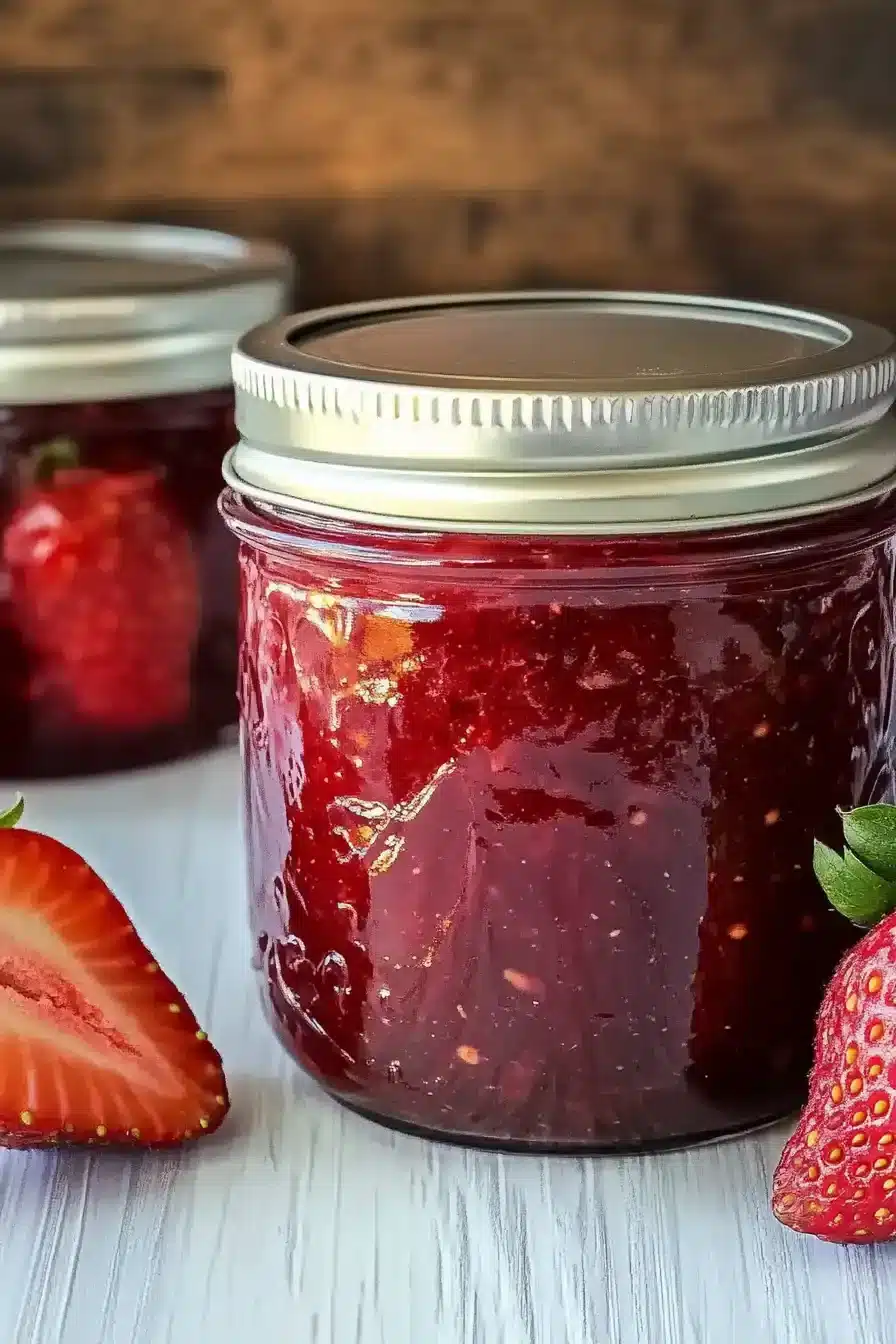
Easy Homemade Strawberry Rhubarb Jam with Pectin

Classic strawberry rhubarb jam with pectin is the perfect sweet and tangy homemade preserve for spring and summer. This classic strawberry rhubarb jam with pectin combines fresh strawberries, tart rhubarb, sugar, and pectin to create a flavorful jam with the perfect spreadable texture.
If you are looking for a classic strawberry rhubarb jam with pectin recipe that is beginner-friendly, easy to make, and perfect for toast, biscuits, desserts, and homemade gifts, this recipe is for you.
Keep reading because I’m sharing everything you need to make this jam at home, including:
- the exact ingredients and measurements to guarantee your jam sets perfectly,
- a clear, step-by-step canning guide (everything from sterilizing jars to sealing them),
- pro tips to avoid common mistakes and get great results each time,
- and ideas for easy ingredient swaps, flavor twists, storage tips, and serving suggestions.
Whether you’re new to home canning or just want a quick, fail-proof jam recipe to enjoy on toast, scones, or as a topping, this one is designed to be simple, approachable, and totally delicious.
Fast, Foolproof, and Flavorful
- Quick preserving project – It comes together in under an hour, making it ideal for busy moms or beginners eager to try canning without a big time commitment; if you want something even faster, try our Easy Rhubarb Compote (ready in 15 minutes).
- Foolproof recipe – Thanks to the pectin, you’ll get a reliably perfect set every time, no guesswork or long cooking times needed.
- Simple ingredients – Just five basics capture that classic strawberry and rhubarb sweet-tart combo that everyone loves.
- Perfect gift idea – Homemade jam always feels special, and these jars make thoughtful presents while preserving fresh spring fruit for year-round enjoyment; for another shelf-stable option, try Rhubarb Juice Concentrate (with canning instructions).
Classic Strawberry Rhubarb Jam with Pectin
- Total Time: 50 minutes
- Yield: 6–8 jars 1x
- Diet: Vegetarian
Description
Classic strawberry rhubarb jam with pectin is a sweet and tangy homemade preserve made with fresh strawberries, tart rhubarb, sugar, and pectin for the perfect spreadable texture. This easy homemade jam recipe is beginner-friendly and perfect for toast, biscuits, desserts, and breakfast recipes.
Ingredients
– 1 tsp butter (optional)
– 6 1/2 cups white sugar
– 1 packet pectin crystals
– 4 1/2 cups mashed strawberries
– 1 1/2 cups chopped rhubarb
Instructions
1. Sterilize clean glass jars in a 225°F oven for 10 minutes and keep warm.
2. Simmer lids and rings in hot water until needed.
3. Mash strawberries and chop rhubarb into small pieces.
4. Combine strawberries, rhubarb, and pectin in a large pot.
5. Bring mixture to a full rolling boil over high heat while stirring constantly.
6. Add sugar all at once and stir vigorously.
7. Return mixture to a rolling boil that cannot be stirred down.
8. Add butter if desired to reduce foam.
9. Continue boiling until mixture reaches 220°F.
10. Boil for exactly 1 additional minute.
11. Remove from heat and stir for 5 minutes.
12. Ladle hot jam into sterilized jars leaving 1/4 inch headspace.
13. Seal jars with lids and rings.
14. Let jars cool for 12–24 hours until fully sealed.
Notes
– Frozen strawberries should be thawed and drained before measuring.
– Properly sealed jars can last up to 18 months in a cool dark pantry.
– Refrigerate opened jars and use within 3–4 weeks.
- Prep Time: 30 minutes
- Cook Time: 20 minutes
- Category: Jam
- Method: Canning
- Cuisine: American
Nutrition
- Serving Size: 6–8 jars
- Calories: 55 kcal
- Sugar: 13g
- Fat: 0g
What Does Strawberry Rhubarb Jam Taste Like?
Strawberry rhubarb jam has the perfect balance of sweet and tart flavors. The strawberries bring juicy sweetness while rhubarb adds a bright tangy flavor that keeps the jam from tasting overly sugary.
The result is a fresh, fruity, old-fashioned homemade preserve that tastes incredible on toast, biscuits, yogurt, cheesecake, and desserts.
Ingredients and Quantities
These simple ingredients create the perfect classic strawberry rhubarb jam with pectin with a sweet flavor, bright color, and smooth spreadable texture.
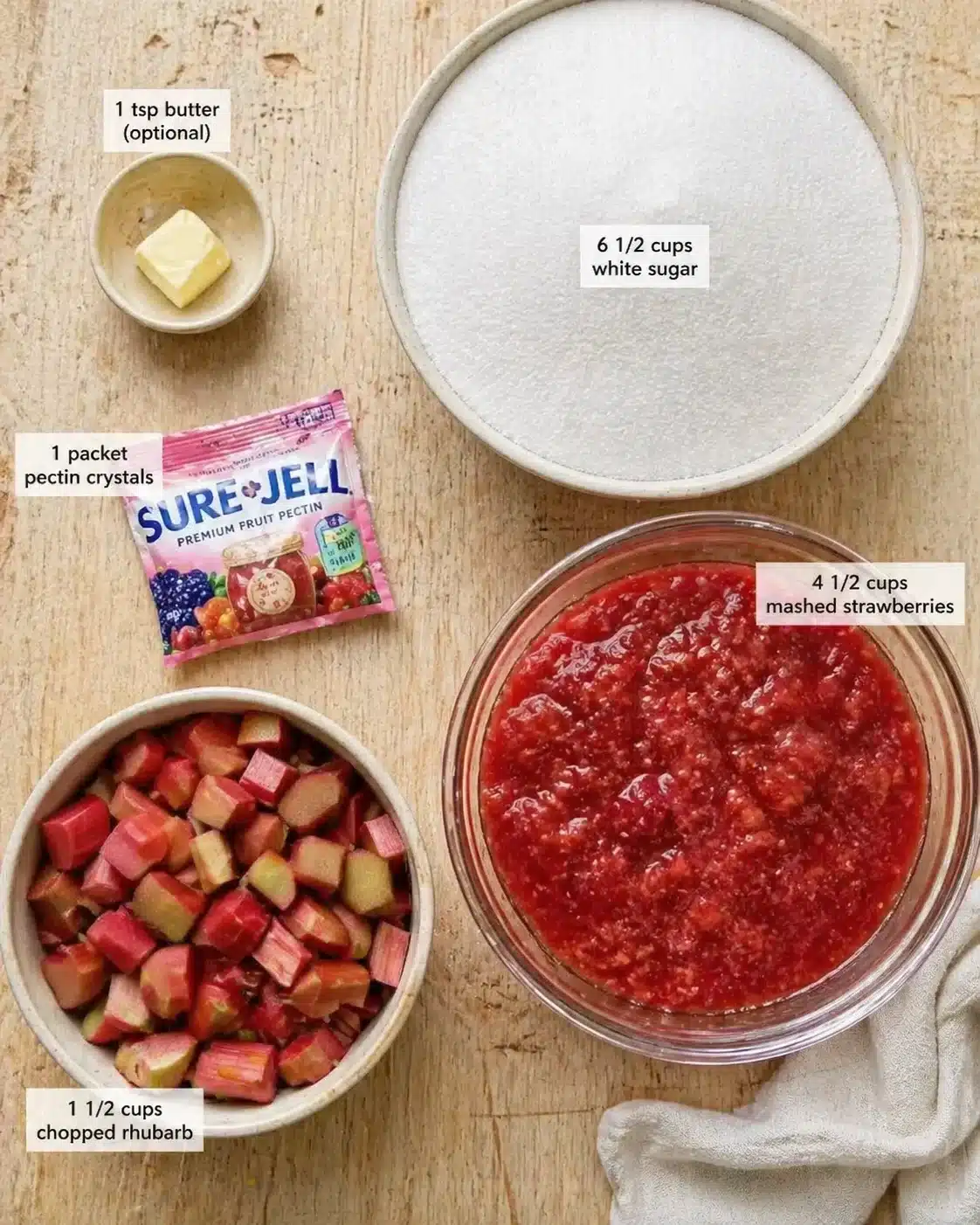
- 1 tsp butter (optional, helps cut down foaming)
- 6 1/2 cups white sugar
- 1 packet pectin crystals (I use Sure-Jell brand)
- 4 1/2 cups mashed strawberries
- 1 1/2 cups chopped rhubarb (cut into 1/2-inch pieces)
Preparing, Cooking, and Canning
Making classic strawberry rhubarb jam with pectin at home is easier than it looks and gives you a delicious homemade preserve perfect for breakfast and desserts.
- Place clean glass canning jars on a baking sheet and sterilize in a 225°F oven for 10 minutes.
- Keep sterilized jars warm in the oven until ready to fill.
- Simmer metal snap lids and rings in hot water and keep them warm until needed.
- If using frozen strawberries, thaw completely and drain before measuring.

- Mash strawberries to measure 4 1/2 cups mashed strawberries.
- Chop rhubarb into 1/2-inch pieces to measure 1 1/2 cups.
- In a large pot, combine the mashed strawberries, chopped rhubarb, and pectin crystals.
- Bring the mixture to a full, rolling boil over high heat, stirring constantly.
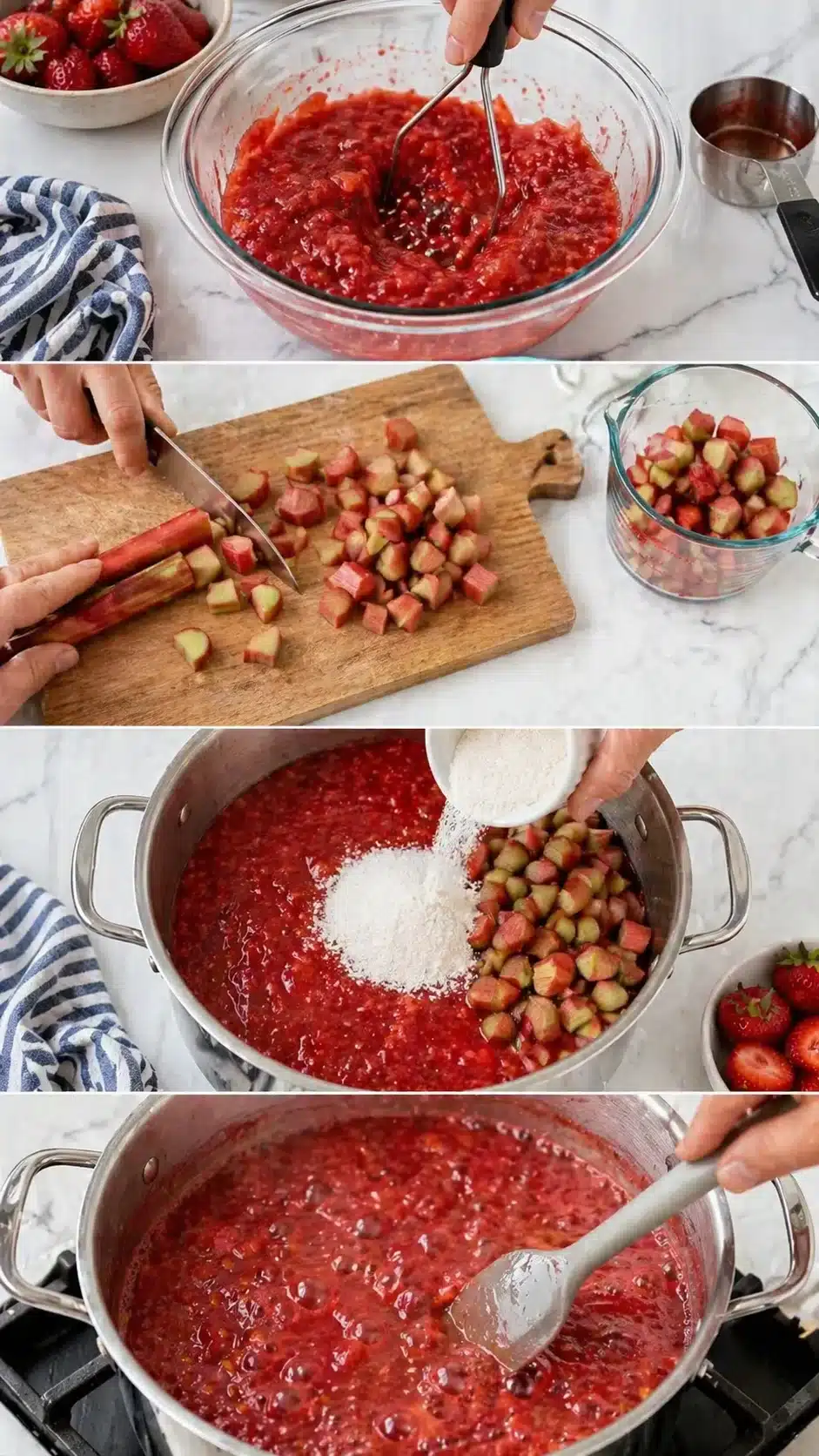
- Add all 6 1/2 cups of sugar to the pot at once.
- Stir vigorously on high heat until the mixture returns to a strong rolling boil that does not stop when stirred.
- Optional: add 1 teaspoon butter to reduce foam.
- Continue boiling and stirring until the mixture reaches 220°F on a candy thermometer.
- Once the mixture reaches 220°F, boil for exactly 1 more minute.
- Remove the pot from the heat and stir continuously for 5 minutes.
- Carefully remove the hot sterilized jars from the oven using oven mitts.
- Quickly ladle the hot jam into jars, leaving about 1/4 inch headspace.
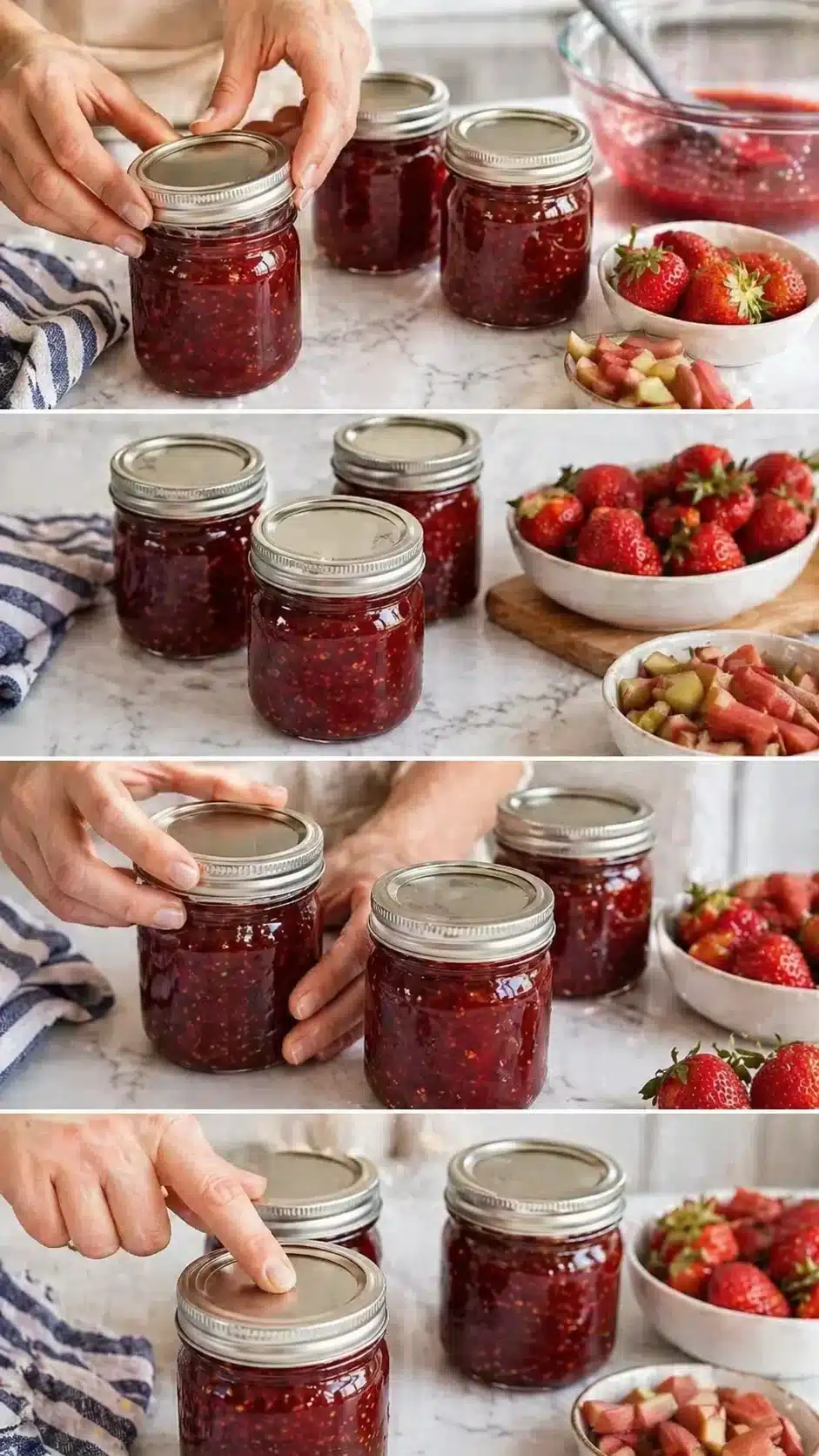
- Place a metal snap lid on each jar and screw on the rings just lightly.
- Let jars cool undisturbed at room temperature for 12–24 hours to allow lids to pop down and seal.
- Once jars are cool and lids have sealed, tighten the rings fully.
- Press the center of each lid to check the seal; refrigerate any jars that did not seal properly.
Troubleshooting and Pro Tips
The number one pitfall is not measuring your ingredients exactly—jam recipes are a little like chemistry, so using precise measurements is key. Even small differences in fruit or sugar can keep your jam from setting. Another common mistake is rushing through the cooking—your mixture must hit a full rolling boil and hold it for one minute to set properly. Also, always use sterilized, warm jars and leave about a ¼ inch of space between the jam and the jar top for the best seal. One last tip: don’t overcook your rhubarb at the start. It should be tender yet still hold its shape. And that optional tablespoon of butter? It really helps keep foam down during boiling, making your jam clearer and easier to work with.

This bright, sweet-tart jam is amazing spread over warm buttered toast or fresh scones such as these classic homemade scones for breakfast. But don’t stop there! It’s a delicious filling for vanilla layer cakes (or even this Spring Strawberry Layer Cake), a swirl-in for plain yogurt, or a luscious topping on vanilla ice cream or cheesecake. I also love it warmed slightly and served on English muffins or fresh biscuits. For a quick snack, try it with peanut butter on whole grain bread—watch how fast those two flavors disappear!
Tips for the Best Strawberry Rhubarb Jam
Always use ripe strawberries for the sweetest flavor and brightest color. Tart rhubarb balances the sweetness and gives this jam its classic homemade taste.
Measure ingredients carefully, especially sugar and pectin, since jam recipes depend on exact ratios for proper setting. Avoid overcooking the fruit mixture once it reaches a full rolling boil to preserve the fresh fruit flavor.
Why Use Pectin in Homemade Jam?
Pectin helps homemade jam thicken properly and creates the classic smooth spreadable texture people expect from traditional preserves.
Using pectin also shortens cooking time, helping preserve the bright strawberry flavor and vibrant red color. This makes the recipe easier and more beginner-friendly.
Flavor Twists and Substitutions
Here are some handy swaps and tweaks you can try, along with which ingredients you’ll want to keep true to the recipe:
- Pectin: Powdered pectin is necessary for this recipe to get that perfect set, but you can use liquid pectin as a substitute. If using liquid, double the amount (two pouches) and add it at the end of cooking instead of the beginning. Don’t skip pectin, or your jam won’t firm up. Prefer a softer, no-pectin fruit spread? Try a quick stovetop rhubarb compote.
- White sugar: The sugar amount is important for both sweetness and setting, so try not to reduce it. However, you can swap out up to 1 cup of sugar for honey if you want a different flavor and a slightly softer jam.
- Strawberries: Fresh or frozen berries both work. If using frozen, thaw completely and drain to avoid extra water. Make sure to keep the same cup measurement for proper texture.
- Rhubarb: You can use fresh or frozen rhubarb—no need to thaw frozen rhubarb. If you don’t have rhubarb, tart apples can substitute, just chop them to the same amount.
- Butter: Totally optional. Use it to cut foam during boiling. You can substitute a tiny bit of oil if you prefer.
Best Ways to Serve Strawberry Rhubarb Jam
Spread this homemade strawberry rhubarb jam on warm toast, buttery biscuits, croissants, or English muffins for an easy breakfast treat.
It also tastes delicious swirled into yogurt, spooned over cheesecake, layered into cakes, or paired with peanut butter sandwiches for a nostalgic sweet snack.
How to Store and Preserve
Properly stored classic strawberry rhubarb jam with pectin can stay fresh for months and makes a perfect homemade pantry staple.
Pantry Storage: If you’ve sterilized your jars well and sealed them tight, this jam will keep beautifully in your pantry for up to 18 months. Just stash the jars somewhere cool and dark—like the bottom shelf of your pantry or a less-used cupboard above the fridge. Once you open a jar, pop it in the fridge.
Refrigeration: After opening, your jam will stay fresh in the fridge for about 3 to 4 weeks. Watch out for any signs of mold or off smells, and discard if anything looks off. For the best flavor, try to use it up within the first two weeks—it’s especially good spooned over warm Rhubarb Muffins with Cinnamon Streusel.
Quick tip: Let your jars cool upright at room temperature for 12–24 hours after filling. You’ll hear the satisfying “ping” sound of each lid sealing. Any jars that don’t seal properly should be refrigerated and used quickly.
Preparation Time 20–30 minutes Cooking Time 15–20 minutes Total Time 35–50 minutes Difficulty Level Medium
Homemade Jam Storage Tips
Store sealed jars in a cool dark pantry away from heat and sunlight for the longest shelf life.
After opening, always refrigerate the jam and use a clean spoon each time to help keep the jam fresh longer.
Can I Freeze Strawberry Rhubarb Jam?
Yes! Strawberry rhubarb jam freezes beautifully. Let the jam cool completely before transferring it to freezer-safe containers or jars, leaving a little room at the top for expansion.
Frozen homemade jam can keep its fresh flavor and texture for up to 1 year.
Common Mistakes to Avoid When Making Jam
One of the biggest mistakes when making homemade jam is not bringing the mixture to a full rolling boil. Without enough heat, the jam may stay runny and fail to set properly.
Another common issue is overcooking the fruit, which can dull the fresh strawberry flavor and create a thick gummy texture. Always follow the cooking times carefully for the best results.
Common Questions About Jam
The best strawberries for jam are ripe, bright red berries with no white or green patches—they’ll give you the sweetest, most flavorful jam. Frozen berries work but should be completely thawed and drained first to keep the right consistency. Local, in-season strawberries usually have the best flavor, but supermarket berries work just fine—just skip any that show soft spots or have mold. Also, don’t wash strawberries until you’re ready to use them since water speeds spoilage.
Can I use frozen fruit? Yes, you can! For strawberries, thaw them completely and drain any extra juice before measuring so you keep the recipe balanced. Frozen rhubarb can go straight into the pot without thawing first.
Do I have to use pectin? For this recipe, yes. Powdered pectin (or the liquid alternative I mentioned earlier) is what guarantees your jam will firm up as expected. If you use liquid pectin, follow the package instructions carefully—usually two pouches added at the end of cooking. Skipping pectin means your jam might be runny, unless you follow a different long-cook, low-sugar recipe.
Can I reduce the sugar? I wouldn’t recommend it. This recipe needs the sugar amount listed to set and preserve safely. If you want to use less, you can swap up to 1 cup for honey, but expect a slightly softer jam with a milder sweetness.
What if my jam doesn’t reach 220 °F or won’t set? Hitting 220 °F is the key to getting a proper set at sea level with pectin. If your jam isn’t setting, keep cooking gently until it reaches that temperature. Watch closely to avoid burning. If it still won’t set, refrigerate those jars and use them first, or try re-cooking the jam with extra pectin following package instructions. Soft-set jam also makes a great filling for strawberry oatmeal crumble bars.
How can I test for set without a thermometer? No thermometer? No problem! Use the chilled plate test: pop a small plate into the freezer, spoon a bit of hot jam onto it, chill for a minute, then push the edge of the jam. If it wrinkles and stays firm, it’s set. It’s a handy trick if you don’t have a candy thermometer, though the thermometer method is more precise.
What does the teaspoon of butter do? Adding butter (or a tiny bit of oil) helps cut down the surface foam while you’re boiling the jam, so you end up with clearer jars and less foam to skim off. It’s optional and doesn’t affect how the jam sets.
Why mash the strawberries and stir off heat for 5 minutes? Mashing releases the berry juices and helps the fruit and pectin mix evenly, so your jam cooks uniformly. Stirring for 5 minutes off the heat before jarring helps prevent fruit pieces from floating to the top, giving you an even fruit distribution.
How do I know a jar is sealed properly? After the jars cool undisturbed for 12–24 hours, you’ll hear each lid make a “ping” sound when it seals. Press the center of a lid—if it doesn’t move, the jar’s sealed. Any jars without a firm seal should be refrigerated and used first.
How long will the jam keep? Properly sealed jars will store for up to 18 months in a cool, dark place. Once opened, keep jam refrigerated and use within 3–4 weeks for best taste, though 2 weeks is ideal.
Why You’ll Love This Classic Strawberry Rhubarb Jam with Pectin? This classic strawberry rhubarb jam with pectin is easy to make, beginner-friendly, and packed with fresh homemade flavor. The combination of strawberries and rhubarb creates the perfect sweet and tart balance that makes this jam incredibly delicious and versatile.
Can I process the jars in a boiling water bath for extra security? Absolutely, if you want extra peace of mind. After filling and sealing, you can process jars in a boiling water bath following tested guidelines—times vary by jar size, elevation, and official recommendations. When unsure, check a trusted canning guide or your local extension office.

Final Thoughts on This Classic Strawberry Rhubarb Jam with Pectin
Classic strawberry rhubarb jam with pectin is one of the best homemade preserves to make during spring and summer. This classic strawberry rhubarb jam with pectin combines sweet strawberries and tart rhubarb to create a perfectly balanced homemade jam recipe with fresh flavor and the ideal spreadable texture.
Whether you spread this classic strawberry rhubarb jam with pectin on toast, biscuits, desserts, or breakfast recipes, it always delivers a sweet and tangy homemade taste everyone loves.
If you love cozy homemade preserves and old-fashioned fruit recipes, this classic strawberry rhubarb jam with pectin is sure to become a favorite in your kitchen.