Simplest Stovetop Rhubarb Compote

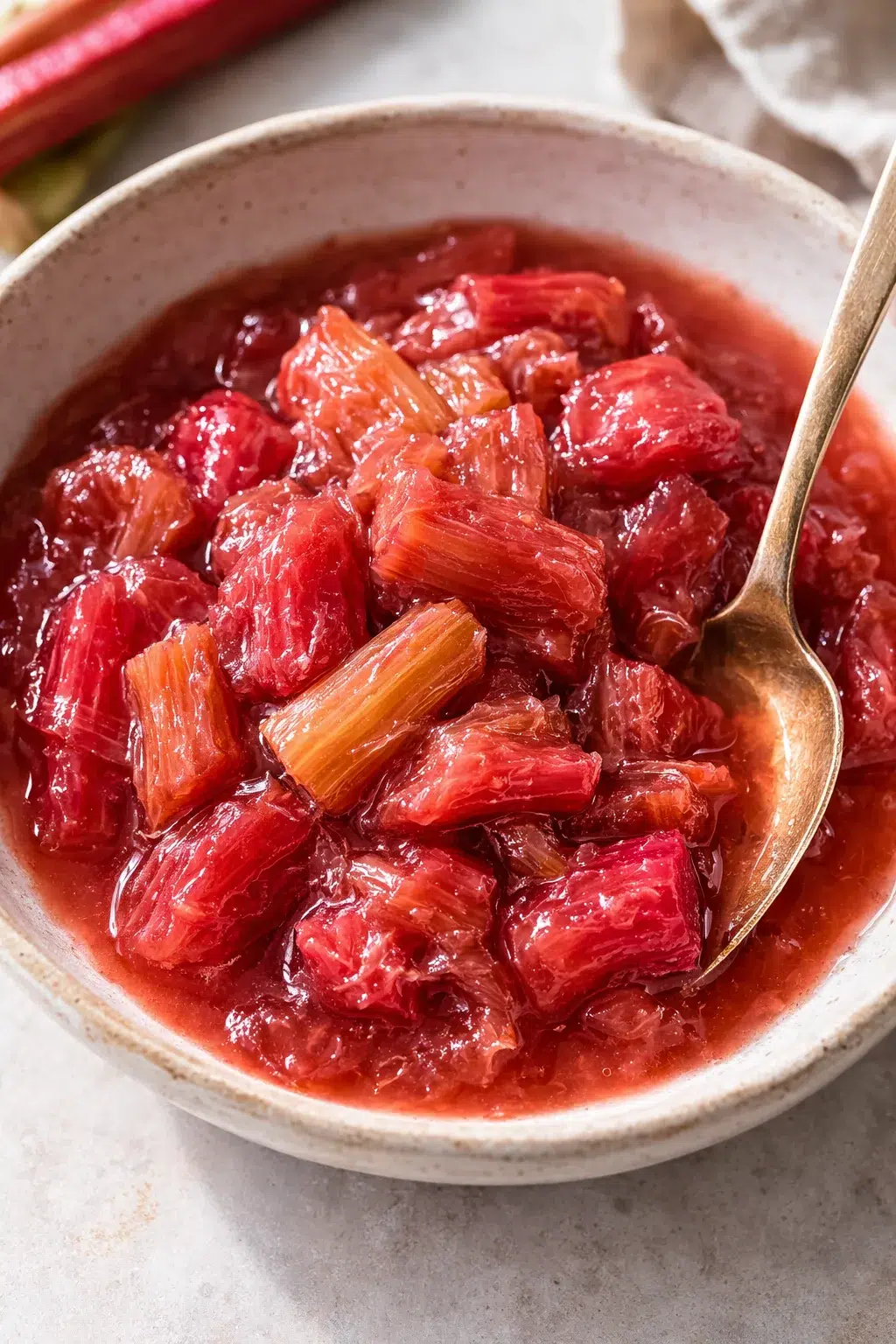
This stovetop rhubarb compote is one of the simplest ways to turn fresh rhubarb into something bright, flavorful, and incredibly versatile.
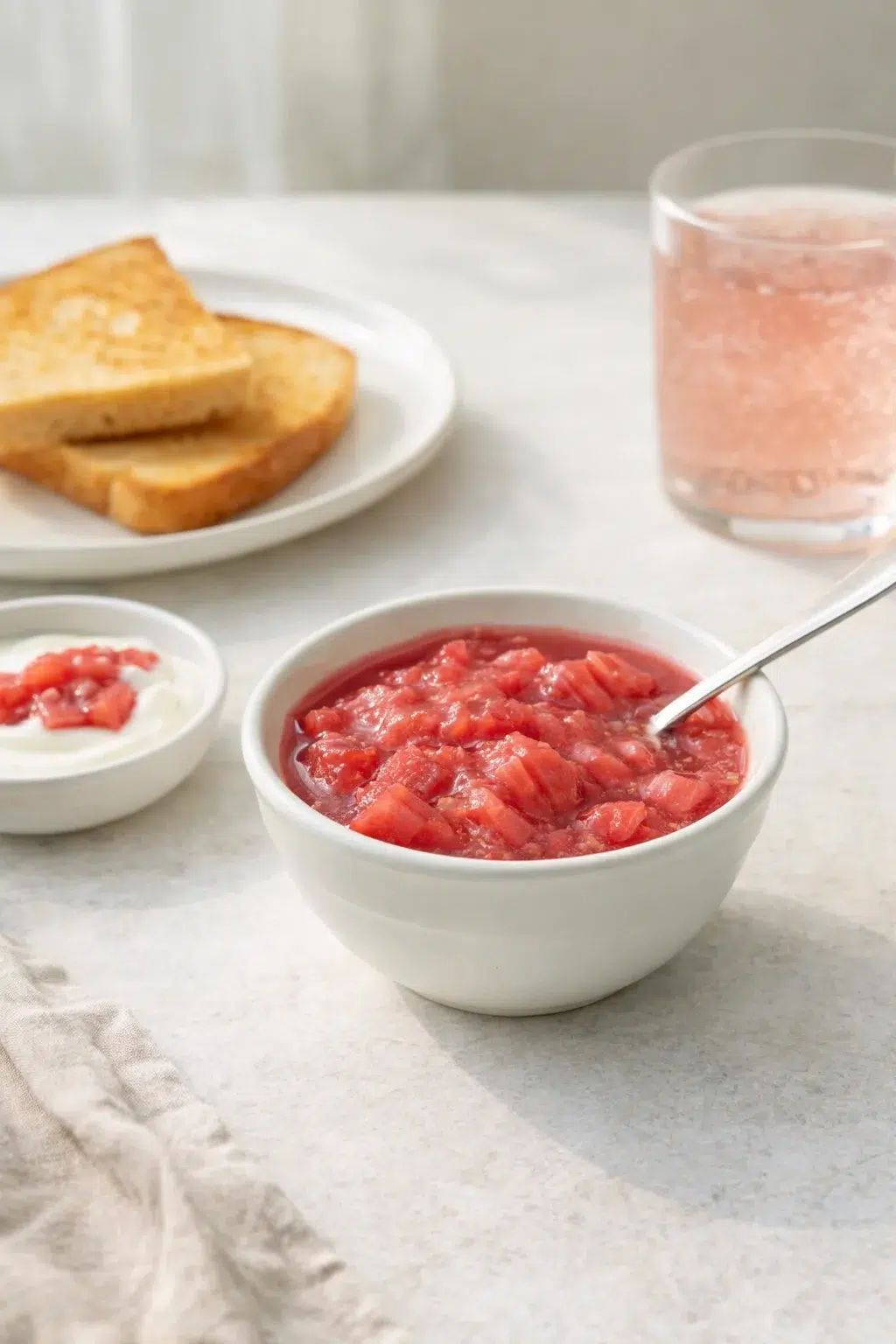
Made with just a few ingredients and ready in about 15 minutes, it cooks down into tender, slightly jammy pieces coated in a glossy, tangy-sweet sauce.
It’s the kind of recipe that fits easily into everyday cooking—perfect for spooning over yogurt, pancakes, or desserts, or even adding a fresh contrast to savory dishes.
If you’re looking for an easy rhubarb compote that’s quick, flexible, and full of flavor, this is one you’ll come back to often.
Quick Answer
What is rhubarb compote?
Rhubarb compote is a simple fruit sauce made by cooking rhubarb with sugar and a small amount of liquid until soft and slightly jammy. It’s commonly used as a topping for breakfast, desserts, or even savory dishes.
Quick Overview
- Prep time: 5 minutes
- Cook time: 10–15 minutes
- Total time: 15–20 minutes
- Servings: ~2 cups
- Calories: ~80–120 kcal per serving
Key benefits: Quick, small-batch, versatile, no baking required.
Why You’ll Love This Rhubarb Compote
This stovetop rhubarb compote is quick, simple, and easy to adapt.
- Fast to make: Ready in about 15 minutes from start to finish.
- Minimal ingredients: Just a few pantry staples and fresh rhubarb.
- Highly versatile: Works for breakfast, desserts, or savory dishes.
- Bright flavor: Naturally tangy with adjustable sweetness.
- Easy to customize: Add citrus, spices, or other fruits to suit your taste.
- If you enjoy rhubarb recipes like this, you might also like our
- lemon rhubarb loaf for another simple pairing.
Ingredients for Rhubarb Compote
This rhubarb compote uses just a handful of simple ingredients.
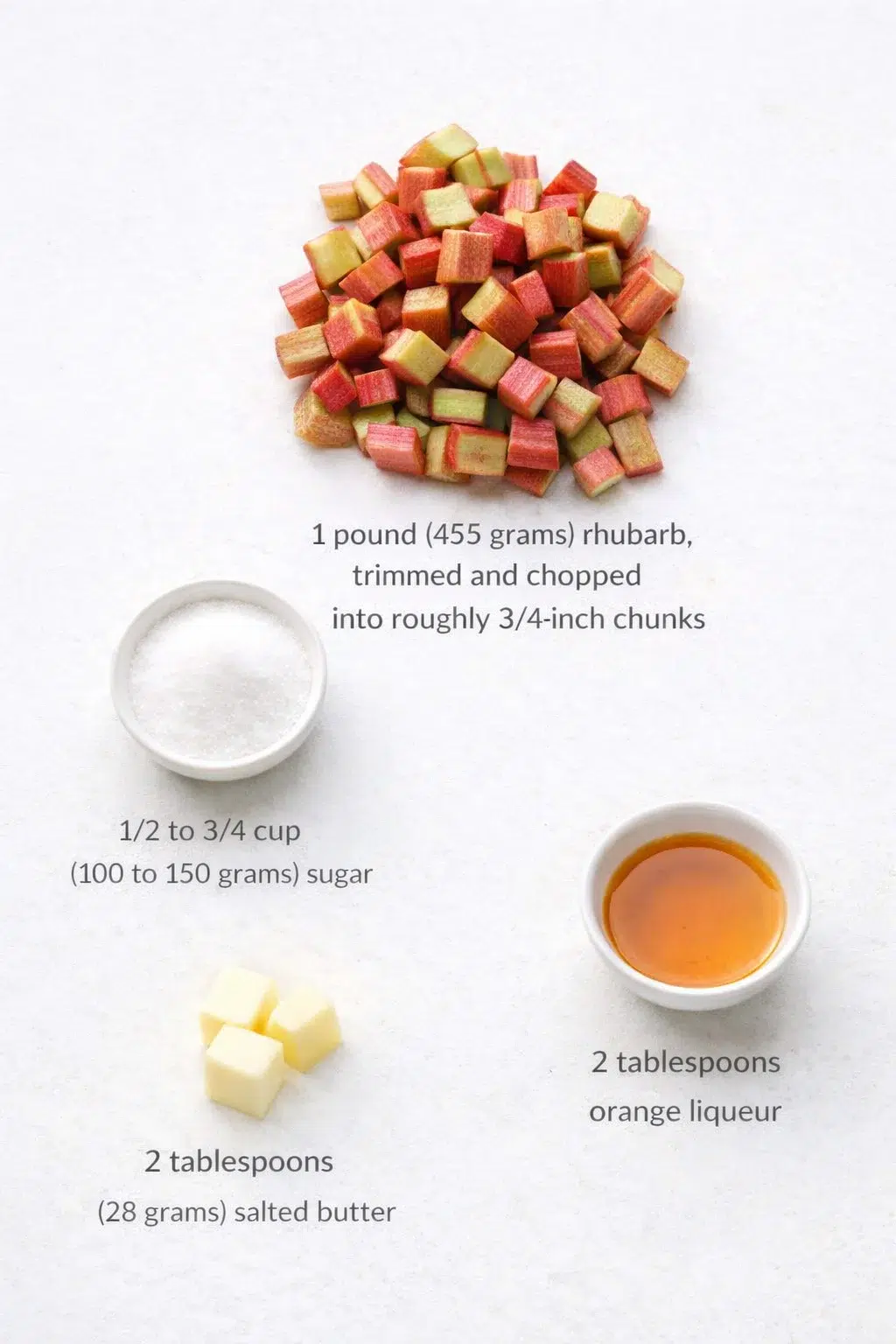
- 1 pound (455 grams) rhubarb, trimmed and chopped into roughly 3/4-inch chunks
- 1/2 to 3/4 cup (100 to 150 grams) sugar, adjusted to your preference
- 2 tablespoon (28 grams) salted butter, or unsalted with a pinch of salt added
- 2 tablespoon orange liqueur, like Cointreau or Grand Marnier, for a subtle citrus kick
How to Make Rhubarb Compote
This stovetop rhubarb compote comes together quickly with just a few simple steps.
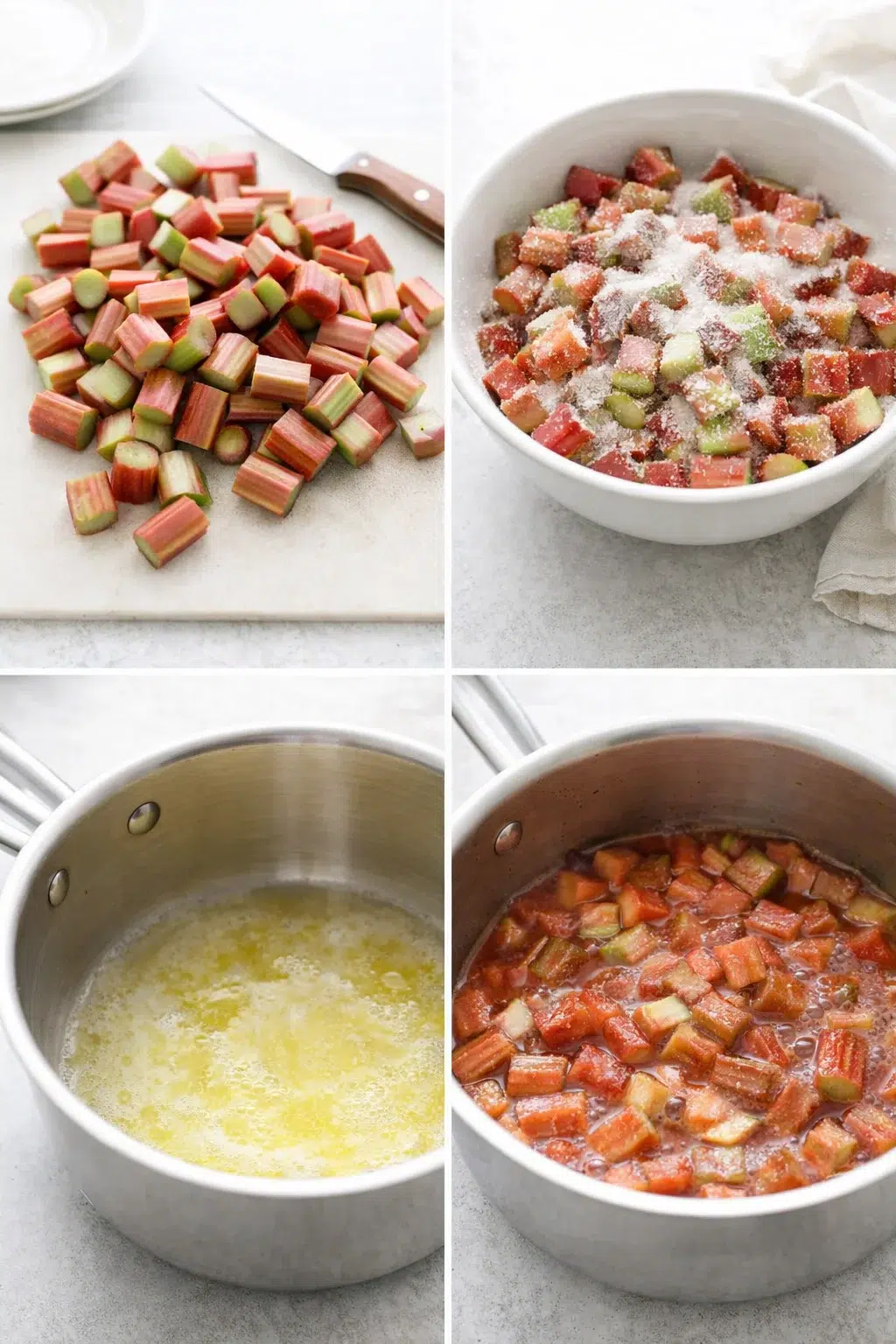
- Trim rhubarb and chop into roughly 3/4-inch even chunks.
- Stir together rhubarb and sugar in a medium bowl and let sit to draw out the juices.
- Melt butter (add a pinch of salt if using unsalted) in a heavy-bottomed medium saucepan over medium heat.
- Add the rhubarb-sugar mixture and orange liqueur to the pan.

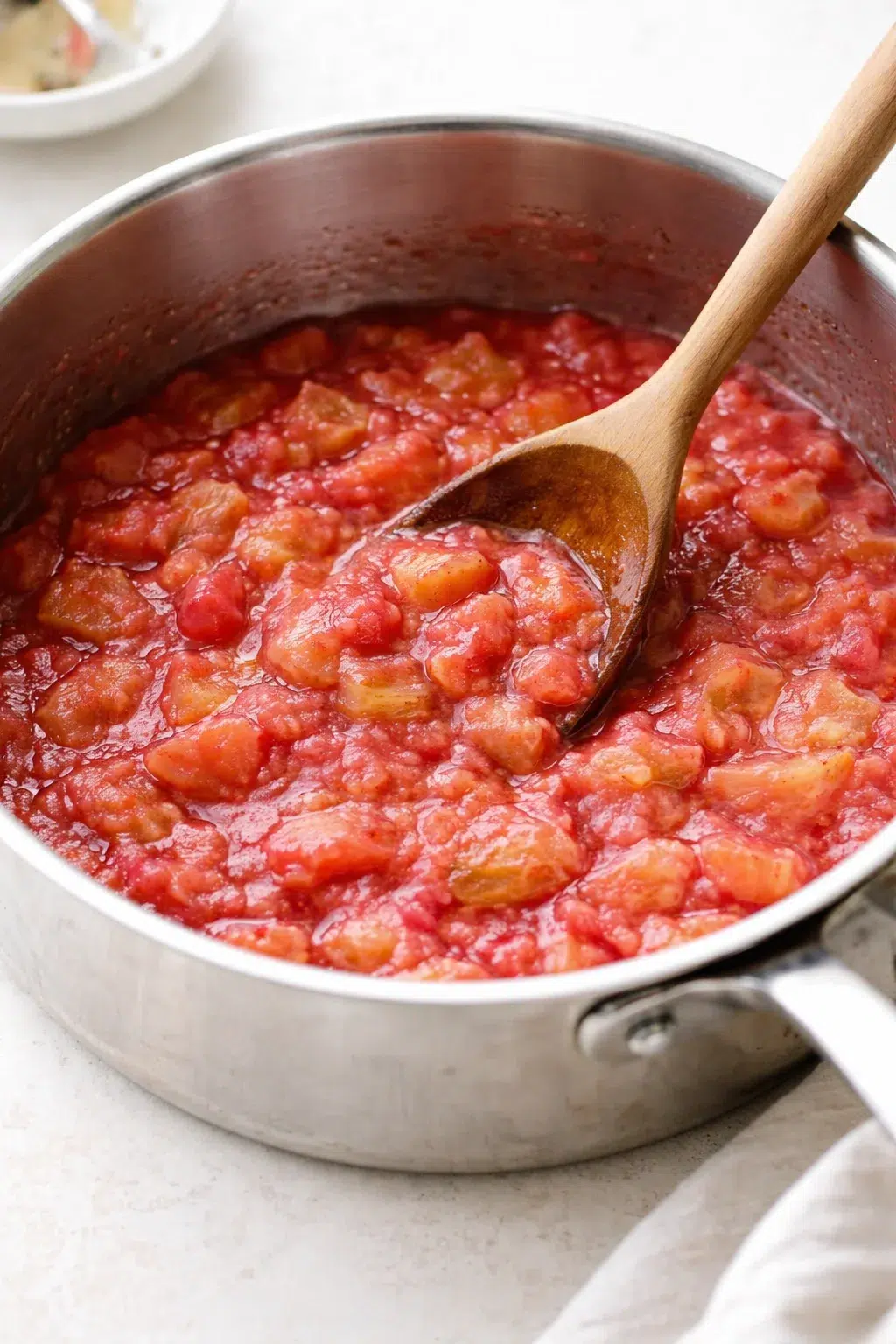
- Cook undisturbed for 2 minutes, then gently stir and continue cooking, stirring occasionally, until the rhubarb softens, breaks down, and the liquid is thick but still saucy, about 10–15 minutes.
Tips for the Best Rhubarb Compote
- Cut evenly: Slice rhubarb into similar-sized pieces (about 3/4 inch) so it cooks evenly and gives a smooth texture.
- Use medium heat: A heavy-bottom saucepan helps prevent burning. Keep the heat moderate to avoid scorching the sugar and butter.
- Don’t stir too early: Let the rhubarb cook undisturbed for the first 2 minutes so it releases its juices naturally and softens properly.
- Adjust sweetness: Start with 1/2 cup sugar and increase up to 3/4 cup depending on how tart your rhubarb is and your taste preference.
- Add a pinch of salt: If using unsalted butter, a small pinch of salt helps balance and enhance the flavor.
- Watch the texture: Stop cooking when the compote is thick but still slightly saucy—it will continue to thicken as it cools.
Serving Ideas
This rhubarb compote is incredibly versatile and easy to use in both sweet and savory dishes.
- Spoon over oatmeal, yogurt, or toast for a simple breakfast boost.
- Serve on pancakes, waffles, or French toast as a quick homemade topping.
- Add a dollop to vanilla ice cream for an easy dessert.
- Use as a filling for galettes, tarts, or over pound cake.
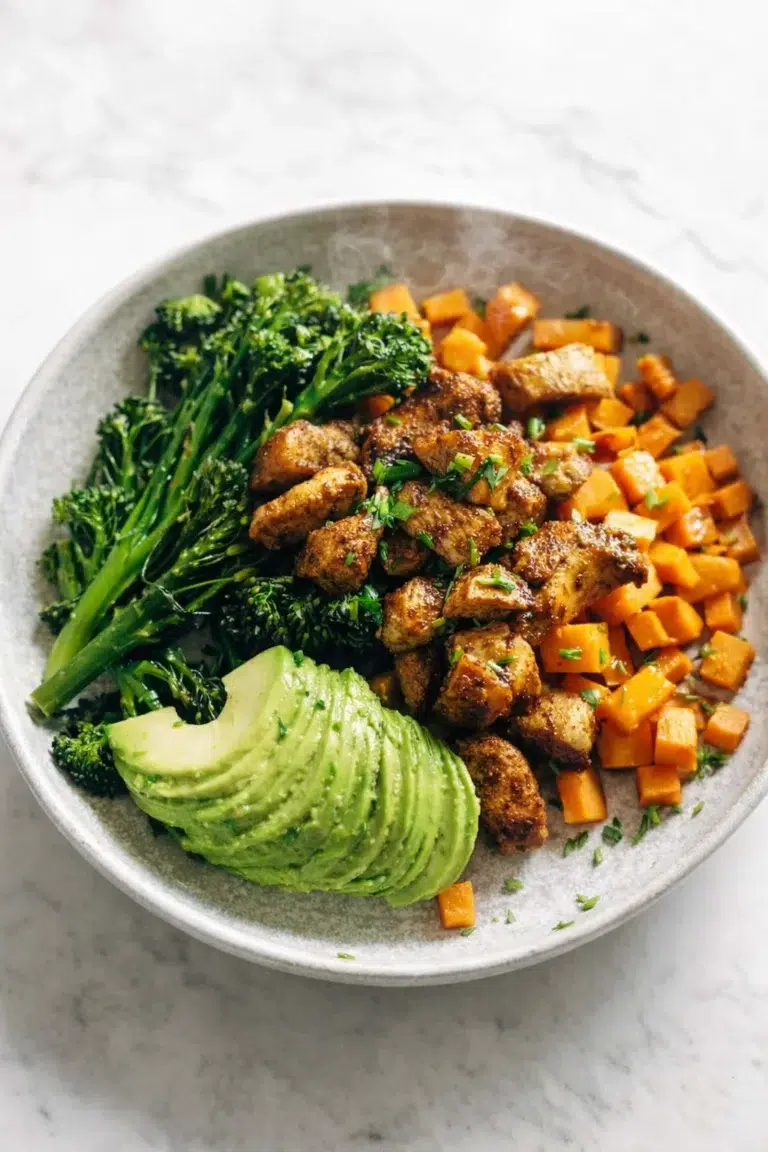
- Pair with savory dishes like roasted pork or chicken for a bright, tangy contrast—especially alongside sheet pan chicken and sweet potato meal prep.
Swaps and Variations
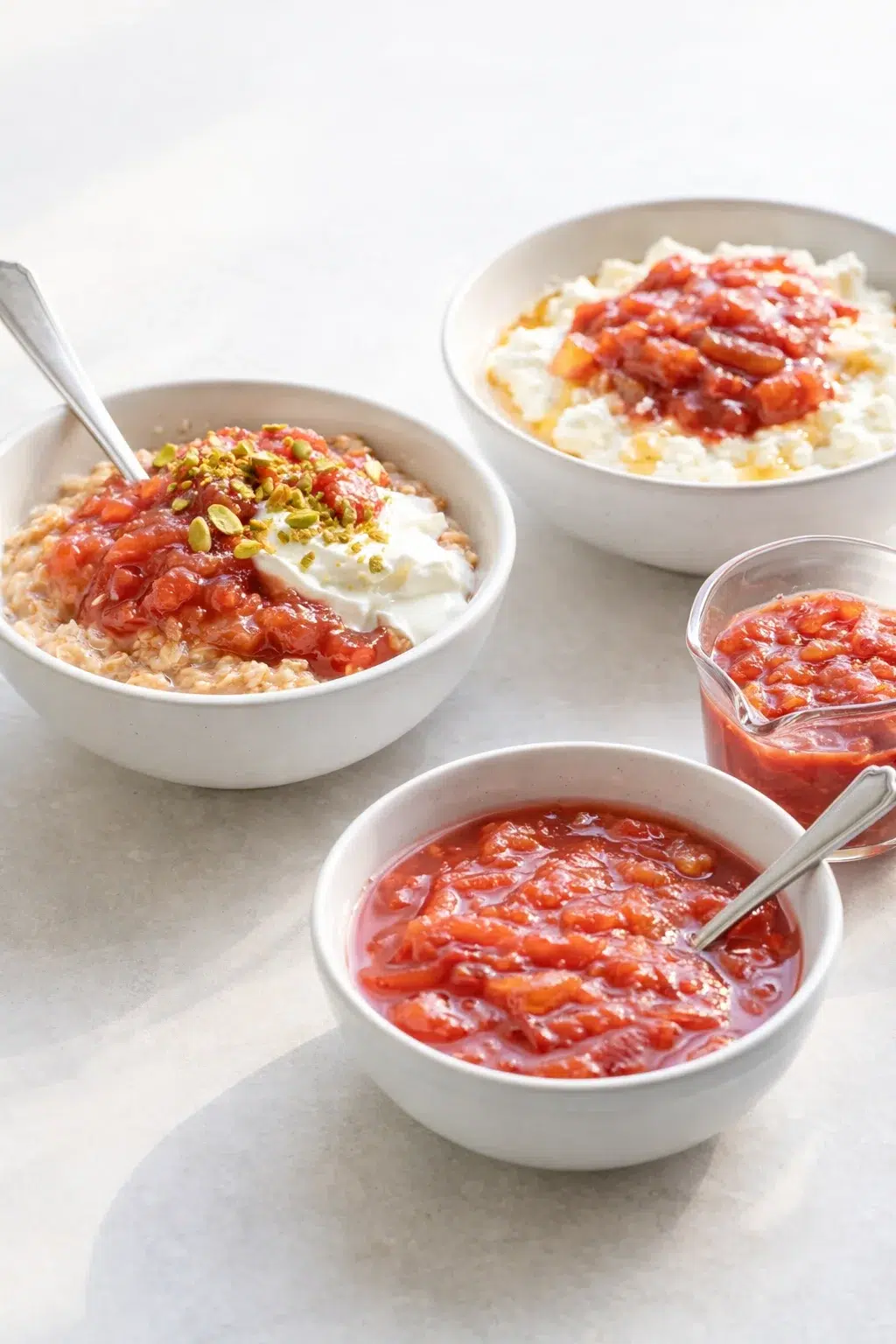
This rhubarb compote is easy to customize depending on your taste and what you have on hand.
- No alcohol option: Skip the orange liqueur and use 1–2 tablespoons of fresh orange juice or a little zest with a splash of water for a similar citrus note.
- Citrus variations: Swap orange for lemon juice and zest for a brighter, tangier flavor.
- Fruit additions: Add strawberries or raspberries during the last 3–5 minutes of cooking for a mixed fruit compote.
- Warm spices: Stir in a pinch of cinnamon, ginger, or cardamom near the end for a cozy twist—this pairing works especially well in recipes like
cinnamon rhubarb bread. - Natural sweeteners: Replace part or all of the sugar with honey or maple syrup. Reduce liquid slightly and monitor cooking time, as these can brown faster.
- Flavor twists: Try different liqueurs like Grand Marnier, triple sec, or even dark rum for a deeper flavor profile.
For more flavor combinations, see how rhubarb pairs beautifully with other fruits in
rhubarb cherry hibiscus crumble.ubarb pairs beautifully with other fruits in rhubarb cherry hibiscus crumble.
Storage, Freezing, and Reheating
This rhubarb compote stores very well and is perfect for making ahead.
- Refrigeration: Let the compote cool completely, then store in an airtight container in the fridge for up to 1 week.
- Freezing: Freeze in a sealed container or freezer-safe bag for up to 3 months. Thaw overnight in the refrigerator before using.
- Reheating: Warm gently on the stovetop over low heat, stirring occasionally. If needed, add a splash of water or orange juice to loosen the texture. You can also microwave in short 15–20 second intervals.
- Make-ahead tip: This compote often tastes even better after a day or two, as the flavors continue to develop.
If you enjoy make-ahead fruit recipes like this, you might also like our easy rhubarb compote recipe.
Is Rhubarb Compote Healthy?
Rhubarb compote can be a light and refreshing addition to your meals when enjoyed in moderation.
Rhubarb itself is low in calories and naturally high in fiber, but the added sugar increases the overall sweetness and calorie content. You can adjust the sugar or use natural sweeteners to make it lighter.
It works well as a topping for yogurt, oatmeal, or fruit-based desserts, making it easy to include in a balanced diet.
Rhubarb is naturally low in calories and a good source of fiber, making it a light and refreshing ingredient. For more detailed nutritional information, you can refer to USDA FoodData Central.
Rhubarb Compote FAQs
Can I use frozen rhubarb?
Yes, you can use frozen rhubarb. Add it directly to the pan without thawing and expect a slightly longer cooking time.
Do I have to use orange liqueur?
No, it’s optional. You can replace it with orange juice, zest, lemon juice, or skip it entirely.
How do I make the compote thicker?
Cook it a bit longer to reduce the liquid, or mash some pieces with a spoon. For a thicker texture, add a small amount of cornstarch mixed with water.
Can I can this compote?
This recipe isn’t designed for safe home canning. For long-term preservation, follow tested canning guidelines.
Will the compote get sweeter over time?
The flavors mellow as it sits, which can make it taste less tart. Adjust the sugar during cooking if needed.
What if my compote is too tart?
Add a little more sugar gradually while cooking until it reaches your preferred balance.
Can I add other fruits?
Yes, strawberries, raspberries, and apples all pair well with rhubarb.
Is rhubarb safe to eat raw?
The stalks are safe but very tart. The leaves are toxic and should never be eaten.
Can I make this vegan?
Yes, simply replace the butter with plant-based butter or coconut oil.
How long does rhubarb compote last?
It keeps in the fridge for up to 1 week and can be frozen for up to 3 months.
Is rhubarb safe to eat raw?
Rhubarb stalks are safe to eat but very tart, while the leaves are toxic and should never be consumed. For more food safety information, see USDA food safety guidelines.
Conclusion
This stovetop rhubarb compote is one of the easiest ways to enjoy fresh rhubarb with minimal effort.
Quick to prepare and easy to customize, it’s a versatile recipe that works just as well for breakfast as it does for dessert or even savory dishes.
Whether you keep it simple or experiment with different flavors, it’s a recipe you’ll find yourself coming back to again and again.