

No-Knead Sourdough Bread (The Calm, Everyday Way)
Some mornings in our house start loud — backpacks thumping, cereal bowls clinking, my husband Mark hunting for his keys. But the mornings when sourdough is in the oven feel different. Slower. Quieter. Almost like the house is holding its breath.
This no-knead sourdough bread became part of our rhythm during a season when I needed cooking to feel grounding again, not demanding. I remember pulling the loaf from the oven one Saturday morning, steam curling out as I sliced into it. My son Oliver said, “Mom, it smells like a bakery.” My daughter Emma immediately asked for butter — thick, melting butter.
That moment reminded me why I love sourdough. It doesn’t rush you. It doesn’t need constant attention. It simply asks for patience — and rewards you with something deeply comforting.
This recipe is for anyone who wants real sourdough bread without stress, complicated shaping, or hours of kneading. If you’ve ever felt intimidated by sourdough, this is where I’d invite you to begin.
Why You’ll Love This Recipe
• No kneading required — time does the work
• Beginner-friendly even if sourdough scares you
• Deep flavor and chewy crumb without complicated steps
• Fits real life — mix it, rest it, bake it
• Family-approved (Mark requests it weekly now)
This loaf has a crackly crust, a soft interior, and that gentle tang that makes sourdough so special — without feeling like a science project.

The Origin of This Recipe
I didn’t grow up with sourdough starters on the counter. My grandmother baked beautiful breads, but they were quick yeast loaves meant to feed a crowd fast. When sourdough became popular online, I felt curious — and overwhelmed.
Every recipe seemed intense: stretch-and-fold schedules, hydration charts, perfect scoring angles. I wanted sourdough that felt like home cooking, not a test.
This no-knead version came from simplifying, testing, and learning what actually matters. It’s based on how bread behaves naturally — given time, flour and water will do their job. You don’t need to wrestle the dough. You just need to let it rest.
Ingredients
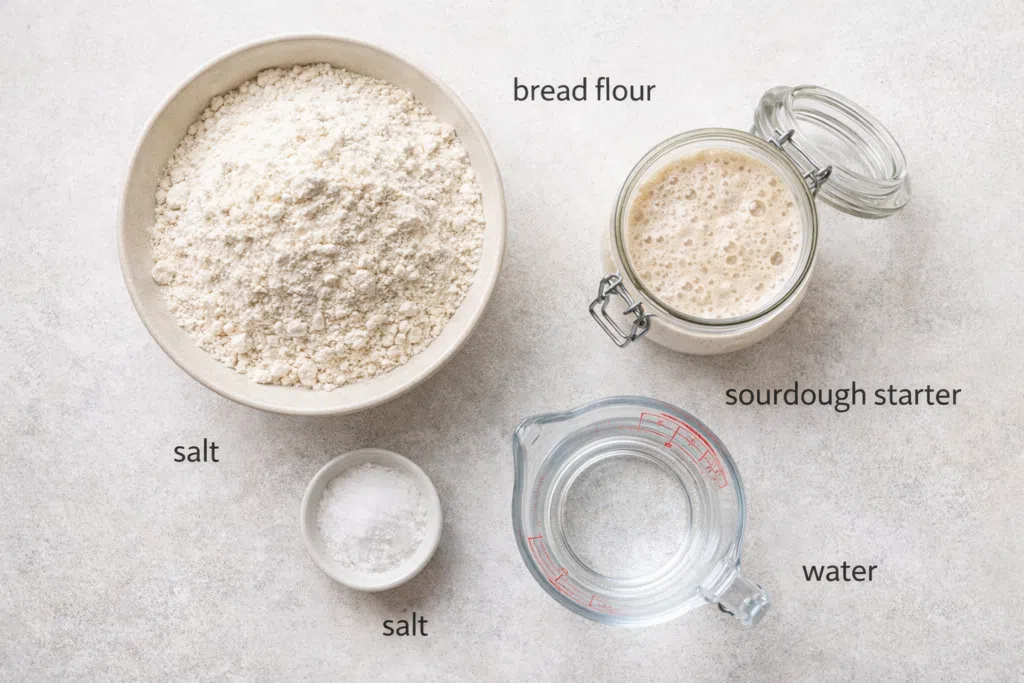
Simple ingredients are the heart of good bread. Each one plays a quiet but important role.
• Bread flour – for structure and chew
• Active sourdough starter – bubbly and ready
• Warm water – encourages fermentation
• Salt – flavor and strength
Instructions – Step by Step, Calm and Clear
1. Mix the dough
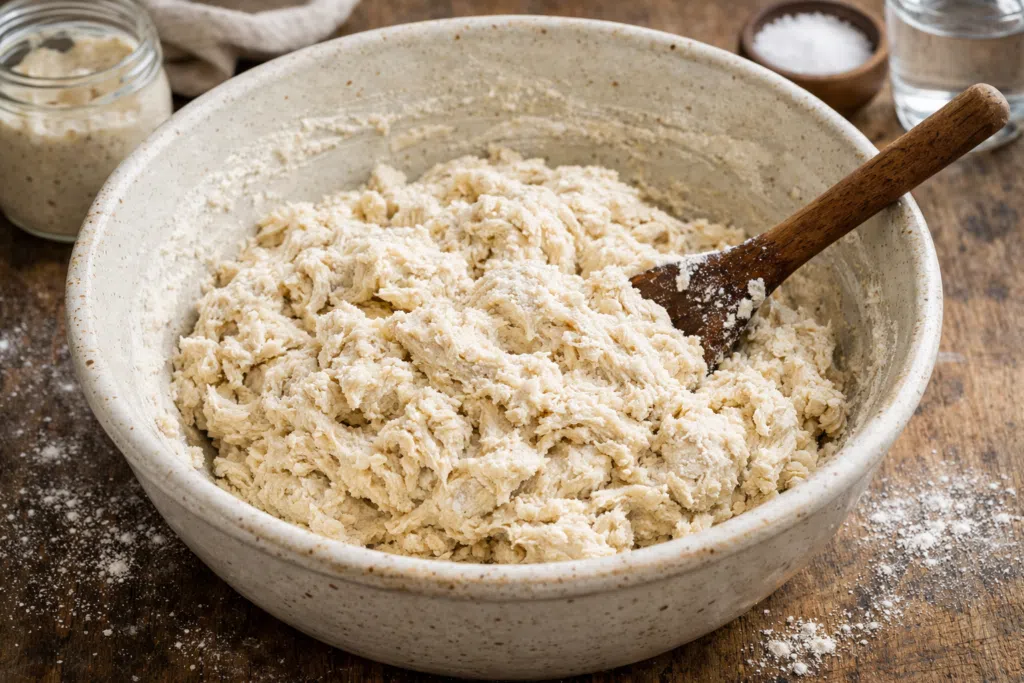
In a large bowl, stir together the flour, water, sourdough starter, and salt until no dry flour remains. The dough will look shaggy and rough — that’s exactly right. Don’t overthink it.
Tip: If it feels sticky, resist adding flour. Sticky dough becomes airy bread.
2. Rest and ferment
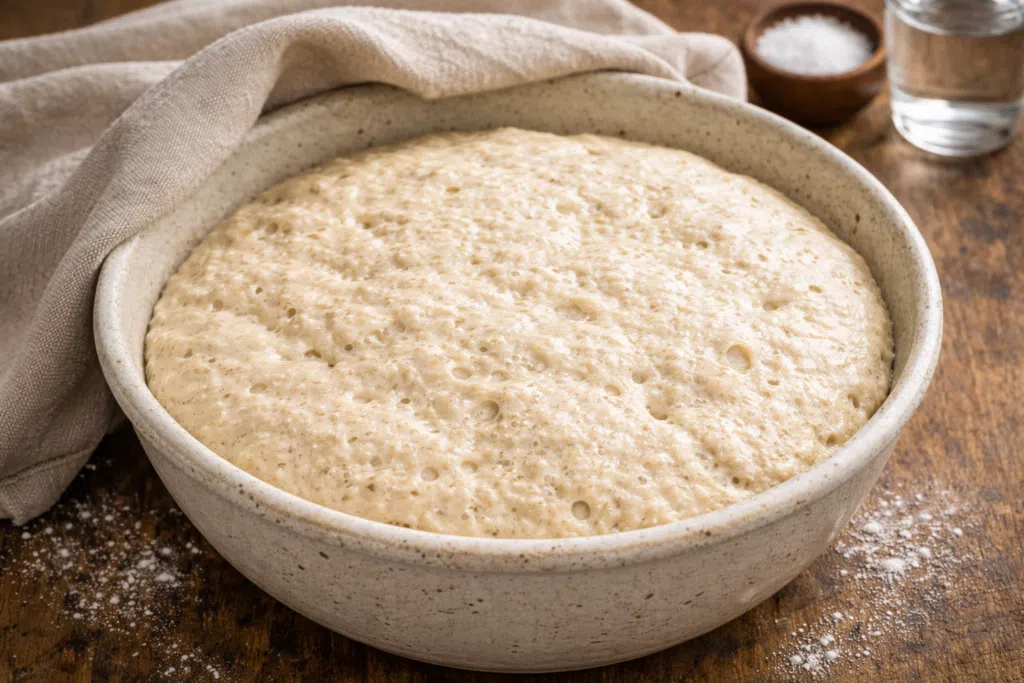
Cover the bowl with a clean towel and let it rest at room temperature for 12–18 hours. During this time, the dough will rise, relax, and develop flavor.
What to look for: Bubbles on the surface, a slightly domed top, and a dough that jiggles when you move the bowl.
3. Shape gently
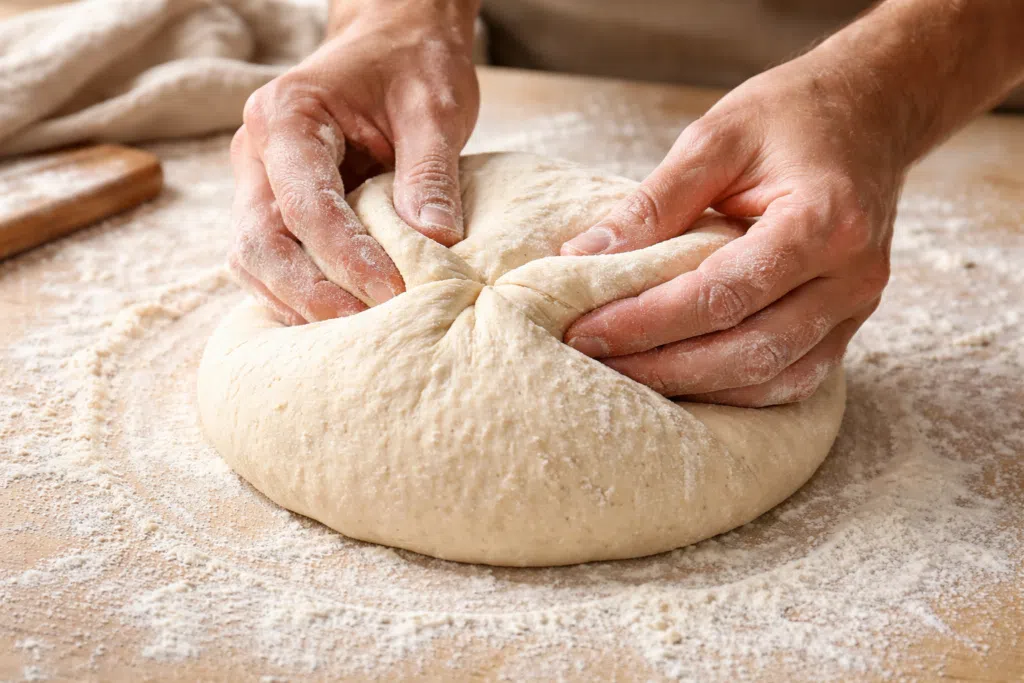
Turn the dough onto a lightly floured surface. Fold the edges toward the center just until it forms a round. No punching. No kneading. Be kind to it.
4. Final rest
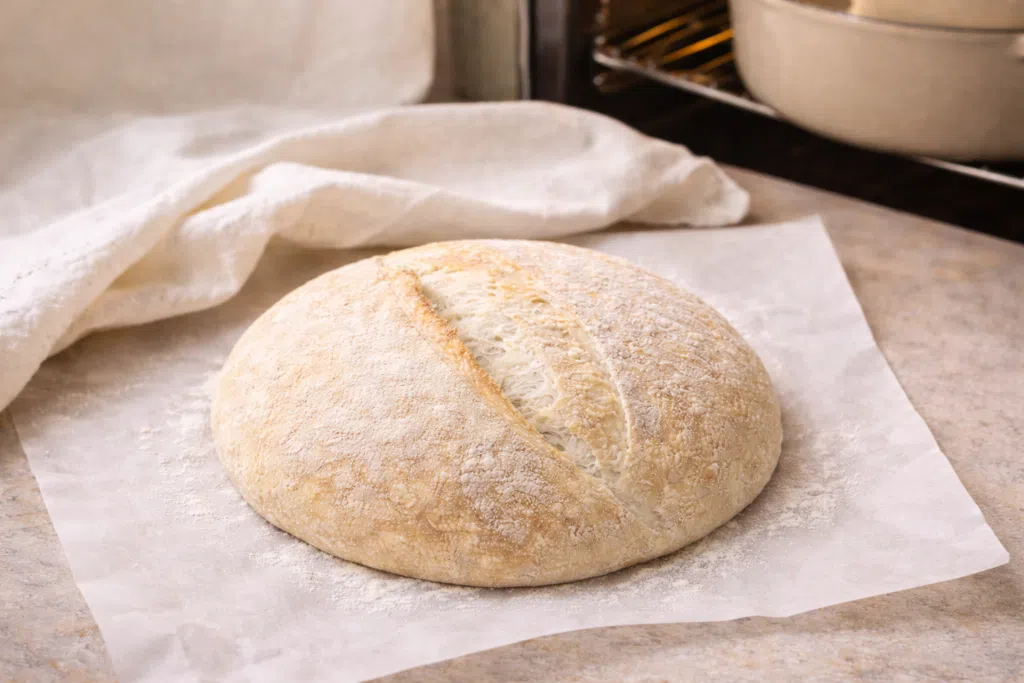
Place the dough on parchment paper, cover loosely, and let it rest while your oven preheats with a Dutch oven inside.
5. Bake
Carefully place the dough into the hot Dutch oven, cover, and bake. Remove the lid halfway through to allow the crust to deepen and crackle.
Visual cue: The loaf should be deep golden with a hollow sound when tapped.
6. Cool (the hardest step)
Let the bread cool fully before slicing. This allows the crumb to set and prevents gumminess.
Tips & Flavor Variations
- Use bread flour for structure – It gives better rise and chew than all-purpose.
- Longer fermentation = more flavor – Time builds complexity naturally.
- A warm kitchen helps beginners – Cold slows fermentation dramatically.
- Add whole wheat flour (up to 20%) – For nuttier flavor without heaviness.
- Seasonal variations – Add rosemary, roasted garlic, or seeds during mixing.
Common Myths & Mistakes
Myth 1: Sourdough must be kneaded to work
Many believe kneading is essential because traditional yeast bread relies on it to build gluten. Social media reinforces this with endless folding tutorials.
This belief is incorrect because time can develop gluten naturally. When flour hydrates and rests, gluten forms on its own. Kneading simply speeds up a process that fermentation already handles beautifully.
The correct approach is trusting rest. Mix thoroughly, then let the dough sit. The structure will develop without force, resulting in a softer crumb and better flavor.
Myth 2: If the dough is sticky, it’s wrong
Sticky dough scares new bakers. It feels unfinished, messy, and hard to handle — so people add more flour.
This is incorrect because hydration is what creates open crumb and tenderness. Adding flour late makes bread dense and dry.
The correct approach is light flouring only during shaping and using a bench scraper if needed. Sticky dough means moisture — and moisture means good bread.
Myth 3: Sourdough must taste very sour
Many assume sourdough should be sharply tangy, almost acidic.
This belief comes from over-fermented or commercial sourdoughs. True homemade sourdough can be mild, balanced, and comforting.
The correct approach is controlling fermentation time and temperature. Shorter fermentation yields gentler flavor — perfect for families and everyday meals.
FAQ – Frequently Asked Questions
How do I store no-knead sourdough bread?
Store the loaf cut-side down on a cutting board or wrapped loosely in a towel for up to two days. For longer storage, use a breathable bread bag. Avoid airtight containers — they soften the crust and create moisture.
Can I freeze sourdough bread?
Yes. Slice first, then freeze in an airtight bag. Toast slices directly from frozen for best texture.
Why is my bread dense inside?
Dense crumb usually means under-fermentation or inactive starter. Ensure your starter is bubbly and your dough has visibly risen before baking.
Can I bake this without a Dutch oven?
You can, but the crust will be softer. Use a preheated baking stone and add steam to the oven for best results.
How do I know my starter is ready?
It should double within 4–6 hours after feeding and show bubbles throughout. A flat or watery starter won’t leaven bread well.
Print
No-Knead Sourdough Bread
- Total Time: 18 hours
- Diet: Vegetarian
Description
A calm, beginner-friendly sourdough loaf with deep flavor, chewy crumb, and no kneading required.
Ingredients
• 3 ½ cups bread flour
• 1 ½ cups warm water
• ½ cup active sourdough starter
• 2 teaspoons salt
Instructions
-
Mix all ingredients until combined.
-
Cover and ferment 12–18 hours.
-
Shape gently into a round.
-
Preheat oven with Dutch oven inside.
-
Bake covered, then uncovered until golden.
-
Cool completely before slicing.
Notes
Store at room temperature for 2 days or freeze sliced.
Mild flavor, family-friendly.
- Prep Time: 15 minutes
- Cook Time: 45 minutes
- Category: Bread
- Method: Baking
- Cuisine: Artisan
Nutrition
- Calories: 180 per slice
- Sugar: 1g
- Fat: 0.5g