

Korean Ground Beef Bowl (Easy Weeknight Dinner)
Hi, I’m Helen Whitaker — welcome to Cookliva.
Some evenings just call for something simple. Not boring. Not bland. Just steady and satisfying. This Korean ground beef bowl became one of our go-to meals during a particularly busy season — soccer practice, homework at the kitchen table, and James getting home just hungry enough to peek into the skillet before dinner was ready.
This Korean ground beef bowl is my favorite easy Korean beef recipe when I need a quick weeknight dinner that still feels intentional. It’s savory, slightly sweet, garlicky, and comforting in that quiet way a warm ground beef rice bowl always is.
And the best part? It’s made with ingredients I already have in my pantry.
Why You’ll Love This Recipe
This isn’t just another ground beef dinner. Here’s why it works so well:
It’s fast without tasting rushed.
From skillet to table in about 25 minutes, which means you can cook while the kids finish homework and still sit down together before the evening unravels.
It’s budget-friendly.
Ground beef is affordable, but with the right sauce, it tastes anything but basic.
It’s deeply flavorful.
Soy sauce, garlic, ginger, and a touch of brown sugar create that irresistible Korean-inspired sweet-savory balance.
It’s perfect for meal prep.
This ground beef rice bowl stores beautifully and reheats without drying out.
It’s flexible.
You can make it spicy, low-carb, extra saucy, or vegetable-packed.

If you love quick rice-based dinners, you might also enjoy my garlic butter rice bowl — it’s another calm, simple option for busy evenings.
URL: https://cookliva.com/garlic-butter-rice/
The Origin of This Recipe
I want to be clear — this isn’t a traditional Korean dish. It’s Korean-inspired. I’ve always loved the bold flavors in Korean cuisine — the balance of sweet, savory, and umami. But I also cook for a family that appreciates flavor without too much heat.
So I tested this recipe over a dozen times, adjusting the sugar, soy sauce, and garlic until the balance felt just right. Enough sweetness to caramelize slightly. Enough salt to deepen the beef. Enough garlic to make the kitchen smell irresistible.
The result? A family-friendly dinner idea that feels special without being complicated.
If you’re curious about the ingredient that gives many Korean dishes their signature heat, you can read more about gochujang here: https://en.wikipedia.org/wiki/Gochujang
It’s not mandatory for this recipe, but a small spoonful adds beautiful warmth.
Ingredients
- 1 lb ground beef (80/20 works beautifully)
- 3 cloves garlic, minced
- 1/4 cup low-sodium soy sauce
- 2 tablespoons brown sugar
- 1 tablespoon sesame oil
- 1/2 teaspoon ground ginger
- 1/4 teaspoon crushed red pepper flakes (optional)
- 2 cups cooked white rice
- 2 green onions, sliced
- 1 teaspoon sesame seeds
- Optional toppings: shredded carrots, sliced cucumber, fried egg
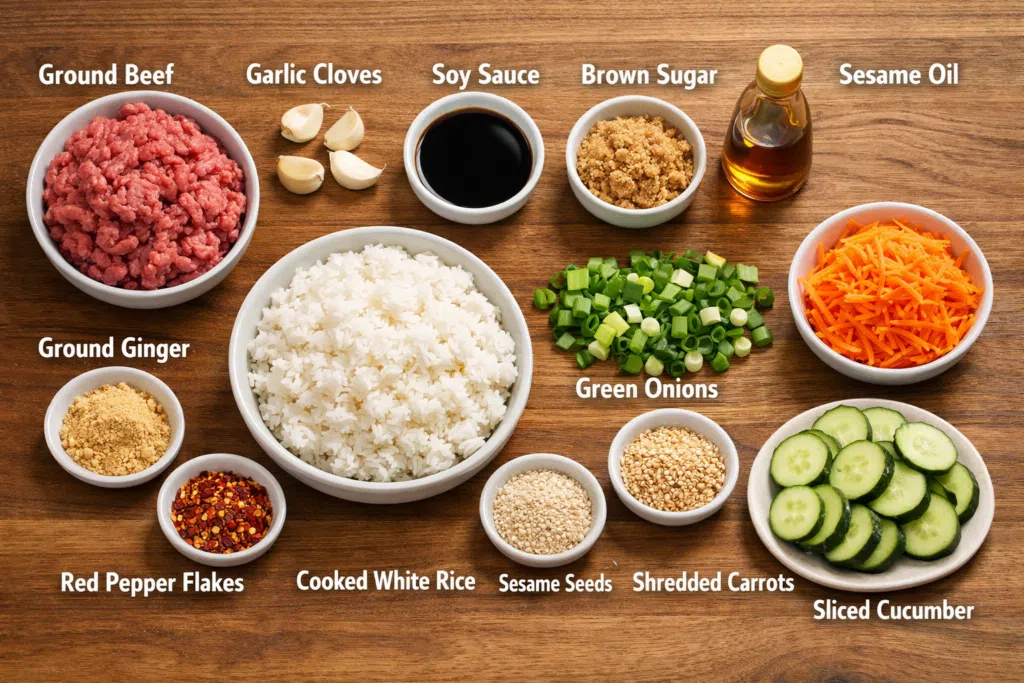
The soy sauce gives saltiness and umami. Brown sugar balances it with warmth. Sesame oil adds a nutty finish — don’t skip it. It’s a small amount, but it makes a big difference.
Instructions
1. Cook the Rice First
If your rice isn’t already prepared, start it first. Fluffy rice is the foundation of this bowl. Rinse it before cooking to remove excess starch — this keeps it from becoming sticky and heavy.
2. Brown the Beef
Heat a large skillet over medium-high heat. Add the ground beef and break it apart with a wooden spoon.
Let it brown properly. Don’t stir constantly. Allow some pieces to develop deep golden edges — that caramelization builds flavor.
Drain excess grease if necessary, but leave a little for richness.
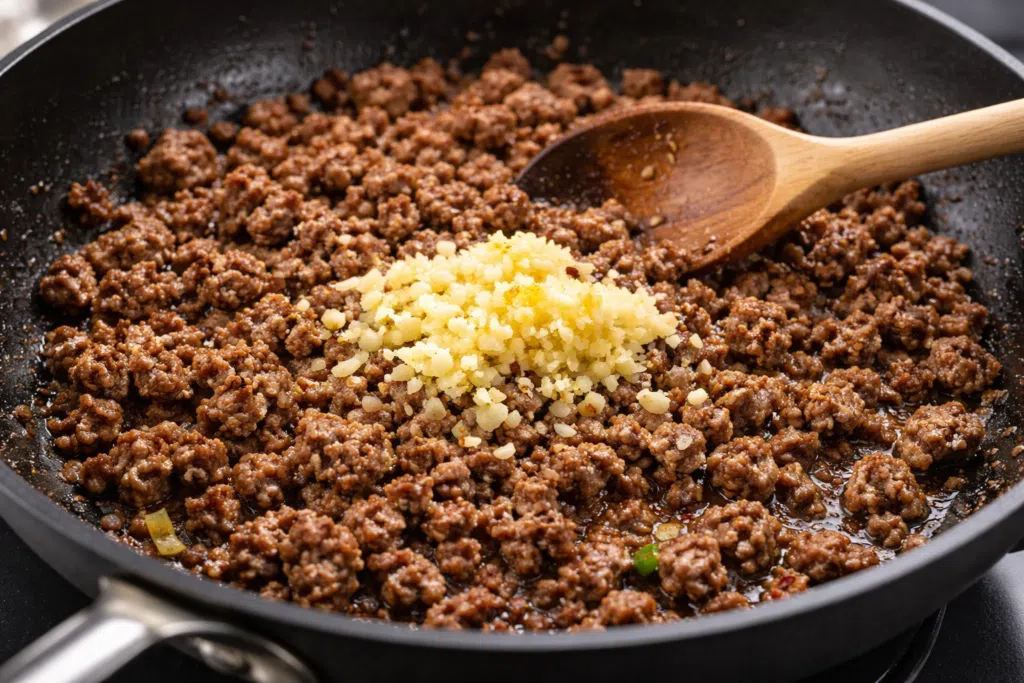
3. Add Garlic & Ginger
Reduce heat slightly. Add minced garlic and ground ginger.
Cook just 30–45 seconds until fragrant. Garlic burns quickly, so stir gently and don’t walk away.
4. Make the Sauce
In a small bowl, whisk soy sauce, brown sugar, sesame oil, and red pepper flakes.
Pour the sauce into the skillet. Stir and let it simmer for 2–3 minutes until slightly thickened. The beef should look glossy and coated, not swimming in liquid.
If it seems too salty, add 1–2 tablespoons of water. If too sweet, add a splash more soy sauce.
5. Assemble the Bowls
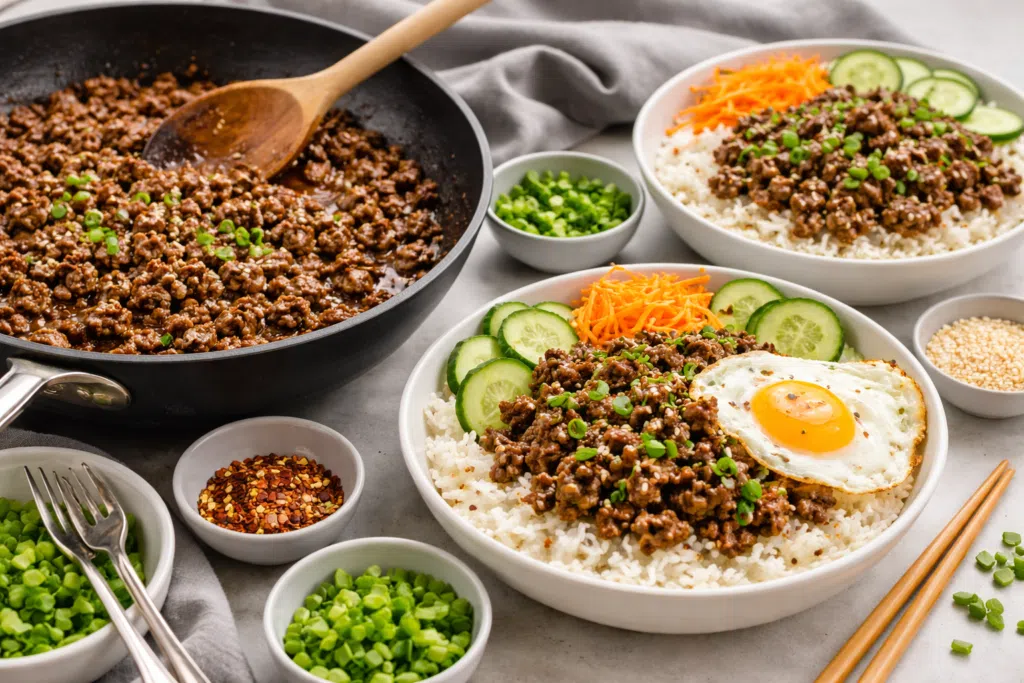
Spoon rice into bowls. Top with beef mixture. Add green onions, sesame seeds, and fresh vegetables.
Emma always adds cucumber. Noah insists on a fried egg on top. James adds extra chili flakes.
Let everyone customize — that’s half the fun.
Equipment You’ll Need
- Large skillet
- Wooden spoon
- Rice pot or rice cooker
- Small bowl for sauce
Nothing fancy. That’s what makes this recipe approachable.
Storage & Make-Ahead
Store beef and rice separately in airtight containers for up to 4 days.
Reheat gently in a skillet or microwave. If the beef seems dry, add a splash of water before reheating.
For meal prep, portion rice and beef into containers and keep toppings separate until serving.
Freezing is possible, but texture is best when eaten fresh or refrigerated short-term.
Tips for Perfect Texture & Flavor
- Use 80/20 beef for best flavor. Leaner beef can taste dry.
- Don’t overcook the sauce. It should coat, not reduce into syrup.
- Add vegetables to the skillet. Finely diced bell peppers or zucchini cook beautifully with the beef.
- Try ground turkey for lighter option. Increase sesame oil slightly to maintain richness.
- Top with a soft fried egg. The runny yolk creates a silky sauce effect.
Flavor Variations
- Add a tablespoon of gochujang for deeper spice.
- Stir in shredded cabbage for crunch.
- Swap rice for cauliflower rice.
- Add kimchi on top for tangy contrast.
- Use coconut sugar instead of brown sugar for subtle difference.
Meal Prep, Storage & Reheating
Store leftovers in airtight containers in the refrigerator for up to 4 days.
For meal prep, portion rice and beef separately to keep texture ideal. Reheat gently in the microwave with a splash of water to prevent dryness.
You can freeze the beef mixture (without rice) for up to 2 months. Thaw overnight in the fridge before reheating.
Common Myths & Mistakes
Myth 1: Ground Beef Can’t Taste “Authentic”
Many people believe authentic Korean flavors require specific cuts of beef and long marinating. While traditional bulgogi uses sliced steak, flavor is about balance — not just cut of meat.
This myth persists because social media often equates authenticity with complexity. But in home cooking, adaptation is practical.
Ground beef absorbs sauce quickly and evenly. When properly browned and seasoned, it delivers deep flavor in minutes.
The correct approach is focusing on caramelization and balanced sauce ratios. Authentic flavor comes from technique and ingredients, not just tradition.
Myth 2: More Sauce Equals Better Flavor
It’s tempting to double the sauce for extra flavor. Many believe a saucier bowl tastes richer.
In reality, too much liquid makes the rice soggy and dilutes seasoning. The goal is coating, not soaking.
The misconception likely comes from stir-fries served with visible sauce. But this dish works best when the beef glistens lightly, not swims.
The correct approach is reducing the sauce just enough to cling to the meat. If extra moisture is needed, add a spoonful at serving — not during cooking.
Myth 3: Sesame Oil Is Optional
Some think sesame oil is just garnish-level flavor and can be skipped.
That’s a mistake. Sesame oil adds aromatic depth that defines the dish. Without it, the flavor tastes flat.
This myth exists because the quantity is small. But small amounts of strong ingredients often have big impact.
The correct approach is adding sesame oil at the end of cooking or in the sauce mixture. Even half a tablespoon transforms the final result.
FAQ – Frequently Asked Questions
Can I make Korean ground beef bowl without brown sugar?
Yes, but you’ll need balance. Brown sugar offsets the saltiness of soy sauce. If omitted, substitute honey or coconut sugar. Without sweetness, the flavor will taste sharp and one-dimensional. Start with a smaller amount and adjust to taste.
Why did my sauce turn too salty?
This usually happens if regular soy sauce is used without adjusting. Low-sodium soy sauce is recommended. If it’s already too salty, add water and a small pinch of sugar to rebalance.
Can I freeze Korean ground beef?
Yes, freeze the cooked beef (without rice) for up to 2 months. Thaw overnight and reheat gently with a splash of water to restore moisture.
How do I prevent dry ground beef?
Avoid overcooking and use beef with moderate fat content. Cooking at too high heat for too long evaporates moisture. Once the sauce thickens, remove from heat promptly.
Can I make this spicy?
Absolutely. Add gochujang, chili paste, or extra red pepper flakes. Adjust gradually — heat builds quickly.
Conclusion
This Korean ground beef bowl is proof that simple doesn’t mean boring. It’s a quick weeknight dinner that feels comforting, flavorful, and made with care. Around our table, it disappears fast — and that’s always the best sign.
Print
Korean Ground Beef Bowl
- Total Time: 25 minutes
Description
A quick and flavorful Korean-inspired ground beef bowl made with soy sauce, brown sugar, garlic, and sesame oil served over fluffy rice.
Ingredients
-
1 lb ground beef
-
3 cloves garlic, minced
-
1/4 cup low-sodium soy sauce
-
2 tbsp brown sugar
-
1 tbsp sesame oil
-
1/2 tsp ground ginger
-
1/4 tsp red pepper flakes
-
2 cups cooked white rice
-
2 green onions
-
1 tsp sesame seeds
Instructions
-
Cook rice.
-
Brown ground beef in skillet.
-
Add garlic and ginger; cook briefly.
-
Mix soy sauce, brown sugar, sesame oil, pepper flakes.
-
Pour sauce into skillet; simmer 2–3 minutes.
-
Serve over rice with toppings.
Notes
Store beef and rice separately up to 4 days.
Add splash of water when reheating.
Freeze beef only for best texture.
- Prep Time: 10 minutes
- Cook Time: 15 minutes
- Category: Dinner
- Method: Stovetop
- Cuisine: Korean-inspired
Nutrition
- Serving Size: 4
- Calories: 480 per serving
- Sugar: 9g
- Fat: 26g


