
king cake
Introduction / Hook
Imagine breaking into a warm, golden ring of pastry, the air perfumed with cinnamon, vanilla, and a whisper of citrus. The crust crackles softly as your teeth sink into a tender, airy interior, each bite releasing a melt-in-your-mouth sweetness that tastes like a celebration. On top, a confetti of purple, green, and gold sugar glitters like Mardi Gras itself, inviting you to gather friends and family around the table. This is king cake—a treasured centerpiece that signals the start of the carnival season, a shared moment of joy, and a delicious ritual that turns an ordinary weekend into a memory. The aroma wafts through the house, drawing neighbors to the doorway, while the ring shape—no beginning and no end—reminds us of the cycles of the seasons, of friendships renewed, and of the moments we choose to savor together. If you’ve ever wanted a dessert that feels like a fête in every bite, king cake is your invitation.
In its simplest essence, king cake is comfort wrapped in celebration: a soft, fragrant dough braided into a circle, spirals of cinnamon-sugar tucked within, and a glaze or icing that glistens as if sprinkled with stardust. It’s the kind of treat that makes coffee taste better, conversations linger longer, and the kitchen become the warm heart of a home. The ritual of sharing a king cake—waiting to discover a tiny prize tucked inside, and deciding who will host the next cake—adds a layer of playful anticipation that makes every slice feel like a small party. Whether you’re feeding a crowd on Fat Tuesday, planning a weekend brunch, or simply craving something indulgent yet comforting, king cake delivers a multi-sensory experience: the sight of its glossy glaze, the scent of toasty dough perfumed with vanilla and cinnamon, the soft pull of a perfectly tender crumb, and the satisfying crunch of sugar crystals that catch the light as you pass the plate.
Beyond its irresistible taste, king cake carries a sense of history and community. It’s a dish that travels across cultures and continents, evolving with each kitchen it enters while preserving a central idea: that food, when shared, becomes a memory in the making. This long-form guide leans into that spirit—celebrating the dish’s roots, exploring modern twists, and offering ideas to tailor king cake to dietary needs and personal preferences—so you can create a version that’s as deeply comforting as it is joyfully festive.
The Story Behind the Dish
Origins and Epiphany Traditions
The concept of a “king cake” has its roots in Epiphany celebrations, when households once baked a special round or ring-shaped cake to honor the arrival of the Wise Men bearing gifts. In many European traditions, a small figurine or bean known as a fève was baked inside the cake, and the person who found it was crowned king or queen for the day. The sense of surprise, ritual, and communal sharing threaded through these Epiphany pastries laid the groundwork for what would become the king cake in other cultures. Over time, bakers adapted the idea to local tastes, incorporating rich brioche-like dough, cinnamon-laced filling, and a glaze that catches the light just so, transforming a simple bake into a symbol of hospitality and festivity.
The North American iteration most people recognize today grew into a beloved Mardi Gras staple, carried forward by pastry shops and home bakers who saw a perfect match between the cake’s indulgent sweetness and the exuberant carnival atmosphere. The dough is often enriched with eggs and butter, giving it a luxurious, tender crumb. Cinnamon-sugar swirls work their way through the ring, playing with the aroma of vanilla and citrus zest as they melt into the dough during baking. The final touch—colored sugar in Mardi Gras hues—adds not just color but a sense of pageantry, inviting guests to linger, admire, and share stories as slices disappear.
Louisiana & the Mardi Gras Connection
In the United States, particularly in Louisiana and New Orleans, king cake has become synonymous with Mardi Gras celebrations. Bakers in this region began to embrace the cake as a pre-Lenten indulgence, a sweet treat that could be shared in social circles known as krewe gatherings. The tradition of hiding a small plastic baby inside the cake is a modern culinary twist that has become almost as iconic as the cake itself. The recipient who finds the baby is often said to host the next king cake party, a playful promise that keeps the season full of gatherings, laughter, and the comforting ritual of passing the baton from one celebration to the next.
The cake’s colors—purple (justice), green (faith), and gold (power)—are not merely decorative. They tell a story about community, resilience, and hope, turning every slice into a reminder of the festive spirit that defines Mardi Gras. While the core of the dish remains the same across kitchens, regional bakers have embraced variations—from cream cheese fillings to almond paste surprises and citrus-forward zest—that honor tradition while inviting personal twists. The result is a dish that feels both timeless and refreshingly modern, a bridge between family recipes and contemporary cravings.
Why You’ll Love This Recipe
What makes king cake irresistibly appealing
King cake is a crowd-pleaser for a reason. It’s a dessert that feels both luxurious and approachable, perfect for gatherings large and small. Here are the reasons this recipe earns a permanent spot on your dessert roster:
- Shareable celebration: The ring shape makes it ideal for slicing and sharing, creating a sense of communal joy around the table.
- Layered flavors: A tender, enriched dough cradles ribbons of cinnamon-sugar, delivering warmth, spice, and a hint of vanilla with every bite.
- Visual centerpiece: The gleam of glaze and the vivid Mardi Gras colors instantly elevate any occasion and set the mood for festivity.
- Customizable to fit occasions: The cake works for breakfast-brunch tables, mid-afternoon tea gatherings, or late-night dessert spreads, adapting to how you serve it and what you pair with it.
- Versatile textures: A delicate outer crust yields to a soft, fluffy interior, sometimes with a sweet surprise tucked inside or a creamy glaze that adds another dimension.
- Easy to personalize: You can tailor fillings, glazes, and toppings to suit dietary needs, flavor preferences, or seasonal ingredients while maintaining the cake’s signature charm.
- Make-ahead magic: The dough can be prepared with spare time, frozen, or stored in the fridge to stretch out the celebration over several days, making it inviting for impromptu gatherings.
- Tradition with a twist: While honoring the classic form, you can experiment with different fillings, glazes, and color accents to reflect your own culture or the occasion you’re celebrating.
Flavor Profile & Texture
At first glance, king cake announces itself with a glossy glaze and the shimmering hues of Mardi Gras—purple, green, and gold—each color casting its own mood over the plate. But the true magic lies in the sensory symphony that follows: a rich, airy, slightly sweet dough that feels luxurious in the hand, a fragrant cinnamon kiss that unfurls as you bite, and a whisper of vanilla that ties the entire bite together. The dough—often enriched with eggs and butter—produces a tender crumb that stays moist without feeling heavy, a balance that makes each slice comfortable to savor, bite after bite.
The cinnamon-sugar interior is where comfort meets crave-worthy. The filling becomes a caramel-like ribbon through the center of the ring, slow-burning in the oven to release its warm, toasty aroma. It’s not cloying; instead, it’s a well-balanced sweetness that complements the dough rather than overpowering it. If a glaze glistens on top, it adds a delicate sweetness and a faint vanilla note that makes the surface feel almost like a sweet glaze-dusted cloud. For some, a touch of citrus zest or a tangy cream cheese swirl provides a bright counterpoint that brightens the entire experience, cutting through the richness with a zesty, morning-bright twist.
Texture-wise, you’ll notice the contrast between the tender interior and the slightly crisp edge where the dough caramelizes at the pan’s inner corners. The ring’s center remains softly chewy rather than dry, a testament to the moisture in the dough and the gentle bake that keeps the crumb supple. The final sugar topping brings a light crunch and a spark of color, catching the light as you pass the plate and inviting eager forks to steal the first slice. All together, the flavor profile is comforting, festive, and deeply satisfying—an edible celebration that tastes like home and feels like a party all at once.
Occasions & Pairings
King cake shines in moments of celebration and companionship. It’s a natural for Mardi Gras festivities, but it also makes sense for a Sunday brunch, a holiday gathering, a potluck, or a weekend treat that marks a special moment with loved ones. The cake’s adaptability means you can present it as a centerpiece on a dessert table, a pass-around pastry at a party, or a warm addition to a cozy family brunch. Its round shape is a visual cue to invite guests to gather, share, and linger a little longer over coffee and conversation.
Pairings can elevate the experience further. A robust cup of coffee—especially a cafe au lait or a cup with a hint of chicory—complements the cake’s richness and pulls out the vanilla and cinnamon notes. For a festive touch, sparkling beverages or a light, fruity punch can offer a refreshing contrast to the indulgence of the cake. If you’re serving the cake as part of a brunch or dessert table, consider sides like praline nuts, fresh berries, or lightly sweetened whipped cream to add texture and brightness to the spread. For an after-dinner pairing, a small glass of milk or a simple fortified wine can echo the cake’s creaminess without overwhelming it.
Tips, Variations & Substitutions
Tips for a flawless king cake
- Proof your yeast properly: Ensure your liquid is warm but not hot, and give your yeast time to bloom to guarantee a light, airy crumb.
- Roll evenly for even bake: When shaping the dough, aim for consistent thickness to avoid dense spots in the center.
- Balance the filling: A generous cinnamon-sugar swirl is classic, but a thin layer of cream cheese or almond paste can add a luscious contrast without overwhelming the dough.
- Watch the bake: King cake should be deeply golden and glossy. If the glaze starts to darken too quickly, cover loosely with parchment to prevent over-browning.
- Decoration matters: Use vibrant purple, green, and gold sugar or sanding sugar to mimic the traditional Mardi Gras palette and to create an eye-catching finish.
Variations & Substitutions
- Vegan king cake: Swap in plant-based butter and milk, and use an egg replacer that suits your preference to maintain a rich, tender crumb.
- Gluten-free option: Use a gluten-free flour blend designed for enriched doughs, plus a little extra fat and moisture to maintain tenderness. You may need to adjust hydration slightly.
- Alternative fillings: Try a cream-cheese swirl, almond paste, or a citrus-curd center to add brightness and a surprise center twist.
- Flavor twists: Add orange zest, cardamom, or nutmeg to the dough or filling for a different aromatic profile.
- Fruit-forward version: Fold in dried fruit or citrus zest into the filling for a festive, fruit-forward variation that pairs beautifully with coffee.
- Mini king cakes: Bake as individual rolls or mini rings for bite-sized celebrations or dessert platters, keeping the same flavor profile in a smaller format.
- Regional touches: Some bakers in different regions swap sugar colors or add a touch of rum or bourbon to the glaze for a deeper, celebratory finish.
Storage & Make-Ahead Ideas
King cake is a forgiving dessert when it comes to storage and making-ahead. Here are practical tips to keep the cake tasting fresh and delicious, whether you’re serving it right away or days later:
- Freshness window: A well-made king cake stays moist and flavorful for 2–3 days at room temperature if wrapped or stored in a cake keeper to protect from dryness.
- Refrigeration: If you live in a hot climate or expect leftovers, refrigerate the cake in an airtight container. Bring it to room temperature before serving for the best texture and aroma.
- Make-ahead dough: The enriched dough can be shaped and partially proofed a day ahead; finish shaping and baking the next day for a freshly baked result.
- Freezing: Bake the cake, cool completely, and freeze wrapped tightly. Thaw at room temperature and, if desired, rewarm gently in a low oven to restore some of the original warmth.
- Make-ahead fillings and glazes: Prepare cinnamon-sugar fillings or glaze ahead of time and store sealed in the fridge; assemble and bake close to serving to preserve texture and shine.
- Leftovers: Slice and freeze individual portions for quick desserts or a fast brunch component; reheat gently to maintain tender texture.
Fun Facts & Trivia (Optional)
- The name “king cake” derives from the Epiphany tradition of crowning a “king” with the birth of Jesus as the focus of the day’s celebrations in many European cultures.
- In New Orleans and surrounding communities, the cake is a staple of Mardi Gras season, often served from Epiphany through Fat Tuesday.
- The practice of inserting a small plastic baby inside the cake is a modern twist that emerged in the 20th century; some bakers use a dried bean instead, depending on tradition and local customs.
- The colors purple, green, and gold were chosen to reflect the celebratory mood of Mardi Gras, with symbolic meanings: justice, faith, and power, respectively.
- King cake can be enjoyed in many cultures under different names and forms, including brioche ring variations in Europe and brunch-friendly roll versions in North America.
- Some bakeries create “home-style” king cakes with extra-large rings or rectangular loaves that still carry the same spirit of sharing and festivity.
- There is a growing trend of gluten-free and vegan king cakes, proving that tradition can evolve to accommodate modern dietary needs without sacrificing flavor or joy.
- In some regions, king cake is celebrated as a community event, with bake-offs and charity fundraisers centered around the cake’s generosity and the excitement of discovery.

Ingredients
King Cake Dough
-
– 4 cups all-purpose flour (plus extra for dusting)
→ This is the foundation of the king cake dough. It provides the gluten network that traps gas and gives the bread-like structure. Measure by spooning into a cup and leveling, then whisk or sift lightly to aerate before using. You may need a little extra flour if the dough is too sticky; add sparingly to avoid a dry crumb, and dust the work surface as needed during kneading.
– 2 1/4 teaspoons active dry yeast (about 1 packet)
→ Yeast is the leavening agent that makes the dough rise and produces the tender, airy crumb characteristic of king cake. For best results, proof if using older yeast: dissolve in 1/4 cup warm milk and a pinch of sugar, then wait until foamy (5–10 minutes). If using instant yeast, you can mix it directly with dry ingredients but ensure the liquid remains warm (not hot) to activate the yeast.
– 1/2 cup granulated sugar
→ Sugar feeds the yeast and contributes to a soft, slightly sweet dough that browns nicely. It also helps balance the spice. If you prefer a deeper flavor, you can substitute part of it with brown sugar, but keep enough sweetness for the filling to shine.
– 1 teaspoon salt
→ Salt enhances flavor, tightens gluten development, and controls yeast activity for a stable rise. Dissolve it in the warm milk or mix with the flour so it distributes evenly. Do not skip salt, especially in a sweet bread like king cake, as it prevents the dough from tasting flat.
– 1 cup warm milk (110–115°F)
→ Hydrates the dough and activates the yeast. The liquid should feel warm to the touch; if it’s too hot, it can kill the yeast. If you’re using dairy-free milk or water, keep the temperature consistent and adjust slightly with extra flour if needed to achieve a soft dough.
– 1/3 cup unsalted butter, melted
→ Enriches the dough with fat, producing a tender, melt-in-your-mouth crumb and richer flavor. Melted butter blends more smoothly into the dough than solid butter; let it cool to warm before mixing so it doesn’t shock or kill the yeast. You can substitute with coconut oil for dairy-free versions.
– 2 large eggs, room temperature
→ Eggs add moisture, structure, and richness while helping emulsify the dough for a smooth, soft texture. Room temperature eggs incorporate more evenly and encourage a uniform rise. If your eggs are cold, place them in warm water for a few minutes to bring them to temperature.
– 2 teaspoons vanilla extract
→ Adds warmth and depth to the dough and pairs well with the cinnamon filling. Use pure vanilla extract for the best aroma; if you have vanilla bean, you can scrape seeds for extra flavor. A little goes a long way, so keep it balanced with the filling.
Cinnamon Sugar Filling
-
– 1/2 cup light brown sugar
→ Provides a moist, caramel-like sweetness that pairs with cinnamon to create the traditional swirl. Light brown sugar has more moisture and a deeper molasses note than white sugar. Pack the sugar lightly when measuring to avoid bitterness from oversweetness. Mix with cinnamon and butter to form a paste that clings to the dough.
– 2 tablespoons ground cinnamon
→ The star spice of the filling, delivering warm, cozy aroma. For a bold cinnamon flavor, you can increase to 1 tablespoon, but balance with sugar and butter to keep the swirls from burning. Sift the cinnamon into the sugar to avoid clumps.
– 2 tablespoons unsalted butter, melted
→ Used to moisten the filling so it swirls evenly and stays in the dough without drying out. The butter also helps carry the cinnamon-sugar mixture into the spirals. Cool slightly after melting before mixing with the sugar so it doesn’t melt the dough when applied.
Cream Cheese Filling (Optional)
-
– 8 oz cream cheese, softened
→ Adds a tangy, creamy core to the king cake swirl, similar to a cheesecake filling. Soften well at room temperature to avoid lumps when mixing. If you refrigerate after mixing, let it soften again before spreading to ensure a smooth swirl.
– 1/4 cup powdered sugar
→ Sweetens and lightens the cream cheese to a spreadable consistency. Powdered sugar dissolves quickly, preventing a grainy texture. If you prefer less sweetness, start with 2 tablespoons and adjust after mixing.
– 1 teaspoon vanilla extract
→ Enhances cream cheese flavor and rounds out the tang. Use real vanilla for best aroma. Optional: add a pinch of salt to balance sweetness if the mixture tastes flat.
Egg Wash
-
– 1 large egg, beaten with 1 tablespoon water
→ An egg wash gives the finished king cake a glossy, golden crust and helps the decorative sugar adhere a bit better. Apply sparingly with a pastry brush just before baking to avoid pooling. If you want a deeper color, you can brush on a second layer halfway through baking but watch for over-browning.
Decoration & Glaze
-
– Purple sanding sugar
→ Traditional Mardi Gras color used to decorate the king cake; apply after baking for bright, granular color that stays crunchy. Sprinkle while the cake is still warm so the sugar adheres but doesn’t melt excessively. Store any excess in a dry container away from moisture.
– Green sanding sugar
→ Another Mardi Gras color that forms the vivid stripes along the cake; distribute evenly around the ring for a balanced look. Like the purple sugar, apply after baking and while the cake is warm for best adhesion. Keep clumps from forming by tapping to loosen.
– Gold sanding sugar
→ The accent color representing wealth and tradition; sprinkle in small, even patches for a festive look. Apply when the cake has cooled slightly so it doesn’t melt and smear, but still adheres well. Store similarly in a dry place to prevent clumping.
– 1 cup powdered sugar
→ For a simple glaze to drizzle over the cooled king cake or to thicken as a glaze. Sift to remove lumps, then whisk with milk and vanilla until smooth. Adjust consistency with more milk for a thin glaze or more sugar for a thicker drizzle. Use at room temperature for best flow.
– 2–3 tablespoons milk or heavy cream
→ Liquid used to thin the glaze to the desired drizzle consistency. Start with 2 tablespoons and add more a teaspoon at a time until you reach the right thickness. If you want a richer glaze, use heavy cream instead of milk; dairy-free alternatives can also work but will affect flavor and texture.
– 1/2 teaspoon vanilla extract (optional)
→ Adds a hint of sweetness and aroma to the glaze; omit if you plan plain icing or if using a very strong vanilla in the dough. If using almond extract, use a tiny amount (about 1/8 teaspoon) to avoid overpowering the glaze.
Instructions
- Preheat your oven to 350°F (175°C) and line a large baking sheet with parchment paper or grease it well to prevent sticking and promote even browning.
→ A properly heated, lined surface ensures the King Cake holds its shape during baking and releases easily when done. - Proof the yeast if using active dry yeast by dissolving 2 1/4 teaspoons (one packet) in 1/4 cup warm milk with a pinch of sugar, and let it sit 5–10 minutes until foamy and bubbling to confirm the yeast is alive.
→ Foaming indicates active yeast, which is essential for a light, airy crumb; if there is no foam, the yeast may be dead and the dough will not rise properly. - Whisk together 4 cups all-purpose flour, 1/2 cup granulated sugar, and 1 teaspoon salt in a large bowl to evenly distribute the salt and sugar for uniform gluten development.
→ Even distribution prevents concentrated pockets of salt or sweetness that can dull flavor and hinder consistent rise. - In a separate bowl, whisk 2 large eggs, 1 cup warm milk, 1/3 cup unsalted melted butter (cooled to warm), and 2 teaspoons vanilla extract until the mixture is smooth and homogenous.
→ A well-emulsified wet mixture guarantees even hydration of the flour, contributing to a tender, cohesive dough. - Add the foamy yeast along with its liquid to the wet ingredients and whisk to incorporate the yeast evenly into the dough base.
→ Even yeast distribution ensures consistent rise throughout the dough rather than uneven pockets of air or density. - Pour the wet mixture into the dry ingredients and stir with a wooden spoon or dough hook until a shaggy dough forms and the flour is just hydrated.
→ Hydration should be deliberate; under-hydrated dough will be stiff and difficult to knead, while over-hydration can cause a sticky, slack dough. - Turn the dough out onto a lightly floured work surface and knead until smooth and elastic, about 8–10 minutes, using a stretch-and-fold technique and rotating the dough to develop gluten evenly.
→ Proper kneading builds gluten structure for strength and a tender crumb; keep the dough from tearing by turning it and adding flour only as needed. - Lightly oil a clean bowl, place the dough inside, cover with plastic wrap or a damp towel, and let rise until doubled in size, about 1–2 hours at room temperature.
→ A proper first rise develops flavor and airy pockets; avoid over-proofing which can cause over-expansion and a collapses later. - Meanwhile, prepare the Cinnamon Sugar Filling by mixing 1/2 cup light brown sugar, 2 tablespoons ground cinnamon, and 2 tablespoons melted unsalted butter until a moist, cohesive paste forms.
→ This paste will cling to the dough, creating the classic cinnamon swirls and rich aroma that define the filling. - If using the Cream Cheese Filling, beat 8 oz softened cream cheese with 1/4 cup powdered sugar and 1 teaspoon vanilla until smooth and completely creamy to avoid lumps.
→ A smooth cream cheese center prevents graining or cracking in the baked cake and yields a luxurious swirl when baked. - Roll the dough on a lightly floured surface into a large rectangle about 16 by 24 inches (rough dimensions); aim for an even thickness to ensure consistent rising and baking.
→ An evenly rolled sheet ensures uniform cooking and a tidy swirl of filling without thin or thick spots that could tear or dry out. - Spread the Cinnamon Sugar Filling in an even layer over the dough, leaving about 1/2 inch bare along the far edge; if using the Cream Cheese Filling, pipe or dollop it in a thin, centered line or small dollops across the middle third to create a marble effect.
→ Keeping a margin prevents filling from seeping out the seam and ensures a clean, professional roll; the centered cream cheese creates a balanced internal swirl when baked. - Roll the dough tightly from the long edge toward you to form a log, pinch and seal the seam, and tuck the ends under to hide any exposed dough.
→ A tight roll preserves the spiral of filling and maintains the ring’s shape during the final rise and baking. - Connect the ends of the log to form a circle and place the ring on the prepared sheet, pressing gently to flatten any bulges and ensure the ring sits evenly.
→ Shaping the cake into a ring creates the traditional king cake appearance and ensures even heat distribution around the center during baking. - Loosely cover and allow the ring to undergo a second rise for 30–45 minutes until puffy; this short proof builds extra height and a soft crumb without overproofing.
→ The second rise in a ring shape promotes a light, springy interior and helps the dough maintain its form in the oven. - Brush the surface of the dough with the prepared egg wash (1 large egg beaten with 1 tablespoon water) to promote a glossy, golden crust and to help the decorative sugars adhere.
→ The egg wash both aesthetics and flavor, creating a protective glaze that holds moisture in the crust and yields a satisfying sheen. - Bake the king cake in the preheated oven for 25–35 minutes, rotating the pan halfway through for even browning, until the crust is deep golden and a toothpick inserted into the center comes out clean.
→ Even browning ensures consistent texture, while the clean toothpick test confirms doneness without underbaking the center. - Remove the cake from the oven and let it cool on a wire rack for 15–20 minutes before decorating to prevent the glaze from melting too quickly and to set the filling.
→ A brief rest allows the steam to escape and the structure to set, making slicing and decorating neater and preventing the filling from running. - Decorate with purple, green, and gold sanding sugars by sprinkling them evenly around the ring while the cake is still warm so the sugars adhere without melting; avoid clustering to preserve a balanced look.
→ Traditional Mardi Gras colors impart festive contrast, and applying them while warm ensures bright, crisp granules that don’t smear or fade as the cake cools. - Prepare the glaze by whisking 1 cup powdered sugar with 2–3 tablespoons milk and 1/2 teaspoon vanilla until smooth and pourable; adjust with more milk for a thin glaze or more sugar for a thicker drizzle.
→ A smooth glaze provides a finished sheen and a subtle sweetness that complements the filling without overpowering it; consistency is key for even drizzle. - Drizzle the glaze over the cooled ring in a light, controlled pattern or in thin ribbons to keep the filling visible and the colors intact, then allow the glaze to set at room temperature.
→ A finished glaze enhances appearance and adds a gentle sweetness that pairs with the cinnamon and cream cheese; setting time prevents running and pooling in uneven spots.
Notes
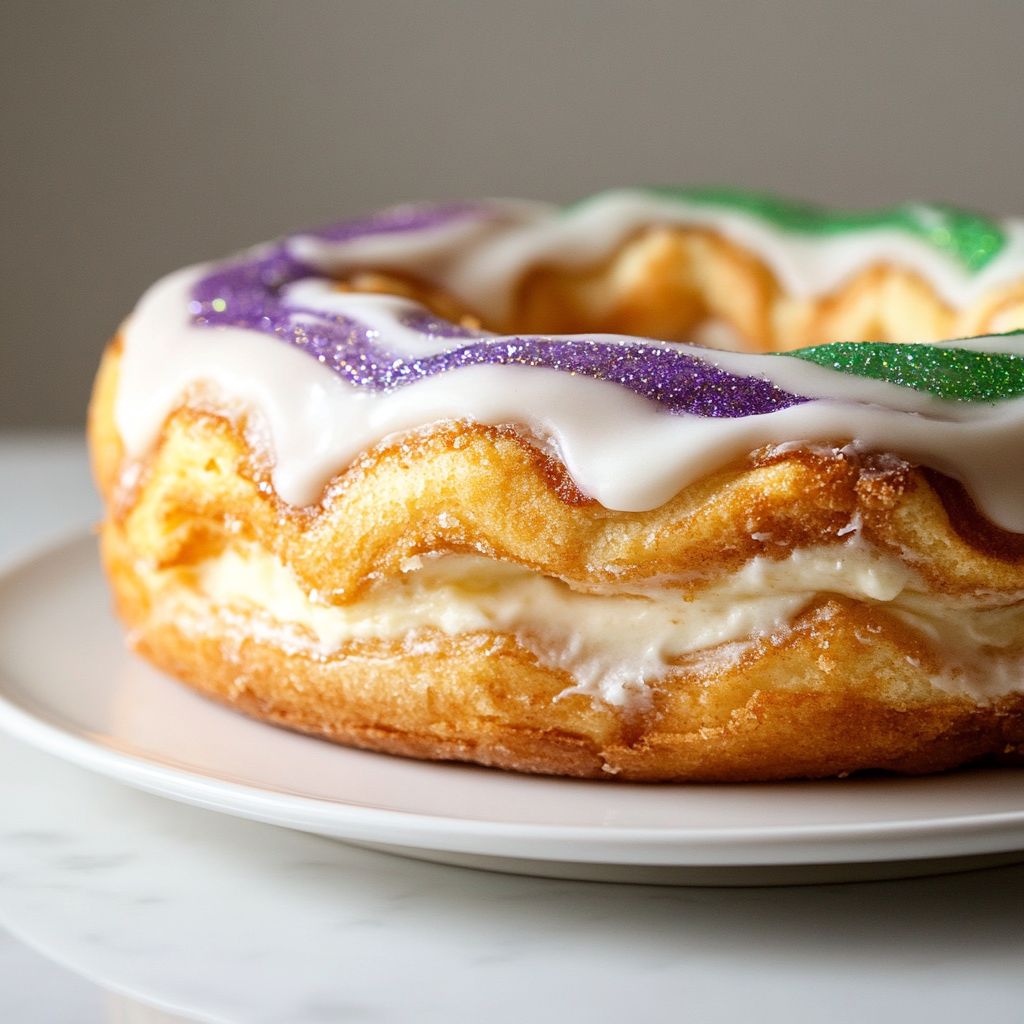
These king cake notes offer a practical guide to producing a tender, celebratory Mardi Gras king cake with a cinnamon-sugar swirl and an optional cream cheese center. You can customize the filling by adding chopped pecans or dried fruit, or by brightening the dough with a hint of citrus zest or a splash of brandy. The dough benefits from thorough kneading and a warm, draft-free rise; ensure the milk in the dough is warm to activate the yeast and that the butter is cooled to warm before mixing to avoid shocking the yeast. Shape the dough into a rope, twist with the cinnamon-sugar filling, and form into a ring; let it rise again until puffy before baking for the best loft and a soft crumb. Bake until deep golden and a kitchen thermometer reads around 190–200°F (88–93°C) in the center. Apply an egg wash for a glossy crust, then decorate with purple, green, and gold sanding sugars while the cake is still warm for best adhesion. Prepare a simple glaze from powdered sugar and milk to drizzle over when cooled, or serve with whipped cream for extra richness. They freeze well and reheat nicely in a low oven or toaster oven; slice before freezing for easy portions. For a gluten-free version, use a certified gluten-free flour blend and adjust as needed; always ensure your flour and baking powder are certified gluten-free if you have gluten intolerance.
Tips
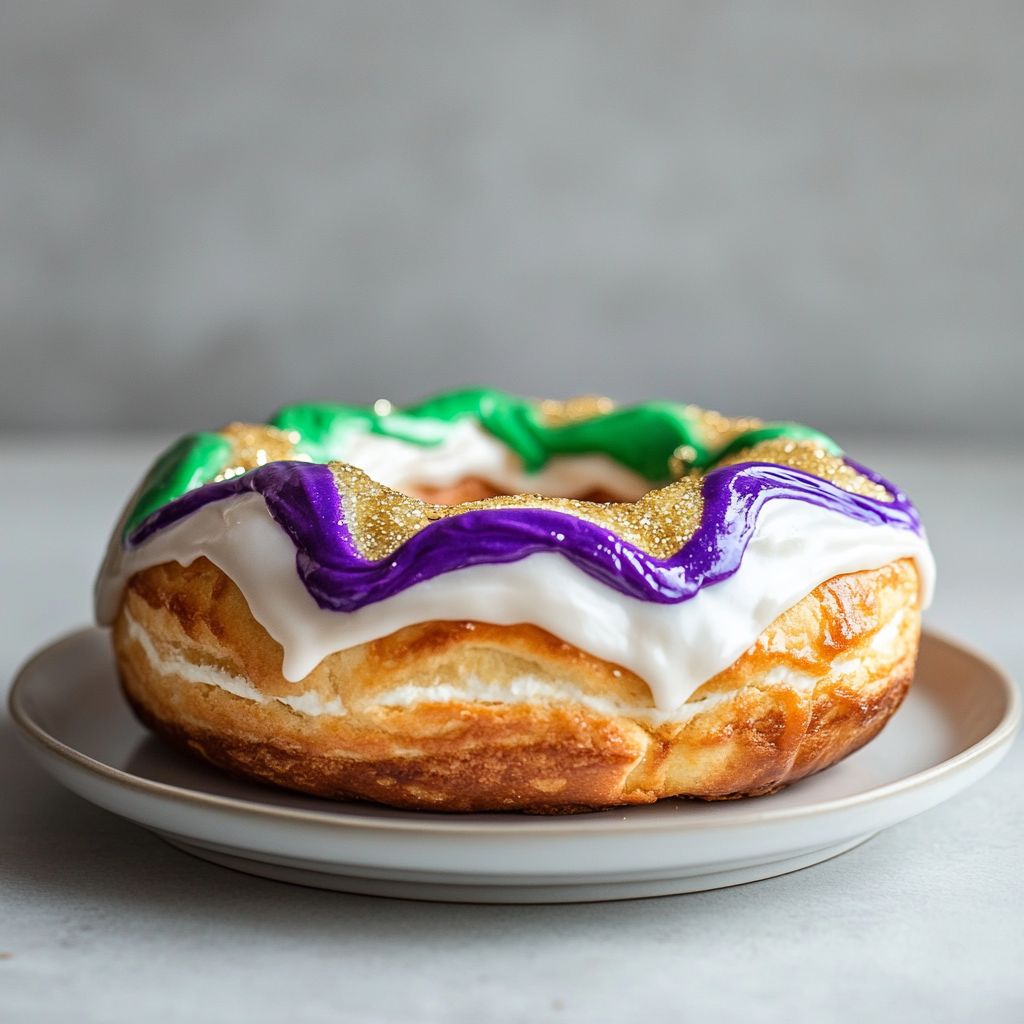
Tips for King Cake
- Hydration and dough handling: if the dough feels overly sticky after the first mix, lightly dust the work surface with flour and knead with a bench scraper. Add flour in small increments (a tablespoon at a time) until the dough is soft and tacky but not dry. Overflouring can lead to a dense crumb, so proceed with caution.
- Proofing guidance: let the dough rise in a warm, draft-free spot until it doubles in size (usually 1–2 hours depending on room temperature). If your kitchen is cool, you can place the bowl in a turned-off oven with the light on or near a warm appliance to speed up the rise. Avoid overproofing, which can make the dough collapse in the oven.
- Gluten development test: to check for strong gluten, perform a windowpane test by stretching a small piece of dough until it becomes translucent without tearing. If it tears easily, give it a few more minutes of kneading.
- Flavor development: for deeper flavor, you can ferment the dough in the fridge overnight after the initial rise. Bring to room temperature and give it a shorter second rise before shaping.
- Fat and temperature considerations: ensure melted butter has cooled to warm (not hot) temperature before adding to the dough to prevent killing the yeast. Eggs should be at room temperature to promote emulsification and an even crumb.
- Filling consistency tips: the cinnamon-sugar filling should be spreadable. If it seems dry, mix in a little extra melted butter or a splash of milk until it forms a paste that clings to the dough without oozing out excessively during shaping.
- Cream cheese filling guidance: if using the cream cheese filling, soften the cream cheese completely and beat with powdered sugar and vanilla until smooth. If it’s too soft to spread, refrigerate briefly to thicken, then bring back to room temperature before swirling to avoid tearing the dough.
- Swirl and seal: roll the dough into a rectangle, spread the filling evenly, and leave a clean margin at the edges. Roll tightly to trap air and seal the seam well to prevent filling from leaking during baking.
- Egg wash technique: brush the dough with the beaten egg wash just before baking to achieve a glossy crust. Apply a thin, even layer and avoid pooling at the edges, which can cause uneven browning.
- Baking and oven setup: bake on the center rack. If using a convection oven, reduce the temperature by about 25°F (15°C). Rotate the sheet halfway through baking for even browning. Look for a deep golden crust and an internal temperature around 190–200°F (88–93°C) for doneness.
- Decoration and glaze: apply purple, green, and gold sanding sugars after baking while the cake is still warm so they adhere. For a glaze, whisk powdered sugar with milk or cream (and a splash of vanilla) until you reach your desired drizzle consistency. If you’re dairy-free, use a non-dairy milk and a dairy-free butter substitute in the glaze.
- Storage and make-ahead: unglazed dough can be prepared up to the point of the final roll and refrigerated overnight; the final rise and bake can be done the next day. Baked king cake can be stored at room temperature for 1–2 days, or refrigerated for up to 4 days. Reheat slices in a low oven to refresh texture. Freeze baked slices for longer storage, or freeze the shaped dough before the final rise for longer-term prep.
- Variations and substitutions: for dairy-free versions, substitute dairy ingredients with plant-based milk (like almond or oat) and vegan butter. If using flax eggs instead of real eggs, keep in mind this may alter the texture slightly and may require a touch more liquid.
FAQ
King Cake – Frequently Asked Questions
What is king cake?
King cake is a traditional Mardi Gras dessert: a rich, braided yeast bread flavored with cinnamon. It’s often glazed and decorated in Mardi Gras colors (purple, green, and gold) and usually contains a hidden figurine or bean. The person who finds it buys next year’s cake.
What ingredients do I need for a classic king cake?
For a traditional version you’ll need:
- Active dry yeast or instant yeast
- Warm milk or dairy-free milk
- Sugar, eggs, and melted butter or dairy-free butter
- All-purpose or bread flour (plus a bit more for kneading)
- Ground cinnamon (for the filling) and a pinch of salt
- Vanilla or almond extract (optional)
- For the glaze: powdered sugar, a little milk or dairy-free milk, and vanilla
- Colored sugar or sprinkles in purple, green, and gold for decoration
Can I make king cake ahead of time or the day before?
Yes. You can prepare the dough and let it rise once, then refrigerate overnight before shaping and baking. You can also braid and freeze unbaked dough for up to a month; thaw in the fridge, let rise, then bake as directed. If you bake ahead, store cooled cake in an airtight container and rewarm gently before serving.
How do I shape and braid king cake?
After rolling the dough into a long rope, divide into three strands. Braid the strands like a plait, then join the ends to form a ring. Seal the seam well and place on a parchment-lined sheet. Let the dough rise again briefly, then bake until golden. Optional: brush with melted butter before baking for extra softness.
Where do I put the baby figurine, and what does it mean?
Traditionally, a small plastic baby (or sometimes a dried bean) is hidden inside the cake after shaping but before baking. The person who finds the baby is said to have good luck and typically buys the next king cake. If using a plastic baby, sanitize it and insert it quickly to avoid piercing the dough.
How do I decorate the king cake with the traditional colors?
King cakes are decorated with a glaze or icing and colored sugar in Mardi Gras colors:
- Purple (justice)
- Green (faith)
- Gold (power)
Sprinkle the colored sugar along the top edge or create stripes around the cake for a festive look.
How long does king cake stay fresh and how should I store it?
Fresh king cake is best eaten within 2–3 days at room temperature. Store tightly wrapped or in an airtight container to keep it from drying out. If you refrigerate, let it come to room temperature before serving to restore softness.
Can I freeze king cake, and how do I thaw it?
Yes. Freeze baked king cake (well wrapped) for up to 2–3 months. Thaw in the refrigerator overnight, then bring to room temperature and warm briefly in a 300–325°F (150–165°C) oven to refresh the texture. Glazes may soften after freezing and thawing.
What are some variations or fillings I can try?
You can customize with:
- Cinnamon-sugar swirl with cream cheese filling
- Nutmeg or orange zest for a different aroma
- Praline or pecan filling for a crunchy sweetness
- Fruit jams (raspberry, strawberry) or chocolate filling
- Glazes with lemon or vanilla instead of the classic sugar glaze
What are common troubleshooting tips if something goes wrong?
Try these:
- If dough won’t rise, check yeast activity and water/milk temperature (should be warm, not hot).
- Dough too sticky? Add a little flour at a time while kneading.
- If the braid unravels, seal the ends well and let it rest a bit longer for a stronger rise.
- Cake is dense? It may be under-proofed or overworked dough; gently re-shape and let rise longer.
- Glaze too runny? Add a bit more powdered sugar and chill the cake to set the glaze.