

Greek Yogurt Bagels – A High-Protein, No-Yeast Favorite for Busy Mornings
Hi, I’m Helen Whitaker — welcome to Cookliva.
If there’s one thing I’ve learned over the years, it’s that slow food doesn’t always mean long recipes. Some of the most comforting meals in our home come together quietly, without fuss, and these Greek yogurt bagels are a perfect example of that.
The first time I made these, it was a weekday morning that already felt too full. My husband was rushing out the door, the kids were negotiating over breakfast options, and I just wanted something warm that didn’t involve another trip to the store. I had Greek yogurt in the fridge, flour in the pantry, and a little bit of patience — and that’s all these bagels really ask of you.
They’re soft on the inside, lightly chewy on the outside, and surprisingly satisfying. No yeast. No boiling water. No waiting around for dough to rise. Just a simple recipe that fits into real life — which is exactly what Cookliva is all about.
Why You’ll Love This Recipe
These Greek yogurt bagels have quietly earned a permanent place in our breakfast rotation, and here’s why I think they’ll earn one in your kitchen too.
First, they’re approachable. If traditional bagels have ever felt intimidating, this recipe removes every barrier. There’s no yeast to proof, no dough to babysit, and no complicated techniques. You mix, shape, and bake — that’s it.
Second, they’re high in protein thanks to the Greek yogurt. That added protein makes them more filling than standard bagels, which means fewer mid-morning hunger pangs. My kids stay full longer, and my husband actually makes it to lunch without snacking.
Third, they’re flexible. You can keep them savory, make them slightly sweet, or adjust the flour and toppings to suit your family’s preferences. One batch, endless possibilities.
And finally, they just feel good to make. There’s something calming about shaping dough with your hands and pulling warm bagels from the oven — especially when life feels rushed.
The Origin of This Recipe
Greek yogurt bagels grew popular as home cooks started looking for ways to simplify traditional baking without giving up texture or flavor. By replacing yeast with baking powder and adding thick Greek yogurt for moisture and structure, bakers discovered they could recreate a bagel-like chew in a fraction of the time.
This style of bagel isn’t meant to compete with an old-world bakery bagel — it’s meant to serve modern kitchens. Busy mornings, limited ingredients, and a desire for nourishing food all played a role in shaping this recipe style.
Over time, variations appeared everywhere: air fryer versions, whole-wheat versions, sweet versions, savory versions. What stays consistent is the heart of the recipe — yogurt, flour, and simplicity working together.
Ingredients
You only need a handful of everyday ingredients to make these bagels, which is part of their charm.
- All-purpose flour – Provides structure and that familiar bagel chew
- Baking powder – Replaces yeast and gives the dough its lift
- Salt – Balances flavor and keeps the bagels from tasting flat
- Greek yogurt – The star ingredient; adds protein, moisture, and tenderness
- Egg – Used for brushing the tops so the bagels bake up golden
- Optional toppings – Everything seasoning, sesame seeds, poppy seeds, garlic flakes, or cinnamon sugar

Ingredient note:
Greek yogurt must be thick. Thin or regular yogurt adds too much moisture and makes the dough difficult to handle.
Instructions
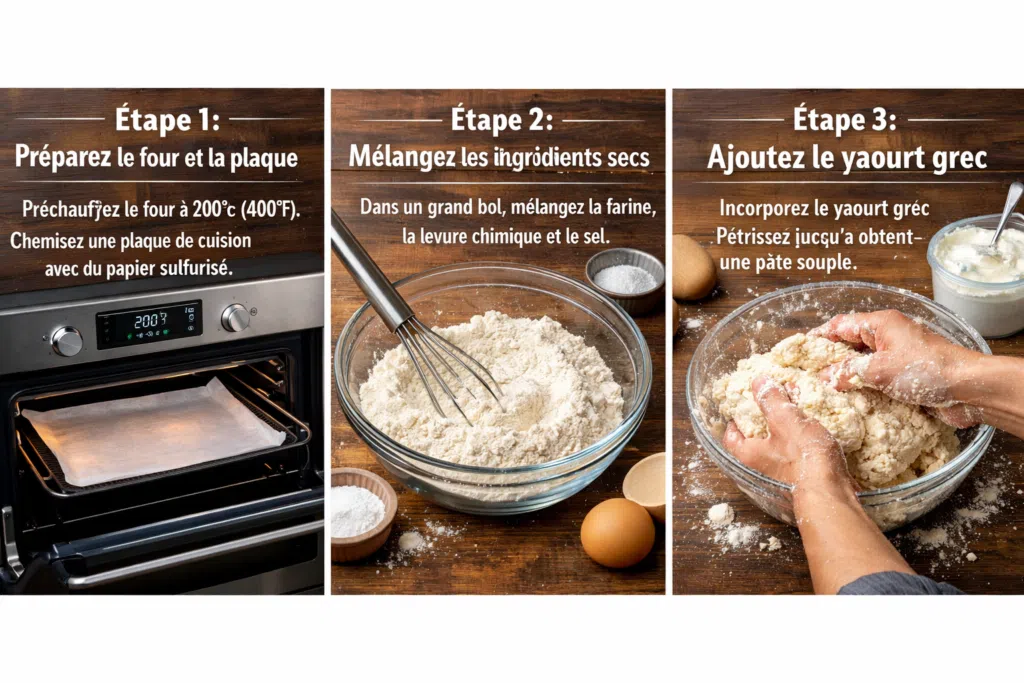
Step 1: Prepare the oven and pan
Preheat your oven to 400°F (200°C). Line a baking sheet with parchment paper. This prevents sticking and helps the bottoms brown evenly.
Step 2: Mix the dry ingredients
In a large bowl, whisk together the flour, baking powder, and salt. Make sure the baking powder is evenly distributed — uneven mixing can cause dense spots in the bagels.
Step 3: Add the Greek yogurt
Spoon in the Greek yogurt and stir with a fork or spatula until the mixture starts to come together. Once it looks shaggy, use your hands to gently knead it in the bowl.
The dough should feel soft and slightly tacky but not wet. If it’s sticking heavily to your fingers, sprinkle in a little more flour. If it feels dry or crumbly, add a teaspoon of yogurt at a time.
Step 4: Shape the bagels
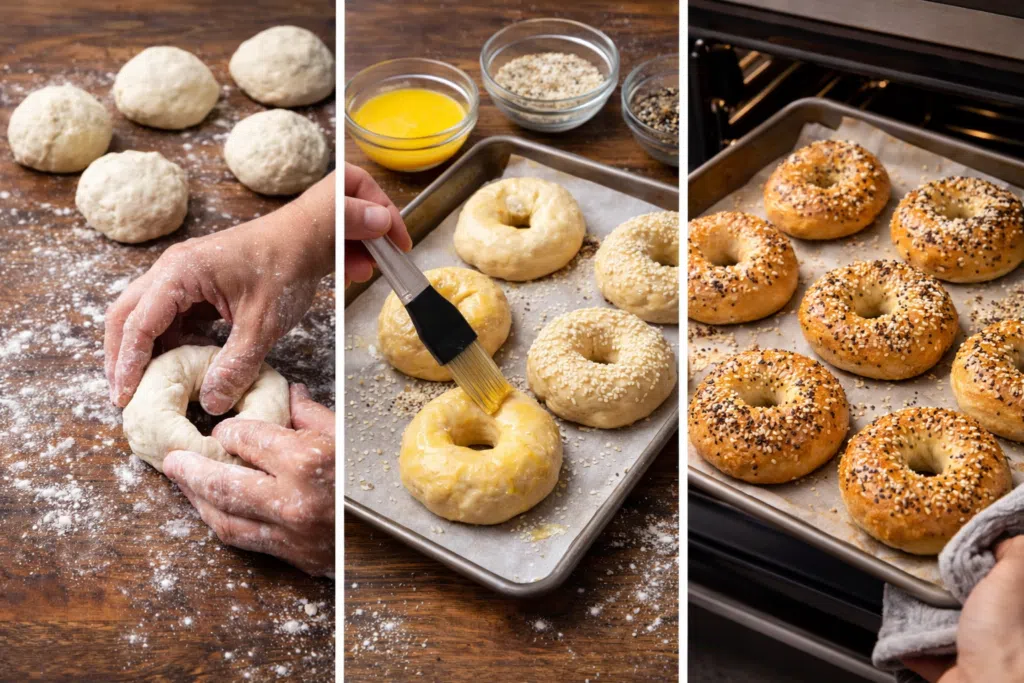
Divide the dough into equal portions. Roll each piece into a ball, then press your thumb through the center and gently stretch to form a bagel shape.
Don’t worry about perfection — rustic bagels have character.
Step 5: Egg wash and toppings
Brush the tops with beaten egg. This helps the bagels develop color and gives toppings something to cling to. Sprinkle with your chosen toppings.
Step 6: Bake
Bake for 22–25 minutes, or until the bagels are lightly golden and firm to the touch. Let them cool for at least 10 minutes before slicing — this helps the crumb set properly.
Tips & Flavor Variations
- Use full-fat or 2% Greek yogurt
Lower-fat yogurts can work, but full-fat gives the best texture and flavor. The dough is easier to handle and the bagels stay tender longer. - Don’t over-knead
This dough doesn’t need heavy kneading. Overworking it can make the bagels tough instead of soft and chewy. - Savory upgrade
Mix garlic powder or dried herbs directly into the dough for built-in flavor, especially if you plan to use them for sandwiches. - Sweet version
Add a tablespoon of honey or sugar to the dough and top with cinnamon sugar. These are lovely toasted with butter or nut butter. - Whole-wheat option
Swap half the flour for whole-wheat flour. Expect a slightly denser bagel with a nuttier flavor — perfect for hearty toppings.
Common Myths & Mistakes
Myth 1: Greek yogurt bagels are just bread rolls with holes
Many people assume that without yeast or boiling, these can’t possibly resemble real bagels. This belief comes from comparing them directly to bakery-style bagels, which follow a very different process. Because traditional bagels rely on fermentation and boiling, anything outside that method is often dismissed as “not a real bagel.”
The truth is, these bagels are designed for a different purpose. Greek yogurt adds protein and acidity, which strengthens the dough and creates chew without fermentation. Baking powder provides lift, while the egg wash mimics the golden exterior people expect.
The correct approach is to judge these bagels on what they are — a quick, nourishing alternative that delivers texture, flavor, and satisfaction without complexity.
Myth 2: You need special equipment or advanced skills
This myth usually comes from traditional bread baking culture, where mixers, proofing baskets, and precision techniques are emphasized. Beginners often believe bagels are only for experienced bakers with the right tools.
In reality, this recipe was built specifically to remove those barriers. A bowl, a spoon, and your hands are enough. No mixer. No thermometer. No proofing time.
The correct approach is to trust the simplicity. Focus on dough feel rather than technique. Soft, workable dough leads to tender bagels — skill level doesn’t matter here.
Myth 3: High-protein bagels are dry and bland
Many store-bought “protein” baked goods rely on powders that strip moisture and flavor. That reputation gets unfairly applied to Greek yogurt bagels as well.
Greek yogurt works differently. It adds both protein and fat, which means moisture stays locked into the dough during baking. When handled gently and baked properly, these bagels are soft inside with just enough chew.
The correct approach is using thick yogurt, avoiding over-baking, and letting the bagels cool slightly before slicing.
FAQ – Frequently Asked Questions
How do I store Greek yogurt bagels so they don’t dry out?
Once completely cooled, store the bagels in an airtight container at room temperature for up to two days. For longer storage, refrigerate them for up to five days. Toasting before serving brings back their soft interior and lightly crisp exterior.
Can I freeze these bagels after baking?
Yes, these freeze beautifully. Slice them first, then freeze in an airtight bag for up to two months. Freezing pre-sliced makes reheating easy — just pop them straight into the toaster.
Why is my dough too sticky to shape?
This usually happens when the yogurt is too thin or measurements are slightly off. Sprinkle in flour one tablespoon at a time until the dough is manageable but still soft.
Can I make these without an egg wash?
Yes. The egg wash mainly affects color and shine. Without it, the bagels will be paler but still delicious. You can brush with milk or yogurt instead.
Are these bagels good for sandwiches?
Absolutely. They’re sturdy enough for egg sandwiches, turkey and cheese, or cream cheese and vegetables. Toasting adds extra structure if you’re loading them up.
Print
Greek Yogurt Bagels – A High-Protein, No-Yeast Favorite for Busy Mornings
- Total Time: 40 minutes
- Diet: Vegetarian
Description
Soft, chewy Greek yogurt bagels made without yeast — simple, protein-packed, and perfect for busy mornings.
Ingredients
-
1 cup all-purpose flour
-
2 teaspoons baking powder
-
1/4 teaspoon salt
-
1 cup thick Greek yogurt
-
1 egg (for brushing)
-
Optional toppings: everything seasoning, sesame seeds, cinnamon sugar
Instructions
-
Preheat oven to 400°F and line a baking sheet.
-
Mix flour, baking powder, and salt in a bowl.
-
Stir in Greek yogurt until a soft dough forms.
-
Divide dough and shape into bagels.
-
Brush with egg wash and add toppings.
-
Bake 22–25 minutes until lightly golden. Cool before slicing.
Notes
Store at room temperature 2 days, refrigerate up to 5 days, or freeze sliced bagels up to 2 months. Toast before serving for best texture.
- Prep Time: 15 minutes
- Cook Time: 25 minutes
- Category: Breakfast
- Method: Baking
- Cuisine: American
Nutrition
- Serving Size: 4 bagels
- Calories: 145 per bagel
- Sugar: 2 g
- Fat: 2 g


