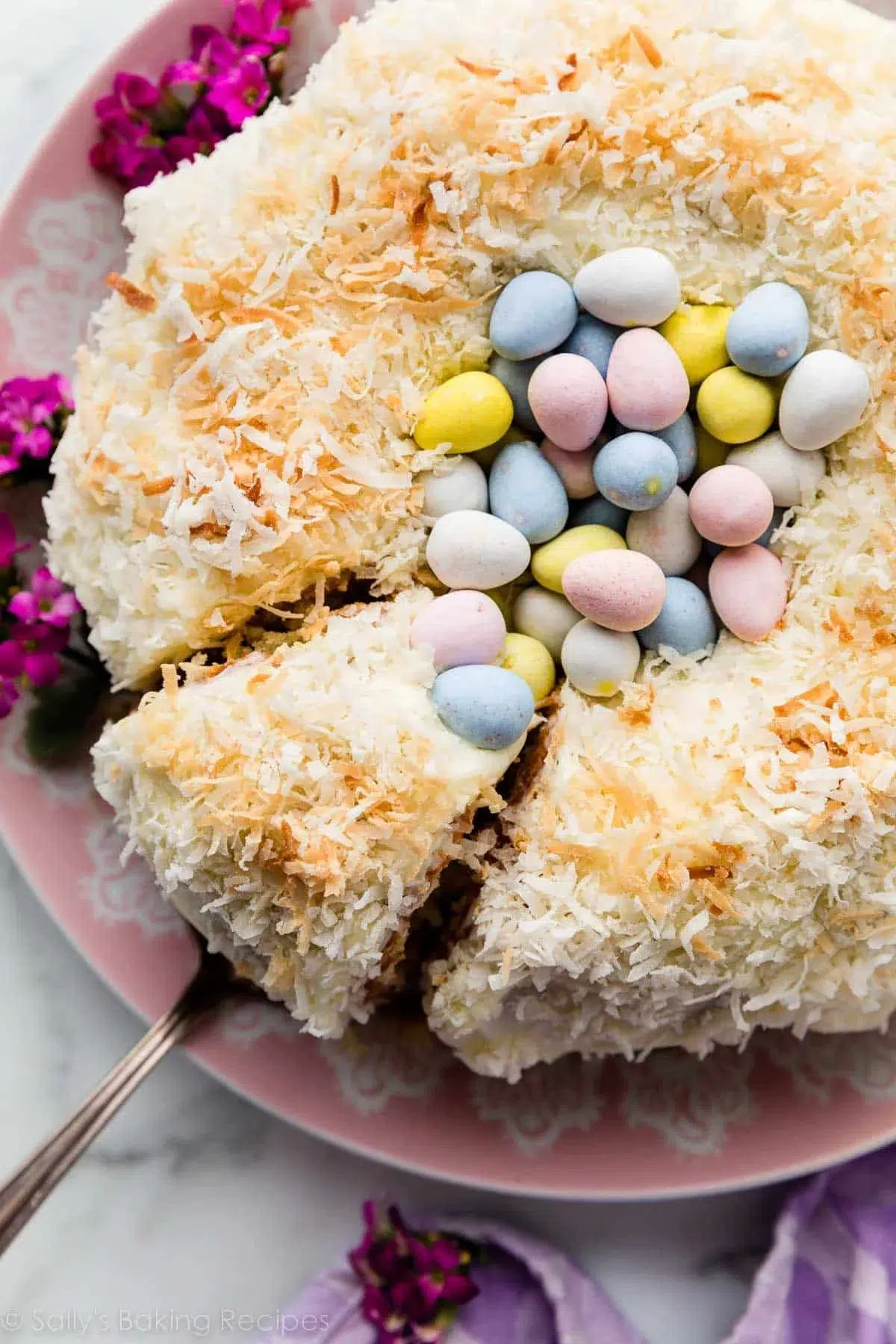
Easter Nest Cake (Lemon Coconut Bundt Cake)

There’s something about Easter baking that feels a little more special. Maybe it’s the colors, maybe it’s the slower mornings, or maybe it’s just the excuse to make something a bit playful. This Easter nest cake is one of those recipes that instantly brings that feeling to the table.
I first made this on a quiet spring afternoon, when the kitchen felt bright and calm and I wanted something simple but memorable. Not a complicated layer cake—just something cozy, pretty, and easy to share. When I added the coconut on top and tucked in those little chocolate eggs, it suddenly looked like a tiny nest, and I knew this one was staying.
It’s soft, gently tangy from the lemon, and finished with that creamy frosting that makes every slice feel just right. And the best part? It looks impressive, but it’s surprisingly easy to make.
QUICK ANSWER
This Easter nest cake is a lemon coconut Bundt cake topped with cream cheese frosting, shredded coconut, and chocolate eggs to resemble a festive nest. It’s simple to make, beginner-friendly, and perfect for Easter gatherings.
QUICK OVERVIEW
- Prep time: 20 minutes
- Bake time: 55–65 minutes
- Cooling time: 2 hours
- Decorating: 10 minutes
- Servings: 10–12
- Difficulty: Easy
WHY YOU’LL LOVE THIS RECIPE
This Easter nest cake is the kind of dessert that feels special without being complicated. The lemon adds brightness, the coconut brings texture, and the cream cheese frosting ties everything together in a soft, balanced way.
It’s also incredibly forgiving. You don’t need advanced decorating skills to make it look beautiful—the “nest” effect comes together in minutes, which makes it perfect if you want something impressive without stress.
And maybe my favorite part—it’s a cake people actually remember. Light, fresh, and just sweet enough to feel like a treat without being overwhelming.
What Makes This Easter Nest Cake Special
What makes this Easter nest cake truly special is the balance between texture, flavor, and presentation.
Keep in mind, this Easter Bundt cake isn’t as light and fluffy as a layered coconut cake—if that’s what you’re craving, try our Strawberry Lemon Cake for a brighter, airier option.
Bundt cakes naturally have a denser, finer crumb—closer to a pound cake—but that’s exactly what gives them their rich texture and that slightly chewy, golden crust on the outside. It’s part of what makes this cake so satisfying.
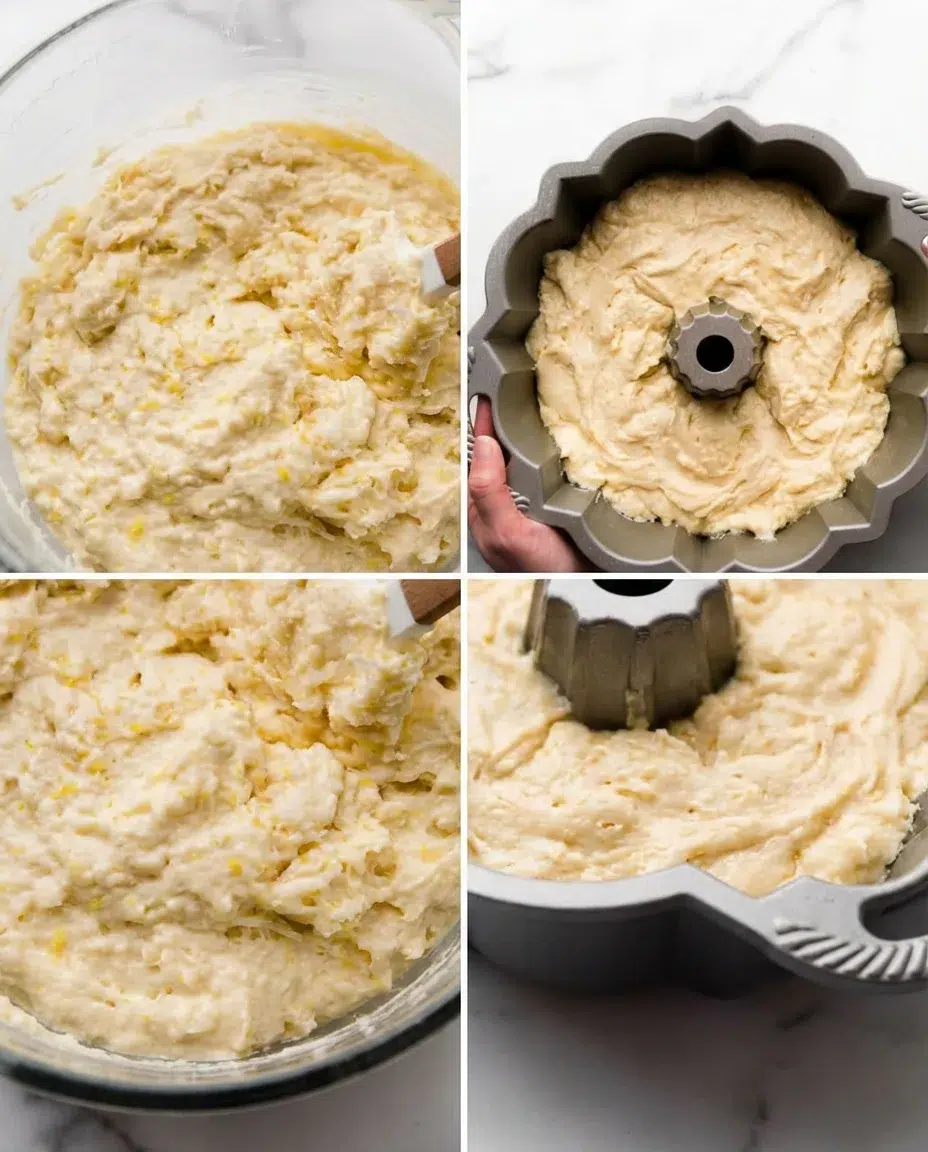
Here’s what your batter should look like — thick, smooth, and fluffy before baking:
Ingredients for the Coconut Lemon Cake
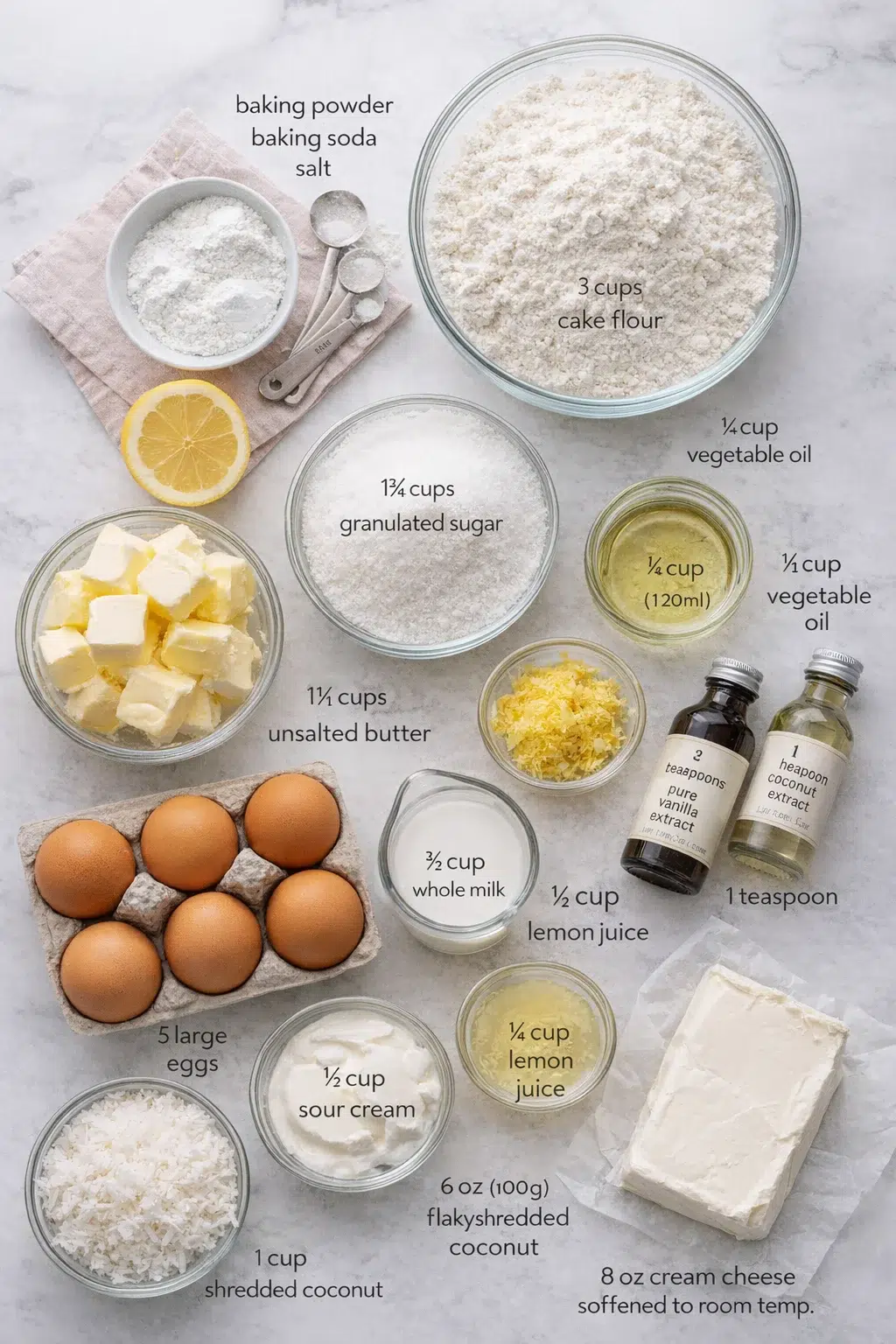
- 3 cups (360g) cake flour (spooned and leveled)*
- 3 teaspoons baking powder
- 1/2 teaspoon baking soda
- 1/2 teaspoon salt
- 1 cup (16 Tbsp; 226g) unsalted butter, softened to room temperature
- 1 and 3/4 cups (350g) granulated sugar
- 1 heaping tablespoon lemon zest
- 1/2 cup (120ml) vegetable oil
- 5 large eggs, at room temperature
- 2 teaspoons pure vanilla extract
- 1 teaspoon coconut extract
- 1/2 cup (120g) full-fat sour cream or plain yogurt, at room temperature
- 2/3 cup (180ml) whole milk, at room temperature
- 1/4 cup (60ml) fresh lemon juice
- 1 cup (100g) sweetened flaked/shredded coconut
- 8 ounces (226g) full-fat brick cream cheese, softened to room temperature
- 1/4 cup (4 Tbsp; 56g) unsalted butter, softened to room temperature
- 2 cups (240g) confectioners’ sugar
- 1–2 tablespoons (15–30ml) fresh lemon juice
- 1 teaspoon pure vanilla extract
- 1 and 1/2 cups (150g) sweetened flaked/shredded coconut*
- 1–2 cups candy-coated chocolate eggs
How to Build the Nest Cake
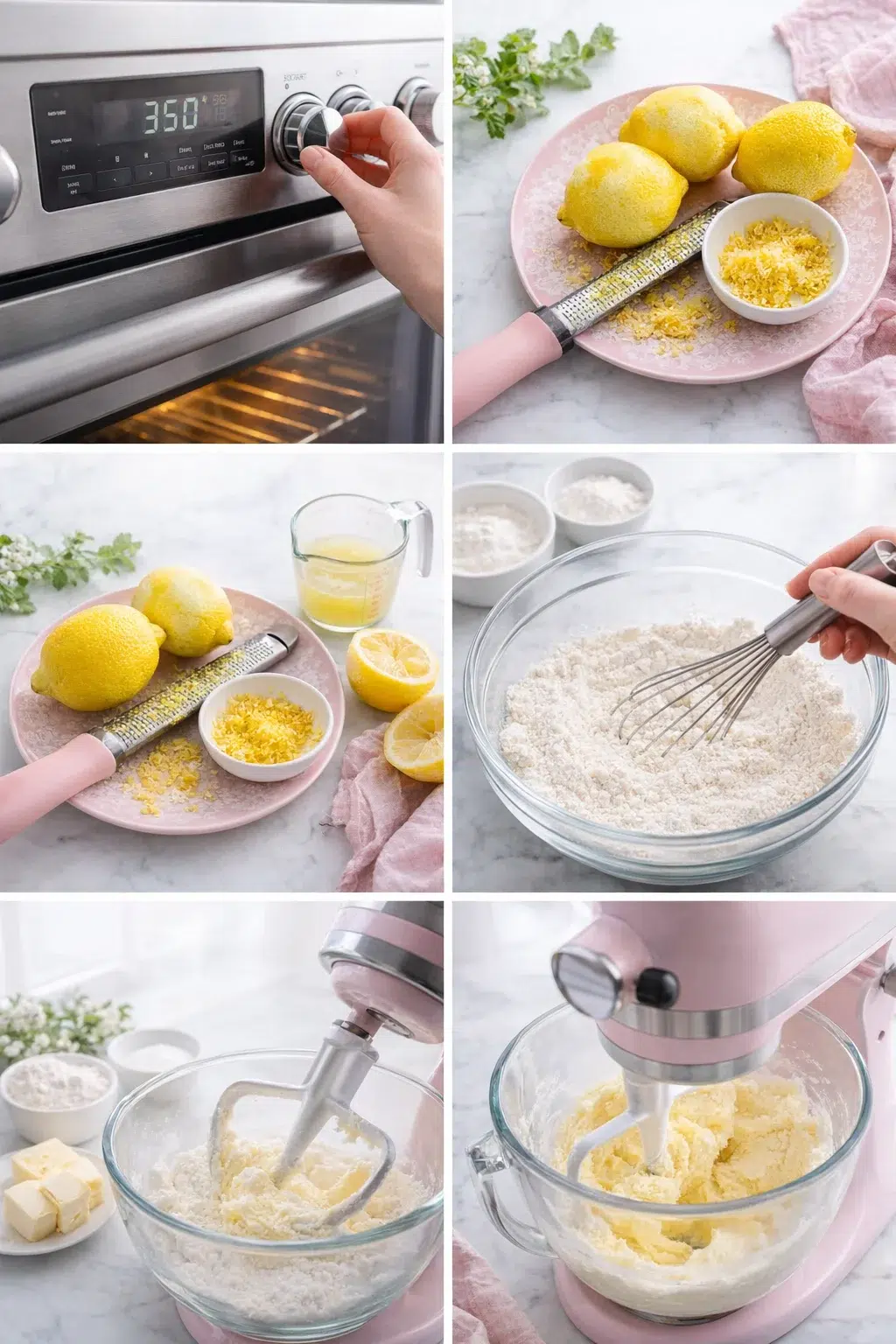
- Preheat the oven to 350°F (177°C) and generously grease a 10– to 12-cup Bundt pan.
- Zest the lemons, then juice them and set the juice aside.
- Whisk together cake flour, baking powder, baking soda, and salt in a medium bowl and set aside.
- In a large bowl with a paddle attachment, beat softened butter on high for about 1 minute until smooth and creamy.

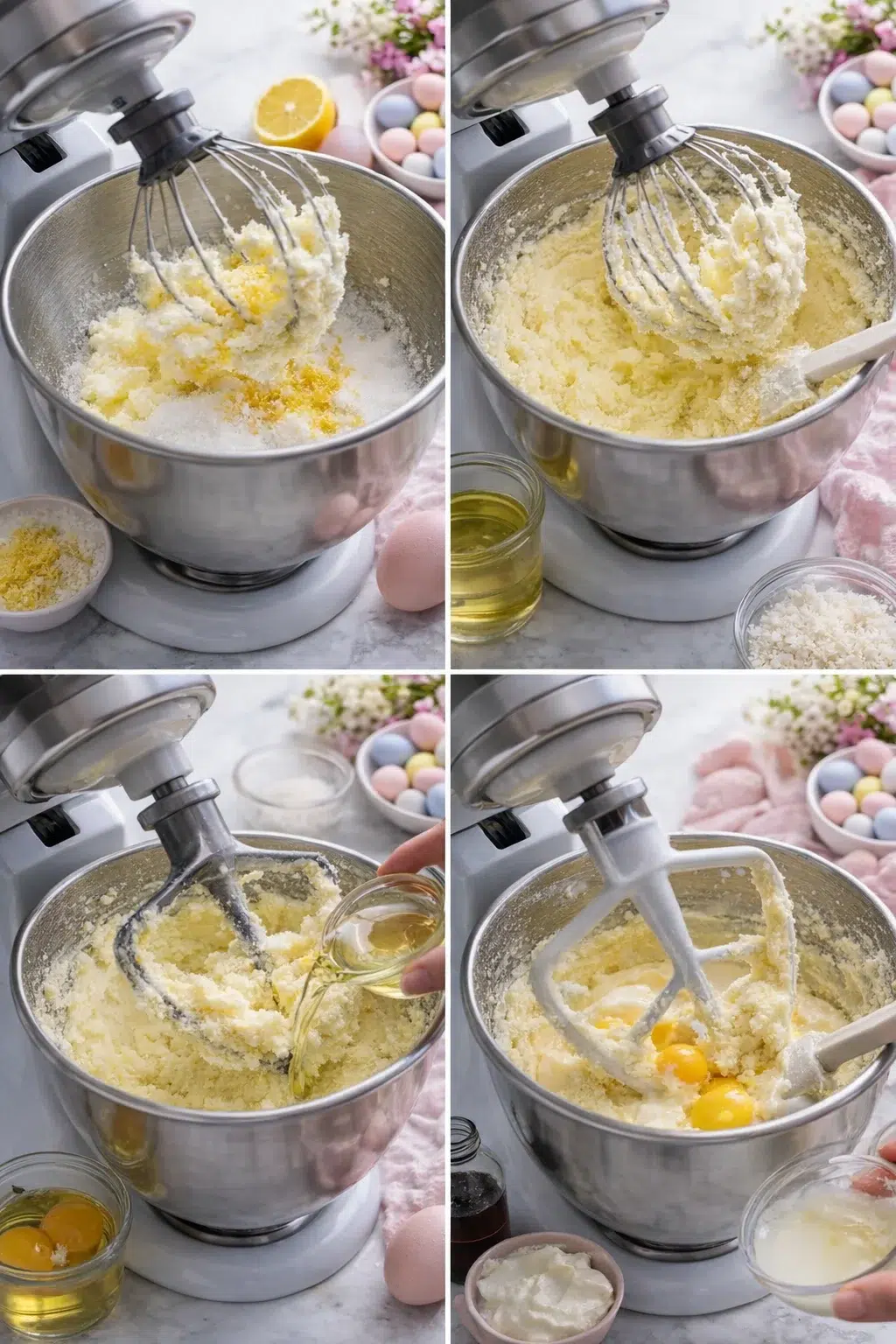
- Add granulated sugar and lemon zest to the butter and beat on high for 3 minutes until fluffy, scraping the bowl as needed.
- Pour in the vegetable oil and mix on medium speed to combine.
- With the mixer running on low, add the eggs one at a time, then add the sour cream, vanilla, and coconut extracts; increase speed to medium-high and beat until well combined, scraping the bowl.
- Whisk together the lemon juice and whole milk.
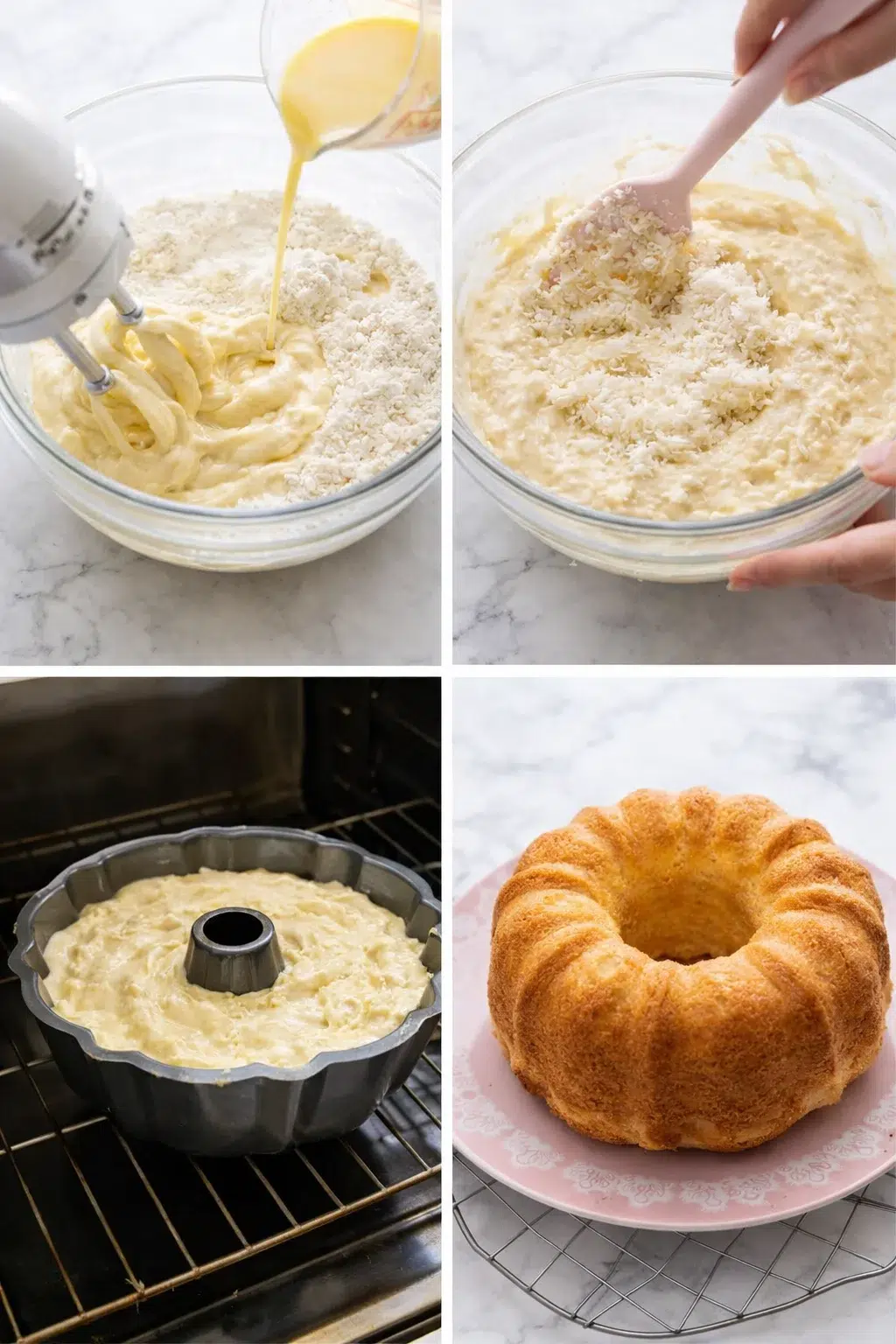
- With the mixer on low, add the dry ingredients in three additions, alternating with the lemon-milk mixture, and mix just until combined each time.
- Gently fold the shredded coconut into the batter.
- Pour the batter evenly into the prepared Bundt pan and bake for 55–65 minutes until the edges are golden and a toothpick comes out clean; loosely tent with foil halfway through if the top browns too quickly.
- Cool the cake in the pan on a rack for 2 hours, then invert onto a plate or cake stand and cool completely before frosting.
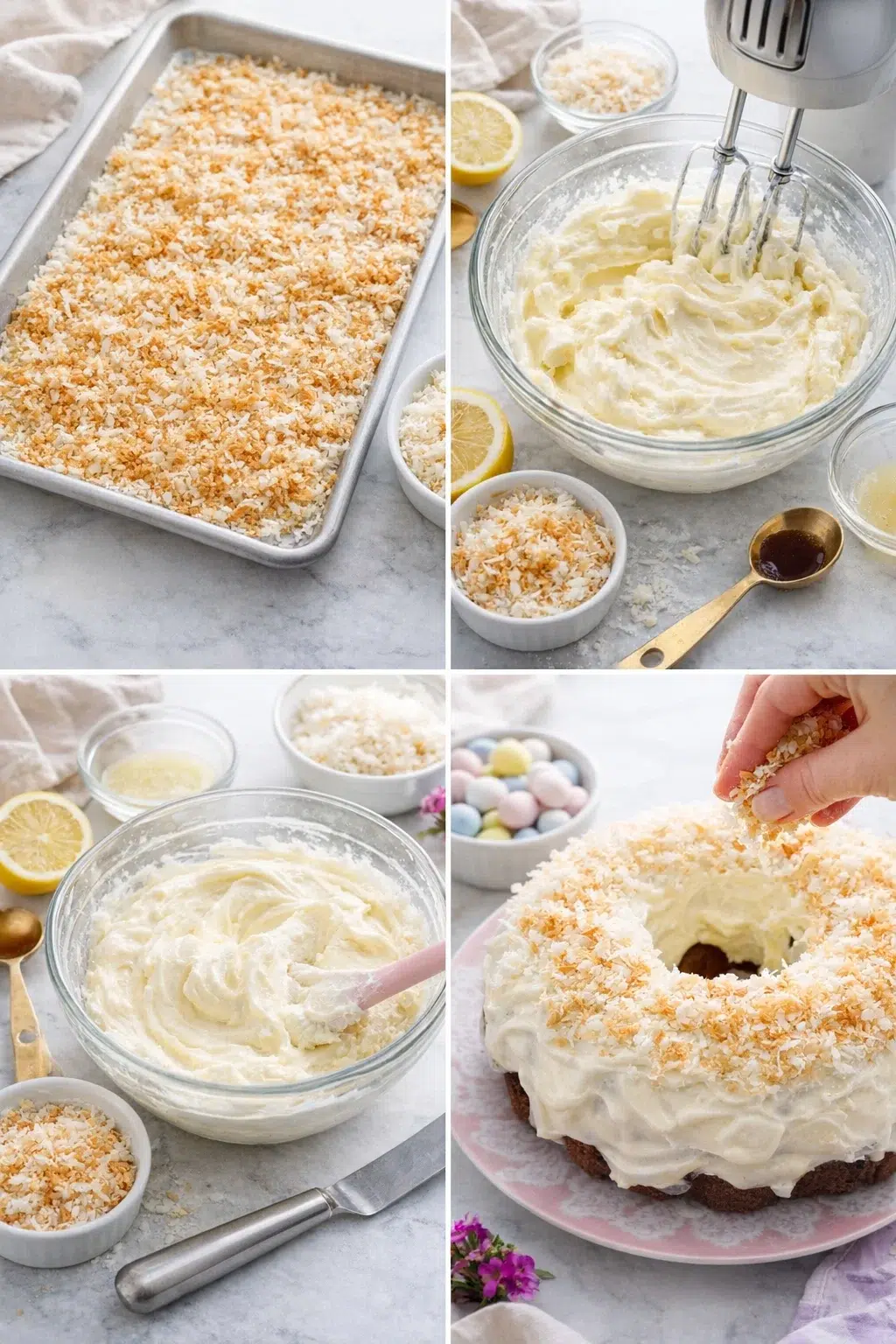
- Spread sweetened shredded coconut on an ungreased baking sheet and toast at 300°F (150°C) for 6–8 minutes until golden; cool completely (toast all or half, then combine with untoasted coconut if desired).
- In a large bowl, beat softened cream cheese and softened butter on medium speed for about 2 minutes until smooth.
- Add confectioners’ sugar, 1 tablespoon lemon juice, and vanilla; beat on low then increase to high and whip for about 3 minutes, adding up to 1 more tablespoon lemon juice if the frosting is too thick.
- Spread the lemon cream cheese frosting over the cooled Bundt cake using a spatula.
- Press the shredded coconut onto the frosting so it sticks and looks fluffy.
- Fill the center hole with candy-coated chocolate eggs.
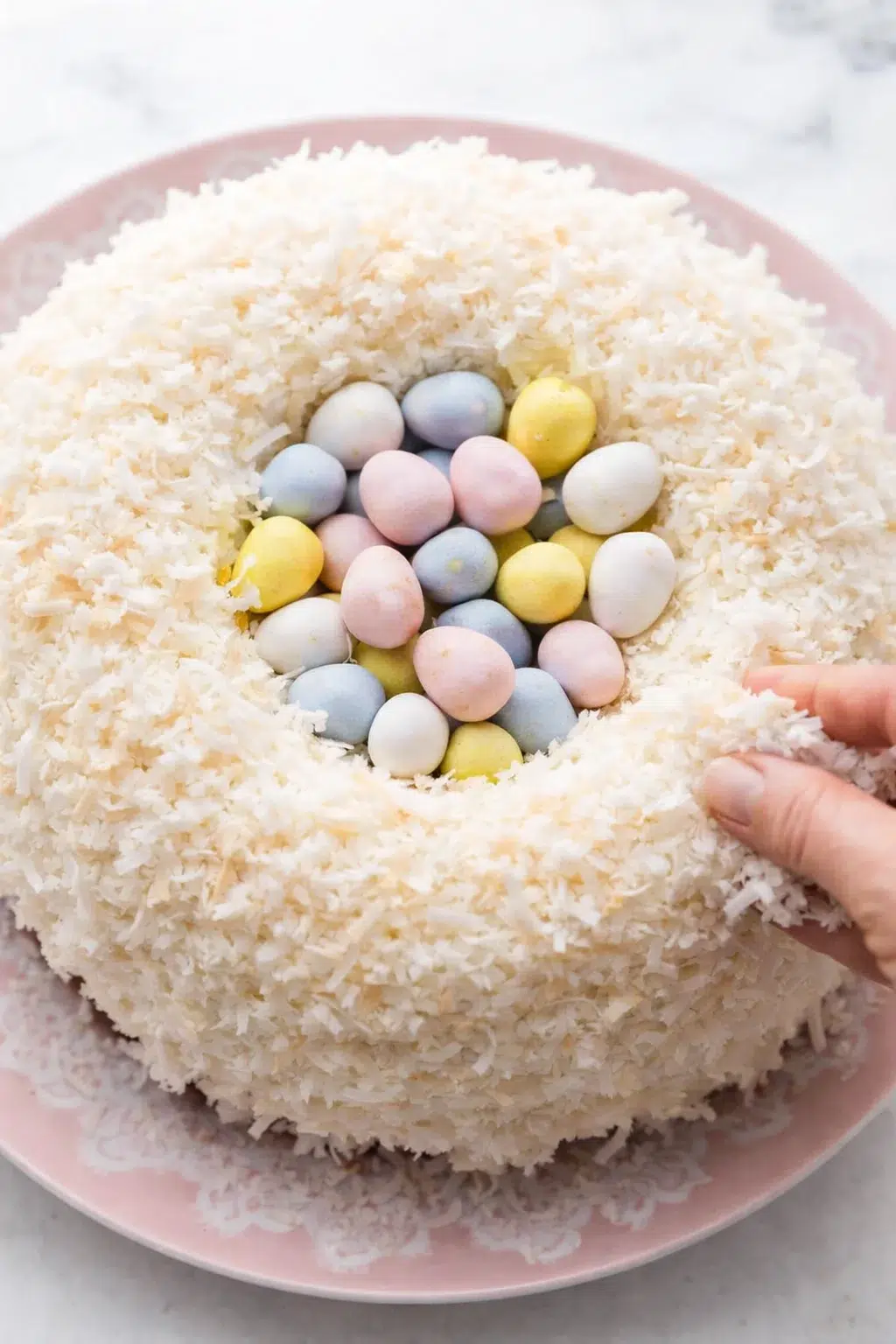
Once baked, be patient and let the cake cool for a full 2 hours in the pan before turning it out onto a serving plate or cake stand. This step is key—it helps the cake hold its shape and prevents breaking.
After that, let it cool completely before adding the frosting and decorations. Then comes the fun part—transforming it into your Easter nest cake!
If you’re planning a full spring dessert table, you can pair it with Mini Lemon Cakes with Lavender Glaze for a light and elegant complement.
Pro Tips for the Best Easter Nest Cake
The small details make all the difference when it comes to getting a perfect Easter nest cake. These simple tips will help you achieve a soft crumb, clean release, and beautiful finish every time.
- Grease your Bundt pan thoroughly
Use a pastry brush to reach every crevice, or a baking spray with flour for extra security. Let the cake cool fully in the pan (about 2 hours) before turning it out to prevent breaking. - Use room temperature ingredients
Cold butter, eggs, or dairy can lead to a dense and uneven texture. Starting with room temperature ingredients helps create a smooth batter and better structure. For example, room-temperature eggs incorporate more easily and help trap air, which improves the final texture of the cake, as explained here: https://www.kingarthurbaking.com/blog/2022/01/25/do-eggs-used-in-baking-really-need-to-be-at-room-temperature - Avoid overmixing the batter
Once you add the dry ingredients, mix just until combined. Overmixing develops gluten and can make the cake tough instead of soft. - Protect the cake while baking
If the top browns too quickly, loosely tent it with foil halfway through baking so the inside finishes cooking evenly. - Measure ingredients carefully
Too much coconut or flour can make the cake crumbly. This recipe balances both for structure and moisture. - Frost at the right consistency
The cream cheese frosting should be soft but not runny. This helps the coconut stick evenly and creates that “nest” effect. - Toast coconut for better texture
Mix toasted and untoasted coconut for a contrast of color and a slightly crunchy finish.
Flavor Variations and Swaps
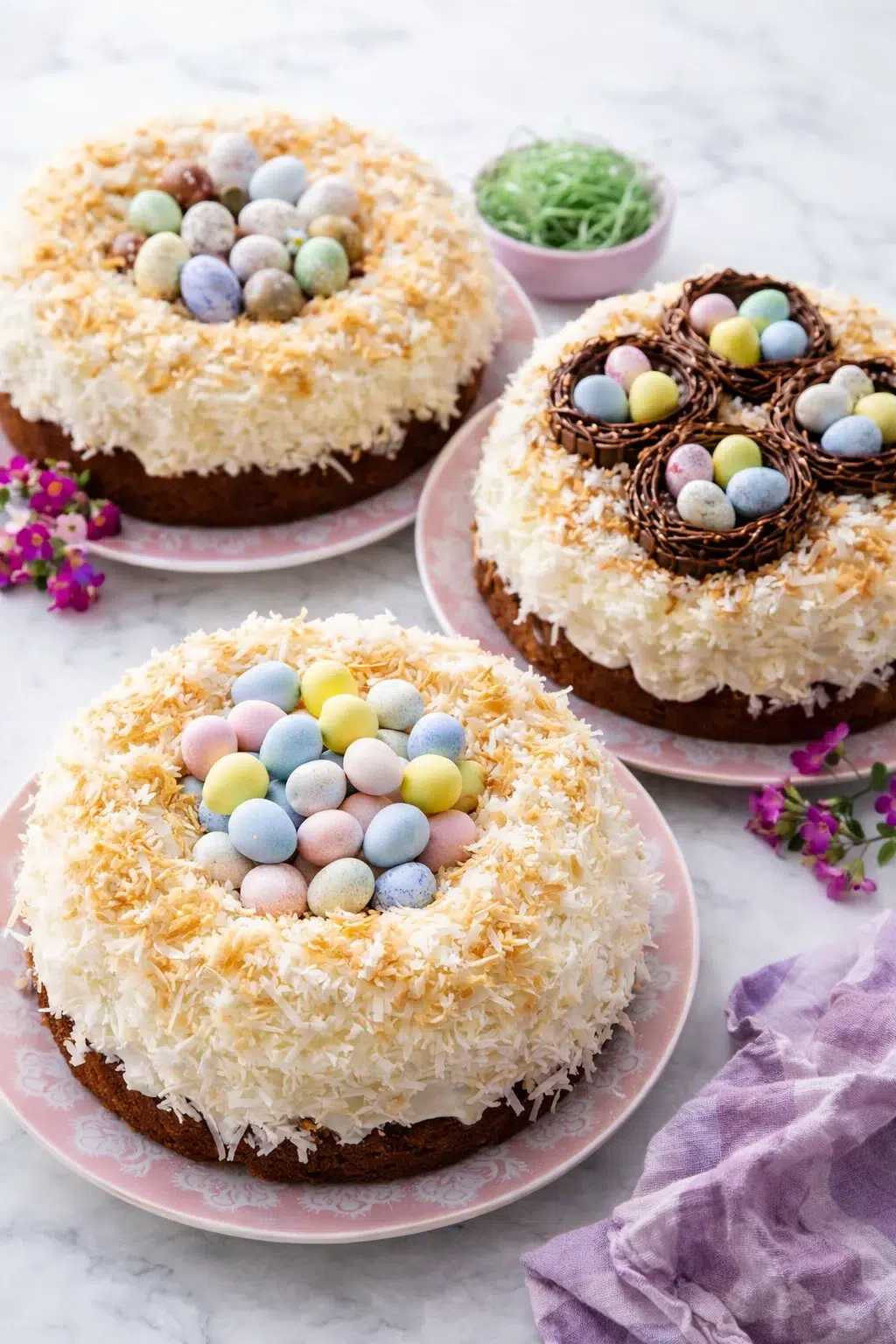
This Easter nest cake is easy to adapt depending on your taste or what you have on hand.
The lemon cream cheese frosting already adds brightness, but you can enhance or change the flavor profile with a few simple tweaks.
- Add ½ teaspoon coconut extract to the frosting for a stronger tropical flavor
- Swap lemon for orange for a softer citrus taste
- For a fruity twist, try adding berry flavor inspiration from Strawberry Lemon Cake
- Prefer something lighter? Use whipped cream instead of frosting (just note it won’t hold the coconut as well)
These small changes let you customize the cake while keeping the same beautiful presentation.
How to Store and Make Ahead
This Easter nest cake stores well, making it a great option for planning ahead.
- Before serving
If refrigerated, let the cake sit at room temperature for about 30 minutes to soften the texture and bring back flavor. - Refrigeration
Because of the cream cheese frosting, store the cake in the fridge. It keeps well for up to 3–5 days if properly covered. - Freezing
Freeze the cake before frosting for best results. Wrap it tightly in plastic wrap and foil, and store for up to 2 months. Thaw overnight in the fridge, then bring to room temperature before decorating. - Make-ahead option
Bake and cool the cake a day in advance, then decorate the next day. This reduces stress and gives you more flexibility when planning.
If you’re preparing a full dessert spread, you can pair it with Raspberry Lemon Loaf Cake which also stores beautifully and complements the flavors well.
Is This Easter Nest Cake Healthy?
This Easter nest cake is definitely more of a celebration dessert than an everyday treat—but that’s part of its charm.
It’s made with real, simple ingredients like eggs, milk, and coconut, which bring richness and flavor, while the lemon helps keep everything feeling fresh and balanced rather than overly heavy. Coconut, for example, contains fats that contribute to satiety and energy, as explained by Harvard T.H. Chan School of Public Health.
Like most cakes, it does contain sugar and butter, so it’s best enjoyed in moderation.
If you’d like to lighten it slightly, you can reduce the amount of frosting or serve smaller slices alongside fresh fruit. But overall, this Easter nest cake is meant to be enjoyed as part of a special moment—shared with family, friends, and a table full of smiles.
Common Questions Answered
Here are a few helpful answers to common questions so your Easter nest cake turns out just right from start to finish.
Can I use unsweetened coconut instead?
You can, but it will slightly change the texture and flavor. Unsweetened coconut is drier and less sweet, so your cake may feel a bit firmer and less rich. If you go this route, you can add a touch more sugar to the batter or keep sweetened coconut just for the topping to balance everything out.
How long can cream cheese frosting sit at room temperature?
Because it contains cream cheese and butter, it’s best not to leave it out for more than about 2 hours. After that, the cake should be refrigerated to stay safe and fresh.
If you need a dessert that holds longer at room temperature, you might prefer something like White Chocolate Lucky Charms Treats.
Can I freeze the whole decorated cake?
It’s possible, but not ideal. Freezing a fully decorated cake can affect both the frosting texture and the coconut topping. For best results, freeze the cake unfrosted, then decorate once thawed.
If you’re looking for a dessert that freezes beautifully from start to finish, try Lemon Crinkle Cookies.
Can I use a different size Bundt pan?
This recipe is designed for a 10– to 12-cup Bundt pan. Using a different size will change both baking time and texture, so you’ll need to keep a close eye on doneness and test with a toothpick.
Why did my cake stick to the pan?
This usually comes down to greasing. Make sure every corner of the pan is well coated—especially the detailed edges. Letting the cake cool completely in the pan (about 2 hours) also helps it release cleanly.
Can I substitute sour cream or milk?
Yes, you can swap sour cream with full-fat yogurt without much difference. Lower-fat or dairy-free milk options also work, but they may slightly change the texture and richness of the cake.
Why is my cake crumbly?
A crumbly texture usually comes from too much coconut, too much flour, or overmixing the batter. Be sure to measure carefully, use room temperature ingredients, and mix just until combined. The balance in this recipe is designed to keep everything soft but stable.
How do I get coconut to stick to the frosting?
The key is frosting consistency. It should be soft and spreadable, but not runny. Once applied, gently press the shredded coconut onto the surface instead of sprinkling it. This gives you that full, fluffy “nest” look and helps everything stay in place.
Conclusion
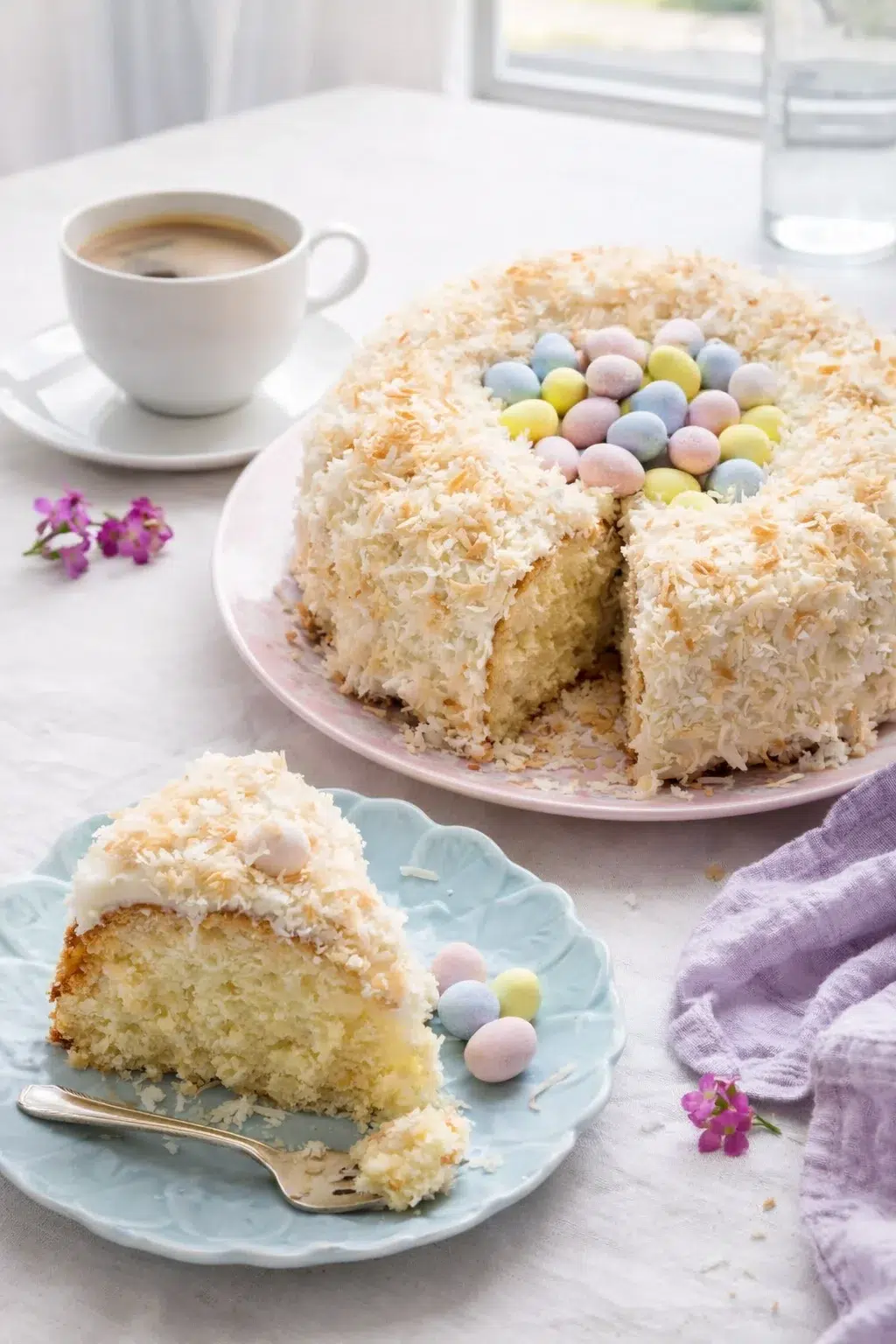
This Easter nest cake is one of those recipes that feels just as good to make as it does to serve. It’s simple, comforting, and just a little bit playful—perfect for celebrating the season without overcomplicating things.
Between the soft lemon coconut cake, the creamy frosting, and that charming nest decoration, it’s the kind of dessert that naturally becomes the centerpiece of the table. And even better, it’s approachable enough that anyone can make it, no matter their baking experience.
Whether you’re planning an Easter brunch, a spring gathering, or just want to bake something a little special, this cake is always a good idea. Once you’ve made it once, it’s the kind of recipe you’ll find yourself coming back to year after year.