

Crustless Ham and Cheese Quiche
Hi, I’m Helen Whitaker — welcome to Cookliva.
There’s something about a quiet weekend morning that makes me want to slow everything down. No rushing lunches, no backpacks by the door, no clock-watching. Just coffee in my favorite mug and the soft hum of the oven warming the kitchen.
This crustless ham and cheese quiche became one of our family staples almost by accident. One Sunday, I opened the fridge and found leftover baked ham from the night before, half a block of cheddar, and a carton of eggs that needed using. Daniel was reading the paper, the kids — Olivia and Jack — were still in pajamas, and I just wanted something warm and comforting without rolling out pastry.
That morning, this simple quiche came together. No crust. No fuss. Just creamy eggs, savory ham, and melty cheese baked into something that felt far more special than the effort it required.
If you enjoy making easy family breakfasts, this recipe belongs right in your rotation.
Why You’ll Love This Recipe
- It’s naturally low-carb without trying to be.
- No pastry means no rolling, chilling, or blind baking.
- It’s ready for the oven in under 15 minutes.
- Perfect for breakfast, brunch, or even a light dinner.
- Leftovers taste just as good the next day (sometimes better).
What I love most is how forgiving it is. The texture stays tender and creamy, not rubbery or dense. And because there’s no crust, the egg mixture becomes the star — soft, custardy, and rich without feeling heavy.
Olivia loves it with ketchup (I try not to judge), and Jack insists on extra cheese. Daniel? He says it’s one of those meals that “feels fancy but tastes like home.”
The Origin of This Recipe

Quiche traditionally comes from France — specifically the Lorraine region — where classic quiche Lorraine includes cream, eggs, and bacon baked in pastry. Over time, home cooks everywhere adapted it.
I started making crustless quiche during one particularly busy season of life when every shortcut mattered. Rolling dough felt like too much. Skipping the crust made it faster, lighter, and honestly — less stressful.
And that’s what Cookliva is all about. Cooking with patience, not pressure.
Ingredients
- 8 large eggs
- 1 cup heavy cream
- ½ cup whole milk
- 1 ½ cups diced cooked ham
- 1 ½ cups shredded cheddar cheese
- ½ small onion, finely diced
- 1 tablespoon butter or olive oil
- ½ teaspoon salt
- ¼ teaspoon freshly ground black pepper
- Pinch of nutmeg (optional but lovely)
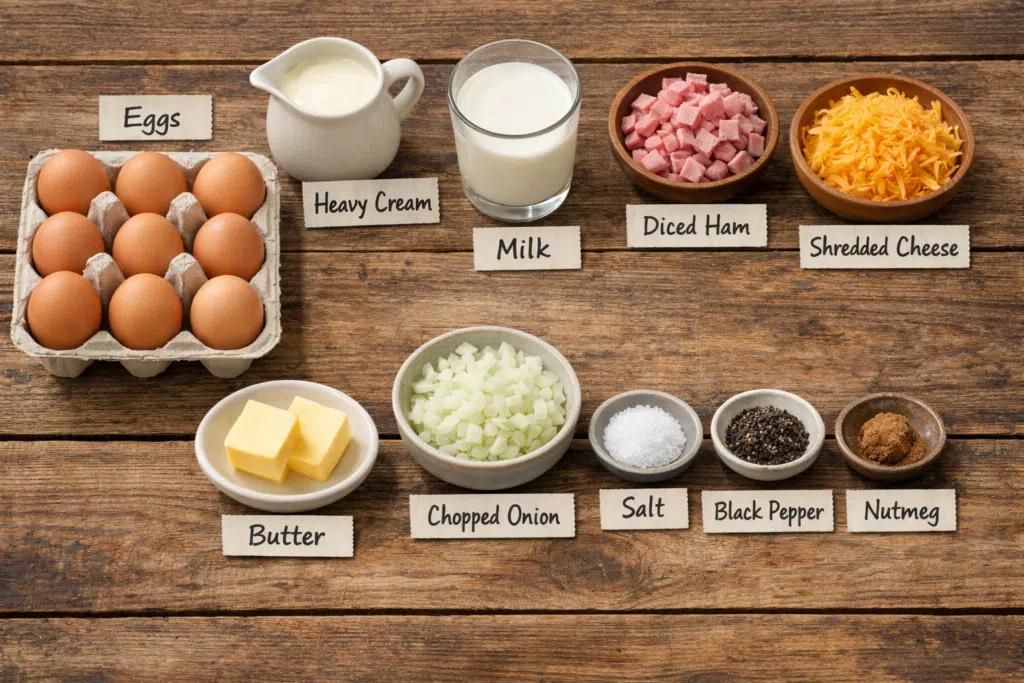
Why These Ingredients Work
Eggs form the structure — they’re the backbone.
Cream brings richness and silkiness.
Milk lightens the custard so it doesn’t feel too dense.
Ham adds saltiness and texture.
Cheddar melts beautifully and gives depth.
Onion adds sweetness and balance.
Instructions
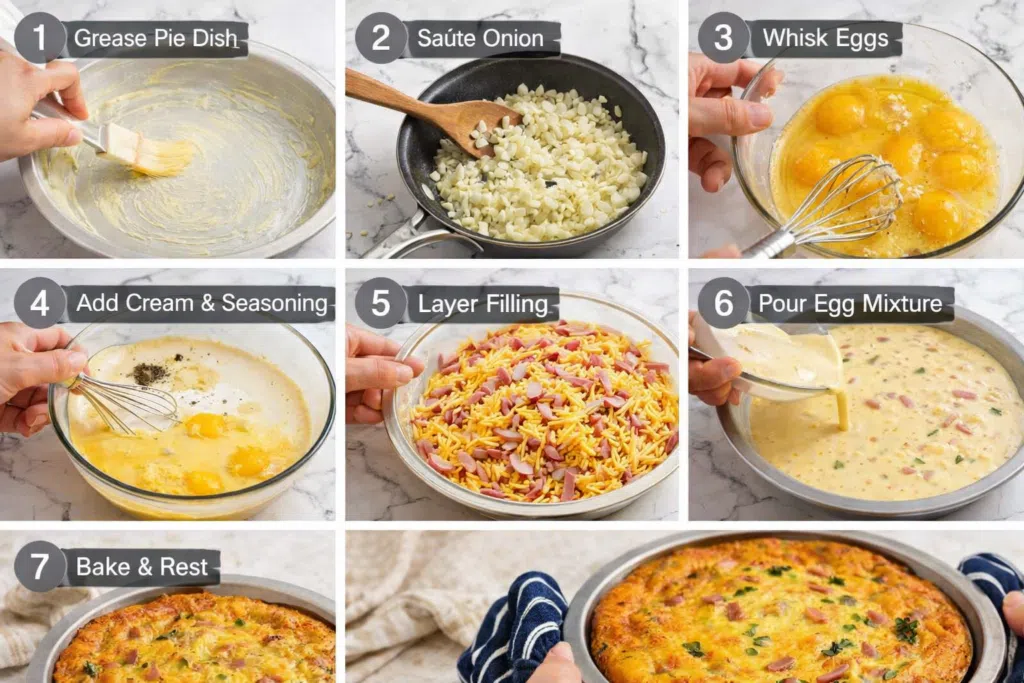
- Preheat your oven to 350°F (175°C).
Grease a 9-inch pie dish generously. Since there’s no crust, proper greasing prevents sticking. I use softened butter and coat the sides well. - Sauté the onion.
Heat butter in a small skillet over medium heat. Cook diced onion until soft and translucent — about 4–5 minutes. Don’t rush this step. If onions brown too much, they can overpower the quiche. Soft and sweet is what you want. - Whisk the eggs gently.
In a large bowl, whisk eggs until just combined. Avoid over-whisking — too much air creates bubbles and a spongy texture. - Add cream, milk, and seasoning.
Stir in cream, milk, salt, pepper, and nutmeg. The mixture should look smooth and pale yellow. - Layer the filling.
Scatter ham, sautéed onions, and cheese evenly in the prepared dish. This prevents everything from sinking to the bottom. - Pour the egg mixture slowly.
Pour gently over the fillings. If you see air bubbles, tap the dish lightly on the counter. - Bake for 35–40 minutes.
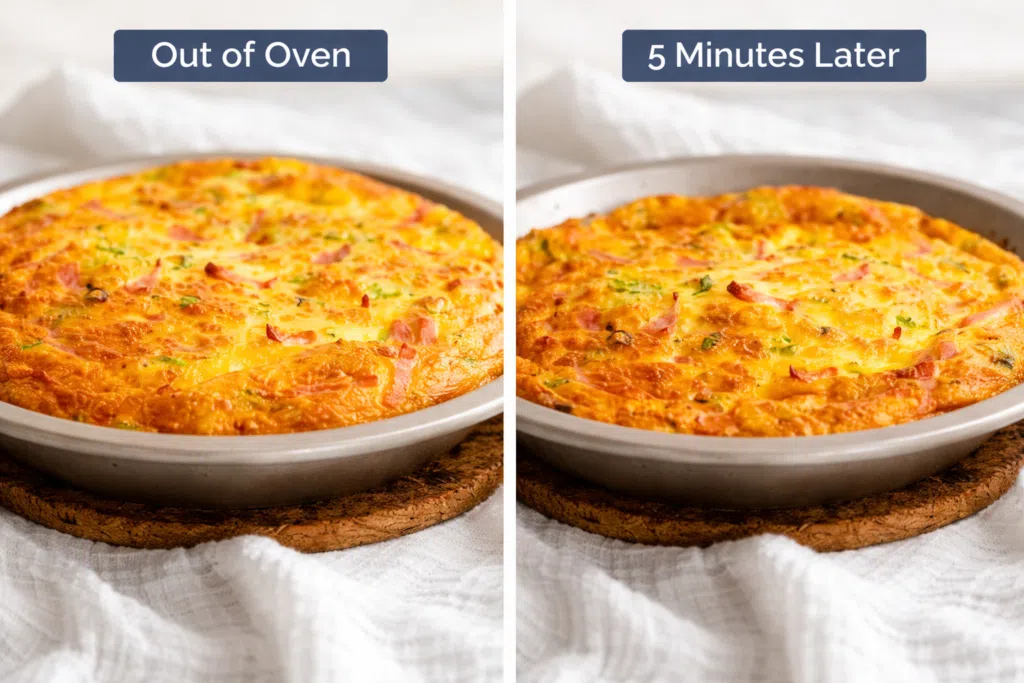
The center should jiggle slightly — like soft set gelatin — but not slosh. Overbaking leads to dryness. The top will be lightly golden. - Rest before slicing.
Let it sit for at least 10 minutes. Cutting too soon causes it to fall apart.
When I pull this from the oven, the kitchen smells buttery and warm. The cheese bubbles at the edges, and that’s when Daniel wanders in saying, “Is it ready yet?”
Tips & Flavor Variations
- Use room temperature eggs.
Cold eggs don’t blend as smoothly with cream. Room temperature eggs create a more uniform custard texture. - Don’t skip sauting onions.
Raw onions release water during baking, which can make the quiche watery. Cooking them first concentrates sweetness. - Try Gruyere instead of cheddar.
Gruyère melts more smoothly and adds nutty complexity — perfect for a more classic flavor profile. - Add vegetables carefully.
Spinach, mushrooms, or bell peppers work beautifully, but cook and drain them first. Excess moisture ruins texture. - Season thoughtfully.
Ham already contains salt. Taste a piece before adding extra salt to the egg mixture.
Flavor Variations
- Spinach & Feta – Replace ham with sautéed spinach and feta.
- Bacon & Leek – Crisp bacon and softened leeks for deeper flavor.
- Broccoli & Cheddar – Kid-friendly and colorful.
- Dairy-Free Option – Use unsweetened almond milk and dairy-free cheese.
What to Serve with Crustless Quiche (My Favorite Side Dishes & Brunch Pairings)
If you’re wondering what to serve with crustless quiche, the good news is that it pairs beautifully with simple, fresh sides. Because the quiche is creamy and savory, I like to balance it with something light, crisp, or slightly acidic.
On relaxed weekend mornings, I usually serve it with a simple green salad tossed in olive oil and fresh lemon juice. That little bit of brightness cuts through the richness of the eggs and cheese perfectly. Sometimes I add sliced cucumbers or radishes for extra crunch.
If I’m planning a brunch menu, I build around the quiche. Fresh fruit is always my first choice — berries, orange slices, or even a fruit salad with mint. The sweetness contrasts beautifully with the savory filling. A basket of warm sourdough or toasted whole-grain bread also works wonderfully if you want something heartier.
For lunch or light dinner, I lean toward roasted vegetables like asparagus, zucchini, or cherry tomatoes. Their slight caramelization adds depth without overpowering the quiche. Arugula with shaved Parmesan and balsamic glaze is another family favorite.
And if I’m being honest? The next day, we often eat it cold straight from the fridge. It’s one of those dishes that doesn’t lose its charm overnight — which makes it perfect for meal prep or casual gatherings.
Common Myths & Mistakes
Myth 1: “If the center jiggles, it’s undercooked.”
Many people believe a perfectly baked quiche must be completely firm before removing it from the oven. They wait until the center is stiff and fully set, assuming that any jiggle means raw eggs. This belief often comes from fear of undercooked eggs and from seeing recipes that emphasize firmness as a sign of doneness.
The problem is that eggs continue cooking from residual heat even after being removed from the oven. If you bake until fully firm, you’ve already gone too far. The proteins tighten excessively, squeezing out moisture and creating a rubbery texture.
The correct approach is to remove the quiche when the center still has a gentle wobble — similar to set custard. It will finish cooking while resting, giving you that silky, creamy interior.
Myth 2: “More cheese makes it better.”
It’s tempting to double the cheese. Social media often celebrates “extra cheesy” everything, and it feels indulgent and generous. Many assume that cheese equals flavor, so more must mean better.
But too much cheese creates problems. It adds excess fat and moisture, preventing the egg custard from setting properly. Instead of creamy slices, you get greasy pockets and uneven texture.
The right balance allows eggs to shine while cheese enhances, not dominates. Stick to about 1½ cups for a 9-inch dish. If you crave stronger flavor, choose a sharper cheese rather than increasing quantity.
Myth 3: “Skipping the crust makes it dry.”
Some believe the crust locks in moisture and that removing it will automatically produce a dry result. That idea likely comes from poorly made crustless versions that were overbaked.
In reality, moisture comes from the egg-to-dairy ratio. A properly balanced custard stays tender without pastry. The crust is structural, not hydrating.
The correct approach is to maintain the right ratio: approximately 1 cup dairy per 4 eggs. Also, avoid overbaking. When done correctly, crustless quiche is lighter and silkier than many traditional versions.
FAQ – Frequently Asked Questions
Why did my crustless quiche turn watery at the bottom?
Watery quiche usually happens because vegetables weren’t pre-cooked or drained properly. Mushrooms, spinach, and onions release moisture as they bake. If added raw, that water seeps into the custard and prevents it from setting properly. Always sauté vegetables first and let them cool slightly before adding them. Also check your dairy ratio — too much milk and not enough eggs weakens the structure. Finally, avoid slicing immediately after baking. Resting allows the custard to firm up and redistribute moisture evenly.
Can I make crustless ham and cheese quiche ahead of time?
Yes, and it’s one of the reasons I love it. You can bake it fully, cool it, and refrigerate for up to three days. Alternatively, prepare the egg mixture and fillings separately and assemble just before baking. If making ahead for guests, bake it the day before and reheat gently at 300°F until warmed through. Avoid microwaving large portions, as it can make the texture rubbery.
Can I freeze crustless quiche successfully?
Absolutely. Let it cool completely, then wrap individual slices tightly in plastic wrap and place in an airtight container. Freeze up to 2 months. For best texture, thaw overnight in the refrigerator before reheating. Reheat in the oven at 325°F until warmed through. Freezing works best when the quiche doesn’t contain watery vegetables.
How do I know when it’s fully cooked without overbaking?
Look for visual cues. The edges will be set and slightly puffed. The center should jiggle slightly but not look liquid. If you insert a knife near the center, it should come out mostly clean. Remember that carryover cooking continues after removal. Trust the jiggle.
For food safety guidance on cooking eggs properly, you can refer to the USDA’s egg safety recommendations.
What’s the best cheese combination for deeper flavor?
Sharp cheddar offers classic flavor, but combining cheeses creates depth. Try half cheddar and half Gruyère for nuttiness, or add a tablespoon of Parmesan for salty complexity. Avoid pre-shredded cheese if possible — it contains anti-caking agents that affect melting. Freshly grated cheese melts smoother and blends better into the custard.
Storage & Make-Ahead Tips
This quiche stores beautifully, which makes it perfect for busy weeks.
In the refrigerator, store leftovers in an airtight container for up to 3 days. Let slices cool completely before refrigerating to avoid condensation, which can affect texture.
For freezing, wrap slices individually in plastic wrap, then place them in a freezer-safe bag or container. Label with the date. Freeze up to 2 months.
To thaw, transfer to the refrigerator overnight. Avoid thawing at room temperature, as condensation can make the surface soggy.
For reheating, place slices on a baking sheet and warm at 300–325°F until heated through. Cover loosely with foil to prevent over-browning. This gentle reheating keeps the custard creamy instead of rubbery.
If packing for lunch, it can be enjoyed at room temperature, which makes it wonderfully practical.
Conclusion
This crustless ham and cheese quiche is one of those recipes that quietly becomes part of your family’s rhythm. It doesn’t demand much. It doesn’t complicate your morning. It simply shows up — warm, comforting, reliable.
And in our house, that’s exactly what we need.
Cook with patience. Keep it simple. And remember — perfection isn’t the goal. Connection is.
Print
Crustless Ham and Cheese Quiche
- Total Time: 55 minutes
- Diet: Low Calorie
Description
A creamy, easy crustless quiche made with ham, cheddar, and a silky egg custard — perfect for breakfast, brunch, or light dinner.
Ingredients
8 large eggs
1 cup heavy cream
1/2 cup whole milk
1 1/2 cups diced cooked ham
1 1/2 cups shredded cheddar cheese
1/2 small onion, finely diced
1 tablespoon butter or olive oil
1/2 teaspoon salt
1/4 teaspoon black pepper
Pinch nutmeg (optional)
Instructions
-
Preheat oven to 350°F and grease a 9-inch pie dish.
-
Sauté onion in butter until soft.
-
Whisk eggs gently.
-
Stir in cream, milk, and seasonings.
-
Scatter ham, onion, and cheese in dish.
-
Pour egg mixture over fillings.
-
Bake 35–40 minutes until center slightly jiggles.
-
Rest 10 minutes before slicing.
Notes
Store refrigerated up to 3 days.
Freeze slices up to 2 months.
Reheat gently at 300–325°F.
Use room temperature eggs for best texture.
- Prep Time: 15 minutes
- Cook Time: 40 minutes
- Category: Breakfast
- Method: Baking
- Cuisine: American
Nutrition
- Serving Size: 6 slices
- Calories: 320 per slice
- Sugar: 2g
- Fat: 24g


