

Cozy Everyday Vegetable Soup (My Calm, Go-To Family Pot)
Introduction (A personal story from my kitchen)
Hi, I’m Helen Whitaker — and this vegetable soup has quietly become one of the most reliable meals in my kitchen. It’s the kind of soup I make when the house feels a little loud, the day has been long, and I need something steady simmering on the stove to bring everyone back together.
I first made this on a chilly afternoon when my husband Mark came home later than planned, and the kids — Emma and Luke — were hovering around the pantry asking what was for dinner every ten minutes. I didn’t want anything complicated. I wanted something forgiving, something that could bubble away while homework got finished and stories got shared at the kitchen table.
This soup started as a way to use up vegetables, but it quickly turned into a family staple. Emma loves dunking crusty bread into the broth, Luke picks out his favorite carrots first, and Mark always goes back for a second bowl. It’s not flashy. It’s not trendy. But it’s warm, nourishing, and deeply comforting — the kind of meal that reminds me why I love cooking in the first place.
Why You’ll Love This Recipe
This vegetable soup is simple in the best way. It doesn’t rely on shortcuts that sacrifice flavor, and it doesn’t demand perfection. You can adjust it based on what you have, how much time you’ve got, or who you’re cooking for.
You’ll love it because it’s naturally wholesome without feeling “healthy” in a boring way. The vegetables soften into the broth, releasing sweetness and depth, while herbs gently perfume the entire pot. It’s light enough for lunch, hearty enough for dinner, and even better the next day.
It’s also incredibly flexible. Some nights I keep it brothy and simple. Other nights I add beans or pasta to make it more filling. No matter how you make it, it always feels like home.
The Origin of This Recipe
This soup traces back to my grandmother’s habit of never letting vegetables go to waste. She believed every carrot, onion, and celery stalk had a purpose. Her soups weren’t written down — they were felt. A handful of this, a pinch of that, always guided by smell and taste rather than a timer.
When I started Cookliva, I wanted recipes that honored that same mindset. This vegetable soup is inspired by those early memories — not copied, not recreated, but rooted in that philosophy of calm cooking. Over time, I’ve adjusted proportions, refined the method, and learned what really makes a vegetable soup taste full and satisfying rather than flat.
Ingredients (And Why They Matter)
Olive Oil
This is your flavor foundation. Olive oil gently carries the aroma of the vegetables and herbs without overpowering them.
Onion
Onion adds natural sweetness and depth. Cooking it slowly at the start is key to building a flavorful base.
Carrots
Carrots bring sweetness and color. As they simmer, they soften and lightly thicken the broth.
Celery
Celery adds balance and a subtle savory note that keeps the soup from tasting overly sweet.
Garlic
Just enough garlic adds warmth and aroma without dominating the vegetables.
Zucchini
Zucchini softens quickly and adds body to the soup. It absorbs flavor beautifully.
Green Beans
They provide texture and freshness, especially when added at the right moment.
Diced Tomatoes
Tomatoes bring acidity and richness, helping balance the sweetness of the vegetables.
Vegetable Broth
Choose a good-quality broth — it’s the backbone of the soup. Low-sodium works best so you can control seasoning.
Bay Leaf
A quiet hero. It adds subtle depth that you don’t notice until it’s missing.
Dried Thyme or Italian Seasoning
Herbs round everything out and give the soup a familiar, comforting flavor.
Salt and Black Pepper
Season gradually. Soup needs time to develop flavor.
Fresh Parsley (Optional)
Added at the end for freshness and color.

Instructions (Step-by-Step, Beginner Friendly)
- Start with the aromatics
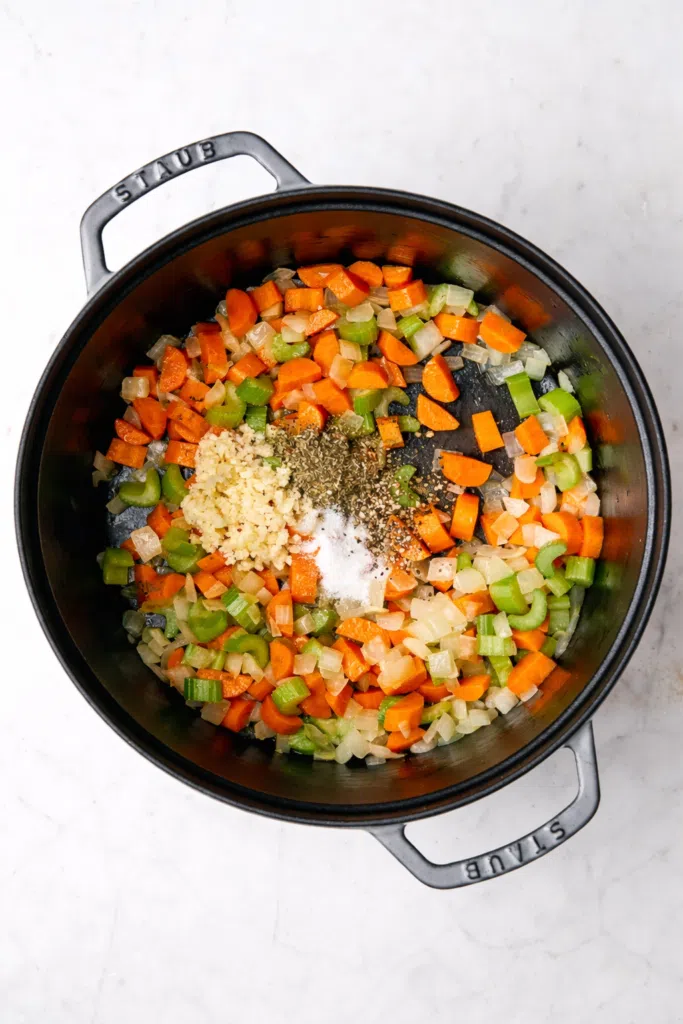
Heat olive oil in a large pot over medium heat. Add the chopped onion, carrots, and celery. Stir gently and let them cook for about 6–8 minutes, until the onions turn translucent and everything smells slightly sweet.
Tip: Don’t rush this step. If the vegetables brown, the soup will taste sharper instead of mellow. - Add garlic carefully
Stir in the garlic and cook for about 30 seconds. You’re looking for fragrance, not color.
Common pitfall: Garlic burns fast — if it turns brown, start over.
- Layer in the vegetables
Add zucchini and green beans. Stir to coat them in the oil and aromatics. Cook for 2–3 minutes to wake up their flavors. - Build the broth
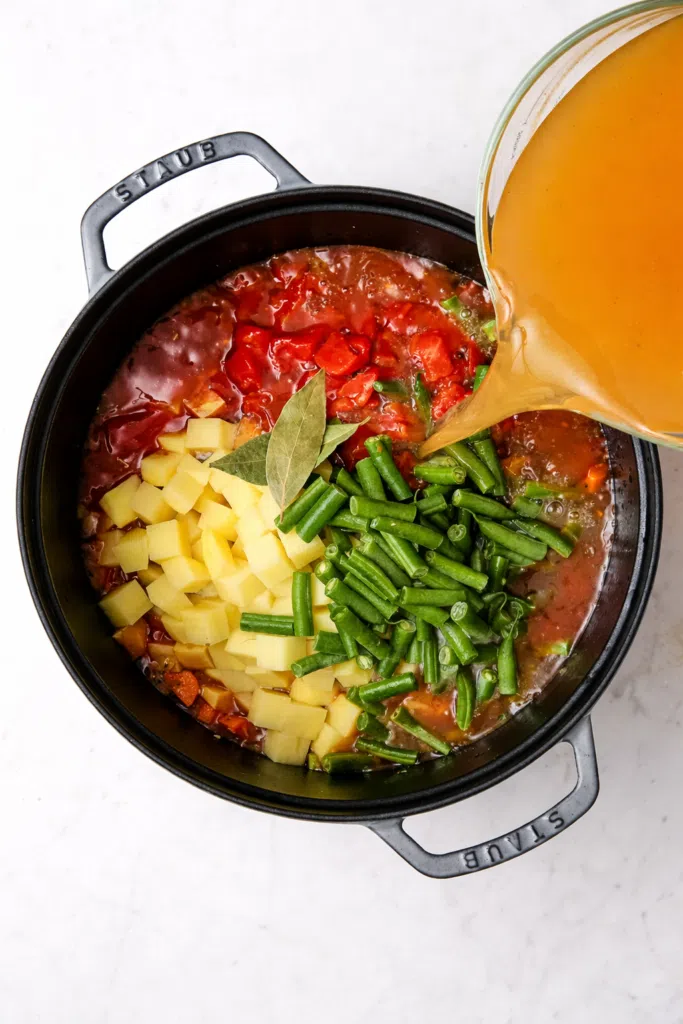
Pour in the diced tomatoes with their juices and the vegetable broth. Add bay leaf, thyme, salt, and pepper. Stir gently.
- Simmer patiently
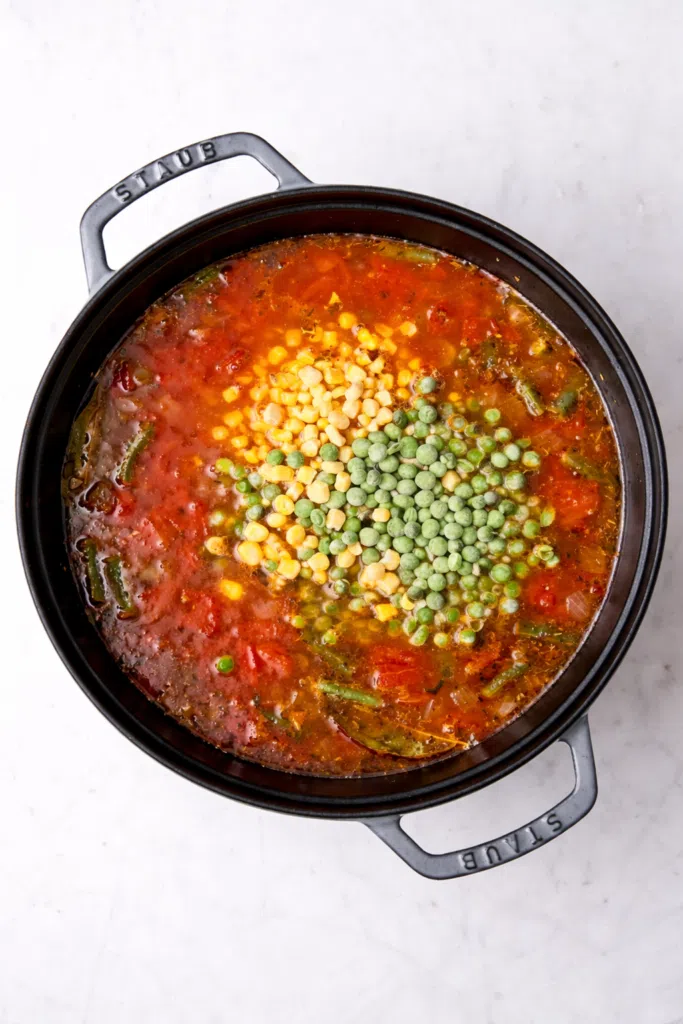
Bring the soup to a gentle boil, then reduce heat and let it simmer uncovered for 20–25 minutes. The vegetables should be tender but not mushy.
Visual cue: You should be able to pierce a carrot easily with a fork, but it should still hold its shape.
- Taste and adjust
Remove the bay leaf. Taste the broth and adjust salt and pepper as needed. Finish with fresh parsley if using.

Tips & Flavor Variations
- Cut vegetables evenly
This ensures everything cooks at the same pace, preventing mushy zucchini and crunchy carrots. - Salt in layers
Season lightly at each stage instead of dumping salt at the end — this builds deeper flavor. - Add beans for protein
White beans or chickpeas make the soup more filling without overpowering it. - Make it heartier
Add small pasta or rice during the last 10 minutes for a more substantial meal. - Finish with acid
A splash of lemon juice or vinegar at the end brightens the entire pot.
Flavor Variations:
- Add smoked paprika for warmth
- Stir in spinach or kale at the end
- Use fresh basil instead of thyme
- Add a parmesan rind while simmering (remove before serving)
Common Myths & Mistakes (Beginner Myth-Busting Guide)
Myth 1: Vegetable soup is bland unless you add meat
Many people believe vegetable soup can’t be satisfying without meat because they associate richness with animal-based fats. This idea often comes from under-seasoned soups or rushed cooking methods where vegetables never get the chance to develop flavor.
The truth is that vegetable soup relies on layering flavor, not replacing it. Slowly sautéing aromatics, choosing a good broth, and seasoning in stages creates depth naturally. Vegetables release sugars as they cook, and herbs infuse the broth over time.
The correct approach is patience. Allow the base vegetables to soften and sweeten before adding liquid. Taste throughout the process and adjust thoughtfully. When done properly, vegetable soup is rich, balanced, and deeply comforting — no meat required.
Myth 2: All vegetables should go in at the same time
This myth usually comes from wanting to simplify cooking or from one-pot recipes that promise speed. Unfortunately, adding all vegetables at once leads to uneven texture — some turn mushy while others stay undercooked.
Different vegetables cook at different speeds. Dense vegetables like carrots need more time, while zucchini cooks quickly and absorbs liquid fast.
The correct approach is staggered cooking. Start with firm vegetables in the sauté stage, then add quicker-cooking vegetables later. This keeps every ingredient at its best texture, making the soup feel intentional rather than sloppy.
Myth 3: Soup should boil hard to develop flavor
Some cooks believe a rolling boil equals stronger flavor, but this often results in broken vegetables and dull broth.
Boiling aggressively causes vegetables to release water too quickly, diluting flavor and damaging texture. Herbs can also turn bitter under high heat.
The correct approach is a gentle simmer. Small bubbles, slow movement, and time allow flavors to meld smoothly. Soup rewards patience far more than speed.
FAQ – Frequently Asked Questions
How long does homemade vegetable soup last in the fridge?
Properly stored vegetable soup will last 4–5 days in the refrigerator. Let the soup cool completely before transferring it to an airtight container. Cooling first prevents condensation, which can water down the broth. When reheating, warm gently on the stove rather than microwaving aggressively, which can overcook the vegetables and dull the flavors.
Can I freeze vegetable soup without ruining the texture?
Yes, vegetable soup freezes very well, especially if it doesn’t contain pasta or potatoes. Let it cool completely, then freeze in portion-sized containers. Thaw overnight in the fridge and reheat gently. If you plan to freeze it, slightly undercook the vegetables so they don’t turn mushy when reheated.
Why did my vegetable soup turn out watery?
Watery soup often comes from too much broth or not enough simmering time. Vegetables need time to release their natural sugars and flavors into the liquid. If your soup tastes thin, let it simmer uncovered a bit longer or add a handful of mashed beans to thicken it naturally.
What vegetables should I avoid adding to vegetable soup?
Very delicate vegetables like lettuce or cucumbers don’t hold up well to simmering and can turn bitter or slimy. Stick to vegetables that soften nicely with heat. Leafy greens like spinach are fine when added at the very end.
Can I make this soup in a slow cooker?
Absolutely. Sauté the aromatics first, then transfer everything to the slow cooker. Cook on low for 6–7 hours or high for 3–4 hours. Add quick-cooking vegetables during the last hour to preserve texture.
Print
Cozy Everyday Vegetable Soup (My Calm, Go-To Family Pot)
- Total Time: 45 minutes
- Diet: Vegetarian
Description
A simple, comforting vegetable soup made with everyday ingredients and gentle simmering for deep flavor.
Ingredients
-
2 tablespoons olive oil
-
1 medium onion, chopped
-
3 carrots, sliced
-
3 celery stalks, chopped
-
3 cloves garlic, minced
-
1 zucchini, diced
-
1 cup green beans, chopped
-
1 can diced tomatoes
-
6 cups vegetable broth
-
1 bay leaf
-
1 teaspoon dried thyme or Italian seasoning
-
Salt and black pepper to taste
-
Fresh parsley, optional
Instructions
-
Heat olive oil in a large pot over medium heat.
-
Add onion, carrots, and celery; cook until softened.
-
Stir in garlic and cook briefly until fragrant.
-
Add zucchini and green beans; stir for 2–3 minutes.
-
Pour in tomatoes and broth; add bay leaf and seasoning.
-
Simmer uncovered for 20–25 minutes.
-
Remove bay leaf, adjust seasoning, and serve.
Notes
Store leftovers in the fridge for up to 5 days. Freezes well without pasta. Add beans or pasta for a heartier meal.
- Prep Time: 15 minutes
- Cook Time: 30 minutes
- Category: Soup
- Method: Stovetop
- Cuisine: American
Nutrition
- Serving Size: 6
- Calories: 140 per serving
- Sugar: 7g
- Fat: 5 g


