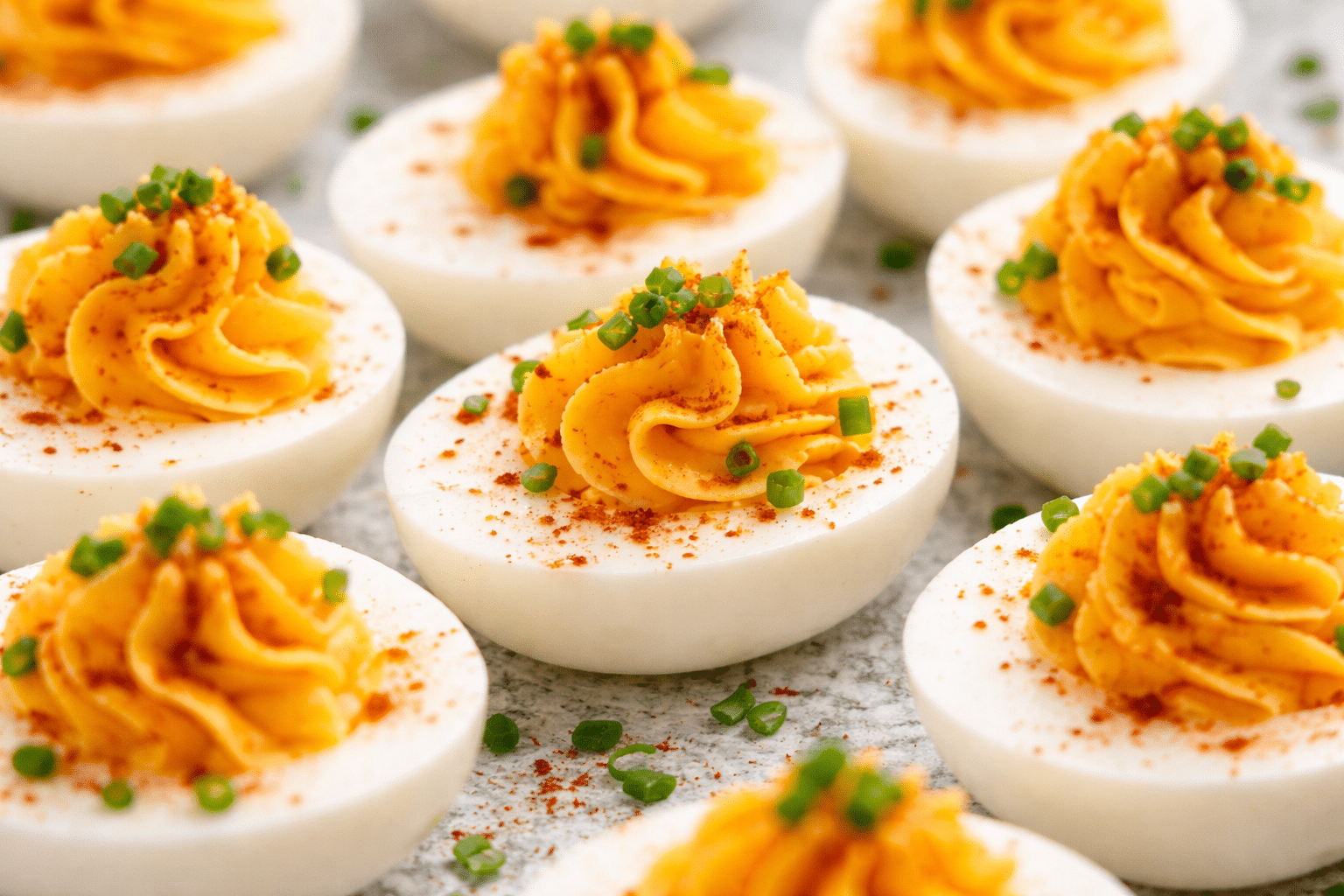
Classic Deviled Eggs (Creamy, Foolproof & Always a Family Favorite)
There are certain recipes that never go out of style — and classic deviled eggs are one of them. Whether it’s Easter brunch, a summer picnic, a holiday gathering, or simply a Sunday lunch at home, these creamy little bites always find their way onto our table.
Hi, I’m Helen, and in our home, deviled eggs are more than just an appetizer — they’re a tradition. Daniel always sneaks one before I’ve even finished plating them, and Emma and Noah stand nearby counting how many halves are “fairly distributed.” It’s one of those simple recipes that somehow turns into a family moment.
Over the years, I’ve learned that making perfect deviled eggs isn’t about complicated ingredients — it’s about technique. Getting the eggs just right, creating a smooth and creamy filling, and balancing that gentle tang from mustard and vinegar makes all the difference.
If you’ve ever struggled with rubbery whites, gray yolks, or a filling that felt too thick or too bland, don’t worry. I’m going to walk you through exactly how to make creamy deviled eggs that are smooth, flavorful, and beautifully simple — every single time.
Because in my kitchen, it’s never about perfection. It’s about creating something comforting, dependable, and worth gathering around.
I didn’t always feel confident making them. Boiling eggs felt simple… until I overcooked them. Filling them seemed easy… until it turned grainy. Over time, though, I learned that deviled eggs aren’t complicated — they just need patience and a few small technique tweaks.
Today I’m sharing the version I make at home: creamy, balanced, slightly tangy, and never dry.
Why You’ll Love This Recipe
- The filling is ultra creamy without being heavy.
- The flavor is balanced — not overly mustardy or too vinegary.
- The yolks stay bright yellow (no gray rings).
- It’s simple enough for beginners.
- You can easily adjust it to your family’s taste.
I love recipes that feel dependable. This is one of those. Once you understand why each ingredient is there, you’ll never need to look up another deviled egg recipe again.

The Origin of This Recipe
Deviled eggs have been around for centuries, though the term “deviled” became popular in the 18th century to describe spicy or zesty foods. In America, they became a picnic and holiday staple in the 20th century — and for good reason.
They’re affordable, portable, and always disappear first.
In our home, they became a tradition during Easter brunch. The kids help peel (carefully), Daniel insists on “taste testing,” and I pipe the filling while reminding myself not to rush.
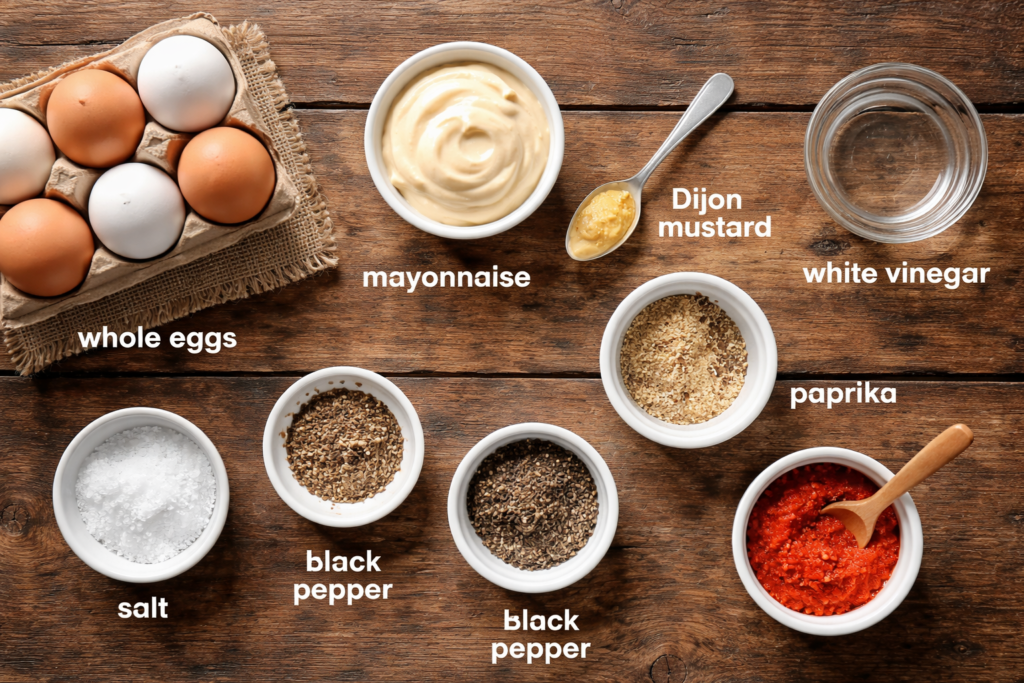
Ingredients
- 6 large eggs
- 3 tablespoons mayonnaise
- 1 teaspoon Dijon mustard
- 1 teaspoon white vinegar (or lemon juice)
- Salt, to taste
- Black pepper, to taste
- Paprika, for garnish
Why These Ingredients Work
Eggs: The star. Fresh eggs are harder to peel, so if possible, use eggs that are at least a few days old.
Mayonnaise: This creates the creamy texture. Don’t skimp — it prevents dryness.
Dijon mustard: Adds depth without overpowering the eggs.
Vinegar or lemon juice: This brightens the filling and balances richness.
Paprika: Mostly visual, but adds subtle warmth.
Instructions
1. Boil the Eggs Properly
Place eggs in a saucepan and cover with cold water by about 1 inch. Bring to a gentle boil over medium heat. Once boiling, cover the pot, turn off the heat, and let sit for 10–12 minutes.
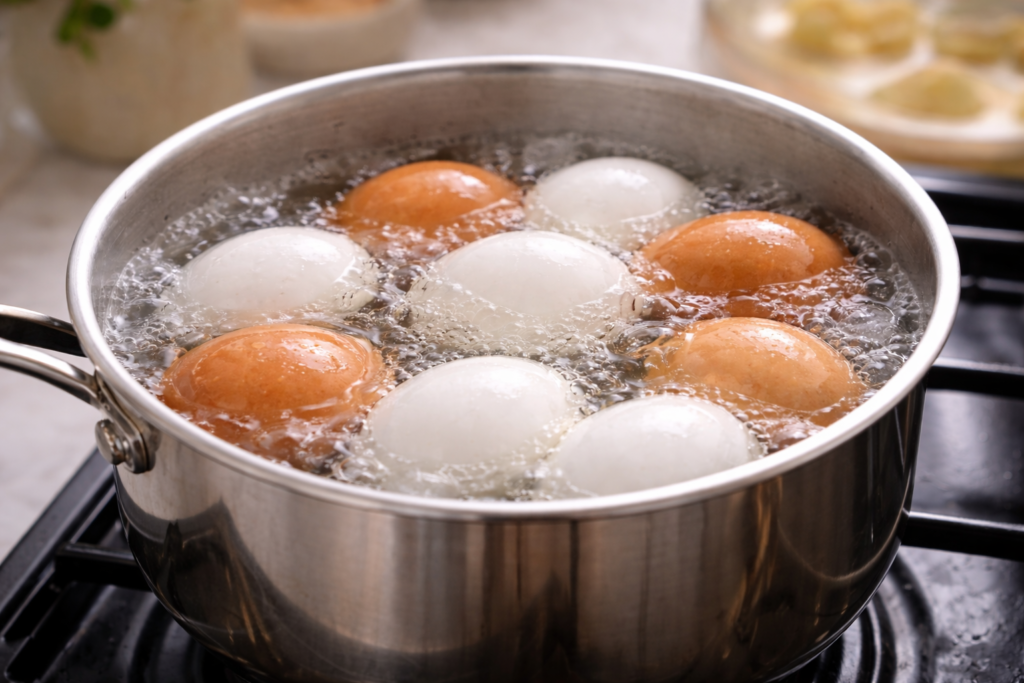
Tip: Don’t let them aggressively boil — that’s what causes rubbery whites and gray yolks.
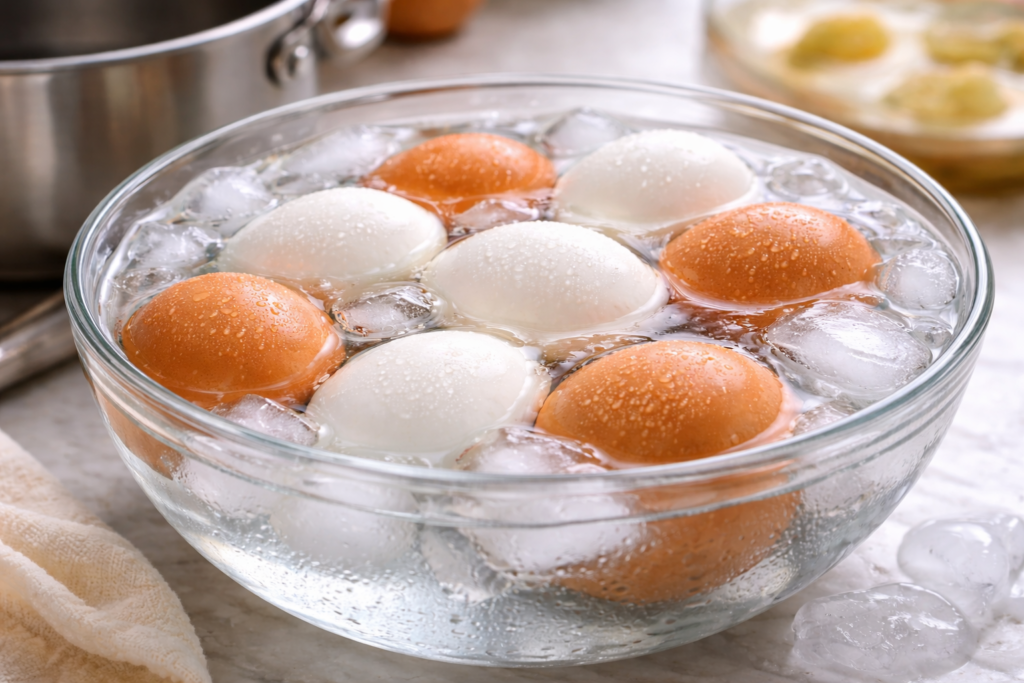
2. Ice Bath Immediately
Transfer eggs to an ice bath for at least 5 minutes. This stops cooking and helps peeling.
3. Peel & Slice
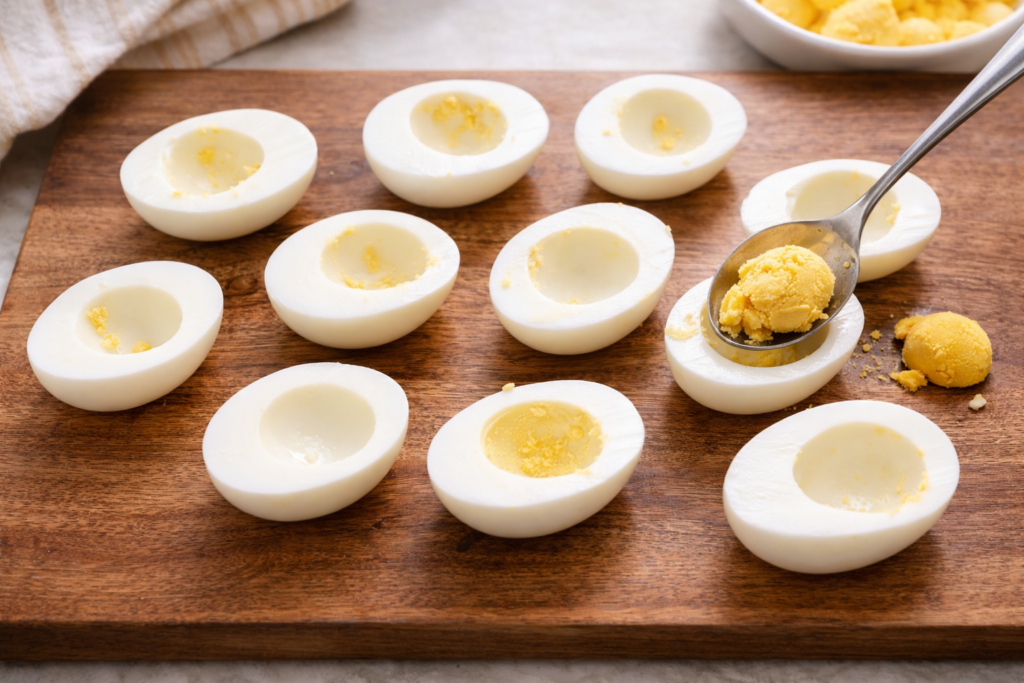
Gently crack and peel. Slice lengthwise with a clean knife.
4. Make the Filling
Mash yolks with a fork until very fine before adding mayo. This prevents lumps. Add mayonnaise, mustard, vinegar, salt, and pepper. Mix until smooth and creamy.
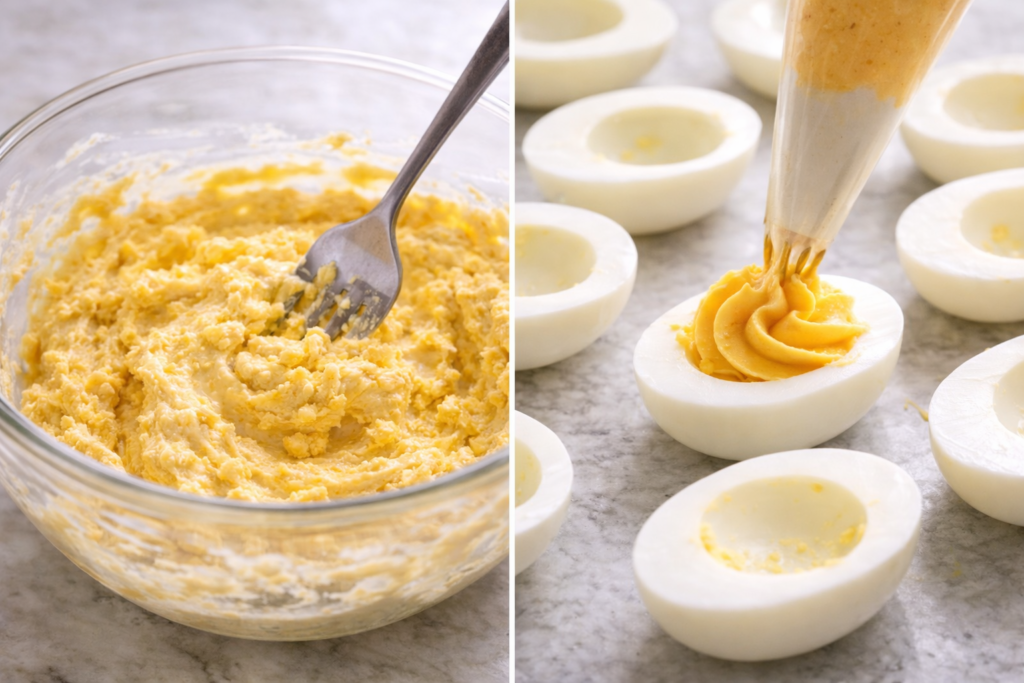
If it feels thick, add ½ teaspoon more mayo.
5. Fill & Garnish
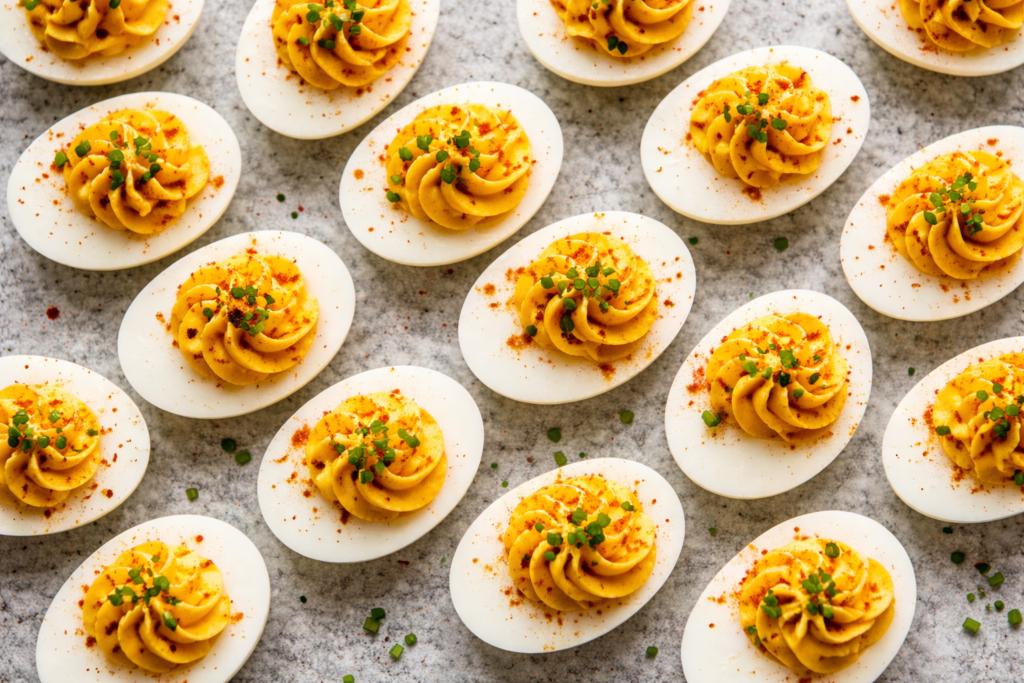
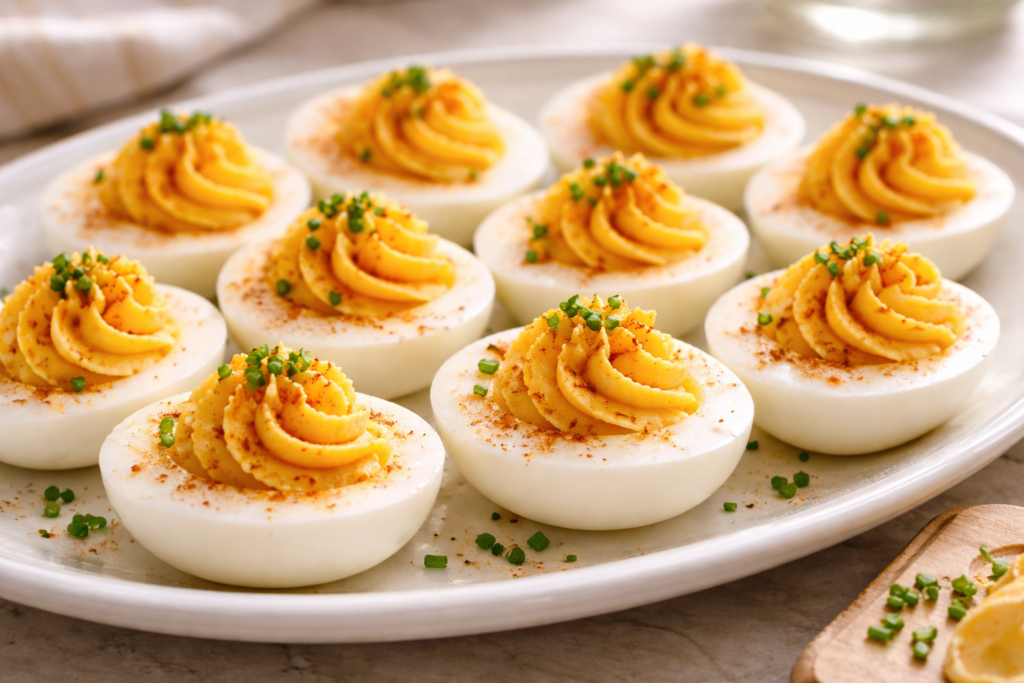
Spoon or pipe the mixture into the whites. Sprinkle lightly with paprika.
Tips & Flavor Variations
- Mash yolks first before adding mayo. This ensures a silky texture.
- Use a piping bag. It makes them look polished and prevents overfilling.
- Taste before filling. Once piped, adjusting seasoning is messy.
- Add a pinch of sugar if your mustard is very sharp.
- Chill before serving. Cold filling tastes firmer and more flavorful.
Variations:
- Add finely chopped pickles for tang.
- Mix in smoked paprika for depth.
- Stir in a spoon of sour cream for lighter texture.
- Add crispy bacon bits for a savory twist.
- Try a pinch of curry powder for something unexpected.
Common Myths & Mistakes
Myth 1: “The longer you boil eggs, the better they cook.”
Many people believe eggs must boil vigorously for 15–20 minutes. This comes from older cooking habits where people feared undercooking.
But prolonged boiling causes sulfur reactions that create a gray-green ring around the yolk and a rubbery white texture.
The correct approach is gentle heat. Bring to boil, turn off heat, and let sit. Controlled residual heat cooks them perfectly without overdoing it.
Myth 2: “More mayonnaise makes them creamier.”
It’s tempting to keep adding mayo if the mixture feels thick. Social media often shows overly whipped, mayo-heavy fillings.
But too much mayonnaise makes the filling greasy and masks the egg flavor.
Instead, mash yolks finely first. Texture comes from technique, not excess mayo.
Myth 3: “Fresh eggs are best for boiling.”
Fresh eggs are wonderful for frying — but terrible for peeling.
As eggs age slightly, the pH changes and shells release more easily.
Use eggs that are at least 3–5 days old for easier peeling and cleaner whites.
FAQ – Frequently Asked Questions
Why do my deviled eggs taste bland even though I added salt?
Often it’s not salt that’s missing — it’s acidity. Vinegar or lemon juice brightens flavor and makes the filling pop. Without acidity, the richness feels flat. Adjust with a few drops at a time.
How do I prevent the yolks from turning gray?
Gray yolks are caused by overcooking. Use the heat-off method and transfer immediately to an ice bath. Avoid rapid boiling for extended periods.
Can I make deviled eggs the day before?
Yes, but store whites and filling separately if possible. Fill them a few hours before serving for best texture.
Why is my filling lumpy?
The yolks weren’t mashed finely enough before adding mayo. Always break them down first.
How long can deviled eggs sit out?
No more than 2 hours at room temperature. Eggs are perishable and should be kept chilled.
Storage & Make-Ahead Tips
Store deviled eggs in an airtight container in the refrigerator for up to 2 days. Keep them covered to prevent drying.
If making ahead, store egg whites and filling separately. Pipe the filling the day of serving.
Freezing is not recommended. The texture of egg whites becomes rubbery after thawing.
To refresh leftovers, lightly stir filling and adjust seasoning before serving again.
Conclusion
Deviled eggs may seem simple, but when made with care, they become something special. In our house, they’re never just an appetizer — they’re part of the memory of the meal.
Cook them gently. Season thoughtfully. And don’t rush.
That’s where the magic really is.
Print
Classic Deviled Eggs
- Total Time: 27 minutes
- Diet: Vegetarian
Description
Creamy, balanced deviled eggs made with simple ingredients and foolproof boiling technique.
Ingredients
6 large eggs
3 tablespoons mayonnaise
1 teaspoon Dijon mustard
1 teaspoon white vinegar
Salt
Black pepper
Paprika
Instructions
-
Cover eggs with cold water and bring to boil.
-
Turn off heat and let sit 10–12 minutes.
-
Transfer to ice bath 5 minutes.
-
Peel and slice lengthwise.
-
Mash yolks finely.
-
Mix with mayonnaise, mustard, vinegar, salt, and pepper.
-
Pipe into whites and sprinkle paprika.
Notes
Store refrigerated up to 2 days.
Do not freeze.
Fill eggs shortly before serving for best texture.
- Prep Time: 15 minutes
- Cook Time: 12 minutes
- Category: Appetizer
- Method: Boiled
- Cuisine: American
Nutrition
- Serving Size: 12 halves
- Calories: 70 per half
- Sugar: 0.5g
- Fat: 6g