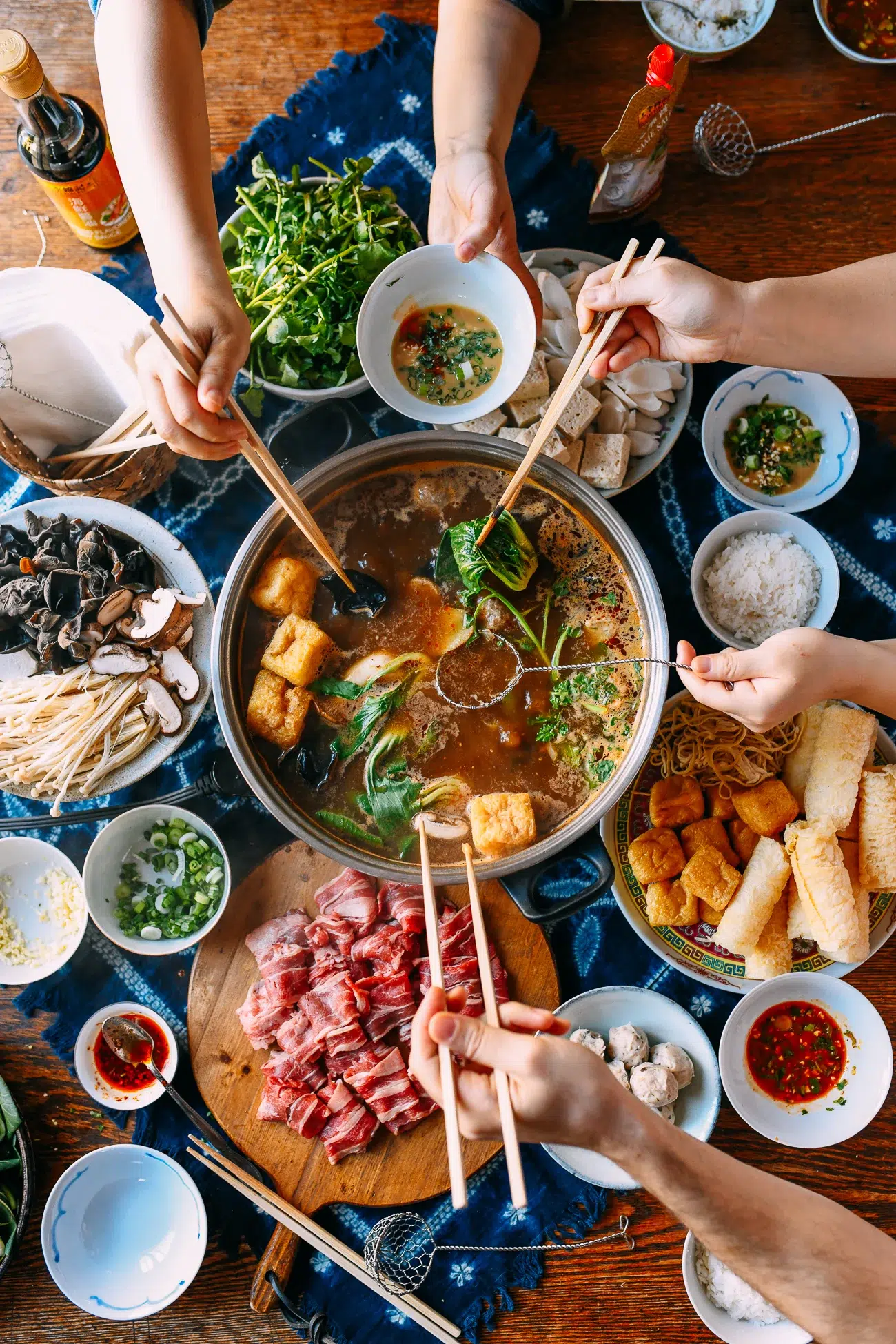
Chinese Hot Pot at Home

When chilly weather hits in fall and winter, Chinese hot pot is one of those cozy meals that instantly comes to mind. It’s warm, comforting, and best enjoyed around the table with family or close friends. Plus, since everything cooks right at the table, it’s super easy and fun for everyone involved.
Hot pot is more than just a meal—it’s a relaxed dining experience. We’ve tried loads of different styles over our years living in China and hosted many hot pot dinners ourselves. So, in this post, I’ll show you how to bring that hot pot magic home and make it feel like a pro’s kitchen without any fuss.
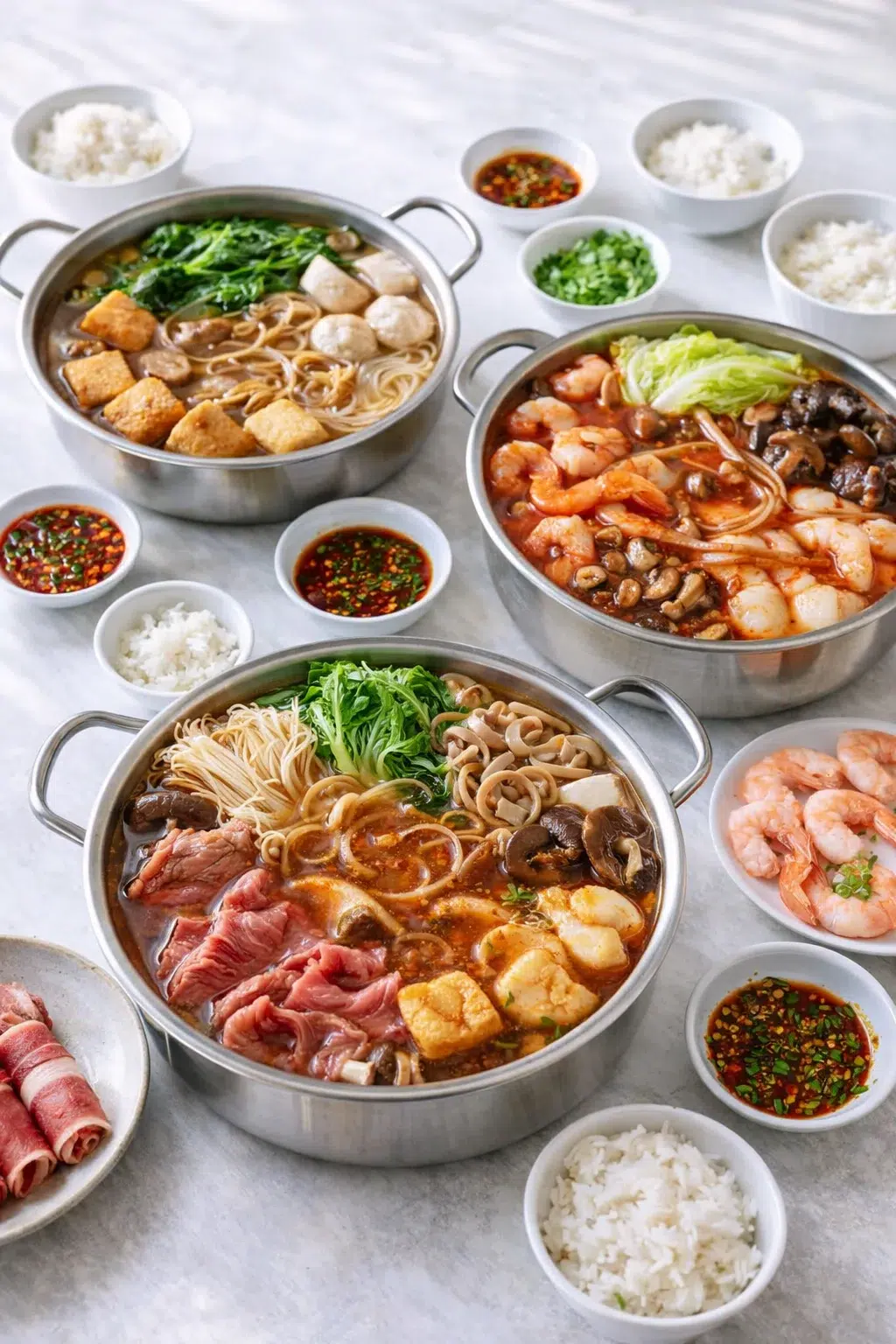
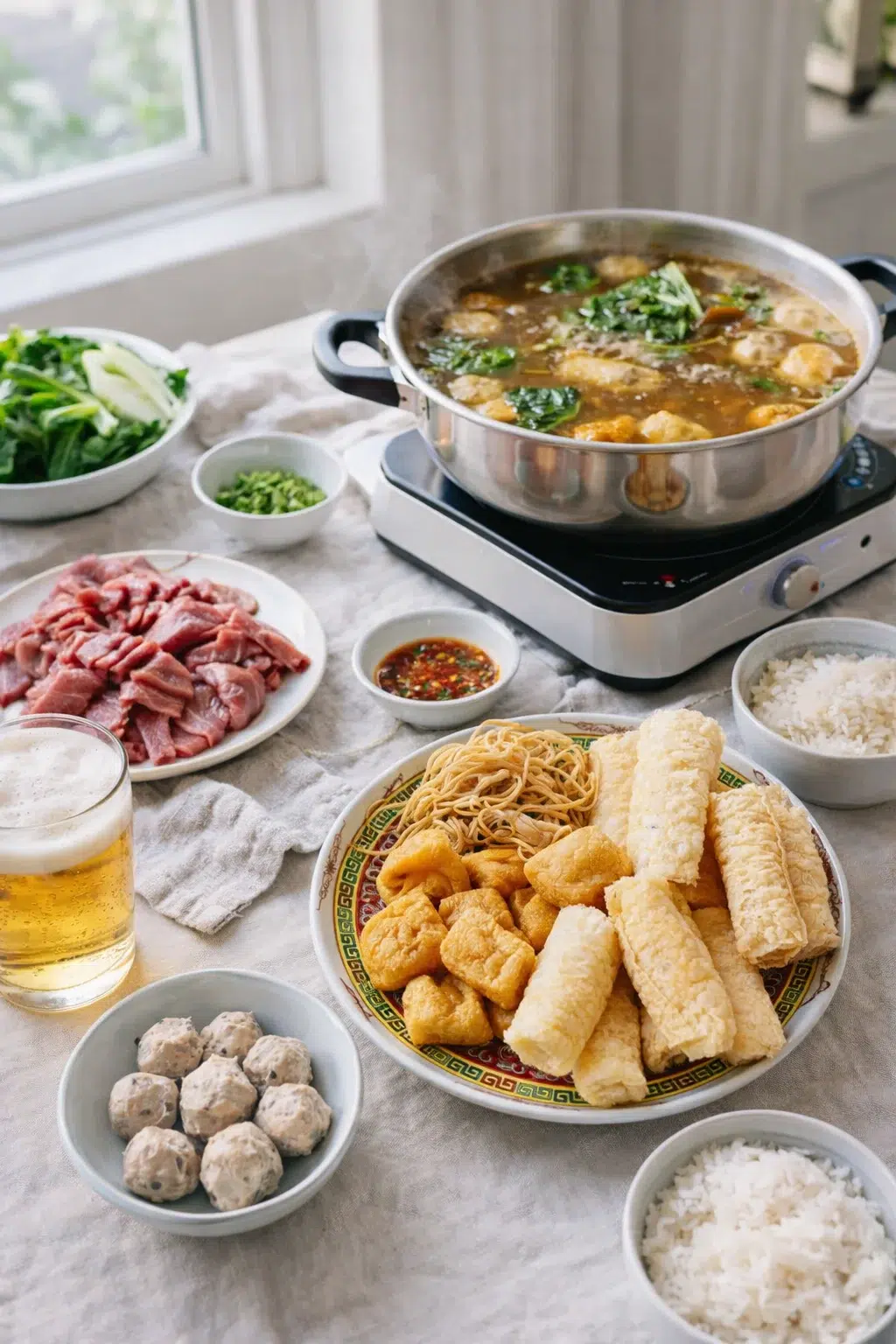
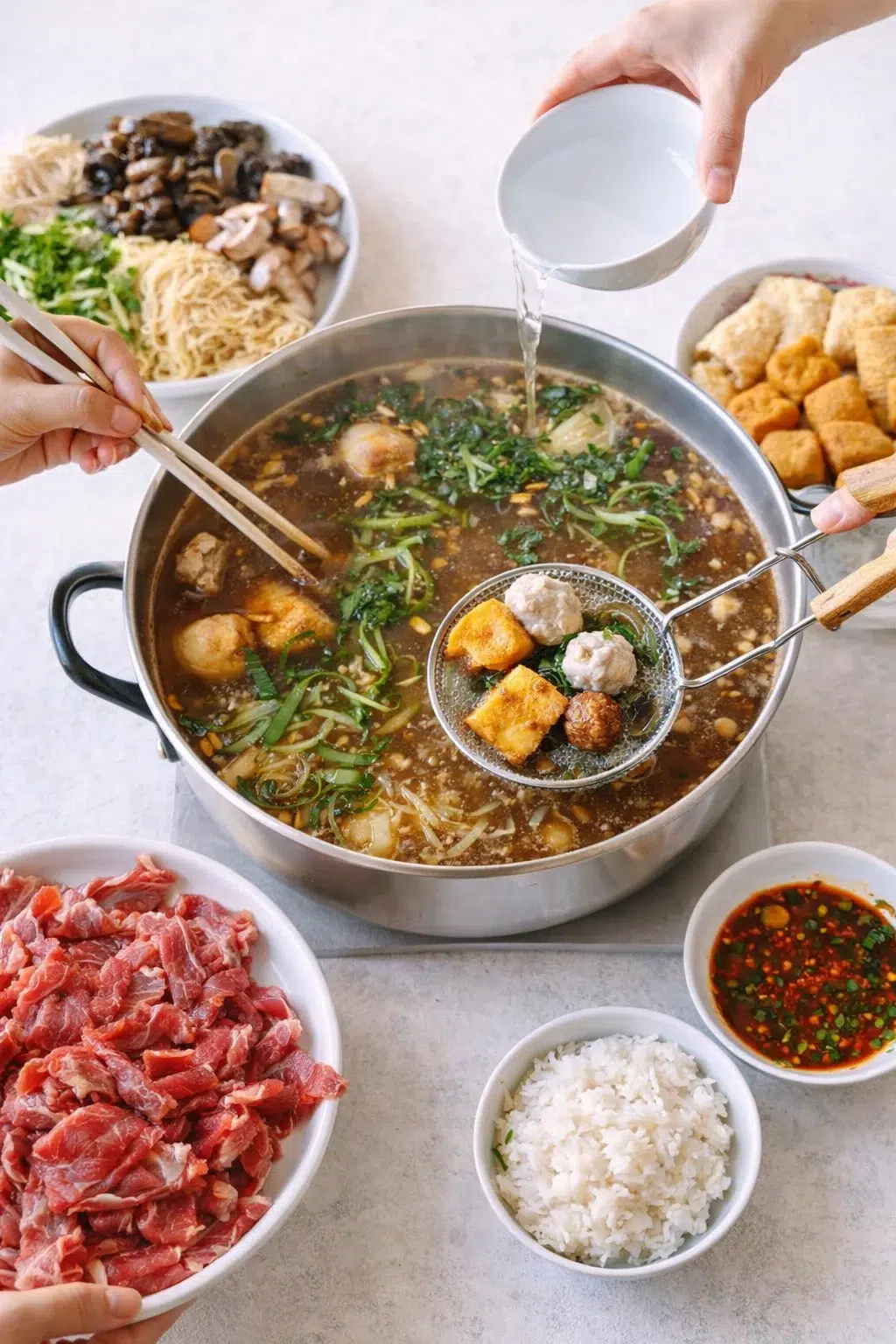
Chinese hot pot comes in many regional styles, but at its core, it’s a social meal where everyone gathers around a pot of simmering broth. You cook thin slices of meat, seafood, veggies, tofu, and starches right at the table, customizing your meal as you go.
Everyone adds whatever they like to that bubbling broth, then fishes out their perfectly cooked bites with wire ladles or chopsticks. And the best part? You get to personalize it with dipping sauces that suit your tastes perfectly.
What’s so great about hot pot is how personalized it can be. Each person can mix up their own dipping sauce, pick their favorites to cook, and really make the meal their own.
If that sounds like your kind of dinner party (how could it not!), stick with me — I’ve got everything you need to know coming right up.
In China, hot pot is a must-have when the cold weather arrives. Restaurants range from super casual spots with conveyor belts of ingredients to fancier places offering two-flavor pots and elegant service.
You’ll find specialized regional hot pots too—like spicy Sichuan, fragrant Yunnan, or hearty Mongolian lamb options. Some spots have pre-mixed dipping sauces on the menu, and others let you build your own at sauce bars.
Here in the U.S., hot pot restaurants exist too, but they often come with a hefty price tag and mixed quality. That’s why I love making hot pot at home. It’s affordable, hands-on, and you get to control every delicious detail.
Is Hot Pot Healthy?
Absolutely—it can be super healthy! Since you’re essentially poaching ingredients in broth, it’s a gentle way to cook and retain nutrients, especially if you keep the broth lean.
Of course, it depends on what you dunk in. I love loading up on veggies, tofu, and different mushrooms (wood ears and enokis are my favorites!). Those will always be better for you than too much meat or processed options like fish balls or Spam—which are still pretty popular though!
Hot pot is one of those meals that instantly makes cold nights feel warmer and more fun—a simmering pot in the center of the table, colorful plates of raw food, and everyone cooking and customizing to their heart’s content. In this guide, I’ll walk you through how to recreate that experience at home without stress or breaking the bank.
You’ll find everything here: what equipment you need (and how to improvise if you don’t have the fancy stuff), which ingredients to pick, how to build flavorful broths, and how to mix dipping sauces that everyone will love. Plus, I’ll share tips on timing, food safety, smart prep and serving tricks, storage for leftovers, and handy shortcuts like using premade soup bases (we tested the Lee Kum Kee ones for you!).
- Learn what hot pot is and why it’s such a fun go-to meal
- Find out about essential gear and simple substitutions
- See ingredient groups and how to balance a colorful spread
- Discover broth ideas (including premade bases) and easy flavor boosts
- Get dipping sauce recipes, cooking tips, and safety advice
- Understand how to store leftovers and troubleshoot common questions
Keep scrolling for the full recipe card and step-by-step instructions to plan, prep, and enjoy a relaxed hot pot night with those you love.
Why Hot Pot Wins Every Time
Hot pot is the ultimate cozy, social meal—it turns dinner into a lively event where everyone cooks exactly what they want right at the table. It’s super flexible, too. You can make it veggie-forward and light for a healthy option, use premade soup bases to save prep time, or go bold with a spicy, rich broth for that restaurant-style kick at home. For contrast, serve it alongside a refreshing Korean cucumber salad.
Since most ingredients are sliced thin or pre-cooked, everything cooks quickly with very little fuss. And everyone gets to mix up their own dipping sauces to match their tastes. It doesn’t get much better than that!
So basically: hot pot is communal, customizable, fast to cook, and a delicious way to showcase a variety of veggies, proteins, and tofu without any extra stress.
Equipment, Staples, and Ingredients
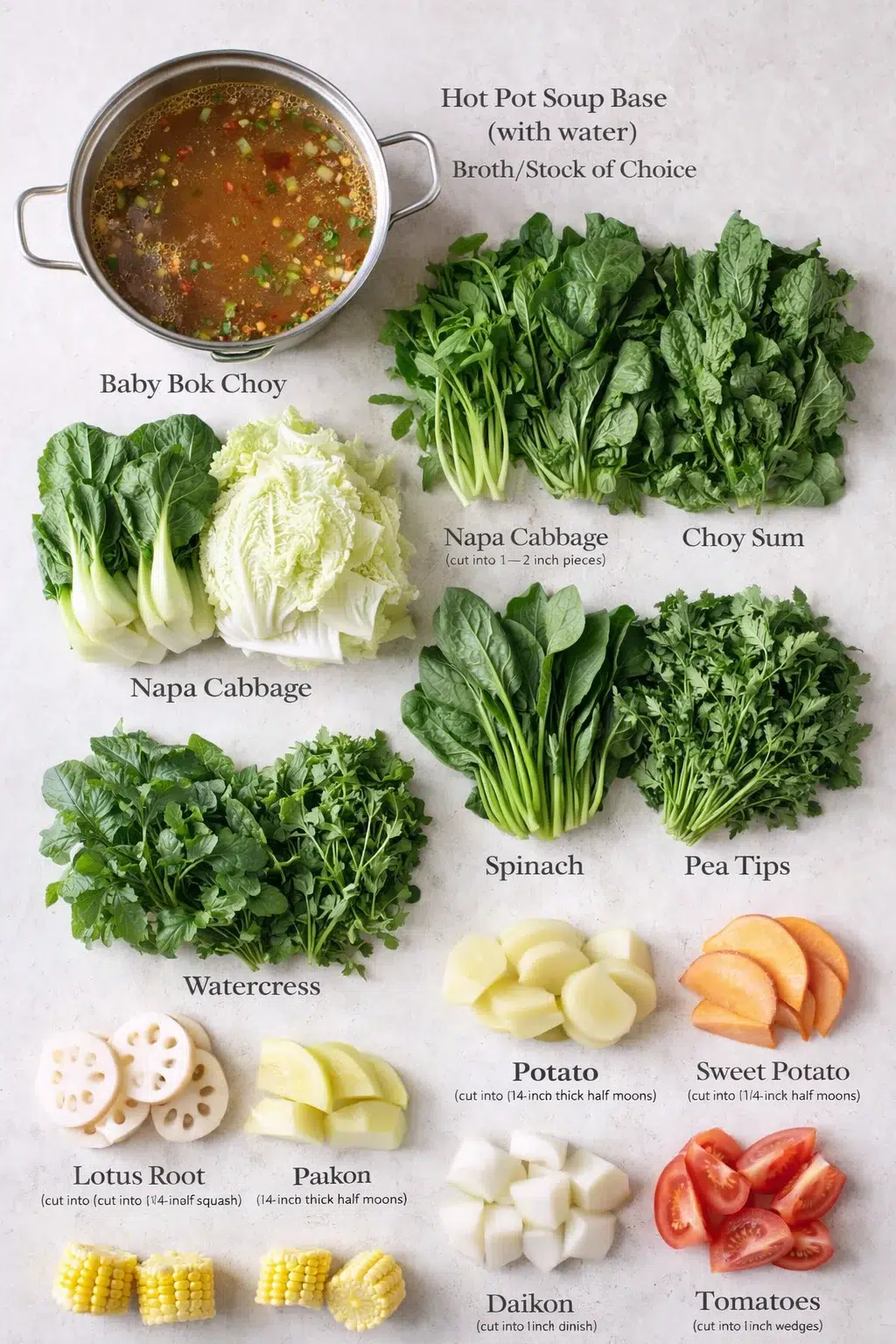
- Hot pot soup base (with water) or broth/stock of choice
- Baby bok choy (washed thoroughly)
- Napa cabbage (washed, cut into 1–2 inch pieces)
- Choy sum (washed thoroughly)
- Spinach (washed thoroughly)
- Pea tips (washed thoroughly)
- Watercress (washed thoroughly)
- AA Choy/Cai (washed and trimmed)
- Chrysanthemum leaves (washed and trimmed)
- Lotus root (cut into 1/4-inch thick half moons)
- Potato (cut into 1/4-inch thick half moons)
- Sweet potato (cut into 1/4-inch thick half moons)
- Pumpkin or kabocha squash (cut into 1/4-inch thick half moons)
- Daikon radish (cut into 1-inch chunks)
- Tomatoes (cut into wedges)
- Corn (ears cut into 1-inch pieces)
- Winter melon (cut into 1-inch chunks)
- Enoki mushrooms (trim 1/2–1 inch from base; separate into smaller bundles)
- Wood ear mushrooms (soak to rehydrate, rinse off sand, trim woody ends)
- King mushrooms (trim ends, thinly slice)
- Shiitake mushrooms (trim stems, slice, add early to broth)
- Oyster mushrooms (clean well)
- Shimeji mushrooms (separate into individual pieces)
- Beef (brisket, short rib, ribeye, sirloin, flank steak – thin slices against the grain)
- Pork shoulder or loin (thinly sliced)
- Pork belly (thinly sliced)
- Lamb shoulder or leg (thinly sliced)
- Boneless chicken breast or thighs (thinly sliced)
- Fish fillets (tilapia, bass, fluke/flounder – thinly sliced)
- Shrimp
- Scallops
- Squid or cuttlefish
- Beef balls
- Pork balls
- Fish balls
- Squid balls
- Mixed seafood balls
- Fish cakes
- Fish tofu
- Mung bean vermicelli (soak in warm water for 10 minutes)
- Rice noodles (boil to par-cook, rinse in cold water, drain)
- Thin fresh white noodles
- Fresh spinach noodles
- Shirataki noodles (add directly to boiling broth, cook in seconds)
- Rice cakes (thin oval ones are best; thick Korean-style logs take longer)
- Frozen dumplings (smaller is better; cook for 7–10 minutes)
- Bean threads (dried bean curd sticks; soak for 3–4 hours, cut into 2-inch pieces)
- Soy puffs (leave whole or cut in half)
- Frozen tofu (cut into 1-inch chunks)
- Firm tofu (cut into 1-inch chunks)
- Dried bean curd rolls
- Fresh tofu sheets/skin
- Pressed tofu
- Chinese sesame paste or sauce
- Peanut butter or peanut sauce
- Soy sauce
- Sha Cha sauce
- Sesame oil
- Sichuan peppercorn oil
- Chili oil or sauce
- Chili garlic sauce or Sambal Oelek
- Chinese black vinegar or rice vinegar
- White pepper
- Toasted sesame seeds
- Minced garlic
- Chopped scallions
- Chopped cilantro
- Fried shallots or garlic
Broth, Cooking Order, and Timing
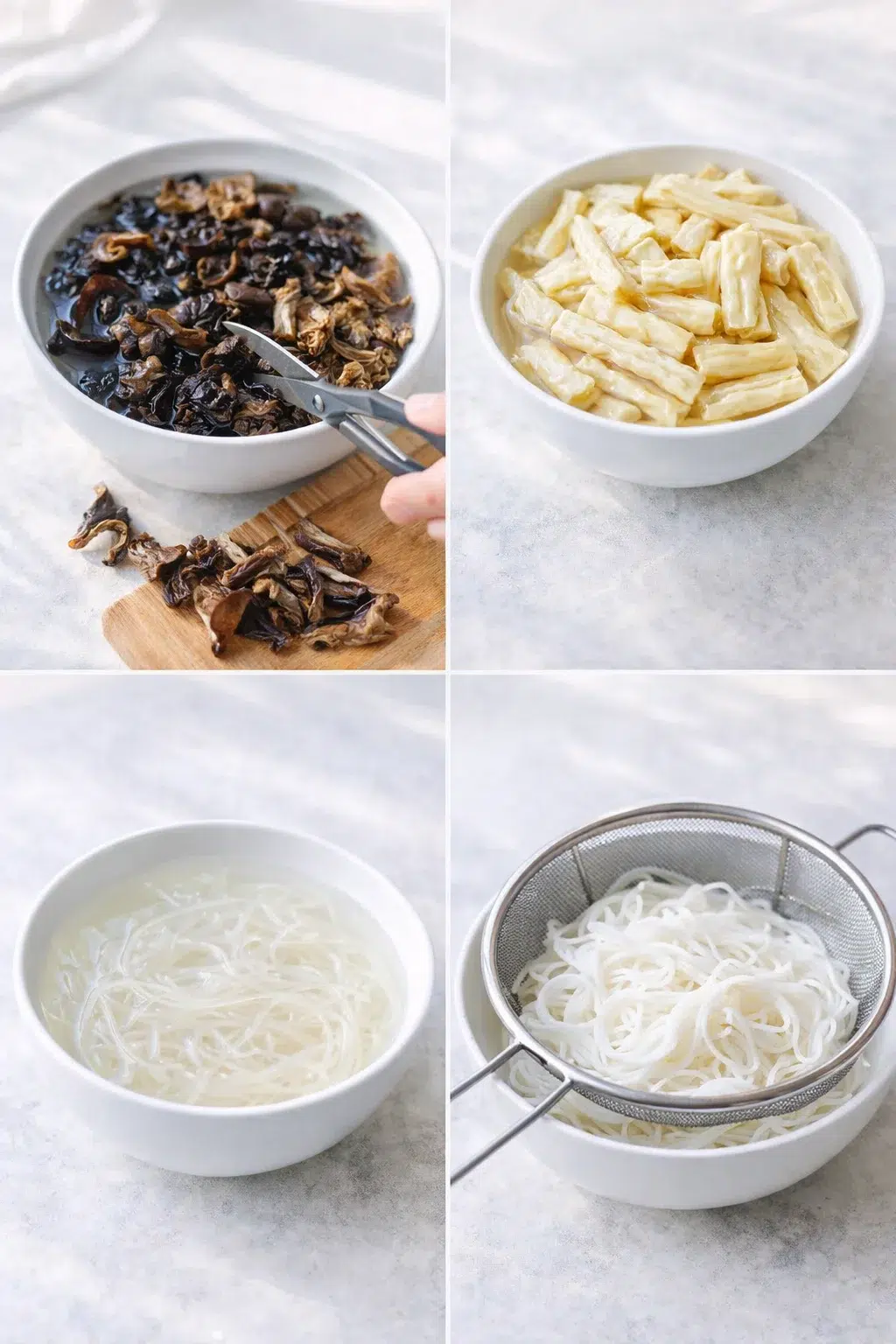
- Soak dried wood ear mushrooms and other dried mushrooms as needed until rehydrated; rinse and trim woody ends.
- Soak bean threads (dried bean curd sticks) for 3–4 hours and cut into 2‑inch pieces.
- Soak mung bean vermicelli in warm water for 10 minutes.
-
Par-cook rice noodles by boiling, then rinse in cold water and drain.

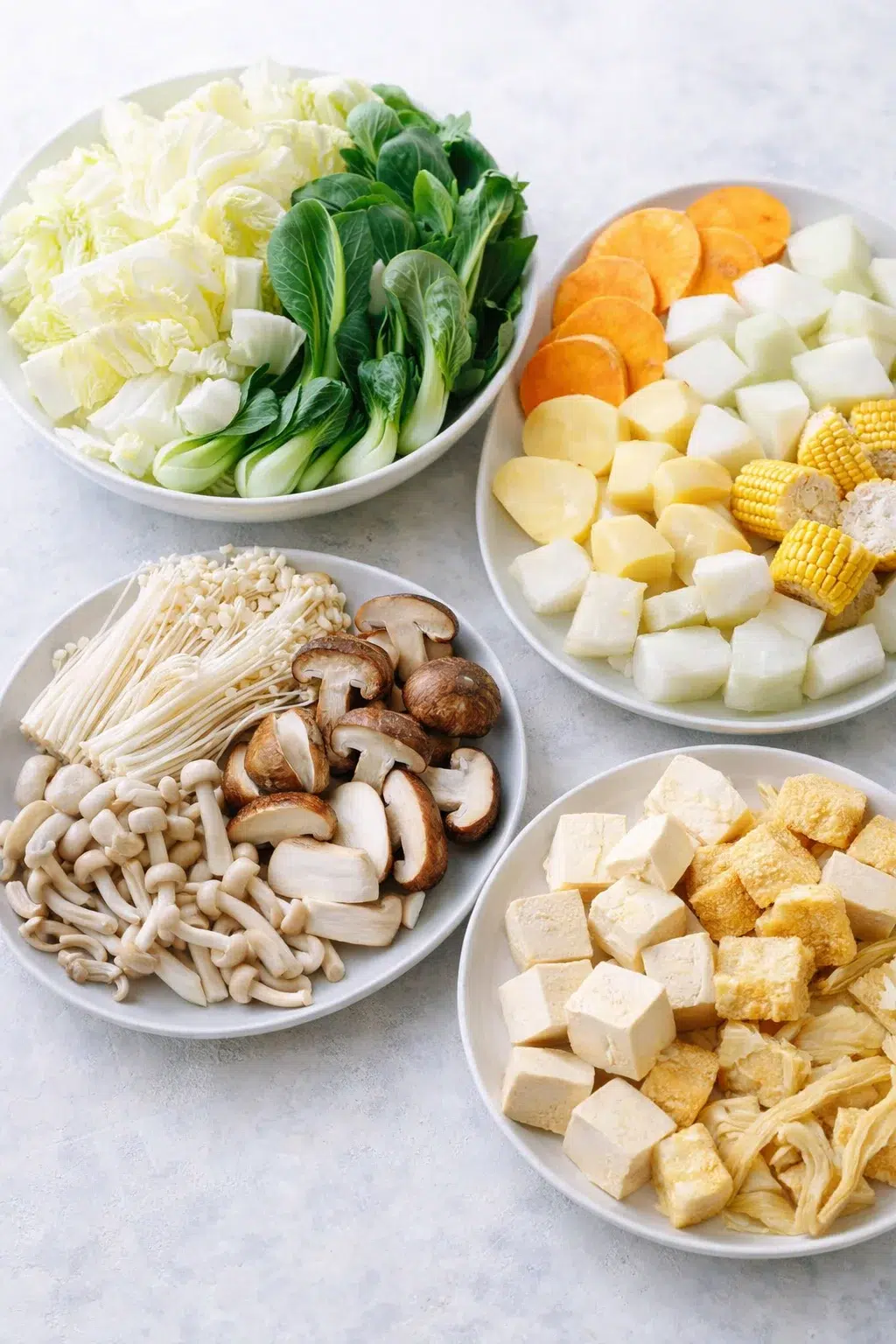
- Wash leafy greens thoroughly and cut larger leaves (e.g., napa cabbage) into 1–2 inch pieces; leave baby bok choy whole if desired.
- Peel and slice root vegetables (lotus root, potato, sweet potato, pumpkin/kabocha) into 1/4‑inch thick half‑moons; cut daikon and winter melon into 1‑inch chunks; cut corn into 1‑inch pieces.
- Trim and prep mushrooms: trim 1/2–1 inch off enoki bases and separate into small bundles, trim shiitake stems and slice, trim king mushroom ends and slice, separate shimeji into individual pieces.
-
Cut tofu and bean curd items into ~1‑inch chunks and slice soy puffs or tofu sheets as needed.
- Partially freeze tougher cuts of meat if not pre-sliced, then slice paper‑thin (about 1–2 mm) against the grain.
- If using thin fish fillets, marinate lightly with cornstarch, oil, Shaoxing wine, salt, and pepper (optional).
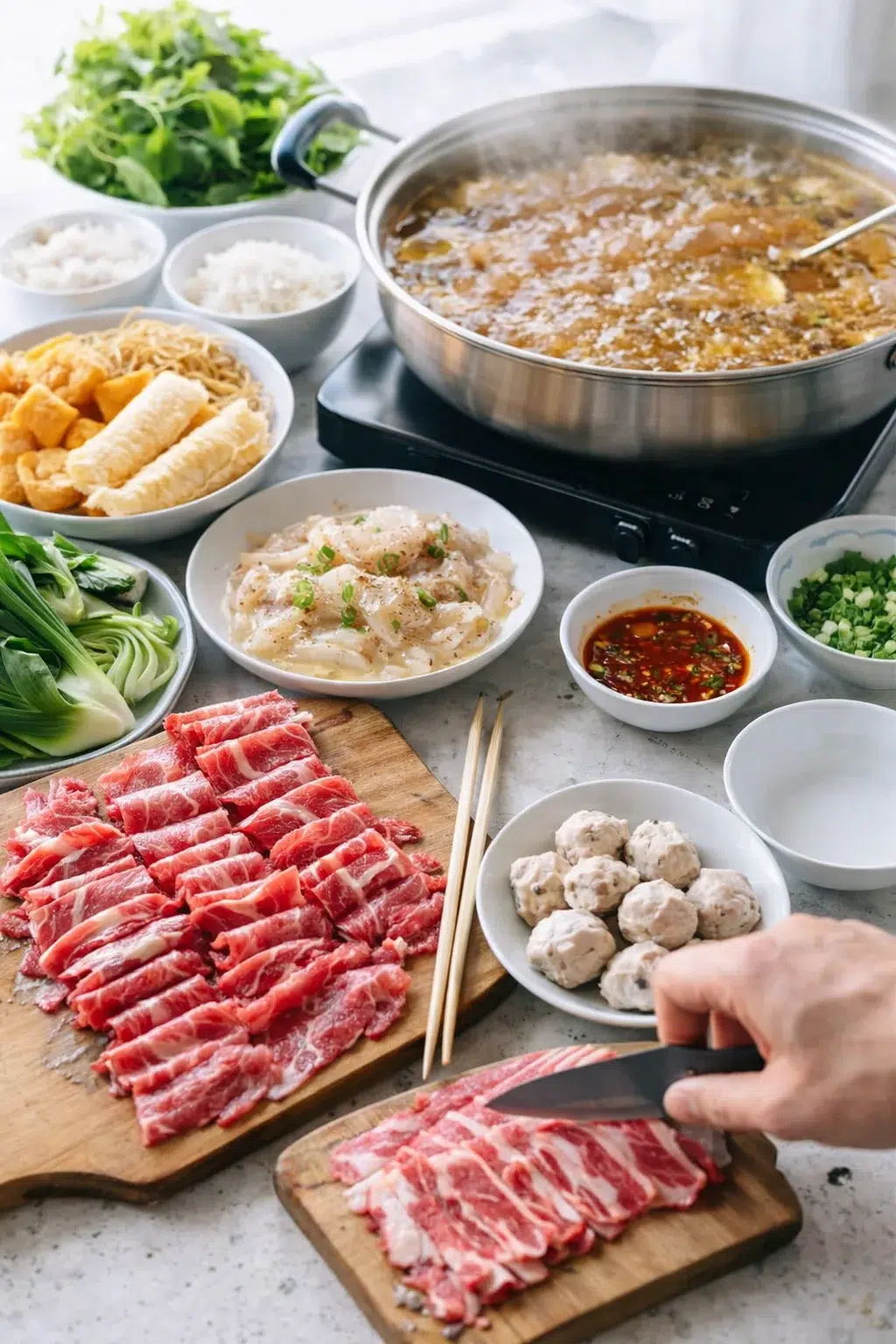
- Arrange individual plates of raw ingredients and dipping sauce components around the pot and set out separate utensils and bowls for raw and cooked items.
-
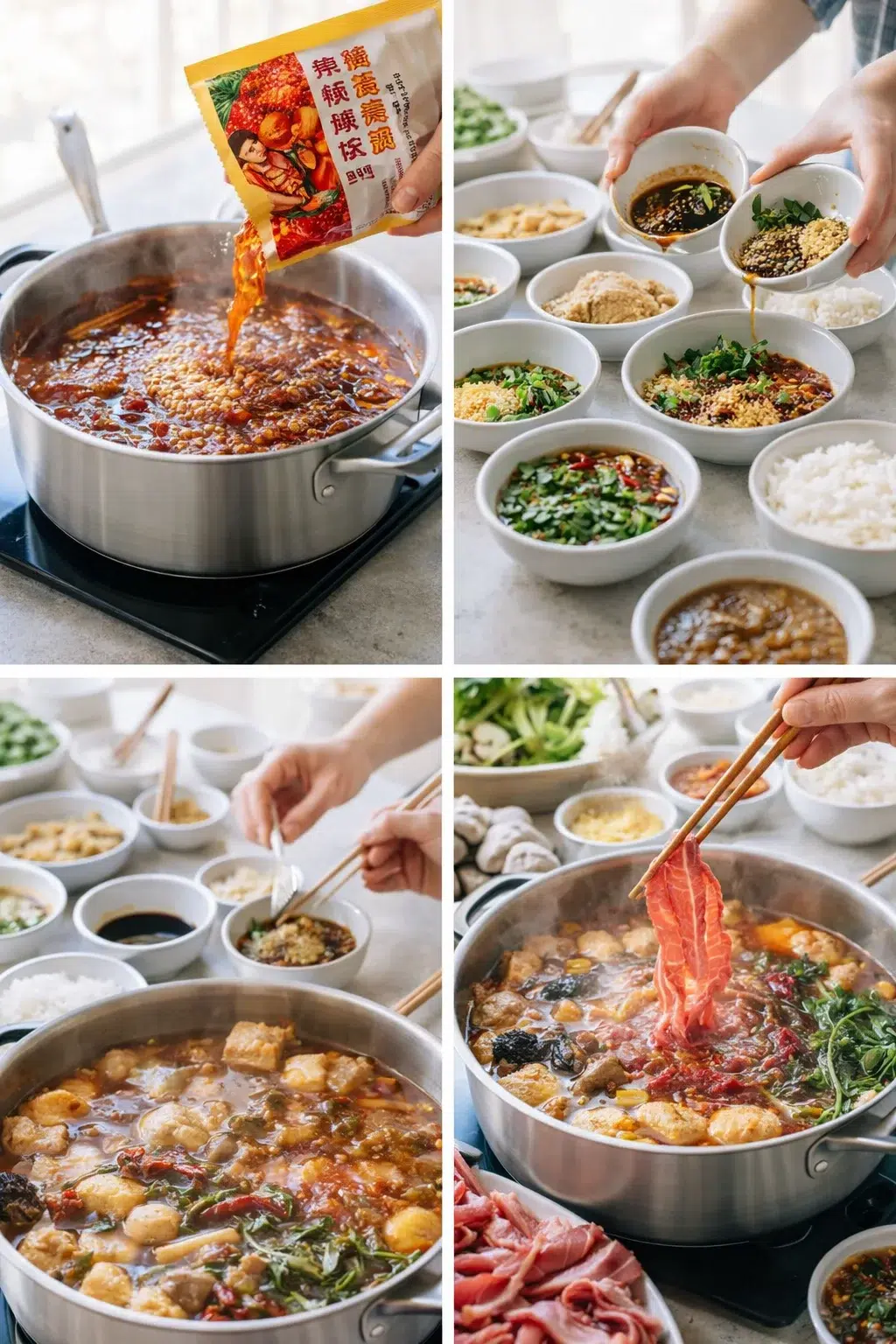
Place hot pot soup base or chosen broth with water into a wide, shallow pot on a portable tabletop burner and bring to a boil.
- If using a premade soup base packet, add the packet to water and bring to a boil.
- While the broth heats, let guests mix their own dipping sauces from sesame paste, soy sauce, Sha Cha, oils, vinegar, garlic, scallions, cilantro, and other condiments.
- Keep the broth at a steady simmer or low boil and add ingredients in batches to avoid crowding and temperature drops.
-
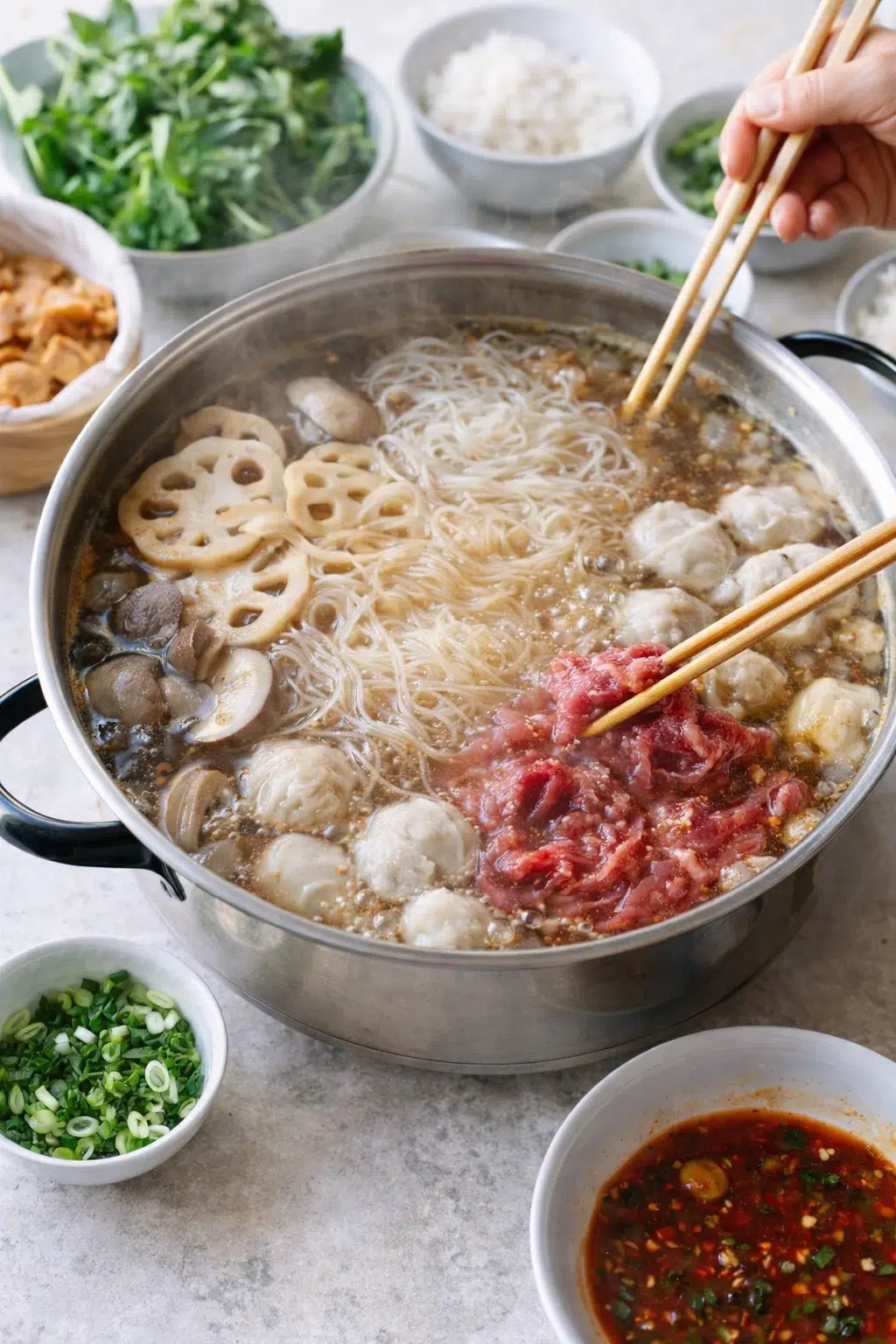
Add thinly sliced beef or lamb to the boiling broth and cook for about 10–30 seconds.
- Add enoki mushrooms to the boiling broth and cook 30–45 seconds until wilted.
- Add thin fish fillets to the boiling broth and cook until opaque and flaky, about 30 seconds–2 minutes depending on thickness.
- Add shrimp to the boiling broth and cook 1–2 minutes until pink and opaque.
-
Add pork or chicken to the boiling broth and cook 1–2 minutes, ensuring poultry is fully cooked.
- Add firm mushrooms or lotus root and cook 2–4 minutes until tender.
- Add soaked mung bean vermicelli or other quick noodles to the boiling broth and cook until softened; add shirataki noodles directly to the boiling broth and cook for seconds.
- Cook frozen dumplings in the boiling broth for 7–10 minutes until heated through.
-
After adding raw meat or seafood, keep the broth boiling for at least 30 seconds to 1 minute before serving those items.
- Use separate utensils and plates for raw and cooked items and use wire ladles or strainers to lift cooked ingredients from the pot.
-
If the broth tastes too strong, dilute with water or unsalted stock and brighten with fresh ginger, scallions, or a splash of vinegar.
Prep, Safety, and Serving Tips
- Prep everything ahead: wash greens, thinly slice root veggies, separate mushrooms, and arrange plates for easy grabbing. For a cool, crunchy side that complements rich broths, make a California roll cucumber salad in advance. Thin slices cook best and most evenly.
- Keep your broth at a steady simmer or low boil. Avoid crowding the pot because dropping the temperature slows cooking—add ingredients in batches to keep things moving.
- Use separate utensils and plates for raw and cooked items to avoid cross-contamination. Extra strainers or wire ladles help guests fish out cooked goodies cleanly.
- Soak ingredients like dried wood ear mushrooms or bean threads in advance. Par-cook or soak thicker noodles and starches so they finish quickly in the pot.
- Cook times vary: thin beef/lamb 10–30 seconds, pork/chicken 1–2 minutes (make sure poultry is fully cooked), shrimp 1–2 minutes, firm mushrooms or lotus root 2–4 minutes, enoki mushrooms 30–45 seconds.
- If your premade soup base tastes too strong, dilute with water and brighten it up with fresh ginger, scallions, or a splash of vinegar.
Mix-Ins and Regional Twists
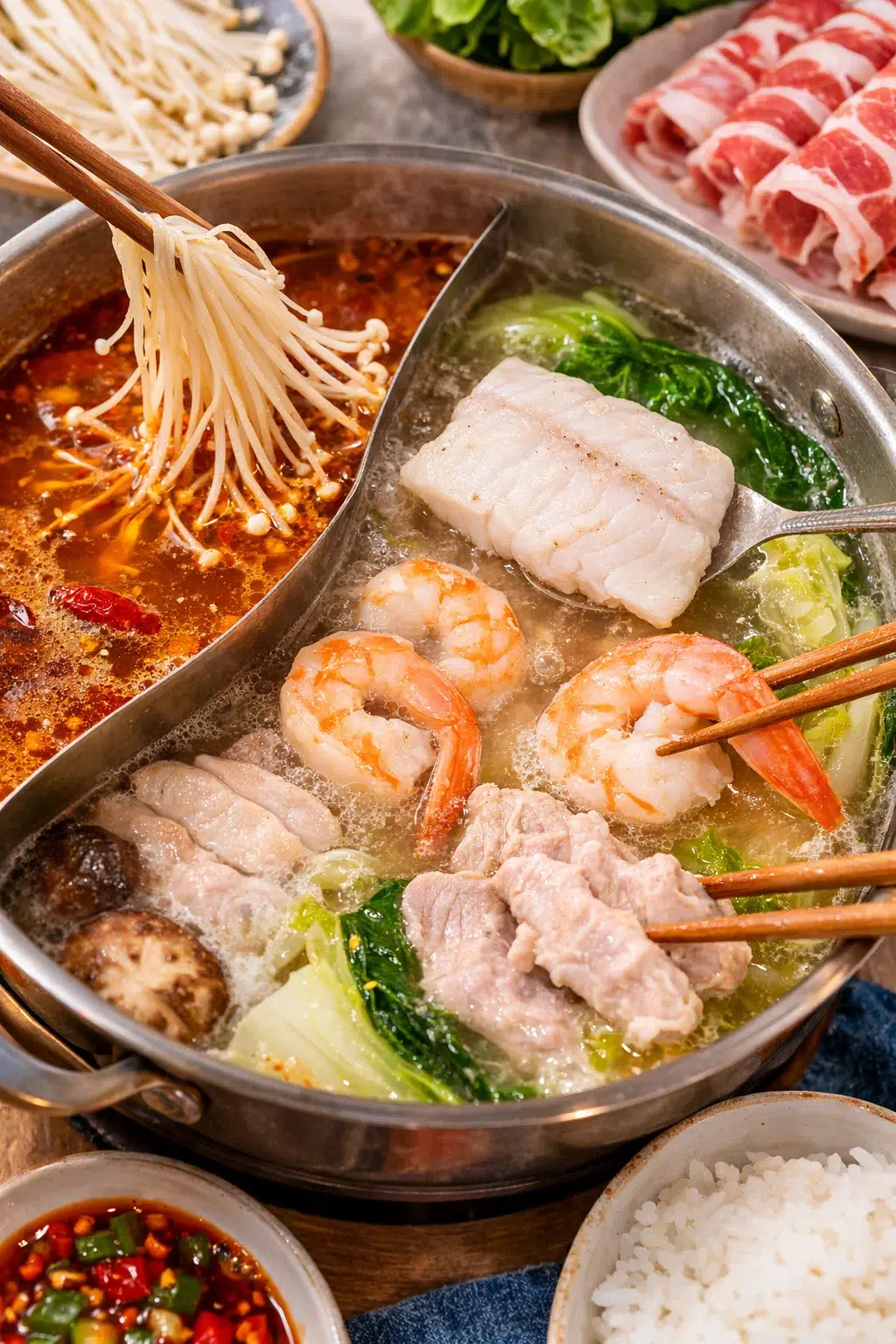
- Broth choices: try clear chicken or mushroom broth for a light pot; tomato broth for a tangy, sweet touch; spicy Sichuan mala for a snappy kick; or Lee Kum Kee satay/seafood base for rich umami. Use a yin-yang pot to enjoy two broths side by side.
- Vegetarian option: skip meat, use mushroom and kombu stock, load up on tofu and an extra variety of vegetables.
- Regional proteins: swap in thin lamb slices for Mongolian style, ribeye for Cantonese, or fish and shellfish for a seafood-forward feast.
- Sauces: go for sesame-paste based for nutty richness, Sha Cha for deep savory notes, or a simple soy-vinegar-chili mix for a lighter, tangy twist.
- Starch swaps: shirataki noodles for low carb, chewy rice cakes for texture, or frozen dumplings for a hearty finish.
Storing and Reheating Leftovers
Got leftover broth? Cool it down quickly and store in a sealed container in the fridge for up to 3–4 days or freeze for 2–3 months. When reheating, bring it back to a rolling boil for safety and best flavor.
Store cooked meats, seafood, veggies, and tofu separately from broth in airtight containers and use within 2–3 days. To reheat, bring broth to boil and warm the solids in it briefly. Avoid reheating the same food multiple times.
Want to make things easier? Prep and chill veggies, slice meats, and prepare dipping sauce ingredients ahead of time. Assemble plates and start your broth the day of your meal. Just don’t leave raw ingredients sitting out too long for food safety.

Quick Answers to Common Questions
-
Q: How thin should meat be sliced?
A: Aim for paper-thin slices about 1–2 mm thick so they cook nearly instantly. If you don’t have pre-sliced meat, freeze a roast partially and use a sharp knife to slice thinly against the grain.
-
Q: How do I know when seafood is done?
A: Shrimp turn pink and opaque in about 1–2 minutes. Thin fish fillets become opaque and flake easily in about 30 seconds to 2 minutes depending on thickness. Always make sure shellfish are cooked through.
-
Q: Is hot pot safe with everyone cooking at the table?
A: Yes! Just keep the broth at a boil or simmer, don’t overcrowd the pot, use separate utensils and plates for raw and cooked food, keep raw meats chilled until cooking, and ensure poultry and fish are fully cooked before eating.
-
Q: Can I use an Instant Pot or a regular stock pot?
A: You can use an Instant Pot on sauté mode for broth prep, but it’s less convenient for table cooking because it’s deep. A wide, shallow electric hot pot or portable burner with a shallow pot is best for that communal feel.
-
Q: What if my broth gets too salty?
A: Add water or unsalted stock to dilute. Adding peeled potato chunks or mushrooms can help absorb salt (remove them before serving). A splash of tomato or rice vinegar can also balance out flavors.
-
Q: Can I make hot pot just for two?
A: Absolutely! Just scale down your quantities and use a smaller pot. Pick 4–6 varied ingredients to keep cooking quick and balanced.
-
Q: Are premade soup bases okay to use?
A: Definitely! Brands like Lee Kum Kee make setup a breeze with consistent, delicious flavor. Just taste and adjust with water or fresh aromatics if you want.