
Chinese Beef and Broccoli (Calm, Better-Than-Takeout, Family Favorite)
Hi, I’m Helen Whitaker — welcome to Cookliva.
There’s something deeply satisfying about recreating a takeout favorite at home — not rushed, not greasy, not overly sweet — just balanced, tender, and made with intention.
The first time I made Chinese beef and broccoli for Daniel, he looked at me halfway through dinner and said, “Why would we ever order this again?” And honestly? That felt like a small kitchen victory. Even Emma and Noah, who sometimes negotiate their vegetable intake like tiny lawyers, cleaned their plates without a word.
That’s when I knew this recipe was staying.
What I love most is that it feels impressive but is actually simple. Once you understand a few small techniques, this dish becomes calm and dependable — exactly the kind of cooking I believe in.
It’s one of those quick weeknight dinners that feels special but comes together effortlessly.
Why You’ll Love This Recipe
- It’s faster than takeout once prepped.
- The beef turns beautifully tender — not chewy.
- The broccoli stays vibrant and slightly crisp.
- The sauce is glossy and balanced, never heavy.
- It’s adaptable for different diets and preferences.
Most importantly? It brings everyone to the table without complaints.

The Origin of This Recipe
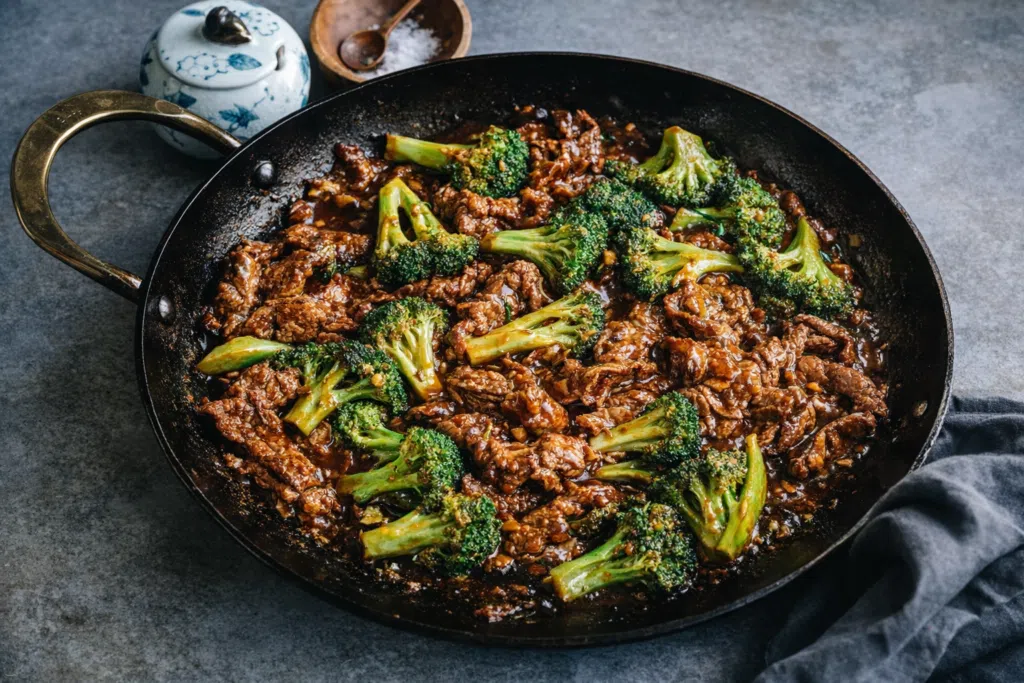
Beef and broccoli is widely known as a Chinese-American dish inspired by Cantonese stir-fry traditions. It reflects the philosophy of quick cooking, thin slicing, and balanced sauce — techniques rooted in classic Chinese cooking methods.
You don’t need a restaurant wok or dramatic flames. What you need is preparation, timing, and a little patience — something my grandmother always said was the most important ingredient in any meal.
This dish is inspired by classic Cantonese cooking and traditional stir-fry techniques that focus on timing and heat control.
Ingredients
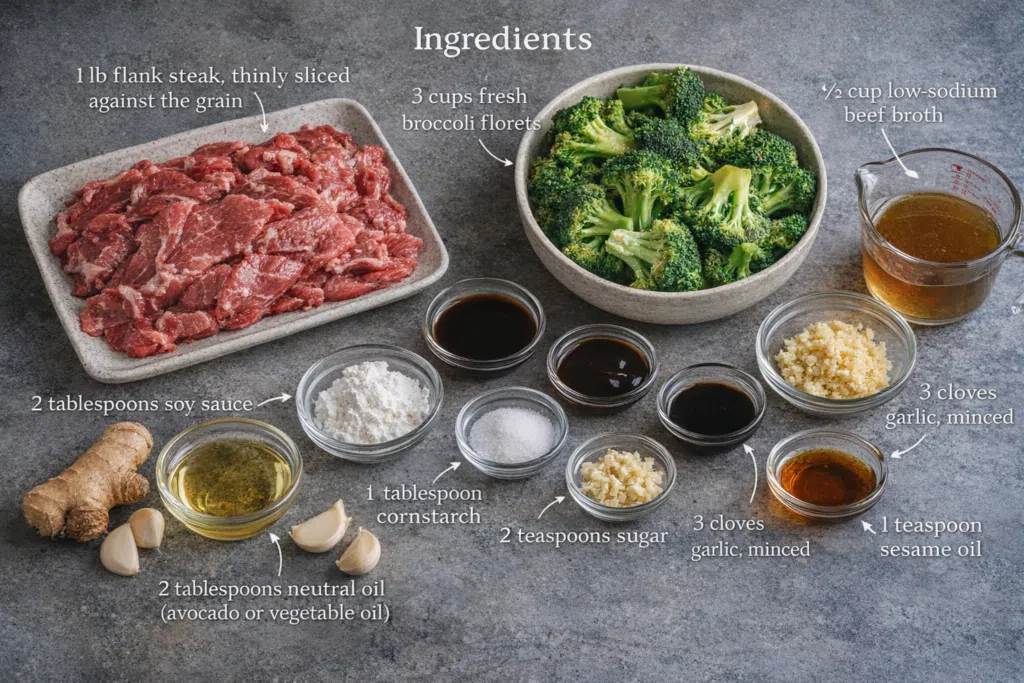
- 1 lb flank steak, thinly sliced against the grain
- 3 cups fresh broccoli florets
- 2 tablespoons soy sauce
- 1 tablespoon oyster sauce
- 1 teaspoon dark soy sauce (optional, for color)
- 1 tablespoon cornstarch
- 2 teaspoons sugar
- 3 cloves garlic, minced
- 1 teaspoon fresh ginger, grated
- ½ cup low-sodium beef broth
- 2 tablespoons neutral oil (avocado or vegetable oil)
- 1 teaspoon sesame oil
Why These Ingredients Work
Flank steak is ideal because when sliced against the grain, it becomes incredibly tender. That slicing direction shortens muscle fibers — a small detail that makes a huge difference.
Cornstarch doesn’t just thicken sauce — it protects the beef during cooking and creates that silky coating you expect in restaurant stir-fries.
Broccoli brings freshness and a slight bitterness that balances the savory sauce beautifully.
Oyster sauce adds deep umami richness without making the dish heavy.
Instructions
Step 1: Marinate the Beef
Slice the flank steak thinly against the grain. If you freeze it for 15 minutes beforehand, slicing becomes much easier — this is one of my favorite quiet kitchen tricks.
In a bowl, combine 1 tablespoon soy sauce and the cornstarch. Toss the beef until evenly coated. Let it rest for 10–15 minutes. This step tenderizes and creates a protective coating.
Step 2: Blanch the Broccoli
Bring a pot of water to a boil. Add broccoli and cook for 1–2 minutes until bright green but still firm.
Do not overcook. It will continue cooking later in the pan. Drain immediately and set aside.
Step 3: Prepare the Sauce
Mix remaining soy sauce, oyster sauce, dark soy sauce, sugar, and beef broth in a bowl. Stir until sugar dissolves.
Having the sauce ready prevents overcooking later.
Step 4: Sear the Beef
Heat 1 tablespoon oil in a large skillet over medium-high heat.
Spread the beef in a single layer. Let it sear undisturbed for 30–40 seconds before stirring. This builds flavor.
Cook until about 80% done, then remove from the pan.
Step 5: Build Aromatics
Add remaining oil. Stir-fry garlic and ginger for about 20 seconds — just until fragrant. Do not let garlic brown.
Step 6: Combine Everything
Return beef and broccoli to the pan. Pour in the sauce.
Simmer 2–3 minutes until sauce thickens and coats everything. Finish with sesame oil.
Turn off heat as soon as the sauce thickens. Overcooking makes beef tough.
Choosing the Right Pan: Wok or Skillet?
I know there’s a lot of talk about needing a wok for proper stir-fry. And yes, a wok is traditional — but in a real home kitchen, especially on an electric stove, it’s not always the most practical choice.
In my own kitchen, I usually reach for a wide, flat skillet instead. Why? Because most home stoves simply don’t generate the intense, concentrated heat that a round-bottom wok was designed for. A skillet gives you more direct contact with the heating surface, which actually helps the beef sear properly instead of steaming.
And with this particular dish — since the sauce is rich and flavorful — you don’t need dramatic “wok hei” flames to achieve depth. What matters more is surface contact and not overcrowding the pan. Sometimes I even cook the beef in two batches to keep everything nicely browned.
If you’re using a nonstick skillet, that’s perfectly fine. A slightly deeper sauté pan works even better because it prevents splattering when you stir. If you truly love your wok and cook on electric, just make sure it has a wide, flat base that sits firmly over the heating element.
At the end of the day, it’s not about owning the “right” tool — it’s about understanding how heat works in your own kitchen. Calm cooking always wins over flashy equipment.
Tips & Flavor Variations
- Slightly freeze beef before slicing — cleaner cuts mean better texture.
- Dry broccoli after blanching — excess water weakens the sauce.
- Cook in batches if needed — overcrowding causes steaming.
- Add white pepper for subtle depth without heat.
- Use homemade broth if possible — it enhances richness naturally.
Variations
- Add red pepper flakes for spice.
- Swap beef for chicken thighs.
- Use mushrooms and tofu for vegetarian.
- Add carrots or snow peas for color.
- Serve with jasmine rice or noodles.
If you’re serving this for a family dinner, it pairs beautifully with my Easy Vegetable Fried Rice
Common Myths & Mistakes
Myth 1: You Need a Wok and Extreme Heat for Authentic Flavor
Many people believe that without a restaurant-style wok burner, stir-fry simply won’t taste right. Social media videos showing dramatic flames reinforce this idea.
This myth exists because restaurant kitchens use extremely high BTU burners that create a smoky aroma known as “wok hei.” Home kitchens rarely replicate that.
However, what truly determines success is preparation and moisture control. Thin slicing, drying ingredients, and cooking in small batches matter far more than blazing heat.
The correct approach: use a heavy skillet, preheat properly, avoid overcrowding, and focus on timing. You’ll achieve tender beef and balanced flavor without flames.
Myth 2: The Sauce Should Be Thick and Very Sweet
Many takeout versions are heavy and sugary. People assume that sticky sweetness equals authenticity.
This misconception likely comes from Americanized restaurant versions designed to appeal broadly.
In reality, authentic stir-fry sauces are balanced — savory, lightly sweet, and glossy rather than syrupy.
The correct approach: aim for a light, silky coating that clings without overwhelming. If your sauce tastes sugary, reduce sugar and increase broth or soy for balance.
Myth 3: Stir-Fry Is Always Healthier Than Other Cooking Methods
Because stir-fry includes vegetables, many assume it’s automatically healthy.
But restaurant versions often use large amounts of oil and sodium-heavy sauces.
The correct approach at home: control oil quantity, use low-sodium broth, and balance portions. When done thoughtfully, it’s nutritious and satisfying.
FAQ – Frequently Asked Questions
How do I store leftover beef and broccoli properly?
Store leftovers in an airtight container in the refrigerator for up to 3 days. When reheating, use a skillet over medium heat and add a splash of broth or water. Avoid microwaving on high power, which can overcook the beef and make it rubbery.
Can I freeze beef and broccoli after cooking?
You can freeze it, but the broccoli texture will soften significantly after thawing. If freezing, slightly undercook the broccoli initially. Freeze in airtight containers for up to 2 months. Thaw overnight in the refrigerator before reheating gently.
Why is my beef chewy even though I followed the recipe?
The most common reasons are slicing with the grain or overcooking. Always slice against the grain and remove beef from heat when 80% cooked. It will finish cooking in the sauce.
How can I make this gluten-free?
Use tamari instead of soy sauce and ensure your oyster sauce is gluten-free. The texture and flavor remain very close to the original.
Why does my sauce turn watery instead of glossy?
This usually happens if broccoli wasn’t drained properly or the pan wasn’t hot enough. Moisture prevents thickening. Ensure ingredients are dry and allow sauce to simmer briefly for proper reduction.
Storage & Make-Ahead Tips
You can slice the beef and mix the sauce earlier in the day to save time. Store separately in the refrigerator until ready to cook.
Blanch broccoli ahead of time, but dry it thoroughly before storing.
Print
Chinese Beef and Broccoli
- Total Time: 35 minutes
Description
A calm, better-than-takeout beef and broccoli stir-fry with tender slices of flank steak and vibrant broccoli in a glossy savory sauce.
Ingredients
1 lb flank steak, sliced against the grain
3 cups broccoli florets
2 tablespoons soy sauce
1 tablespoon oyster sauce
1 teaspoon dark soy sauce
1 tablespoon cornstarch
2 teaspoons sugar
3 cloves garlic, minced
1 teaspoon grated ginger
½ cup low-sodium beef broth
2 tablespoons neutral oil
1 teaspoon sesame oil
Instructions
-
Marinate beef with soy sauce and cornstarch for 10–15 minutes.
-
Blanch broccoli 1–2 minutes; drain.
-
Mix sauce ingredients in bowl.
-
Sear beef in hot oil until 80% cooked; remove.
-
Sauté garlic and ginger briefly.
-
Return beef and broccoli; add sauce and simmer 2–3 minutes.
-
Finish with sesame oil and serve.
Notes
Store refrigerated up to 3 days.
Reheat gently with splash of broth.
Slice beef against grain for tenderness.
- Prep Time: 20 minutes
- Cook Time: 15 minutes
- Category: Main Course
- Method: Stir-Fry
- Cuisine: Chinese-American
Nutrition
- Serving Size: 4
- Calories: 380 per serving
- Sugar: 5 g
- Fat: 18g