Carrot Cake Recipe – Soft, Moist & Easy Homemade Cake
By Helen Whitaker, Cookliva
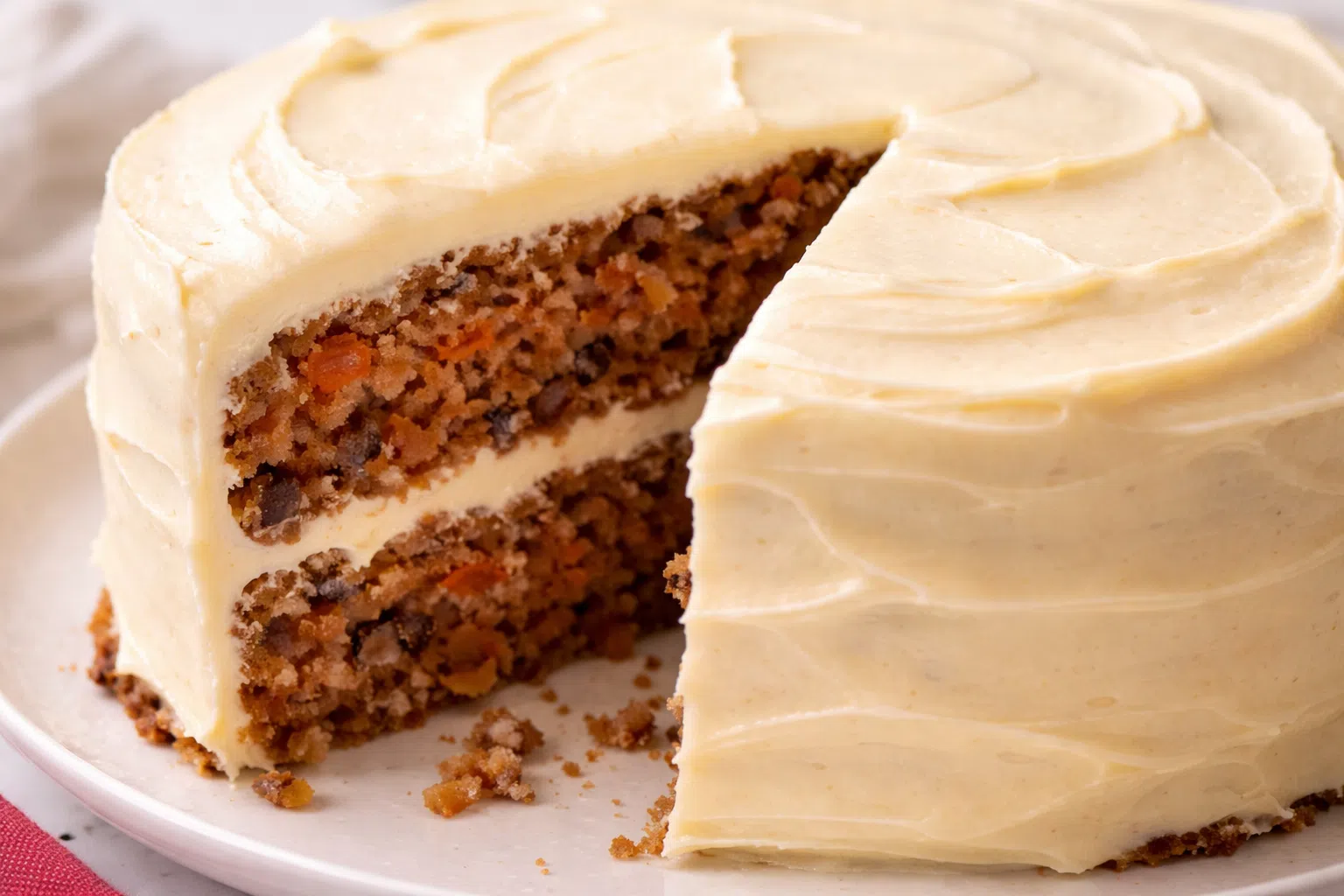
Carrot cake recipe has always felt like the quiet overachiever of desserts. It doesn’t shout with bright colors or dramatic layers. It simply sits there — humble, fragrant, and impossibly moist — and then steals the show with the very first bite.
I still remember the first time I baked this for Tom’s birthday. He’s not a “cake person,” or so he claims. But that afternoon, after one forkful, he paused mid-bite and said, “Okay… this is different.” Emma picked off the walnuts from the top. Noah asked for “extra white frosting.” And just like that, this carrot cake became our cake.
It’s soft without being heavy. Sweet but balanced. And that cream cheese frosting? Smooth, tangy, and just rich enough to make every bite feel complete.
Let me walk you through it slowly — the way I believe baking should be.
If your family enjoys soft, bakery-style treats, my Moist Chocolate Chip Muffins are another cozy favorite that never lasts long in our kitchen.
What Is Carrot Cake?
Carrot cake is a moist, spiced layer cake made with grated carrots, oil, warm spices, and topped with cream cheese frosting.
Why You’ll Love This Recipe
- Incredibly moist crumb that stays soft for days
- Perfect balance of spice and sweetness
- Not overloaded with sugar
- Foolproof mixing method
- Dreamy cream cheese frosting that spreads beautifully
This cake isn’t dense or oily like some carrot cakes can be. It’s tender, gently spiced, and layered with a frosting that complements instead of overwhelms.
And best of all? It’s surprisingly simple.

Why This Carrot Cake Recipe Works Every Time
There are so many versions online, but a truly reliable carrot cake recipe comes down to balance. The ratio of oil to flour keeps the crumb soft without feeling greasy, while the brown sugar adds depth instead of just sweetness. Every ingredient has a purpose, and nothing feels excessive.
Another reason this carrot cake recipe turns out beautifully every time is the way the carrots are handled. Finely grated carrots release moisture slowly as the cake bakes, creating that tender, almost melt-in-your-mouth texture. When grated properly, they blend into the crumb instead of creating wet pockets.
The mixing method also matters more than people think. By combining wet and dry ingredients gently and stopping as soon as the flour disappears, you avoid developing too much gluten. That’s what keeps the cake soft and delicate instead of dense and heavy.
And finally, this carrot cake recipe relies on oil rather than butter. Oil stays liquid at room temperature, which means the cake remains moist even after refrigeration. It’s a small choice that makes a big difference in texture.
The Origin of This Recipe
Carrot cake dates back centuries — when sweeteners were scarce and carrots were used to naturally sweeten baked goods. It became especially popular during wartime rationing, when sugar was limited.
That history always makes me smile. Something born from necessity became something celebratory.
To me, carrot cake represents thoughtful baking. Using humble ingredients — carrots, flour, oil — and turning them into something extraordinary. It’s the kind of dessert my grandmother would have approved of: simple, practical, and deeply comforting.
Ingredients
This recipe makes two 8-inch cake layers.
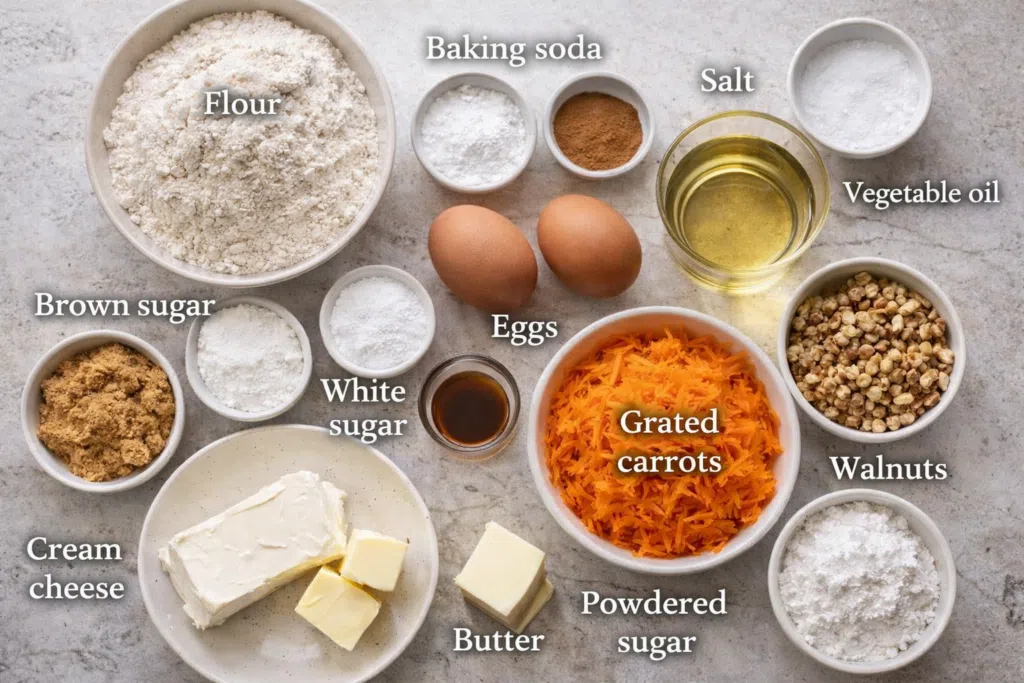
Dry Ingredients
- 2 cups all-purpose flour
- 2 teaspoons baking soda
- 1/2 teaspoon salt
- 2 teaspoons ground cinnamon
Wet Ingredients
- 1 cup vegetable oil
- 1 cup brown sugar
- 1 cup white sugar
- 4 large eggs
- 2 teaspoons vanilla extract
Add-Ins
- 3 cups finely grated carrots (about 4–5 medium carrots)
- 1 cup chopped walnuts (optional)
Cream Cheese Frosting
- 8 oz (225g) cream cheese, softened
- 1/2 cup unsalted butter, softened
- 3 cups powdered sugar
- 1 teaspoon vanilla extract
Instructions (Beginner-Friendly)
Let’s go step by step through this carrot cake recipe so you can bake it with complete confidence.
Step 1: Prepare the Pans
Preheat oven to 350°F (175°C). Grease and line two 8-inch round cake pans with parchment paper.
Tip: Lining the bottom prevents sticking — carrot cake is very moist.
Step 2: Mix Dry Ingredients
In a bowl, whisk together flour, baking soda, salt, and cinnamon. Set aside.
This ensures even spice distribution.
Step 3: Combine Wet Ingredients
In a large bowl, whisk oil, brown sugar, and white sugar until smooth. Add eggs one at a time, mixing well after each addition. Stir in vanilla.
The mixture should look glossy and slightly thick.
Step 4: Combine Wet and Dry
Add dry ingredients to wet ingredients. Mix gently until just combined.
Common mistake: Overmixing. Stop as soon as you don’t see dry flour.
Step 5: Fold in Carrots & Nuts
Stir in grated carrots and walnuts.
The batter will be thick — that’s normal. The carrots release moisture while baking.
Step 6: Bake
Divide batter evenly between pans. Bake 30–35 minutes, or until a toothpick inserted in the center comes out clean.
Let cool in pans 10 minutes, then transfer to wire rack to cool completely.
Never frost a warm cake — frosting will melt.
Step 7: Make the Frosting
Beat cream cheese and butter until smooth. Gradually add powdered sugar. Mix in vanilla.
If frosting feels too soft, chill for 20 minutes before spreading.
Step 8: Assemble
Place one layer on a plate. Spread frosting evenly. Add second layer and frost top and sides.
Decorate with extra walnuts if desired.
How to Make Carrot Cake (Step-by-Step Breakdown)
Even though carrot cake is wonderfully simple, understanding why each step matters makes all the difference. When I bake this cake, I never rush. Moisture, texture, and balance come from small, intentional choices.
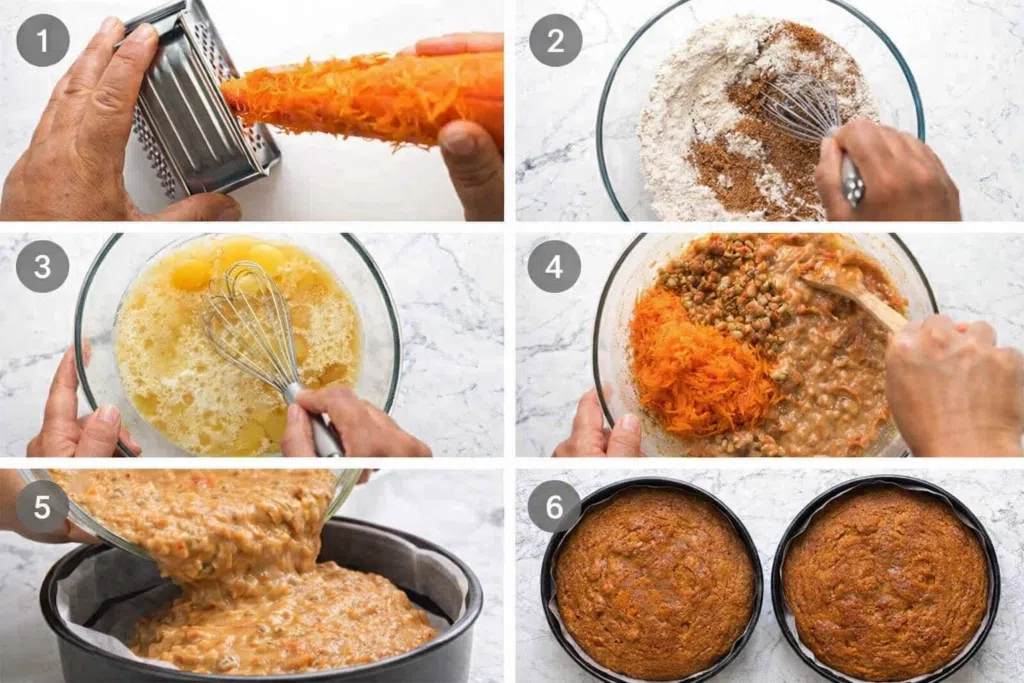
1. Grate the Carrots Properly
This step matters more than most people think.
Carrots should be finely grated, not chunky and not pureed. Thick shreds create uneven texture and pockets of excess moisture. Too fine, and the cake can become heavy.
I always use the small holes of a box grater. It takes a few extra minutes, but the carrots melt beautifully into the crumb as the cake bakes.
2. Mix Gently — Don’t Overwork the Batter
Once the dry ingredients meet the wet ingredients, mix only until the flour disappears.
Many people think a perfectly smooth batter means better results. In reality, overmixing develops gluten and makes the cake dense and tight.
Carrot cake should be soft and tender — almost delicate. A slightly thick batter with visible carrot strands is exactly what you want.
3. Divide Evenly and Tap the Pans
Pour the batter evenly between your cake pans. Then gently tap each pan on the counter once or twice.
This removes large air pockets and helps the layers bake evenly without doming too much in the center.
4. Bake Just Until Done
Carrot cake continues to cook slightly after it leaves the oven.
Insert a toothpick in the center — it should come out with a few moist crumbs, not completely dry. If it’s totally clean, it may already be slightly overbaked.
Overbaking is the fastest way to lose that beautiful moist texture.
5. Cool Completely Before Frosting
I cannot stress this enough: never frost a warm cake.
Even slightly warm layers will melt the frosting and cause it to slide. Let the cakes cool completely on a wire rack before assembling.
Patience here makes all the difference.
Cream Cheese Frosting for Carrot Cake
Carrot cake and cream cheese frosting are inseparable. The slight tang from the cream cheese balances the warm spices and sweetness of the cake.
What makes a truly good cream cheese frosting isn’t just sweetness — it’s smooth texture and balance. It should feel creamy, not gritty. Rich, but not overpowering.
When done correctly, it spreads like silk and holds its shape between the layers.
If you love desserts with a rich and creamy finish, you might also enjoy my Mini Peanut Butter Cup Cheesecakes, which use a similarly smooth and indulgent texture.
How to Make Cream Cheese Frosting (Foolproof Method)
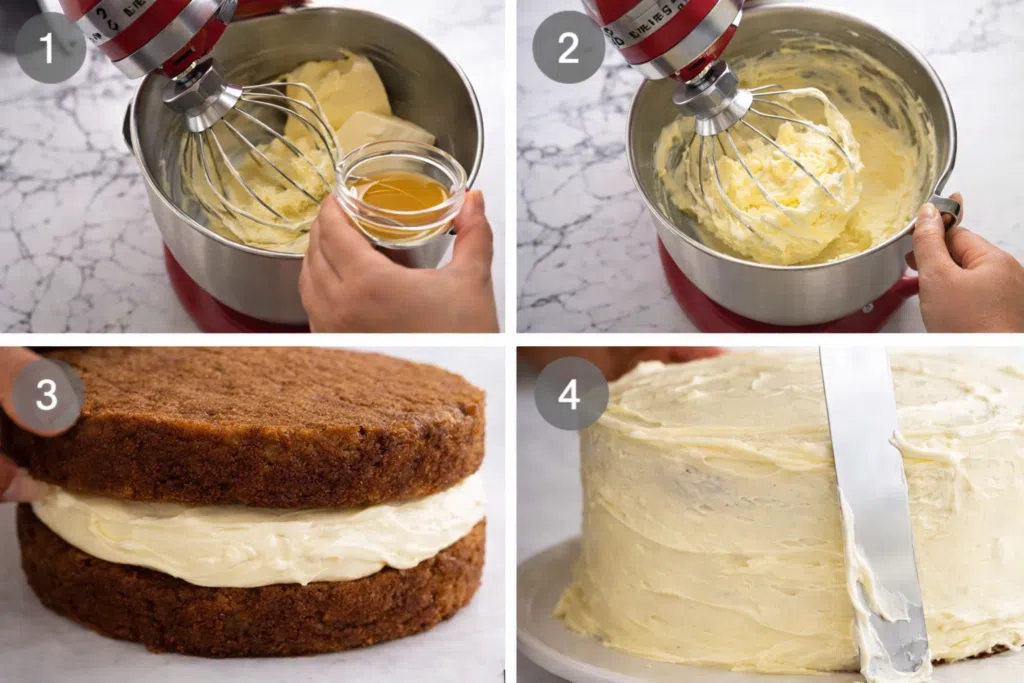
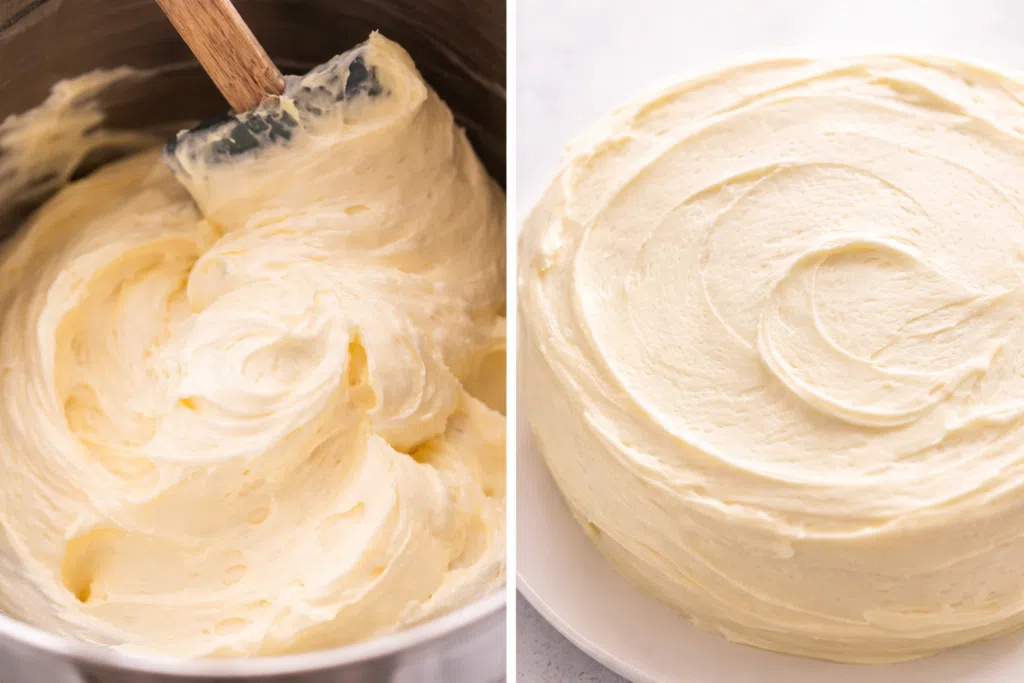
Here’s the method I use every single time — and it has never failed me.
1. Start with the Right Temperature
Both the butter and cream cheese should be softened but still cool to the touch.
If they’re too warm, the frosting becomes runny. If they’re too cold, it turns lumpy.
I usually take them out of the refrigerator about 45 minutes before mixing.
2. Beat the Butter First
Beat the butter alone for 2–3 minutes until it becomes lighter in color and slightly fluffy.
This step creates structure and helps prevent a grainy texture later.
3. Add the Cream Cheese
Add the cream cheese and beat just until smooth and combined.
Do not overbeat. Overmixing cream cheese frosting is one of the most common mistakes — it breaks down the structure and makes the frosting too soft.
4. Add Powdered Sugar Gradually
Add powdered sugar slowly, mixing on low speed.
Taste as you go. Sometimes you don’t need the full amount. The goal is balanced sweetness, not overpowering sugar.
5. Adjust the Texture if Needed
If the frosting feels too soft, refrigerate it for 20–30 minutes before spreading.
If it feels too firm, let it sit at room temperature briefly.
Tips & Flavor Variations
- Finely grate carrots. Large shreds create uneven texture. Fine grating melts into the crumb.
- Use oil, not butter. Oil keeps the cake moist for days. Butter firms up when cold.
- Toast the walnuts first. Toasting enhances flavor and removes bitterness.
- Add crushed pineapple (1/2 cup, drained). This adds extra moisture and subtle sweetness.
- Make it gluten-free. Use a 1:1 gluten-free flour blend. Texture stays surprisingly tender.
- Add orange zest. Brightens the spice and balances sweetness.
Each adjustment works because carrot cake is forgiving and moisture-rich.
And if you enjoy fruit-forward bakes, you’ll absolutely love my Blueberry Cream Cheese Bread, which has that same tender crumb and balanced sweetness.
Common Myths & Mistakes
Myth 1: Carrot Cake Is Supposed to Be Dense
Many people believe carrot cake should feel heavy and thick. That assumption likely comes from poorly balanced recipes overloaded with sugar and oil.
In reality, carrot cake should be moist but tender — not brick-like. Too much oil or underbaking creates density.
The correct approach is balanced ratios and proper baking time. When done right, the crumb feels soft and springy, not heavy.
Myth 2: More Carrots Make It Better
It sounds logical — more carrots equal more flavor. But excess carrots add too much moisture, preventing structure from forming.
This myth likely started from the idea that carrot cake is “healthy.” But it’s still cake.
Stick to the recommended amount. Three cups is perfect for moisture without collapse.
Myth 3: Cream Cheese Frosting Must Be Extremely Sweet
Many frostings are cloyingly sweet, leading people to assume carrot cake frosting should be similar.
Traditional cream cheese frosting should be tangy, not sugary overload. Too much powdered sugar masks that signature flavor.
The correct approach is balanced sweetness. Let the cream cheese shine.
FAQ – Frequently Asked Questions
Why is my carrot cake dry even though I followed the recipe?
Dry carrot cake usually means overbaking. Because the batter is moist, it’s easy to assume it needs more time. Check at the minimum baking time. Also ensure carrots were finely grated — thick shreds don’t release moisture evenly.
Can I make carrot cake ahead of time?
Yes. In fact, carrot cake tastes even better the next day. The spices deepen and the moisture settles. Bake layers, cool completely, wrap tightly, and refrigerate overnight before frosting.
When preparing this carrot cake recipe, small details like proper baking time and finely grated carrots make all the difference.
Can I freeze carrot cake?
Absolutely. Wrap unfrosted layers tightly in plastic wrap and freeze up to 3 months. Thaw overnight in the refrigerator before frosting.
You can also freeze frosted slices individually.
What’s the best way to grate carrots?
Use the small holes of a box grater or a food processor with a fine shredding attachment. Avoid pre-shredded store carrots — they’re too dry and thick.
Why is my frosting runny?
Runny frosting usually means the cream cheese or butter was too warm. Beat just until smooth. If soft, chill 20–30 minutes before spreading.
Storage & Make-Ahead Tips
Store frosted carrot cake in the refrigerator due to the cream cheese frosting. Cover loosely with plastic wrap or store in an airtight container. It stays fresh for up to 4 days.
For best texture, let slices sit at room temperature for 20–30 minutes before serving. Cold cake can feel firmer because the oil solidifies slightly.
To freeze, wrap unfrosted layers tightly and freeze up to 3 months. Frosted slices can be frozen individually and thawed overnight in the refrigerator.
Avoid microwaving to thaw — it melts frosting unevenly.
This carrot cake recipe actually tastes even better the next day, as the spices deepen and the moisture settles beautifully into the crumb.
Conclusion
Carrot cake isn’t flashy. It doesn’t need to be. It’s steady, comforting, and quietly impressive.
In our home, it’s the cake that shows up for birthdays, spring gatherings, and random Tuesday evenings when we just need something sweet and grounding.
Bake it slowly. Frost it generously. And don’t forget to save yourself the first slice — before the kids find it.
I hope this carrot cake recipe becomes a tradition in your home the way it has in ours.
Print
The Most Comforting Carrot Cake (Soft, Moist & Full of Love)
- Total Time: 55 minutes
- Diet: Vegetarian
Description
A soft, tender carrot cake layered with tangy cream cheese frosting. Perfectly spiced and incredibly moist.
Ingredients
2 cups all-purpose flour
2 teaspoons baking soda
1/2 teaspoon salt
2 teaspoons ground cinnamon
1 cup vegetable oil
1 cup brown sugar
1 cup white sugar
4 large eggs
2 teaspoons vanilla extract
3 cups finely grated carrots
1 cup chopped walnuts
8 oz cream cheese
1/2 cup unsalted butter
3 cups powdered sugar
Instructions
-
Preheat oven to 350°F (175°C). Grease and line two 8-inch pans.
-
Whisk flour, baking soda, salt, and cinnamon.
-
Mix oil and sugars. Add eggs and vanilla.
-
Combine wet and dry ingredients.
-
Fold in carrots and walnuts.
-
Bake 30–35 minutes. Cool completely.
-
Beat cream cheese and butter. Add powdered sugar and vanilla.
-
Frost cake and assemble.
Notes
Store refrigerated up to 4 days.
Freeze unfrosted layers up to 3 months.
Bring to room temperature before serving.
- Prep Time: 20 minutes
- Cook Time: 35 minutes
- Category: Dessert
- Method: Baking
- Cuisine: American
Nutrition
- Serving Size: 12 slices
- Calories: 480 per slice
- Sugar: 42g
- Fat: 28g