

2-Ingredient Cottage Cheese Flatbread (High Protein & No Yeast)
2 ingredient cottage cheese flatbread has completely changed the way I cook quick meals at home.
This 2 ingredient cottage cheese flatbread recipe is one of the easiest ways to make soft, high-protein flatbread at home without any complicated steps.
There are some recipes that feel almost too simple to be worth talking about, and then they surprise you the moment they hit the pan. That is exactly what happened the first time I made this cottage cheese flatbread. I was standing in my kitchen on a busy afternoon, trying to put together something quick before Oliver came home hungry and Grace started asking for snacks, and I wanted something warm, filling, and a little more nourishing than toast. What started as a curiosity turned into one of those recipes I now make on repeat.
What I love most is that it gives you that satisfying homemade feeling without asking much from you at all. No yeast, no long rise, no complicated kneading, and no special baking skills. Just a couple of simple ingredients, a bowl, and a pan. My husband Daniel was skeptical the first time I made it because he could not quite believe flatbread could come together from cottage cheese and flour alone, but after one bite he was already asking whether I could use it for wraps the next day.
This 2 ingredient cottage cheese flatbread is a perfect solution when you need something quick, filling, and easy to prepare at home.
Quick Answer
This 2 ingredient cottage cheese flatbread is made with just two main ingredients: cottage cheese and self-rising flour. The cottage cheese brings moisture, protein, and tenderness, while the flour gives the dough structure. The result is a quick stovetop flatbread that is soft, flexible, and perfect for wraps, dipping, or serving alongside soups and salads.
This 2 ingredient cottage cheese flatbread is ideal for wraps, quick meals, or high-protein snacks.
Quick Overview
This 2-ingredient cottage cheese flatbread is one of the easiest homemade breads you can make. It is high in protein, requires no yeast, and is ready in about 10 minutes.
The dough comes together quickly, rolls out easily, and cooks in a dry skillet until lightly golden with tender, chewy layers. It’s perfect for busy lunches, quick breakfasts, or easy dinner sides when you want something homemade without extra effort.
This 2 ingredient cottage cheese flatbread is especially useful on busy days when you need a fast, reliable, high-protein option.
Why You’ll Love This 2 Ingredient Cottage Cheese Flatbread
This 2 ingredient cottage cheese flatbread fits perfectly into busy routines where simple, reliable meals matter most.
I come back to this recipe because it fits real life. It is fast, practical, and forgiving, which matters on the kind of day when dinner needs to happen in between homework questions, laundry, and someone telling me they are starving right now.
You will love this recipe because it is genuinely simple. There are only two main ingredients, which means fewer dishes and less fuss. It is also a wonderful way to make a bread-like side that feels hearty without being heavy. Cottage cheese gives the dough a soft richness and boosts the protein, so the flatbread feels more satisfying than many quick breads.
Another reason this recipe works so well is its flexibility. I have used it as a wrap for grilled chicken, cut it into wedges for dipping in hummus, and even served it beside scrambled eggs in the morning. Grace likes hers with melted cheese tucked inside, while Oliver prefers it warm with a swipe of butter. Daniel has used leftovers as a quick sandwich base, and honestly, that alone is enough to keep this recipe in my regular rotation.
If you are new to making bread, this is also a lovely place to begin. There is no waiting for yeast to bloom and no worrying about whether your dough rose properly. You mix, shape, cook, and eat. That kind of simplicity builds confidence.
If you enjoy simple, high-protein recipes, you might also like these cottage cheese protein cookies or this high protein chicken alfredo bake for easy meals.

The Origin of This Recipe
This recipe grew out of the kind of cooking I rely on most often: taking a few humble ingredients and turning them into something that feels comforting and useful. Quick dough recipes have been around for generations, especially in home kitchens where time and ingredients were limited. There is something timeless about mixing dairy with flour to create a soft, tender dough that can be cooked quickly on a hot surface.
The modern version became especially popular because people started looking for high-protein, easy meals that did not require much effort. Cottage cheese had a big return to home cooking for good reason. It is mild, creamy, affordable, and far more versatile than many people expect. When paired with self-rising flour, it creates a dough that behaves beautifully with very little work.
For me, this recipe feels like a lovely mix of old-fashioned practicality and modern convenience. It is exactly the kind of food I think home cooking should include more often.
Ingredients
To make this 2 ingredient cottage cheese flatbread, you only need a simple combination of ingredients that work together naturally.
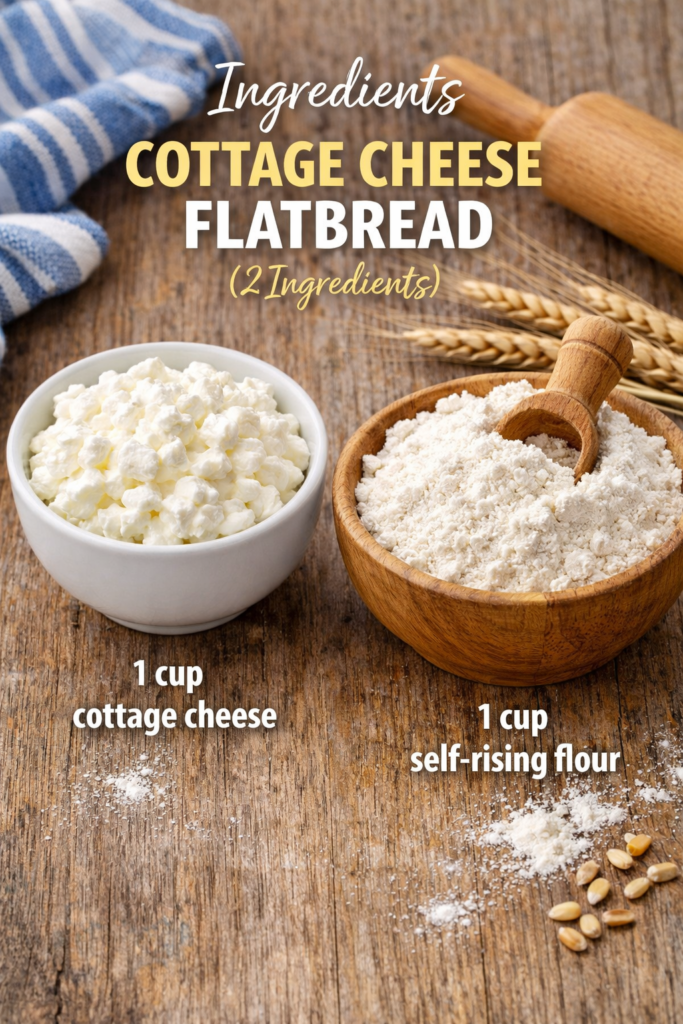
- 1 cup cottage cheese
- 1 cup self-rising flour
That is the heart of the recipe, but it helps to understand why they work.
Cottage cheese: This is what gives the flatbread moisture, softness, and protein. Full-fat cottage cheese tends to produce the richest texture, but low-fat works too. If your cottage cheese is very wet, the dough may need an extra spoonful of flour. If it is especially thick, the dough may come together more quickly. Small-curd cottage cheese blends more easily into the dough, but large-curd works just fine too.
Self-rising flour: This keeps the recipe simple because it already contains baking powder and salt. It gives the flatbread a little lift and helps create a soft, tender bite. If you only have all-purpose flour, you can make your own substitute by adding baking powder and salt, but self-rising flour keeps the texture especially easy and reliable.
Optional extras, if you want to build on the basic recipe:
- Olive oil or butter for brushing
- Garlic powder
- Dried herbs like oregano or parsley
- A pinch of salt if your cottage cheese is bland
Instructions
Making this 2 ingredient cottage cheese flatbread is quick and beginner-friendly when you follow these steps.
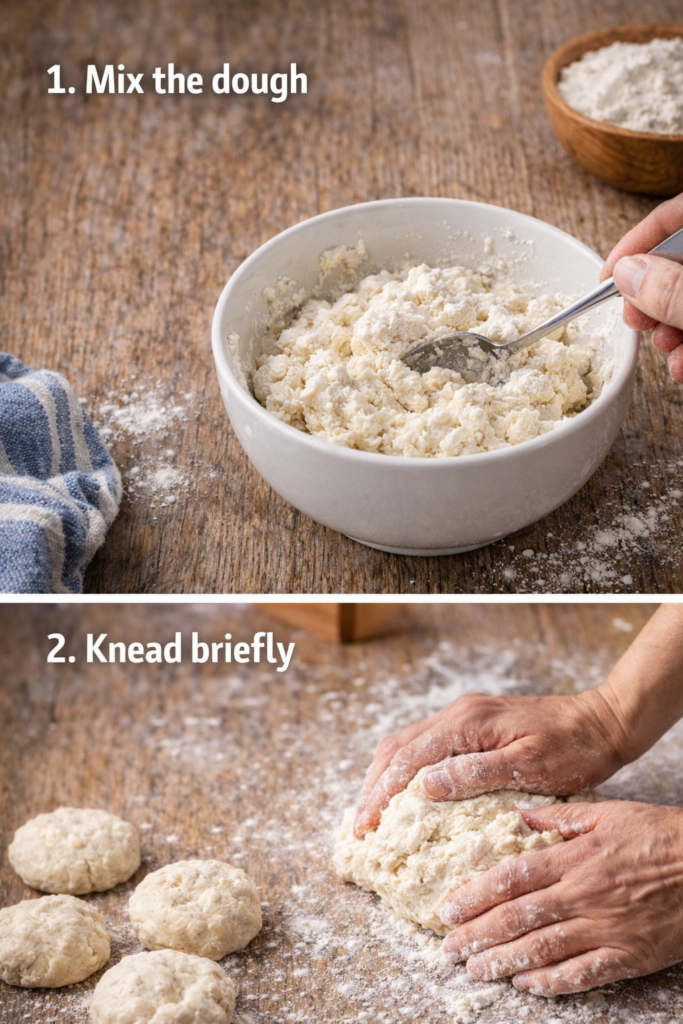
1. Mix the dough
In a medium bowl, combine the cottage cheese and self-rising flour. Stir with a spoon until a shaggy dough begins to form. Then use your hands to gently bring it together.
The dough should feel soft and slightly tacky, but not so sticky that it clings heavily to your fingers. If it seems overly wet, dust in a little more flour, one tablespoon at a time. Try not to overdo it, because too much flour can make the flatbread dense instead of tender.
2. Knead briefly
Turn the dough onto a lightly floured surface and knead it for about 1 to 2 minutes. This is not the kind of dough that needs a long knead. You are simply helping it become smoother and more even.
A good visual cue is when the dough stops looking lumpy and starts feeling soft and workable. If you knead too aggressively, the flatbread can lose some tenderness, so think gentle and short rather than forceful and long.
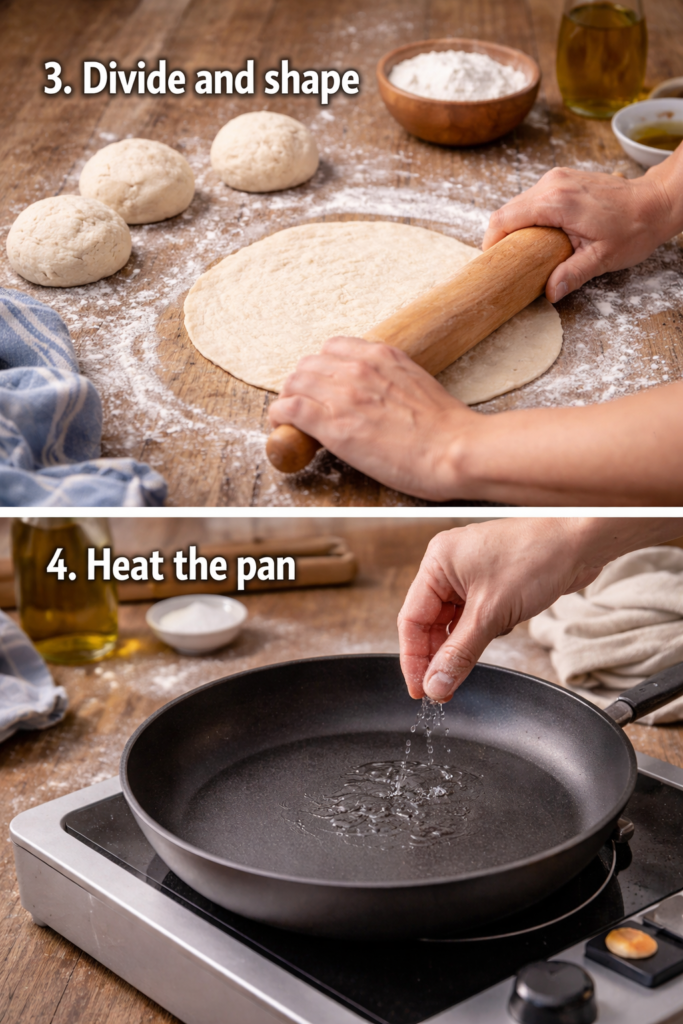
3. Divide and shape
Divide the dough into 2 to 4 portions, depending on whether you want larger wraps or smaller flatbreads. Roll each portion into a ball, then flatten and roll it out into a round or oval shape.
Aim for about 1/4 inch thickness. Too thick, and the middle may stay doughy before the outside browns. Too thin, and the flatbread can dry out or become cracker-like. If the dough springs back as you roll it, let it rest for a minute, then continue.
4. Heat the pan
Place a nonstick skillet or cast-iron pan over medium heat. Let it warm fully before adding the flatbread. A properly heated pan makes all the difference because it helps the dough cook evenly and develop those lovely golden spots.
Do not rush this step by turning the heat too high. A pan that is too hot will brown the outside before the center cooks through.
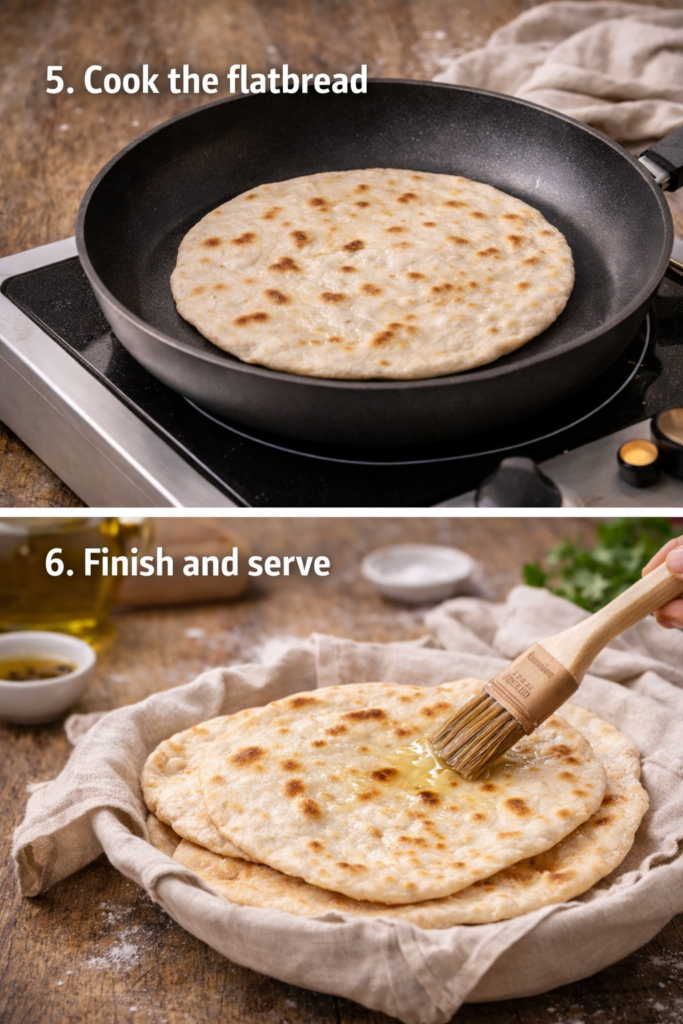
5. Cook the flatbread
Place one rolled flatbread into the dry pan. Cook for about 2 to 3 minutes on the first side, until bubbles begin to appear and golden patches form underneath. Flip and cook the second side for another 1 to 2 minutes.
You are looking for light golden spots and a cooked center that feels springy rather than wet. If the flatbread is browning too fast, lower the heat slightly. If it looks pale and stiff, your pan may not be hot enough. Repeat with the remaining dough.
6. Finish and serve
Stack the cooked flatbreads in a clean kitchen towel as they come off the pan. This helps trap a little steam and keeps them soft.
Brush with olive oil or melted butter if you like, especially if you are serving them warm at the table. This small step adds flavor and makes them feel just a little extra special.
HOW TO SERVE COTTAGE CHEESE FLATBREAD
This flatbread works perfectly as a wrap, a side, or a quick base for meals.
Serve it with dishes like hot honey chicken quinoa bowls or creamy chicken spinach casserole for a complete and satisfying meal.
Tips & Flavor Variations
One of the best things about this recipe is how easy it is to adapt, but a few practical tips can make the difference between good flatbread and really lovely flatbread.
First, choose the right cottage cheese texture. If your cottage cheese is very watery, drain it briefly before mixing. This matters because too much moisture can make the dough sticky and force you to add excess flour, which leads to heavier bread.
Second, do not overwork the dough. A short knead is enough. This keeps the flatbread tender and easy to chew. Overmixing develops too much gluten and can make the final texture a bit tough.
Third, roll evenly. Try to keep the center and edges close in thickness. This matters because uneven dough cooks unevenly, leaving some parts raw while others dry out.
Fourth, keep the heat at medium rather than high. Medium heat gives the inside time to cook through while still building color outside. High heat often tricks people into thinking the bread is ready when the center is still gummy.
Fifth, store cooked flatbreads wrapped in a towel until serving. That gentle trapped warmth keeps them soft and flexible, which is especially useful if you want to use them as wraps.
For flavor variations, there is plenty of room to play. Add dried oregano and garlic powder for a savory version that pairs beautifully with soups or grilled chicken. Stir in a little shredded cheddar and black pepper for something richer and more comforting. For a seasonal twist, I sometimes add chopped chives in spring or a pinch of smoked paprika in cooler months when I want a deeper flavor.
If you want a slightly sweeter breakfast version, roll the flatbread a little smaller and brush it with butter after cooking, then sprinkle with cinnamon. It is simple, but surprisingly lovely with fruit on the side.
For dietary flexibility, use a higher-protein cottage cheese and serve with eggs, turkey, or hummus for an even more filling meal. You can also make mini versions for lunchboxes, which Grace especially enjoys because they feel like her own little personal breads.
For more easy meal ideas, you can also explore simple skillet dishes like garlic chicken with broccoli or quick protein bowls for balanced meals.

Common Myths & Mistakes
Myth 1: Cottage cheese flatbread tastes strongly like cottage cheese
This is one of the biggest worries people have before trying the recipe. Many assume that because cottage cheese is such a noticeable ingredient in the bowl, the final flatbread will taste obviously cheesy, sour, or overly dairy-heavy. That belief keeps people from trying the recipe at all, especially those who do not usually eat cottage cheese on its own.
People believe this because cottage cheese has a distinct look and texture before mixing. The curds can seem unusual, and on social media, many quick recipe videos skip over the part where the dough transforms during cooking. Viewers see the ingredient but do not get a clear explanation of how its flavor changes once combined with flour and heated.
The truth is that cottage cheese becomes quite mild in the finished flatbread. Its main role is to add moisture, protein, and tenderness rather than a dominant flavor. Once cooked, the flatbread tastes more like a soft, simple pan bread than a cheesy snack. The correct approach is to trust the balance of the dough and season after cooking if needed. If you want more flavor, add herbs, garlic powder, or a brushing of butter on top rather than assuming the base recipe will taste too strong.
Myth 2: If the dough feels sticky, the recipe is failing
A lot of beginners panic the moment they touch the dough and feel some stickiness. They immediately add flour, then more flour, and sometimes even more after that, thinking the dough must become dry and perfectly smooth before it is safe to cook. This is one of the most common mistakes with quick flatbread recipes.
People believe this because many traditional bread recipes teach that dough should be elastic, polished, and only lightly tacky. That advice has its place, but this is not a yeast dough that needs extended kneading and rising. This dough is softer by nature because cottage cheese contains moisture that keeps the flatbread tender.
That is exactly why the myth is incorrect. A slightly sticky dough is often the sign that you are on the right track. If you add too much flour, you shift the balance and end up with flatbread that feels dry, heavy, and less flexible. The correct approach is to flour your surface lightly, knead briefly, and only add small spoonfuls of flour if the dough is truly unmanageable. Think soft and workable, not dry and stiff.
Myth 3: High heat cooks flatbread better and faster
It is easy to think high heat is the smart choice here. After all, flatbread is thin, cooks quickly, and people often want those beautiful golden spots as fast as possible. Many assume a hot pan will create the best result, just like searing meat or toasting tortillas. Unfortunately, that approach often leads to disappointing flatbread.
This myth sticks around because visual browning can be misleading. When the outside colors quickly, it looks done, and beginners naturally trust what they see. Social videos also tend to reward speed, so people copy the idea of blasting the pan for a dramatic finish without realizing the inside may still be undercooked.
The problem is that this dough contains moisture-rich cottage cheese, so it needs a little time for the center to set. Too much heat scorches the outside before the inside cooks through, leaving a doughy middle and bitter dark spots. The correct approach is medium heat and patience. Let the pan preheat, cook until bubbles appear, then flip once golden patches form. That steadier method gives you a flatbread that is both cooked inside and beautifully soft.
IS 2 INGREDIENT COTTAGE CHEESE FLATBREAD HEALTHY?
This 2 ingredient cottage cheese flatbread can absolutely fit into a balanced diet, especially when you’re looking for a quick, high-protein alternative to traditional bread.
Cottage cheese provides protein, calcium, and essential nutrients, making this flatbread more satisfying than many standard quick breads. Because it uses simple ingredients and requires no added fats in the base recipe, it can be a lighter option depending on how you serve it.
If you want to make it even healthier, you can pair it with lean proteins, vegetables, or nutrient-dense toppings instead of heavier spreads. Like most foods, it’s best enjoyed as part of a varied and balanced diet.
For general nutrition guidance, you can refer to the Harvard T.H. Chan School of Public Health Nutrition Source.
FAQ – Frequently Asked Questions
How long does cottage cheese flatbread last in the fridge?
Cottage cheese flatbread will usually keep well in the fridge for about 3 days when stored in an airtight container. I like to place a piece of parchment or wax paper between the flatbreads if I am stacking them, because it helps prevent sticking. Once chilled, they may firm up a little, but that is normal. A quick reheat in a dry skillet or microwave softens them nicely. For the best texture, wrap them in a clean towel right after cooking and let them cool fully before storing so excess condensation does not make them damp.
Can I freeze cottage cheese flatbread without ruining the texture?
Yes, you can freeze them, and they hold up better than many people expect. Let the flatbreads cool completely first, then stack them with parchment between each one and place them in a freezer-safe bag or container. This makes it easier to pull out only what you need. When you are ready to use them, thaw them at room temperature or warm them directly in a skillet over low heat. Freezing may make them slightly less tender than fresh, but if you reheat them gently and avoid overheating, they still stay pleasantly soft and very usable for wraps or sides.
Why did my cottage cheese flatbread turn out dense instead of soft?
Dense flatbread usually comes down to one of three things: too much flour, overworking the dough, or rolling it too thick. Because cottage cheese varies in moisture, it is easy to keep adding flour until the dough feels “safe,” but that often creates a heavy texture. A short knead is enough for this recipe. If you keep kneading to make it perfectly smooth, the dough can tighten and lose tenderness. Thickness matters too. If the flatbread is too thick, it may not cook evenly and can feel heavy in the center. Keep the dough soft, the kneading brief, and the rolling even.
What can I substitute for self-rising flour in cottage cheese flatbread?
If you do not have self-rising flour, you can make a simple substitute with all-purpose flour, baking powder, and salt. This works well because self-rising flour is essentially a pre-mixed version of those ingredients. The key is making sure the baking powder is fresh, since that is what helps the flatbread stay light rather than flat and chewy. Once mixed properly, the dough behaves very similarly. I still prefer self-rising flour for convenience, especially on busy days, but the homemade version is absolutely reliable and a useful option when you want the recipe without a grocery run.
How do I reheat cottage cheese flatbread so it stays soft?
The best way to reheat it is in a dry skillet over low to medium-low heat for about 30 seconds to 1 minute per side. This warms the flatbread gently without drying it out. If you are in a hurry, the microwave works too, but I recommend covering the flatbread with a slightly damp paper towel so it does not become rubbery. Try not to overheat it, because quick breads can lose softness when reheated too long. A light brushing of butter or olive oil after warming can also help restore flavor and flexibility, especially if the bread has been refrigerated overnight.
CONCLUSION
This 2 ingredient cottage cheese flatbread is one of those simple recipes that quickly becomes part of your everyday routine.
It’s fast, flexible, and requires very little effort while still delivering a soft, satisfying result. Whether you use it as a wrap, a side, or a quick base for meals, it’s a practical option that fits easily into busy days.
Once you try it, it’s the kind of recipe you’ll come back to again and again when you need something quick, homemade, and reliable.
You can also pair it with other easy high-protein recipes like cottage cheese protein cookies or simple dishes like chicken quinoa bowls to create complete and balanced meals.